10 Small Towns in Texas Were Ranked Among US Favorites
Marfa pulls art crowds 200 miles southeast of El Paso for Donald Judd's permanent installations at the Chinati Foundation. Fredericksburg keeps a German-heritage Main Street alongside the National Museum of the Pacific War. Dripping Springs sits 25 miles west of Austin with the largest concentration of distilleries and wineries in Texas Hill Country. Luckenbach packs a general store, saloon, and dance hall into three buildings made famous by Waylon Jennings and Willie Nelson in 1977. The ten Texas stops ahead each anchor a different piece of the state's cultural geography.
Dripping Springs

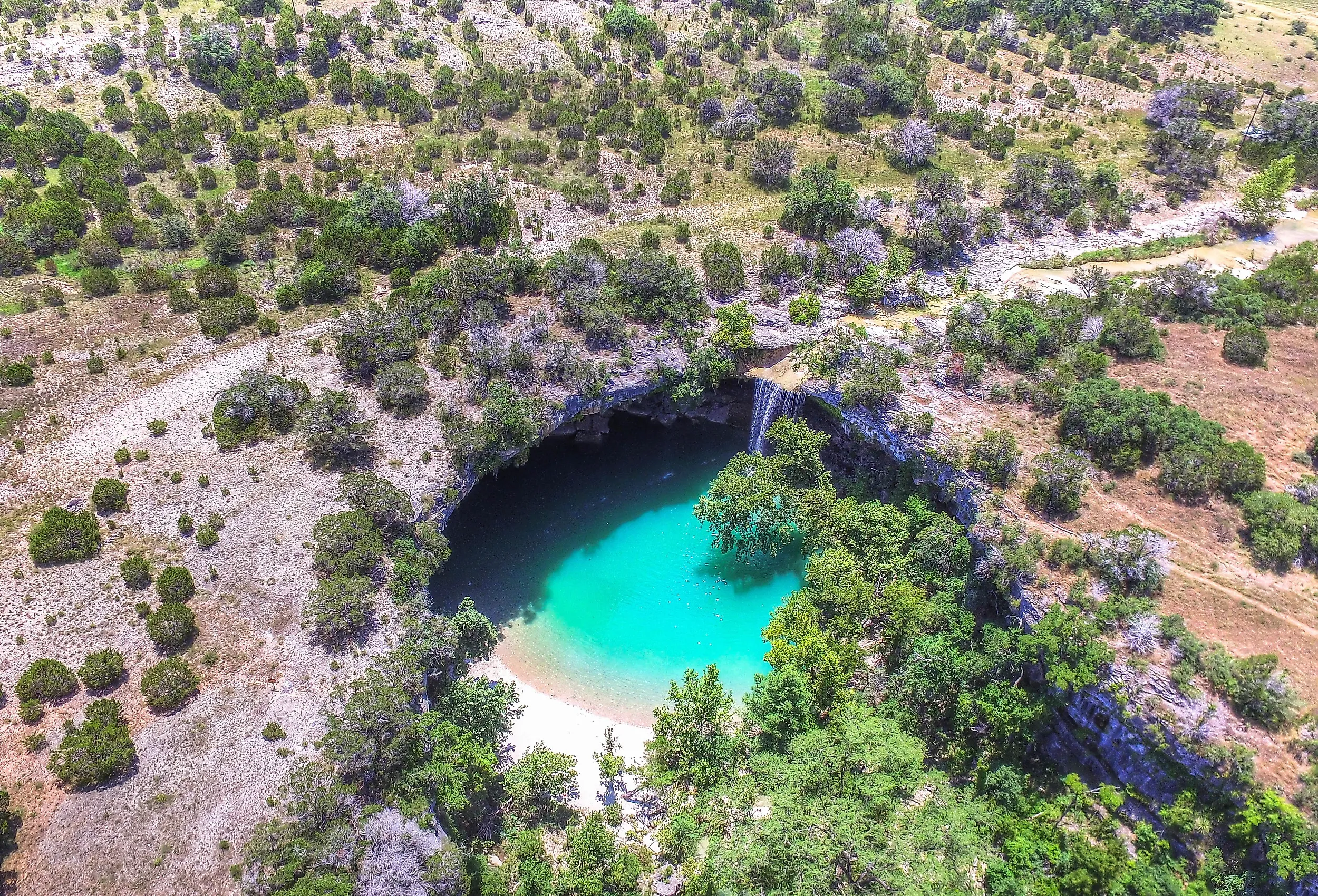
Dripping Springs sits 25 miles west of Austin and carries the official "Wedding Capital of Texas" designation thanks to more than 50 working venues across town. The Texas Legislature also designated it the official "Wine Capital of Texas." Desert Door Distillery on Mercer Street is the country's only commercial sotol distillery, working with the wild West Texas sotol plant rather than the agave used in tequila and mezcal. Hamilton Pool Preserve, 13 miles west, runs reservation-only swimming below a 50-foot collapsed-cavern grotto. Pedernales Falls State Park covers 5,212 acres along the Pedernales River with hiking, swimming, and the namesake limestone cascades.
Wimberley

Wimberley sits 14 miles south of Dripping Springs at the confluence of the Blanco River and Cypress Creek. Wimberley Square anchors a walkable downtown with the long-running First Saturday Market Days drawing 450 vendors and crowds from as far as Houston. Blue Hole Regional Park runs a reservation-required swimming season from May through September in cypress-shaded creek water. Jacob's Well Natural Area, four miles north of town, protects one of the country's deepest underwater caves (with the dive system mapped at over 4,500 feet of passages) and the artesian spring that feeds Cypress Creek. The Leaning Pear on River Road serves Hill Country produce and crab cakes.
Fredericksburg

Fredericksburg holds the strongest German-heritage stretch in the Hill Country, founded in 1846 by 120 German immigrants under the Adelsverein settlement society. The town runs about 11,600 residents and the Main Street historic district still preserves the original Sunday Houses (small one-story houses farmers used for weekend church trips). The Auslander on Main Street serves Bavarian dishes and stocks more than 100 German beers on draft. The National Museum of the Pacific War covers six acres in town and holds one of the most thorough World War II Pacific Theater collections in the country, anchored by Admiral Chester W. Nimitz's birthplace (the Nimitz Hotel, 1846). Enchanted Rock State Natural Area, 18 miles north, rises 425 feet above the surrounding hills as a pink granite batholith roughly 1 billion years old.
Luckenbach

Luckenbach is barely a town, 13 miles southeast of Fredericksburg, with a permanent population of three and a roster of three buildings: the general store and post office (continuously operating since 1849), a saloon, and a dance hall. Waylon Jennings and Willie Nelson's 1977 hit "Luckenbach, Texas (Back to the Basics of Love)" turned the spot into a country-music pilgrimage. The dance hall books live music every Sunday afternoon plus regular Friday and Saturday shows, and the saloon pours all year. Hondo Crouch bought the entire town in 1970 for $30,000 and rebranded it as the "Free State of Luckenbach," a designation locals still lean into.
Marfa

Marfa sits in the West Texas Chihuahuan Desert at 4,688 feet elevation, 200 miles southeast of El Paso. The town's population runs about 1,800 and pulls art crowds far disproportionate to its size because of the Chinati Foundation, the contemporary art museum founded by minimalist artist Donald Judd in 1986 on the former Fort D.A. Russell military base. Chinati holds Judd's "100 Untitled Works in Mill Aluminum" (the artist's monumental aluminum series in two converted artillery sheds) plus permanent installations by John Chamberlain, Dan Flavin, Claes Oldenburg, and Carl Andre. The Marfa Lights, the unexplained nocturnal glow first reported in 1883, can be viewed from the official platform 9 miles east on US-90.
Bandera

Bandera sits 50 miles northwest of San Antonio along the Medina River and carries the official "Cowboy Capital of the World" designation from the Texas Legislature. The town runs about 900 residents and sat directly on the Great Western Cattle Trail used to drive longhorns north to Kansas railheads from the 1870s through the 1890s. The Frontier Times Museum, founded by J. Marvin Hunter in 1933, runs cowboy-culture exhibits in a working stone-and-cedar building. Hill Country State Natural Area covers 5,369 acres of undeveloped backcountry, designed for hikers, mountain bikers, and horseback riders (the park is one of the few in Texas to allow camping with horses). Arkey Blue's Silver Dollar Bar and the 11th Street Cowboy Bar still book live country music most weekends.
Shiner
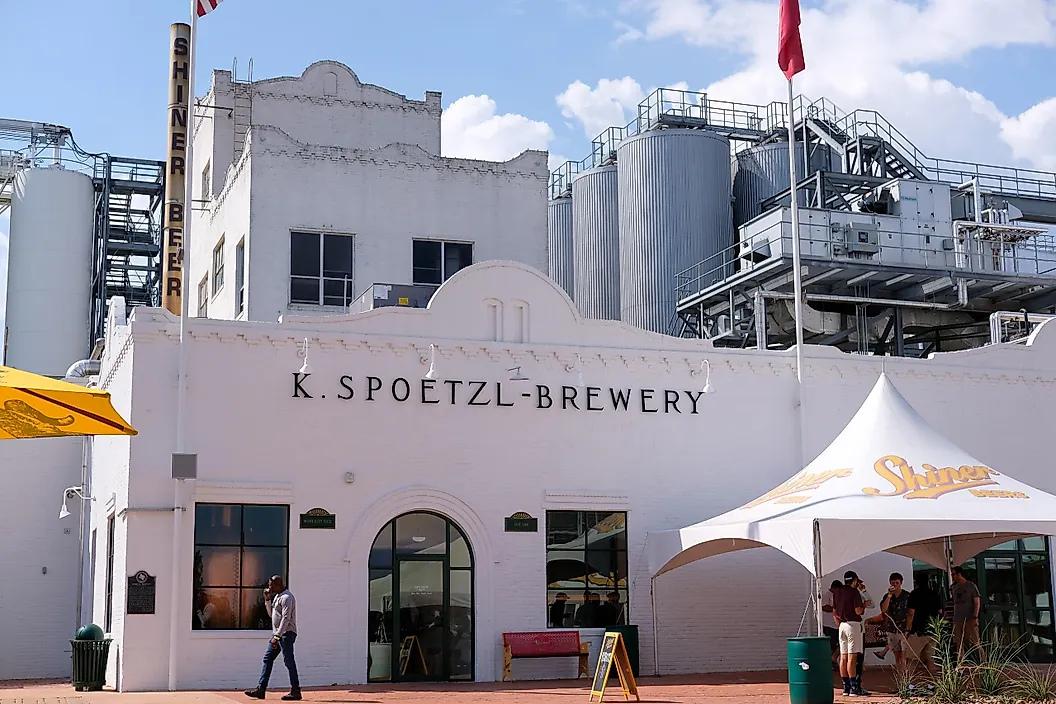
Shiner sits along US-90A roughly midway between Houston and San Antonio, with about 2,000 residents and an outsized brewing presence. The Spoetzl Brewery, founded in 1909 by Kosmos Spoetzl, is the oldest independent brewery in Texas and runs 45-minute production-floor tours weekday afternoons. Shiner Bock, the brewery's flagship dark lager, is the best-known craft beer in the South and now ships nationwide. Welhausen Park anchors the small downtown alongside the 1895 Gaslight Theater and the Edwin Wolters Memorial Museum, which covers the Czech and German immigrant communities that founded the town in the 1880s.
Salado

Salado sits midway between Austin and Waco off I-35 and was incorporated in 2000 (one of the youngest incorporations in Texas), though the village dates to 1859. The town carries an unofficial "Most Peaceful Town in Texas" tag and runs about 2,400 residents. Salado Creek runs through the centre of the village with the Tablerock Festival amphitheatre, and the Salado Glassworks studio on Royal Street runs glassblowing demonstrations through most afternoons. Fletchers Books & Antiques handles bibliophile traffic, and the Shoppes on Main Boutique Marketplace stocks home decor, crêpes, and coffee. The Stagecoach Inn, operating in some form since 1861, is one of the oldest continuously running hotels in Texas.
Dublin

Dublin sits in southwest Erath County on US Highways 67 and 377 with a population around 3,500 and the official "Irish Capital of Texas" title bestowed by the state legislature in 2002. The Dublin Bottling Works produced the original cane-sugar Dr Pepper from 1891 until June 2012, when a licensing dispute with Dr Pepper Snapple ended the long-running production. The plant still bottles Dublin Bottling Works sodas (the same recipes but under different brand names) and runs daily factory tours. The Ben Hogan Museum traces the legendary golfer's Dublin childhood and his career, with original clubs, trophies, and his 1953 Hickok Belt. The Dublin Historical Museum and the Dublin Rodeo Heritage Museum round out the town's history stops.
Jefferson

Jefferson sits in East Texas in the Piney Woods region with about 2,000 residents and a nickname as the most haunted town in the state. The town was Texas's busiest inland port through the 1860s, served by steamboats running up Big Cypress Bayou from Caddo Lake and the Red River. River trade collapsed in 1873 when the US Army Corps of Engineers cleared the Great Raft (the natural log jam that had raised water levels on the Red River and allowed deep-water navigation to Jefferson). The Excelsior House Hotel, in operation since the 1850s, runs paranormal tours alongside its restaurant. The Jefferson Historic District holds more than 50 buildings on the National Register, including the Jay Gould Railroad Car (the 1888 private rail car of the financier Jay Gould, preserved in town).
The Texas Read
These ten towns each lean on something different. Dripping Springs and Wimberley anchor Hill Country wineries and swimming holes. Fredericksburg layers German immigrant heritage onto Pacific War history. Luckenbach packs a country-music tradition into three buildings. Marfa pulls minimalist art crowds 200 miles into the West Texas desert. Bandera works cowboy culture along the Great Western Cattle Trail. Shiner runs the oldest independent brewery in Texas. Salado, Dublin, and Jefferson each preserve a specific 19th-century commercial and cultural moment that the modern state grew past.