6 Best Cities To Retire In The UK
Although still shy of retirement age, I recently visited several UK cities that would be on my shortlist of great places to retire to when that time comes. Spread across the United Kingdom, Durham, Wells, Derby, Stirling, Nottingham, and Newcastle not only cover essentials like healthcare and public transit, but they also boast no end of fun things to do, whatever stage of life you're at. Here's what I found out about the best cities to retire to in the UK.
Durham, County Durham

Durham packs a great deal into the compact, hilly peninsula it sits on. Hugged by the scenic River Wear, there's so much to do in this historic city that you'll never get bored. Topping the list of attractions, Durham Cathedral can trace its roots all the way back to 1093.
Along with Durham Castle next door, it's now listed as a UNESCO World Heritage Site and is a great place not only to visit, but to volunteer. Durham Cathedral runs a large volunteer program, with retirees serving as welcome stewards and tour guides.

For retirees who enjoy a city stroll, Durham is ideal. The city's wooded riverbanks were laid out specifically for leisure walking in the 18th century and still form an easy circular route around the peninsula. If you want to go all out, tackling the hillier sections leading from the river to the cathedral, castle, and shopping areas is a great workout with plenty of excuses to stop.
For something gentler on the legs that gives a little upper body exercise, Brown's Boats has hired out traditional rowing boats on the Wear since the early 1900s. The river's also the scene of the Durham Regatta, the second-oldest rowing regatta in England after Chester; it started back in 1834 and runs every June with support from volunteers like you.

Just a short distance from the city, County Durham's two best-known attractions also run large volunteer programs that are well-suited to retirees with time to give. Kynren, staged at Bishop Auckland, is an exciting outdoor night show that retells 2,000 years of British history across a sprawling 7.5-acre stage. A cast and crew of more than 1,000 local volunteers help pull off this production, and newcomers are always welcome to help.
Beamish, the Living Museum of the North near Stanley, is equally fun. This 350-acre open-air museum recreates North East life in the 1820s, 1900s, 1940s, and 1950s, with working trams, buses, and even a replica of the region's first steam train that you can ride on. It's not only an excellent place to visit with the grandkids, but it also requires hundreds of volunteers in roles that span period-character interpreters and behind-the-scenes work.
Nottingham, Nottinghamshire

The city of Nottingham likely needs no introduction. Famous for its connections to the legend of Robin Hood, Nottingham combines a full set of city amenities with plenty of green space and a strong volunteering culture. It's also home to one of the most unusual claims of any destination in the United Kingdom: it's known as the "City of Caves."
Built on a ridge of soft sandstone that can easily be cut with hand tools, archaeologists have logged over 1,000 manmade caves, some more than a thousand years old. You can see some of the most interesting with a visit to the City of Caves attraction, or by taking a cave tour at Nottingham Castle. One of the most interesting sights here is Mortimer's Hole, a once-secret medieval passage carved through the rock that was used in 1330 to capture the castle.

Nottingham is no slouch when it comes to pub culture, too. Whether you visit for a pint or a meal with your retired friends, Ye Olde Trip to Jerusalem offers a completely unique experience. Partly built into the rock below the castle, the pub dates all the way back to 1189, making it one of the oldest in England.
When it comes time to give something back to the community, you'll find volunteering options plentiful here. Nottingham City Museums places volunteers at Wollaton Hall, where they can assist with tasks like restoring the estate's walled garden or park-ranger work.

And the volunteer-run Nottingham Industrial Museum fires up its engines on the last Sunday of each month at Wollaton, an event known as the Steaming Days that would top my list of places to volunteer.
On the healthcare front, it's worth mentioning that Queen's Medical Centre was the country's first purpose-built teaching hospital and is the largest major trauma center in England. Another plus: direct trains reach London in under two hours.
Wells, Somerset

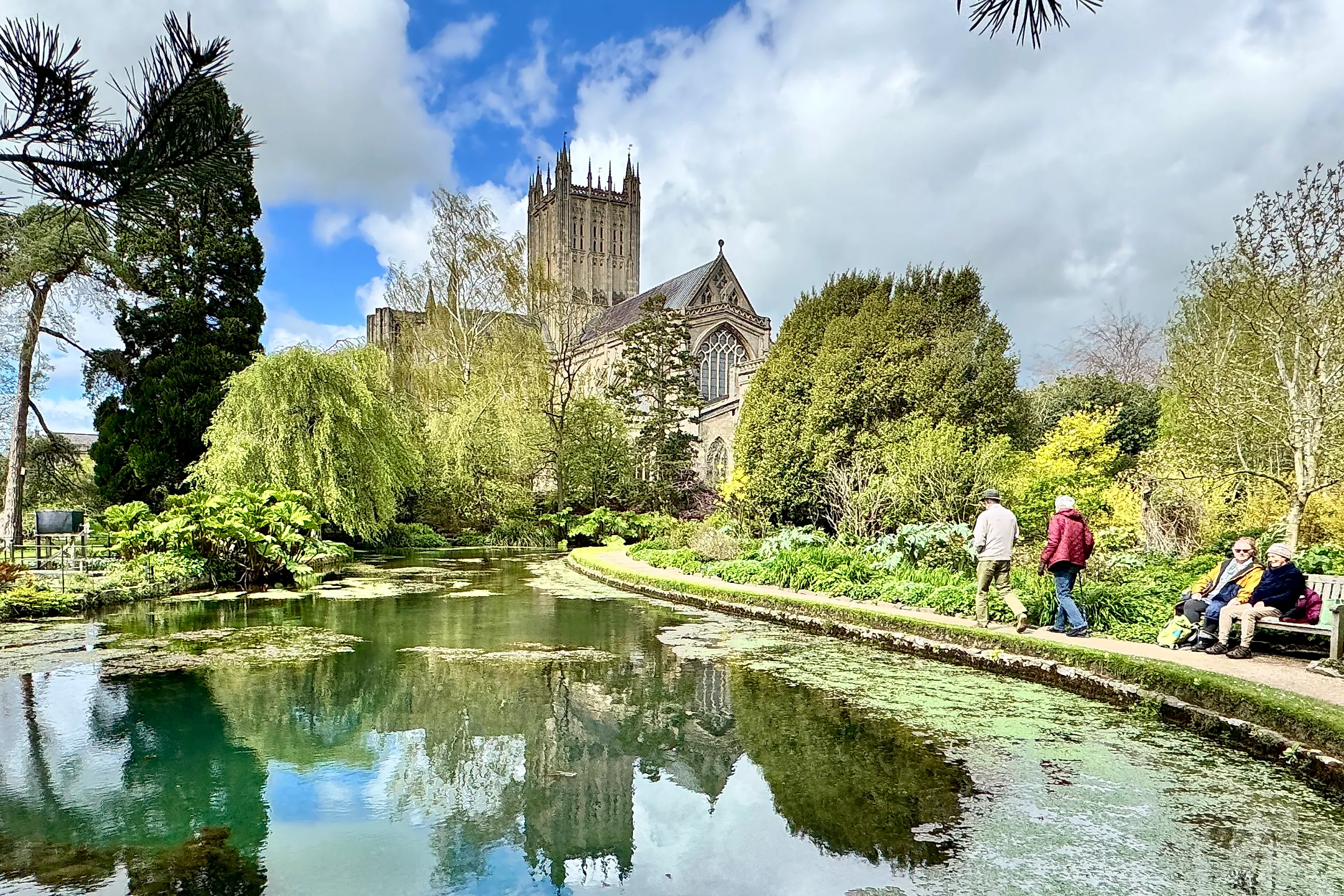
Wells is famous as England's smallest city, a status it holds not because of its size (its population is only around 13,000), but because of its cathedral. Built in the 13th and early 14th centuries, Wells Cathedral is not only a huge draw for visitors to this pretty town, but also for those seeking to retire here.
The wide lawn of Cathedral Green in front is an ideal place for a stroll or to sit and chat with new friends. Better still, pull up a cathedral-view patio chair and grab a drink from The Swan Hotel. The cathedral itself is always looking for reliable volunteers as greeters and guides.

From the green, you're only a few steps away from Vicars' Close, a cobbled street of medieval stone houses built in the 14th century to house the cathedral's choristers. This lovely old street is the oldest purely residential street in Europe, and is still lived in.
Also close by, the Bishop's Palace has been home to the bishops of Bath and Wells for 800 years. Its large moat is wonderful to walk around and faces an imposing wall that surrounds the three springs that give the city its name. It also shelters 14 acres of gardens, all of which can be visited.

It's a setting that certainly suits an active outdoor retirement as Wells lies between the Mendip Hills, a protected upland of walking trails and limestone gorges, and the flat Somerset Levels. So country walks start on the city's doorstep and can take in nearby landmarks like Glastonbury Tor.
Volunteering opportunities are also available at the Bishop's Palace, especially in its gardens. For healthcare matters, general day-to-day services are covered at clinics in town, while the nearest acute care facility is an easy drive or public transit ride to the Royal United Hospital in nearby Bath.
Stirling, Stirlingshire

I've got a soft spot for Stirling in Scotland for one very good reason: I went to university there. After revisiting the area for the first time in years, I was struck by just how good a place to retire it would be. The historic gateway to the Highlands, Stirling gives retirees a small, historic city within easy reach of Edinburgh and Glasgow, each reachable in less than an hour by train or car.
Stirling is unique for having not just one, but two standout landmarks. Stirling Castle is a striking royal palace set on a volcanic crag that served as home to the Stewart kings. The castle grounds are wonderful for a stroll, especially if you include the extensive cemeteries in your route, one of which has a bench with the best castle view in Scotland.

With your back to the castle, look out over the town, and you'll clearly see Stirling's other landmark: the National Wallace Monument. Looking like something out of a retro sci-fi film, this 220-foot gothic tower was completed in 1869 on Abbey Craig to commemorate William Wallace's victory over the English at the Battle of Stirling Bridge in 1297. Though it's a steep, 246-step climb to the top, the views over the city and the Forth valley make it all worthwhile.
The Battle of Bannockburn Experience, run by the National Trust for Scotland, is ideal for history buffs looking for volunteer opportunities. Set on the very spot where Robert the Bruce defeated England's Edward II in 1314, volunteers handle everything from conservation work to welcoming visitors at the door.

If you're looking for an even more active retirement, Stirling boasts an extraordinary variety of options. Golfers will want to join Stirling Golf Club, formed in 1869 within a royal hunting ground used by Scottish monarchs for more than 800 years. The Back Walk, a path laid out in 1723, follows the line of the old town wall and never gets boring.
Newcastle upon Tyne, Tyne and Wear

I know a few Geordies (that's what folks from Newcastle proudly call themselves), so I suspected that the capital of England's North East region would be retirement-friendly. And I wasn't wrong. Newcastle upon Tyne is not only immensely walkable, but it also boasts a top-notch football team and a downtown stadium, and is a hotbed of art and culture.
The main attraction is the Quayside, a level promenade along the River Tyne that's defined by its bridges. The views from the riverside of the city, framed by the impressive steel arch of the old Tyne Bridge and the more modern Gateshead Millennium Bridge, the world's first tilting bridge, are incredible.

Riverside attractions like the BALTIC Centre for Contemporary Art, a free gallery converted from a 1950s flour mill, and ultra-modern Glasshouse International Centre for Music, take care of the cultural side of things. Even if you're not an art fan, the views from the BALTIC's fourth-floor viewing platform over the river and city make a visit worthwhile. Both also run volunteer programs.
Other pleasant places to walk to include Grainger Town, a central covered market that has been around since 1835. Vendors sell everything from fresh fish to great local beer (Firebrick Brewery even has a comfy pub-like seating area here).

For a stroll in a country-like setting, Jesmond Dene is a steep, wooded river valley that's just over a mile north of the busy central core. Waterfalls, woodland paths, a twice-monthly market on the historic Armstrong Bridge, and great dining or an afternoon tea at Jesmond Dene House round out an almost entirely car-free stroll in this retirement-friendly city. Best of all, it's easy to get to thanks to Newcastle's excellent Metro system.
Derby, Derbyshire

Derby has built its retirement-friendly appeal around its rich industrial heritage as the birthplace of the modern factory system. Built in 1721, the Derby Silk Mill is considered the world's first factory and has been reinvented as the Museum of Making, telling the story of the Derwent Valley Mills.
Now a UNESCO World Heritage Site, this 15-mile stretch of the Derwent, along with the museum, is a delight to explore. Entering through the original tall, wrought-iron gates made in 1725, this free museum also tells the story of Rolls-Royce, the city's biggest employer. One of three facilities to fall under the Derby Museums umbrella, I met several retirees who were busy volunteering here, all of them relishing the experience (especially the fellow running the museum's large train set!).

A personal must-visit was the Derby Museum and Art Gallery, home to the largest public collection of works by 18th-century painter Joseph Wright of Derby. I'd seen an exhibition of Wright's work in London's National Gallery, so I was excited to learn more about this master of light and shadow. The museum and its friendly volunteers didn't disappoint and plied me with other fascinating details about Wright and his paintings.
Retirees with green thumbs will want to check out the Derby Arboretum. Gifted to the town by a mill owner in 1840, it's another first for Derby, as it was the country's original planned public park. And as a visiting North American, I was intrigued to find out that it's often cited as an influence on the design of New York's Central Park. Markeaton Park, the city's most-used green space, adds a boating lake to the list of things retirees can do in Derby.

Experienced and novice gardeners alike are always welcome to volunteer at the centrally located Electric Daisy. This community garden and outdoor event space on Bold Lane is run by Down To Earth, a local regeneration social enterprise that also puts on open days, workshops, live music, and food events. This remarkable initiative is especially suited to retirees with the time and life experience to give to the local community.
I also met a fascinating fellow in Derby who, frankly, will likely never retire. Paranormal Historian and presenter on the TV show, Most Haunted, Richard Felix offers fascinating insights into the city's past and is an inspiration to those who believe that age really is just an attitude. Tours kick off in the historic Derby Gaol, where you'll also hear vivid tales of just how brutal prisons were in the past.
Six Cities, Six Unique Retirements
Having recently visited Newcastle, Nottingham, Stirling, Derby, Durham, and Wells, I can safely say that each of these unique cities would be ideal places to retire to. They show just how varied a UK retirement can look, with walkable historic districts, free museums and parks, organized volunteering opportunities, and NHS healthcare services close at hand when they're needed.