2026's 11 Best Small Towns To Visit In New Zealand
Some of New Zealand's most impressive scenery, wildlife, and history are in and around its smaller towns. Wānaka draws skiers into the Southern Alps, and its most extreme waterfall cable climb ends with a helicopter ride back down. Kaikōura pairs the clear skies of an International Dark Sky Sanctuary with boat trips to see sperm whales and swim with dusky dolphins. In Ōamaru, Victorian streetscapes carved from local whitestone now house galleries, shops, and the retro-futuristic art of Steampunk HQ. Havelock, the Greenshell Mussel Capital of the World, serves its famous harvest raw-shucked on the marina and celebrates it at an annual seafood festival. These 11 small towns are among the best destinations in 2026, each with its own mix of landscapes, local flavors, and living history.
Russell

This little town on the Bay of Islands took its name from nearby Okiato, which served as New Zealand's first capital under the name Russell. There is so much rich history here to explore at the Russell Museum. The exhibits share the story of the land and the many generations and various cultures that steward it through artifacts, historic photographs, and artwork, including the largest collection of artwork by acclaimed local Māori artist Pauline Kahurangi Yearbury.
This town is also home to Christ Church, the oldest surviving church in the country, and an inclusive chapel that welcomes visitors of all backgrounds. The Art of Hāngī fully immerses travelers in the ancient past, when cooking was closely connected to the earth. The day-long hands-on class involves making an earth oven and watching evening entertainment as the food cooks.
Martinborough

Martinborough is within the Wairarapa Wine Region, an area famous for its wine, especially the Pinot Noir. Martinborough Vineyard has some of the oldest Pinot Noir grapevines in the country. Their tasting room offers a taste of their vineyards, and their restaurant cooks local produce, making plates with flavours that reach beyond their property. Wine is such a central part of this small town's identity that they celebrate it every year at the Toast Martinborough Festival, a sophisticated summertime party with high-energy live music, food, and gin and wine to toast with. Along with wine, gin has earned its own place in Martinborough. Lighthouse Gin is led by New Zealand's first female Head Distiller, who uses water filtered from the nearby mountains to infuse botanicals into each bottle.
Wānaka

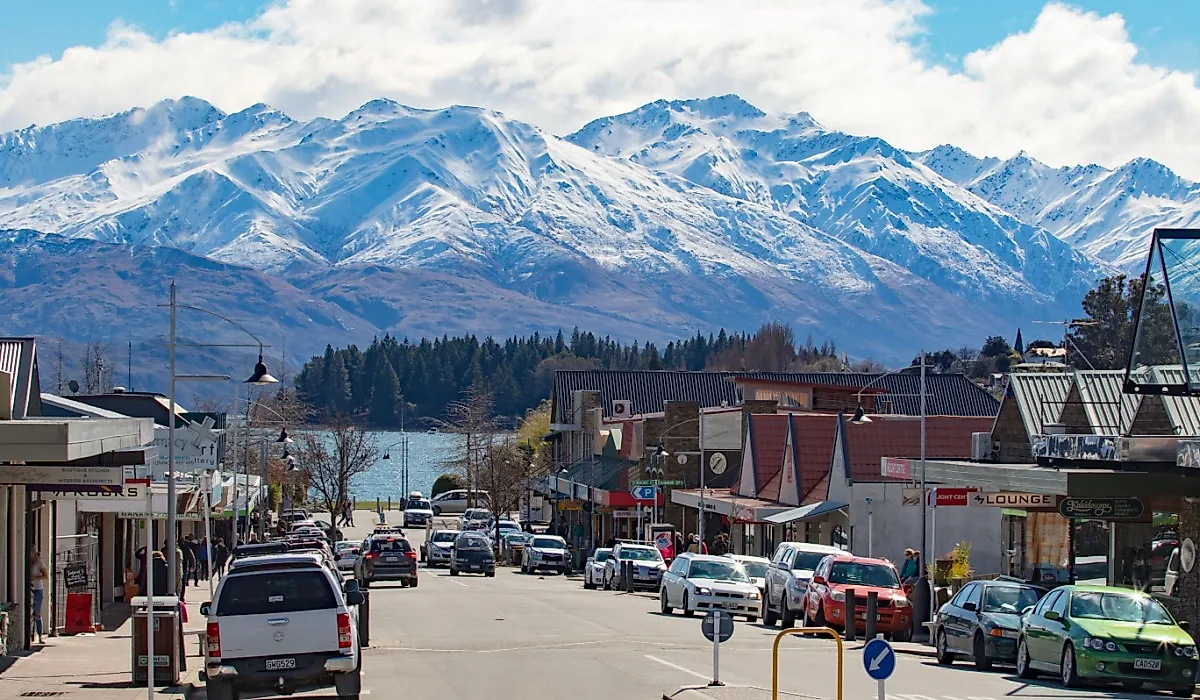
Wānaka's adventurous spirit is best spent on travelers who enjoy the thrills of its snow-capped mountains. Skiing, snowboarding, and mountaineering in the Alps are very popular here. Each resort has its own identity. Snow Farm focuses on traditional Nordic winter sports, while Cardrona Alpine Resort caters to families. Wānaka mountain guides also offer a more personalized experience by guiding skiers through the Southern Alps/Kā Tiritiri o te Moana in small groups led by experts on the landscape.
Outside of adventures in the snow, you can also go on a waterfall cable climb with Wildwire Wānaka. Of the 3 levels, the 3rd is the most extreme. Climbers venture to the top of a waterfall and take a helicopter back to the base. The 1st and 2nd levels are milder, though they still involve climbing boulder-side rungs and walking across wire bridges.
Ōamaru

Victorian streetscapes and 19th-century structures create Ōamaru, the largest town of the Waitaki District. Ōamaru's Heritage Precinct is one of New Zealand's most significant heritage experiences. Designated a Tohu Whenua site, this precinct defines and shapes culture through its buildings, carved from Waitaki whitestone quarried locally. The buildings contain galleries and shops that connect new creations with the ancient material in which they are housed.
There are also museums like Steampunk HQ, which uses technology to create retro-futuristic art installations. Though future-focused, the museum ties back to the precinct's purpose by exploring what the Victorian-era imagination could have created with portals and sculptures. Miss Purple's Studio Realm also has a steampunk feel, filled with leather goods and jewelry. Buggy Robot is an equally creative space where vintage metal and bolts are recycled and repurposed into robots.
Cambridge

European settlers sharpened the equine legacy that still exists over a century later. There are many stud farms that carry on the tradition of racehorses bred for sport. See some of this history at the Cambridge Stud Heritage Centre. The centre is full of trophies as well as interactive displays about racing. The Equine Stars Walk of Fame delves deeper into New Zealand's history in the thoroughbred industry, featuring colorful mosaics of local heroes who just so happen to be horses. See the horses at work at Cambridge Raceway, a track mostly used for harness racing. The town is known for its thoroughbreds; harness racing typically features the Standardbred horse, which pulls a small 2-wheeled cart in which the rider sits.
Raglan

Raglan is a world-famous surfing destination. Manu Bay has one of the longest left-hand breaks in the world, giving surfers the chance to ride waves for up to 600 meters. Ngarunui Beach is the main beach in town, with a black-sand shore for swimming, surfing, and sunbathing on the heated dark sand that absorbs the sun's heat. Visitors can learn to surf in the same wavebreak beloved by the professionals at Raglan Surf School. Lessons are either private or group-instructed, and are suitable for first-timers. There are gentler aquatic sports in town, like kayaking through "Pancake Rocks" with Raglan Kayak. The kayak tour takes paddlers along the town's distinctive coastline to see the ancient limestone formations that can only be reached by small watercraft.
Havelock

Since the town is known as the "Greenshell Mussel Capital of the World", much of a trip to Havelock revolves around the water and its harvest. The town benefits from the Pelorus and Kaituna Rivers, which converge along the shoreline, providing clean water for growing the mussels unique to New Zealand. Mills Bay Café is right on the Havelock Marina, where customers eat fresh seafood prepared in an open kitchen. The petite menu puts its star player at the center, creating sauces and sides for the raw shucked mussels.
The Mussel Pot is another option for tasting the town's famous seafood. The husband-and-wife team behind the restaurant prepares the green-lipped mussels steamed, battered, and grilled. The people of this small town take their appreciation for local seafood seriously, and they also have fun with it at the annual Havelock Mussel & Seafood Festival. With live music playing in the background, New Zealand's best seafood can be tried all in one place, including king salmon, the Pacific oyster, and, of course, the greenshell mussel.
Hokitika

Hokitika feels like one large art installation where human craftwork meets abundant nature. The artists at Bonz N Stonz carve local jade stone and shells into talismans, turning pieces of the land into wearable art. The designs are inspired by traditional Māori craftsmanship, rooting the pieces in history and location. Hokitika Glass Studio also creates artistic pieces that travelers can take with them. The studio makes hand-blown glassware, allowing guests to watch the creative process in workshops. With these studios cultivating fire and earth, Hokitika Beach displays art cultivated from the water. Driftwood bends and stacks on the sand, creating art installations right on the beach made from washed-up materials reshaped into animals and fantasy-inspired creations.
Arrowtown

As a gold-rush town, Arrowtown has retained its shimmering history through restored settlements and museums, such as the Chinese Settlement. During New Zealand's gold rush era, Chinese immigrants traveled to the islands to work the mines, building communities similar to those found in the American West. Walking through the settlement reveals the huts and stores that were once central to mine workers' lives.
The Lakes District Museum & Gallery delves further into the history displayed in the settlement. The museum displays artifacts and photographs that share local stories of miners and other settlers, while also hosting recreations of a blacksmith shop and a Victorian schoolhouse. A self-guided Heritage Walk takes visitors through the rest of the town's preserved history, featuring miners' cottages and commercial buildings, starting at Buckingham Street. The loop winds through many historically significant structures, along with bars and eateries to stop at.
Akaroa

The South Island of New Zealand meets the Pacific Ocean at Banks Peninsula, a biologically rich area originally formed by volcanic cones. The volcanoes are extinct now, having a more peaceful purpose as a pasture for alpacas at Shamarra Alpacas. The pastures overlook the Peninsula, offering a 360-degree view of blue waters and rolling green hills. Guests can enter the pastures to interact with the resident alpacas, who have come to expect cuddles with visitors.
Many more animals inhabit Akaroa, some of which are found only in New Zealand. Hector's dolphins, among the world's smallest and rarest dolphins, live in the shallow water right off the coast and can be seen with an Akaroa Dolphins Nature Tour. The playful little creatures are known to approach boats, so guests are likely to see them. The outer coastline hosts seals and another animal unique to Canterbury, the white-flippered penguin, a subspecies of the Kororā. See the silvery-blue penguins with white flippers and blue eyes at Pōhatu Marine Reserve, where travelers can kayak through the shallows, giving them a chance to see seals, penguins, and maybe even small dolphins swimming nearby.
Kaikōura

Kaikōura is an International Dark Sky Sanctuary, a protected zone that preserves clear views of the constellations. Astronomers and stargazers typically go to the Fyffe House or Kaikōura Lookout for the best look at the stars. Other magnificent sights include marine animals breaching the waters surrounding the town. Whale Watch, the only operator permitted to offer boat-based whale watching off Kaikōura, guides passengers through the waves to see sperm whales in their natural habitat. The dusky dolphin also inhabits these waters. Dolphin Encounter cruise guests will likely see albatross and seals during their tour while also getting to swim with the dolphins. Since they are among the more interactive aquatic species, the chances of an encounter are high.
Discovering the Small-Town Side of New Zealand
If you're planning to explore New Zealand, its small towns reward you with some of the country's most memorable scenery, wildlife, and history in a single trip. These 11 destinations share a deep connection to the land and the sea, with alpine slopes above Wānaka, Victorian whitestone streets in Ōamaru, and sperm whales surfacing off the coast of Kaikōura. For anyone mapping out a visit in 2026, these towns are the best way to experience the landscapes, local flavors, and living history of New Zealand.