2026's 10 Best Small Towns To Visit In Germany
Germany's small towns offer some of the country's most memorable landscapes without requiring visitors to choose between nature and culture. In the Bavarian Alps, boats cross mountain lakes beneath sheer rock walls, while cable cars climb from painted villages toward high ridges. Elsewhere, the Rhine and Moselle wind beneath castles and vineyards, waterfalls tumble through the Black Forest, and historic transportation carries hikers into the sandstone formations of Saxon Switzerland. The best small towns also provide experiences beyond their scenery, from Mittenwald's centuries-old violin-making tradition to Cochem's secret Cold War bunker. All ten are small, and each offers at least three compelling reasons to make it part of a Germany trip in 2026.
Berchtesgaden

Berchtesgaden sits among some of the most dramatic scenery in the Bavarian Alps, making the surrounding landscape as important as the historic town itself. Start at Königssee, where electric passenger boats travel between steep mountain walls to the pilgrimage church of St. Bartholomä. With no road circling the lake, exploring by boat provides one of the easiest ways to appreciate its secluded setting. For a view from above, the Jennerbahn carries passengers to approximately 5,900 feet, opening panoramas across Königssee toward Watzmann and the peaks of Berchtesgaden National Park.
The experience changes completely underground at the Berchtesgaden Salt Mine, which remains an active mine more than 500 years after operations began. Visitors change into miners' clothing before riding a mine train into the mountain, descending wooden slides, and crossing an underground salt lake. Back above ground, the historic center offers painted façades, cafés, and traditional Bavarian architecture beneath the surrounding peaks.
Mittenwald

Few German towns have a mountain backdrop as immediate as Mittenwald's. The Karwendelbahn rises from the edge of town to 7,362 feet in roughly ten minutes, placing visitors high above the Isar Valley with trails and viewpoints overlooking the surrounding Karwendel and Wetterstein ranges. At lower elevation, a walk through the Laintal leads past a waterfall to Lautersee, a small Alpine lake surrounded by forest and mountain slopes.
Mittenwald's cultural identity is just as distinctive. Matthias Klotz established a local violin-making tradition during the 17th century, and the Violin Making Museum now displays historic instruments, tools, and a reconstructed workshop while explaining how generations of craftspeople developed the trade. Outside the museum, the historic center serves as an attraction of its own. Elaborate Lüftlmalerei murals decorate many façades along streets such as Obermarkt, where religious scenes and ornamental designs turn ordinary buildings into some of the town's most recognizable landmarks.
Tegernsee

Life in Tegernsee revolves around the lake that shares its name. Passenger boats cross Lake Tegernsee between communities along the shoreline, providing views of wooded foothills and Alpine peaks while allowing visitors to explore without a car. Back in town, the former Tegernsee Abbey recalls a history beginning with the foundation of a Benedictine monastery in the eighth century. Parts of the complex later became a royal residence, while the neighboring Bräustüberl continues the site's long association with Bavarian brewing culture.
For a higher perspective, ride the Wallbergbahn above nearby Rottach-Egern. The cable car climbs the slopes of Wallberg, where walking routes and viewpoints look back across the lake toward the Alps. The attraction has an additional reason for a visit in 2026, because the Wallbergbahn celebrates its 75th anniversary this year. After returning to the shoreline, visitors can follow Tegernsee's waterfront paths, stopping at lakeside restaurants, docks, and green spaces as boats move between the surrounding villages.
Meersburg

Meersburg rises steeply from the shore of Lake Constance, giving visitors lake views from several levels of its historic center. The town's defining landmark is Meersburg Castle, whose towers and stone walls overlook the lower town and waterfront. Inside, visitors can explore furnished rooms, defensive spaces, and exhibits tracing centuries of life within the fortress. A short walk away, the New Palace presents a more elaborate side of local history through Baroque state rooms and a garden terrace overlooking the lake and distant Alps.
The surrounding landscape is equally important to a visit. Vineyards climb the sunny slopes around Meersburg, continuing a wine-growing tradition closely associated with the Lake Constance region. Down at the waterfront, promenades run past restaurants, cafés, and boat docks. Visitors can board passenger vessels for trips across Lake Constance, making it easy to combine Meersburg's medieval streets and wine culture with an afternoon on the water.
Triberg

Triberg places one of the Black Forest's best-known natural attractions within walking distance of town. The Triberg Waterfalls descend more than 520 feet through a forested ravine in a sequence of seven cascades. Several paths climb alongside the falls, allowing visitors to choose between shorter viewpoints and longer walks through the surrounding woods.
Back in town, the Black Forest Museum explores regional crafts and everyday life through displays ranging from traditional costumes to mechanical musical instruments. Cuckoo clocks provide another link to local craftsmanship. Triberg and neighboring Black Forest communities contain workshops and oversized clocks that have helped turn the timepieces into one of the region's most recognizable cultural symbols. The Black Forest Railway offers a different way to experience the landscape. The historic route negotiates steep terrain through tunnels and sweeping curves around Triberg, allowing passengers to watch forested valleys and mountains pass outside the window rather than seeing the region only from a hiking trail.
Bad Schandau

Bad Schandau sits beside the Elbe at the edge of the sandstone formations of Saxon Switzerland, where even getting to a hiking trail can become part of the experience. The Kirnitzschtal Tramway, which has operated since 1898, travels roughly five miles from Bad Schandau through the wooded Kirnitzsch Valley. Its stops provide access to walking routes leading deeper into the surrounding rock formations and forests.
Another unusual ride begins much closer to the center. The historic passenger elevator, constructed in 1904, climbs approximately 164 feet in a freestanding steel tower above town. From the upper station, visitors can look across the Elbe Valley before continuing on foot toward viewpoints and trails in Saxon Switzerland National Park. Summer visitors may also encounter the Bad Schandauer SommerBummel, held in August, when music, food, local organizations, guided activities, and entertainment spread through the center and along the Elbe promenade.
Rothenburg ob der Tauber

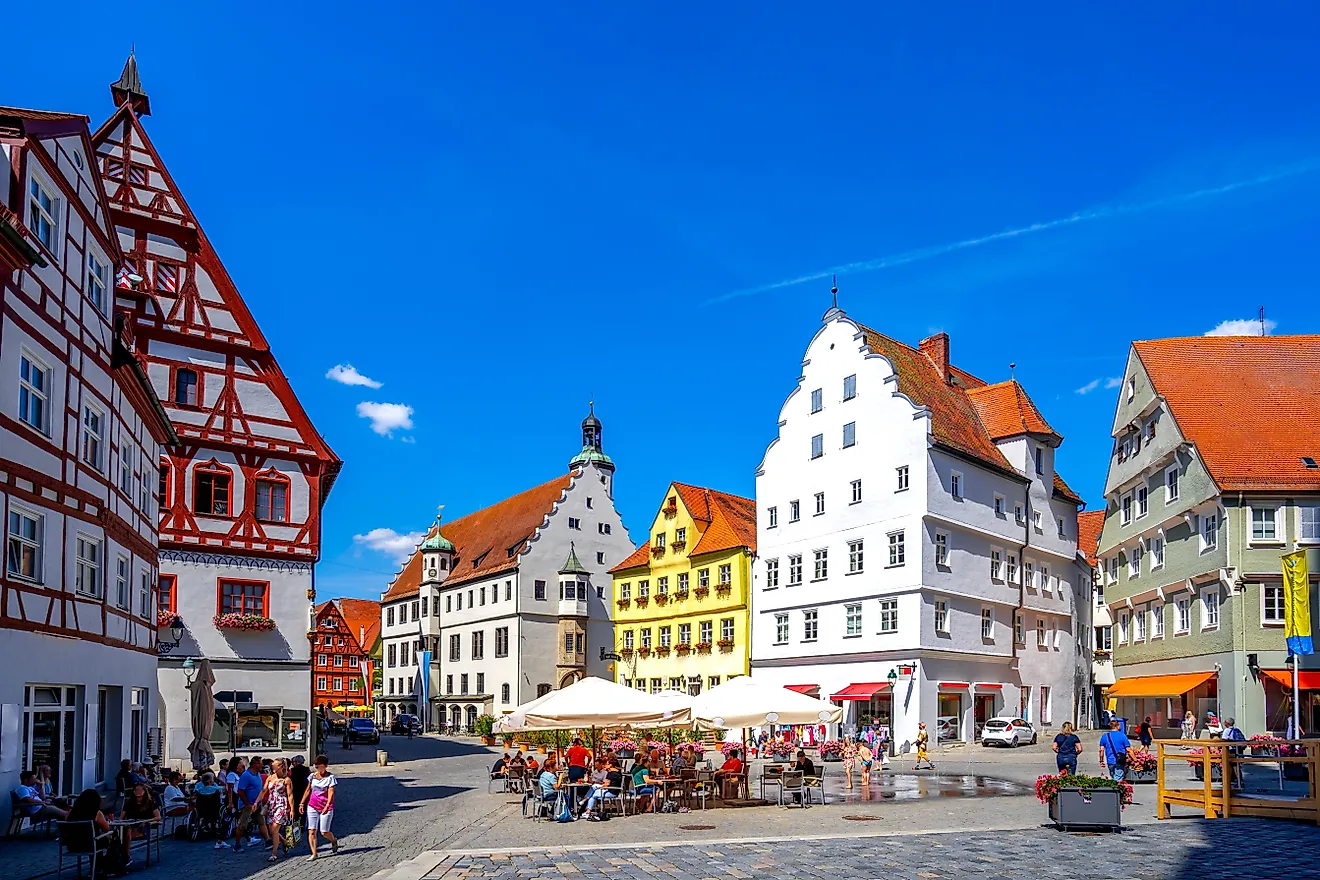
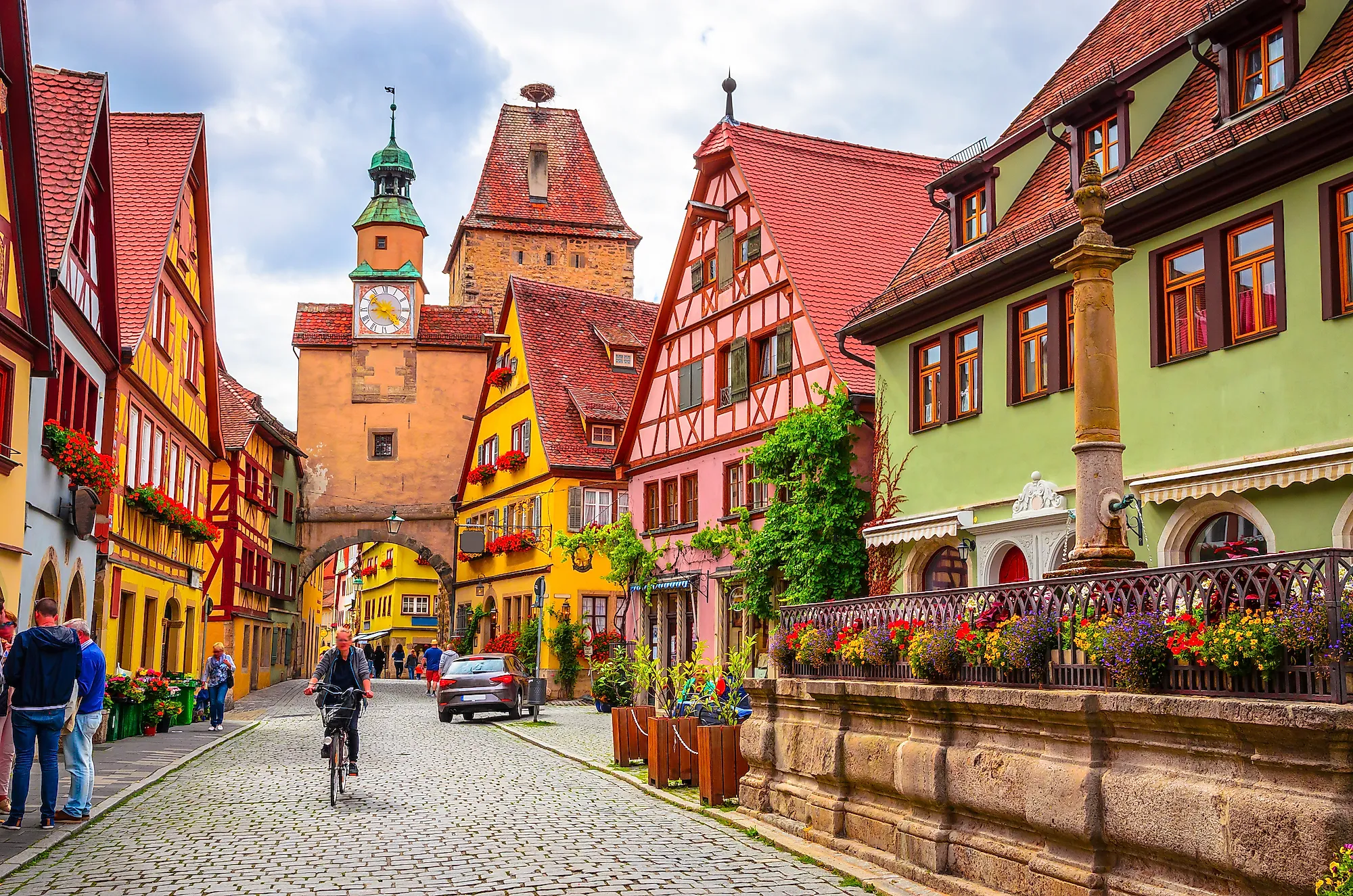
Rothenburg ob der Tauber earns its place without an Alpine lake or mountain range because few small German towns offer such an immersive historic setting. Begin on the medieval town walls, where elevated walkways pass defensive towers and provide changing views over red roofs and narrow streets. Down below, Plönlein forms the town's most recognizable streetscape, with a half-timbered building standing between two diverging lanes framed by medieval towers.
The Medieval Crime and Justice Museum goes considerably deeper than the architecture. Its collections examine roughly 1,000 years of European legal history through manuscripts, judicial objects, symbols of public humiliation, and material associated with criminal punishment. Visitors arriving around Pentecost can also see the Meistertrunk historical festival, when costumed participants reenact episodes associated with the Thirty Years' War. Additional performances usually follow in September and October, so check the current schedule when planning a visit.
Monschau

Monschau's narrow streets follow bends in the Rur River through the wooded hills of the Eifel, but its polished appearance has an industrial story behind it. The Red House provides the best introduction. Wealthy cloth manufacturer Johann Heinrich Scheibler built the residence during the 18th century, and its preserved rooms, period furnishings, and striking wooden staircase reflect the prosperity that textile production once brought to the town.
Afterward, wander through the historic center, where half-timbered and slate-fronted houses crowd along the Rur and small bridges repeatedly cross the river. Monschau Castle rises above these streets, offering another perspective over the valley and hosting cultural events within its medieval walls. For a change of pace, head into the surrounding Eifel landscape. Hiking and cycling routes lead through forests, river valleys, and upland scenery near town, allowing a visit to combine Monschau's architectural heritage with the countryside that encloses it.
Cochem

Cochem has the ingredients of a classic Moselle Valley destination, but one of its most fascinating attractions lies hidden beneath an ordinary residential neighborhood. First, climb to Reichsburg Cochem, the hilltop castle that dominates views over the town, river, and surrounding vineyards. Visitors can tour its furnished interiors before returning to the waterfront for a Moselle cruise, where the castle and steep vineyard slopes take on a different appearance from the river.
Then head underground at the Bundesbank bunker. During the Cold War, West Germany secretly stored billions of marks in an emergency currency here, intended for circulation if widespread counterfeiting threatened the country's monetary system. Tours now lead through the former bunker and explain an operation kept secret for decades. Back above ground, the Moselle vineyards complete the visit. Walking routes climb among the vines surrounding Cochem, combining elevated river views with the wine culture that continues to shape the valley.
Bacharach

Bacharach packs much of the appeal of the Upper Middle Rhine Valley into a remarkably compact riverside town. High above the rooftops stands Stahleck Castle, a medieval fortress rebuilt during the 20th century and now used as a youth hostel. Walking uphill toward it rewards visitors with views across Bacharach's slate roofs, vineyard terraces, and the Rhine.
On the slope below stands the ruined Gothic Werner Chapel. Its graceful arches make it one of Bacharach's most distinctive structures, but its history also requires context. The chapel became associated with the medieval cult of Werner of Oberwesel after false accusations that Jews had murdered him in 1287 contributed to violent persecution of Jewish communities along the Rhine. Today, the ruin also serves as a reminder of that history. From the town below, visitors can board a Rhine cruise through the UNESCO-listed Upper Middle Rhine Valley or walk into the surrounding vineyards, where trails climb above the river toward viewpoints over castles, villages, and passing boats.
Small Towns, Big Reasons To Visit
Germany's best small towns reward travelers who look beyond the country's major cities. Berchtesgaden, Mittenwald, and Tegernsee place Alpine peaks within reach of lakes, cable cars, and hiking trails, while Meersburg, Cochem, and Bacharach pair historic architecture with some of Germany's most recognizable waterscapes. Triberg opens onto the Black Forest, Bad Schandau provides an unusual gateway into Saxon Switzerland, and Monschau combines Eifel scenery with the legacy of its textile industry. Even Rothenburg ob der Tauber, without a lake or a mountain, earns its place through medieval walls and traditions that remain active in 2026. Together, these ten towns show how much history, culture, and outdoor adventure Germany can fit into small communities.