12 Most Neighborly Towns In New York
Every February in Saranac Lake, hundreds of volunteers cut blocks of ice out of Lake Flower and stack them into a palace. The village has repeated that job nearly every winter since the late 1940s, and the crew works for free. Skaneateles does its own version each December, when more than fifty residents dress as Dickens characters along Genesee Street. In Aurora, neighbors have kept working to protect the Wells College campus since it closed in 2024. Greenport fills Mitchell Park with summer concerts while fishing boats keep working the harbor a few steps away. The twelve New York towns below earn their welcome the same way, through traditions that residents organize and staff themselves.
Skaneateles

Every December, Skaneateles transforms into a Victorian village during its annual Dickens Christmas celebration. More than 50 costumed volunteers portray characters from Charles Dickens' novels, greeting visitors along Genesee Street and turning local businesses into part of the experience. The event has become one of Central New York's best-known holiday traditions because residents continue to organize and participate in it year after year.
On Saturday mornings, locals gather at the Skaneateles Farmers Market before walking to Clift Park, where benches overlook one of the cleanest lakes in the Finger Lakes region. Mid-Lakes Navigation cruises depart nearby, but many visitors simply enjoy watching sailboats drift across the water from the public pier.
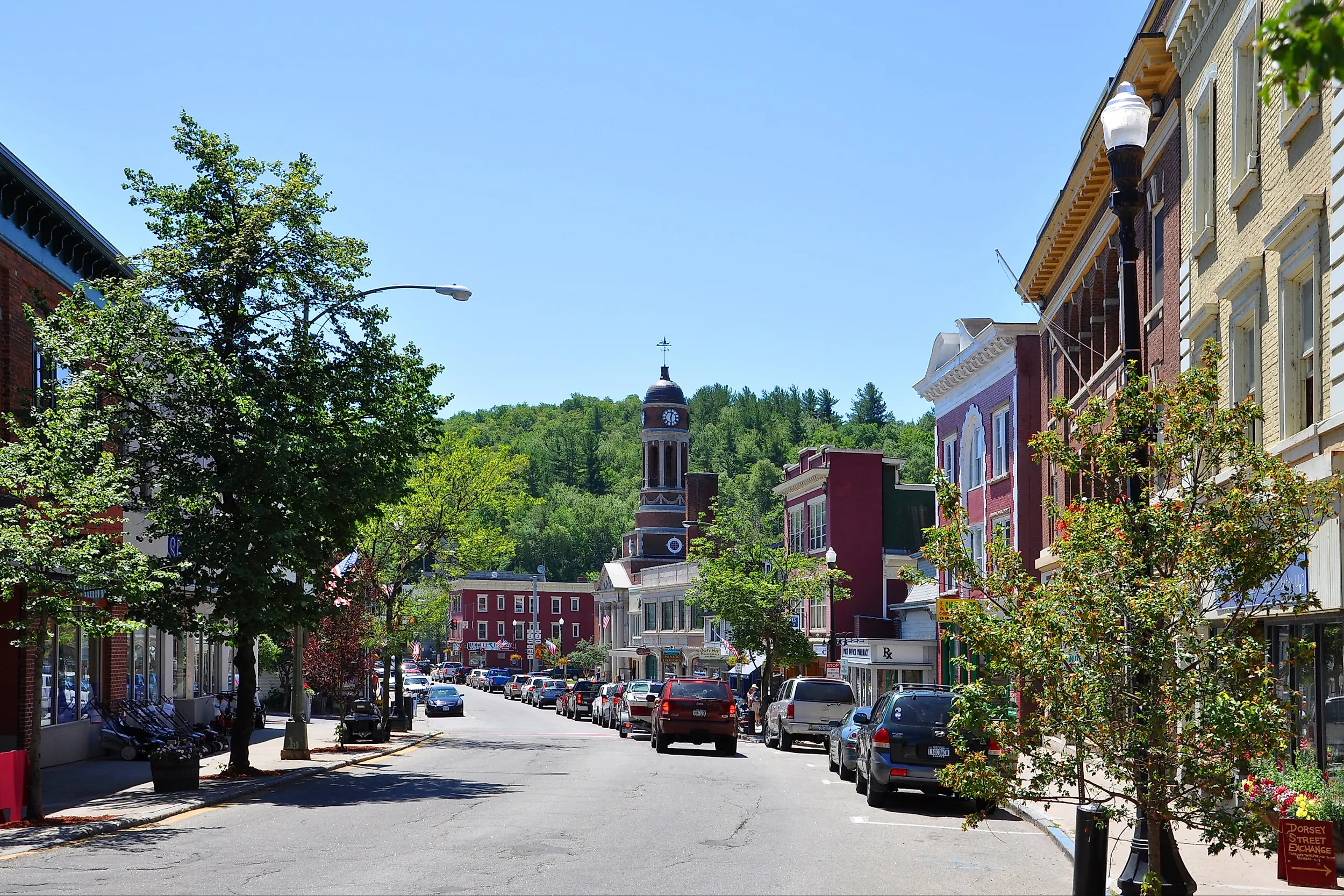
Downtown remains easy to explore on foot. Family-owned businesses outnumber national retailers, and longtime favorites like Doug's Fish Fry continue attracting residents as much as visitors. Rather than feeling designed for tourists, Genesee Street serves as the village's everyday meeting place.
Cold Spring

Cold Spring has something many Hudson Valley towns lack: a downtown that naturally encourages people to spend time together. Metro-North Railroad passengers step off the train just a few minutes from Main Street, where bookstores, cafés, antique shops, and restaurants occupy restored nineteenth-century buildings.
Local businesses help shape the town's identity. Split Rock Books regularly hosts author events, and the Main Street cafés fill with hikers, cyclists, and residents heading out to nearby trails. Rather than rushing between attractions, people tend to linger downtown, creating the friendly atmosphere for which Cold Spring has become known.
The surrounding landscape also brings people together. Breakneck Ridge remains the best-known climb here, but its trailhead has been closed since April 2025 for construction of the Fjord Trail's Breakneck Connector and is expected to stay shut into 2027. Hikers have shifted to the Washburn Trail up Bull Hill, and Dockside Park offers a quieter place to watch boats travel the Hudson River. Before reaching either destination, many visitors stop at West Point Foundry Preserve, where walking trails explain how an abandoned ironworks became one of the region's most important historic sites.
Cooperstown

Baseball may introduce visitors to Cooperstown, but the village's strongest traditions extend well beyond the sport. Many downtown businesses have served generations of local families, and community events continue long after the crowds leave at the end of summer.
The National Baseball Hall of Fame remains the biggest attraction, yet it shares the village with institutions that tell different stories about New York's past. The Farmers' Museum recreates rural life through working demonstrations inside its blacksmith shop, printing office, and historic homes. Across the road, Fenimore Art Museum overlooks Otsego Lake with collections that include American folk art, landscape paintings, and Indigenous artwork.
After visiting the museums, many people head toward Main Street rather than returning directly to their cars. Local cafés, bookstores, and ice cream shops encourage visitors to slow down, while nearby Doubleday Field often hosts youth baseball games that remind everyone the sport remains part of daily life here.
Lake Placid

Although Lake Placid hosted the Winter Olympics in 1932 and 1980, residents have never allowed the village to become only an Olympic destination. Community races, youth hockey tournaments, and outdoor events keep local facilities busy throughout the year.
Mirror Lake sits at the center of village life. Residents walk the lakeside path in every season, and paddlers fill the water during summer mornings. Main Street remains equally active, with outdoor outfitters, coffee shops, and restaurants serving hikers returning from Adirondack trails as often as vacationers.
The Olympic Center continues drawing visitors decades after the famous "Miracle on Ice" hockey game. A short drive away, Whiteface Mountain welcomes skiers during winter and hikers during warmer months. The Veterans' Memorial Highway leads almost to the summit, rewarding travelers with one of the Adirondacks' widest panoramic views.
Canandaigua

Life in Canandaigua often revolves around the lake. Families gather at Kershaw Park for summer concerts, children cool off at the public beach, and anglers cast lines from the city pier before sunrise. Those shared spaces help explain why residents remain deeply connected to their community.
Independent restaurants, coffee shops, and boutiques line Main Street, while the Canandaigua Farmers Market continues drawing regional growers and artisans each week. Shopping here often feels as much like a social event as an errand.
A few blocks northeast of Main Street, Sonnenberg Gardens & Mansion State Historic Park preserves one of New York's finest Victorian estates. Visitors can spend hours walking through the Japanese Garden, Rose Garden, and Italian Garden before continuing along the Canandaigua Lake Wine Trail, where several wineries remain family-owned and operated.
Lewiston

History has always brought people together in Lewiston. During the nineteenth century, freedom seekers crossed the Niagara River here on their journey to Canada through the Underground Railroad. Today, the Freedom Crossing Monument honors those stories while reminding residents of the town's role in American history.
Summer festivals regularly fill Center Street with artists, musicians, and local food vendors, while Artpark hosts concerts overlooking the Niagara River. Residents often arrive early to picnic before performances, turning each event into a neighborhood gathering rather than simply another concert.
Outdoor recreation adds another dimension. The Niagara Gorge Trail begins at Artpark and follows the rim south toward Devil's Hole State Park, where a stone staircase drops hikers to the water's edge beside the Devil's Hole Rapids. Jet boat tours depart only a few minutes away, carrying passengers through the same stretch of river that has shaped Lewiston's history for centuries.
Woodstock

Woodstock earned its reputation as an arts community decades before the famous 1969 music festival took place in Bethel. That creative spirit still shapes daily life. Tinker Street is lined with independent galleries, working artist studios, bookstores, and cafés where residents gather as often as visitors. On most weekends, it is common to find an opening reception, live music, or a craft demonstration taking place within a few blocks.
The community has long supported local artists instead of treating art as an attraction. The Woodstock Artists Association & Museum has showcased regional painters and sculptors since 1919, while the historic Maverick Concert Hall hosts one of the country's oldest summer chamber music festivals. During warmer months, many residents head to the Overlook Mountain Trail, where the path passes the stone ruins of the former Overlook Mountain House before reaching one of the Catskills' best viewpoints.
Rhinebeck

Rhinebeck's strongest asset is its walkable downtown, where locally owned businesses continue to outnumber chain stores. On market days, residents browse fresh produce, baked goods, and flowers before stopping to chat with neighbors along Montgomery Street and East Market Street. That routine has helped preserve the village's welcoming atmosphere despite its popularity with weekend visitors.
History remains part of everyday life here. The Beekman Arms has welcomed travelers since 1766 and continues serving guests from its place in the center of town. Just outside the village, Staatsburgh State Historic Site opens the doors to a Gilded Age mansion overlooking the Hudson River. Nearby Wilderstein Historic Site tells another chapter of Hudson Valley history through guided tours of its Victorian estate and surrounding grounds.
Saranac Lake

Every February, hundreds of volunteers work together to build an Ice Palace from blocks cut out of Lake Flower. The structure serves as the centerpiece of the Saranac Lake Winter Carnival, which dates back to 1897 and has run every year since the late 1940s. Few events demonstrate the town's community spirit more clearly.
Downtown murals celebrate local history, independent bookstores and cafés welcome regular customers, and nearby outfitters help residents and visitors reach the surrounding lakes and mountains. The Adirondack Carousel, whose hand-carved animals represent regional wildlife rather than horses, reflects the community's connection to the landscape.
Saranac Lake also preserves an important chapter of medical history. Many of the village's historic cure cottages remain standing, recalling the period when patients traveled here seeking treatment for tuberculosis in the mountain air.
Greenport

Greenport still feels like a working waterfront instead of a town that simply remembers its maritime past. Commercial fishing boats share the harbor with pleasure craft, and many local restaurants serve seafood landed only a short distance away. Residents gather in Mitchell Park throughout the summer for outdoor concerts, festivals, and community celebrations overlooking Peconic Bay.
Families often make the park's antique carousel their first stop before walking to the East End Seaport Museum to learn about the village's shipbuilding and fishing history. The Railroad Museum of Long Island sits only a few blocks away, making it easy to spend an afternoon without moving the car.
Beyond downtown, the North Fork's vineyards, orchards, and farm stands encourage visitors to slow down and meet the growers who have shaped the region for generations. That connection between local businesses and the surrounding farmland gives Greenport much of its character.
Aurora

Aurora has fewer than 1,000 residents, but community pride is easy to see along its lakeshore and historic streets. Neighbors have worked together for years to preserve nineteenth-century homes, public buildings, and the village's connection to Cayuga Lake. Even after Wells College closed in 2024, local organizations continued searching for ways to protect the campus and support the village's future.
The Aurora Inn has overlooked the lake since the 1830s and remains a favorite gathering place for visitors and residents. A short drive north leads to MacKenzie-Childs, where guided tours introduce guests to the company's colorful farmhouse, gardens, and artisan workshops. Before leaving town, many people stop at Long Point State Park, where the quiet shoreline offers wide views across Cayuga Lake.
Ithaca

Although Ithaca is the largest community on this list, its neighborhoods still revolve around places where people naturally gather. The Ithaca Farmers Market has connected local farmers, bakers, artists, and shoppers for decades, creating a Saturday tradition that draws residents to the Cayuga Lake waterfront throughout the growing season.
The Ithaca Commons serves a similar role downtown. Street musicians perform near outdoor cafés, independent bookstores welcome regular customers, and community festivals regularly close the surrounding streets to traffic. Instead of functioning as a shopping district alone, the Commons remains one of the city's most active public spaces.
Nature is equally woven into everyday life. Cascadilla Gorge Trail begins only a few blocks from downtown and follows waterfalls toward Cornell University. Nearby Buttermilk Falls State Park and Robert H. Treman State Park give residents easy access to swimming holes, hiking trails, and dramatic gorges without requiring a long drive.
Communities That Still Feel Connected
Neighborly towns do not become welcoming overnight. They earn that reputation through traditions that residents continue year after year. In Skaneateles, volunteers transform downtown during Dickens Christmas. In Saranac Lake, hundreds of people still build the Ice Palace by hand every winter. In Greenport, families gather at Mitchell Park while commercial fishing boats continue working the harbor nearby. From the Hudson Valley to the Finger Lakes and the Adirondacks, these towns demonstrate that a welcoming community depends less on population and more on the people who continue investing in the places they call home.