12 Most Charming Towns On The Pacific Coast
In Carmel-by-the-Sea it is technically illegal to wear high heels without a permit. The law exists because the pavement buckles under the tree roots and the town would rather hand out free permits at City Hall than get sued. Nobody enforces it. Nobody repeals it either.
That is the exact species of stubbornness this list is after. Not scenery, which the entire Pacific coast has going spare, but the small civic eccentricities that make a place worth slowing down for. No container ports. No cities wearing a town costume. Ten places in the lower 48 you can walk end to end in an afternoon, running north to south, and then two more at the end that are worth the extra day and, for one of them, a passport.
Port Townsend, Washington

Port Townsend spent the 1880s absolutely certain it was about to become the great harbour of the Pacific Northwest. Speculators threw up ornate brick commercial blocks downtown and mansions on the bluff above. Then the railroad went to Tacoma, the boom died in a matter of months, and everybody left.
Nobody came back with money until the 1970s, by which point the entire Victorian seaport was still standing because knocking it down would have cost more than ignoring it. It is now one of only a handful of Victorian seaports listed as a National Historic Landmark district, and it genuinely looks like a town still waiting for a train.
Come in September for the Wooden Boat Festival, when the harbour fills with gaff rigs and schooners and the Northwest Maritime Center runs the whole waterfront. Fort Worden, the decommissioned coastal battery on the headland, has concrete bunkers you can wander into with a torch and a parade ground that gets used for concerts.
La Conner, Washington

Nine hundred people live in La Conner. Every April, roughly a million turn up.
The Skagit Valley Tulip Festival is the largest in the country and it happens in the fields all around this village, which spends four weeks absorbing a crowd a thousand times its own size and then goes quiet again. If you want tulips, book early and expect traffic. If you want La Conner, come literally any other month.
What you get then is a boardwalk town on the Swinomish Channel with an improbable number of galleries, left over from the Northwest School painters who worked here mid-century. The Museum of Northwest Art covers them properly. The orange Rainbow Bridge arcs over to the Swinomish Reservation, and the waterfront buildings lean out over the water at angles that only survive in places nobody got around to redeveloping.
Friday Harbor, Washington

You arrive by boat or you do not arrive. The ferry from Anacortes puts you off at the bottom of the main street, so there is no drive in, no outskirts, no transition between travelling and being there. One minute you are on the water, the next you are in it.
Roughly 2,500 people live here, the only incorporated town in San Juan County, out in Washington's inland sea. The Whale Museum was the first in the country devoted to a wild whale population, and it tracks the southern resident orcas individually, by name and by the shape of each dorsal fin. Lime Kiln Point on the west side of the island is one of the few places on earth where you can reliably watch whales from dry land.
On Saturdays between spring and autumn the farmers market fills Brickworks Plaza with goat cheese and berries. Downriggers does oysters looking out over the water you came in on. Then the last ferry goes and the island exhales.
Sequim, Washington

Sequim gets sixteen inches of rain a year. The rainforest an hour to the west gets twelve feet. Same peninsula.
The Olympic Mountains throw a rain shadow directly over this corner of the coast and locals call the resulting patch of blue sky the Blue Hole. That freak of geography is the only reason lavender grows here and essentially nowhere else in western Washington, and Sequim has leaned into it hard enough to call itself the lavender capital of North America. The farms open to visitors every summer for Lavender Weekend.
The marina is named after John Wayne, who moored his converted minesweeper here and left the town the land. Dungeness Spit, the longest natural sand spit in the country, runs five miles out to a lighthouse you can walk to if you read the tide table correctly. Alder Wood Bistro handles dinner.
Cannon Beach, Oregon

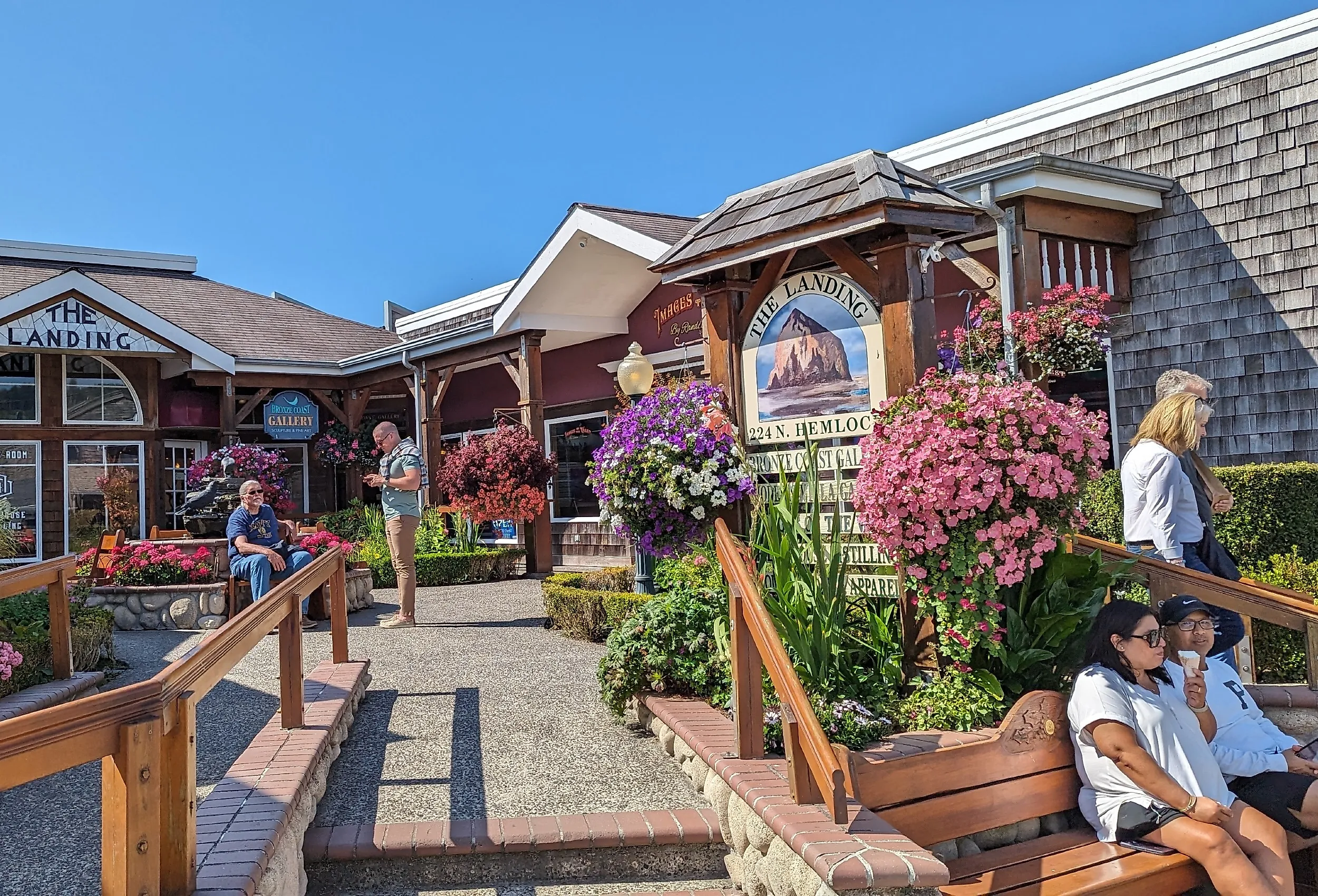
Haystack Rock comes 235 feet out of the sand and at low tide you can walk right up and put a hand on it. Look up in spring and there are tufted puffins nesting on the ledges. Look down and the tide pools at the base are a protected marine garden with volunteers posted specifically to stop people standing on the anemones, which tells you how often people try.
The town behind the rock has banned chain restaurants and neon signs. That one decision explains everything about how it looks: weathered cedar, galleries in converted houses, not a franchise in sight.
It is ninety minutes from Portland, which makes Cannon Beach the easiest escape on the Oregon coast and the busiest in July. Come for the Stormy Weather Arts Festival in November instead and you will more or less have the beach.
Yachats, Oregon

Seven hundred people live in Yachats and every one of them will tell you it is the gem of the Oregon coast. The name comes from Siletz and means, roughly, where the trail leaves the beach.
This is rock rather than sand, which changes the whole proposition. No sunbathing. Instead you get basalt shelves that throw spray twenty feet in the air and tide pools worth an hour on your knees. Three miles south, Cape Perpetua has old-growth Sitka spruce on the hill and Thor's Well at the bottom, a collapsed sea cave that at the right stage of tide appears to be draining the entire Pacific down a plughole.
Watch that one from well back. The sneaker waves on that shelf have killed people, and the rock is slick in a way photographs do not convey. Afterwards, the Drift Inn has been feeding this town for decades, and Styx, Stones, N' Bones sells gemstones and oddities to anyone still damp.
Bandon, Oregon

An Irish settler planted gorse here because it reminded him of home. In 1936 the gorse caught, and the fire took the entire town in a few hours and killed ten people. Bandon is the rebuilt version, which is why Old Town is compact and nothing predates the Depression.
The beach is the reason to come anyway. South of town the shoreline is a run of sea stacks substantial enough to have been given names, Face Rock being the one everybody photographs, and at low tide you can walk out among them. Go at sunset and the whole thing turns silhouette.
Bandon also grows a serious proportion of the west coast's cranberries and throws a festival for them each September. Bandon Dunes brings golfers from three continents, and the Coquille River Lighthouse sits across the water on the north jetty, white and squat and photographed almost as often as the rock.
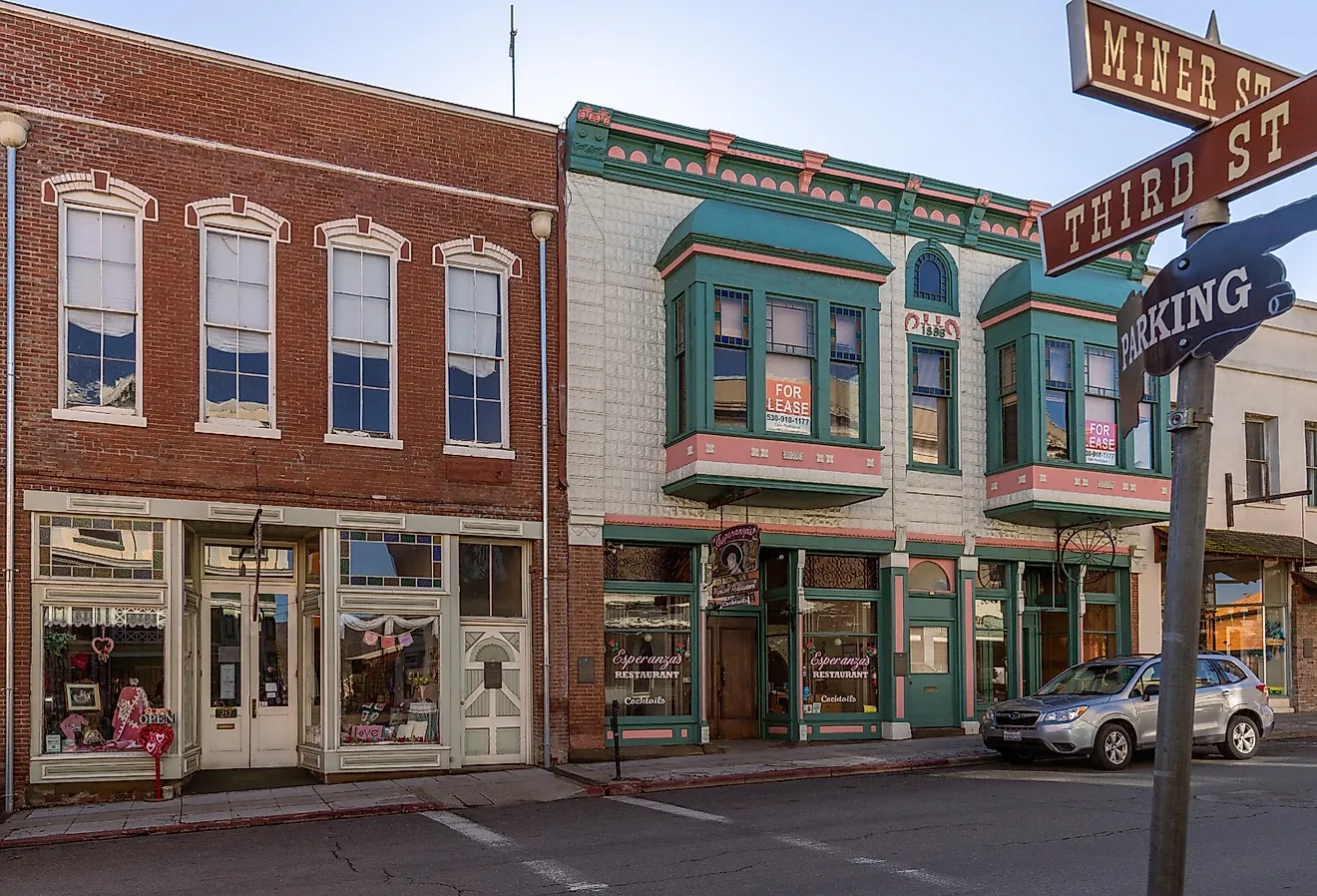
Ferndale, California

Dairy farmers built Ferndale and got rich enough doing it that locals still call the ornate Victorian houses butterfat palaces. Then the money thinned out and nobody could afford to modernise anything, which is the single best thing that ever happened to the place.
The whole Main Street district is on the National Register and it is the most intact 19th-century streetscape on the California coast. The Golden Gait Mercantile is a working general store that appears to have stopped restocking its decor around 1950.
Once a year the town becomes the finish line of the Kinetic Grand Championship, when human-powered sculptures the size of parade floats come grinding down Main Street after three days crossing dunes, mud, and Humboldt Bay. The rest of the time it is quiet enough to feel like a film set, which it has been more than once. The Lost Coast, the wildest shoreline in the state and the stretch the highway engineers simply gave up on, begins just south.
Mendocino, California

Stand on the headland at Mendocino and you could be looking at coastal Maine. Pitched roofs, white clapboard, wooden water towers on legs. That is not an accident: New England transplants built the place in the 1850s on redwood money and built the only thing they knew how to build.
The village sits on a bluff wrapped on three sides by Mendocino Headlands State Park, so there is nothing between the last row of houses and the cliff edge, and the ocean is visible from almost everywhere in town. It is the rare place where the view was protected before anyone thought to sell it.
The Temple of Kwan Tai dates to the 1850s and is among the oldest Chinese temples in California still standing where it was built. Point Cabrillo Light Station is a short drive north, Russian Gulch and Van Damme hold the redwoods, and the Mendocino Art Center has anchored the local scene since 1959.
Carmel-by-the-Sea, California

Back to the high heels. No street addresses either, no street lights, and no parking meters, in a village of 3,200 that has turned municipal eccentricity into a civic identity and an economy. Residents collect post at the counter and give directions by cross street, which is delightful right up until you try to order a delivery.
It was founded as an artists' colony in 1903 and still runs more galleries per block than almost anywhere its size. Hugh Comstock built his crooked little cottages in the 1920s to house his wife's doll business, and they are now the most photographed houses in town.
Ocean Avenue runs downhill to white sand and a line of wind-bent cypress. The Carmel Mission, founded in 1771, holds Junípero Serra's grave. Go midweek. The weekends belong to Monterey.
Tofino, British Columbia

Two left, and both of them mean a longer trip. Start with the one that requires a passport. People come to Tofino in January on purpose. Storm watching is a real industry here, with hotels selling packages built entirely around sitting behind heavy glass while the Pacific hurls itself at the rocks a few metres away. It sounds like a marketing invention. It is not.
The rest of the year, this village of 2,500 at the end of a very long road on Vancouver Island runs on surf and old growth. Chesterman Beach is the break everyone learns on. Pacific Rim National Park Reserve has the rainforest boardwalks, and Clayoquot Sound beyond it is a UNESCO biosphere region you reach by boat or floatplane and not otherwise.
Eat at Wolf in the Fog, which is more ambitious than a town this size has any right to support. See Nuu-chah-nulth work at the House of Himwitsa. Then get coffee at Rhino and watch the rain, because there will be rain. British Columbia has nothing else like it.
Skagway, Alaska

And finally, the furthest north of the lot. Thirty thousand men came through here in 1897 chasing gold. Most of them never reached the Klondike. About 1,200 people live in Skagway now, and the entire downtown they walked through is preserved as a national historic park, false fronts and boardwalk intact.
The railway those prospectors paid for still runs. The White Pass and Yukon Route opened in 1898 on three-foot narrow gauge and climbs the pass on ledges blasted out of the rock face, which is the best thing you can do in Alaska without lacing up boots. If you would rather lace up, the 33-mile Chilkoot Trail follows the stampeders' route over the summit into Canada, and people still find rusted tins and boot soles alongside it.
The Red Onion Saloon was a brothel until 1909 and now runs upstairs tours led by guides in period costume who have clearly decided to enjoy themselves. One tip: check the cruise schedule before you book. On a three-ship day the boardwalk is shoulder to shoulder, and on a no-ship day it is practically yours.
What These Twelve Have In Common
Every town here got stuck at some point, and that is the whole story. Port Townsend lost its railroad. Ferndale lost its dairy money. Skagway lost its gold rush, Mendocino ran out of redwood, and Bandon burned down. In every case the buildings survived because replacing them cost more than leaving them alone, and a century later that accident is precisely what people drive hundreds of miles to look at.
The second thing they share is an edge. Haystack Rock, Thor's Well, the Dungeness Spit, the Lost Coast. These are not resort beaches, and more than one of them will genuinely hurt you if you misjudge the water. Read the tide table, go midweek and off-season wherever you can, and pick two or three towns in one region rather than attempting the lot. The coast runs past 3,500 miles, and the driving is not the good part.