What Happened To The Shelterbelts Planted After The Dust Bowl
The Dust Bowl of the 1930s left much of the Great Plains struggling with devastating soil erosion. Years of drought, combined with farming practices that left the soil exposed, allowed strong winds to pick up millions of tons of topsoil and carry it across the country. In response, the federal government launched an ambitious conservation effort that permanently changed the landscape.
Proposed by President Franklin D. Roosevelt in 1934, the Great Plains Shelterbelt Project called for planting long rows of trees and shrubs across a 100-mile-wide stretch of the Great Plains from the Canadian border to northern Texas. The goal was to create natural windbreaks that would slow prevailing winds, reduce soil erosion, protect crops, and help prevent another environmental disaster like the Dust Bowl.

The idea of planting trees across the prairie wasn't new. South Dakota, for example, had been encouraging it for decades. They even passed a law in 1890 offering financial incentives to landowners who established and maintained trees on their property.
Beginning in 1935, the U.S. Forest Service worked with farmers, the Works Progress Administration (WPA), and other government agencies to establish the shelterbelts. The entire program kicked off on a farm in Greer County, Oklahoma, with the state's first forester, George R. Phillips, planting the first tree on March 18, 1935.

Over the next several years, workers planted about 18,600 miles of windbreaks on more than 30,000 farms from North Dakota to Texas. Nebraska had the most, with more than 4,000 miles planted; that was 500 more miles than any of the other states. Estimates of the total number of trees and shrubs vary, but the project is commonly credited with putting more than 200 million plants into the ground.
Nearly a century later, some of the shelterbelts are still standing, while others have been thinned, replaced, or removed altogether. Their history offers a look at both the lasting benefits of conservation and the challenges of maintaining it across generations.
Many Shelterbelts Survived and Continue to Benefit the Land

Despite the difficult growing conditions across the Great Plains, the shelterbelt project proved more successful than early critics expected. Many of the trees survived and grew into the protective barriers foresters had envisioned, but others succumbed to drought, insects, and grazing animals. Kansas learned just how vulnerable they were when a five-year drought from 1952 to 1956 killed many of the younger trees.
A 1946 study published in the Journal of Forestry examined 1,072 shelterbelts planted between 1935 and 1943. Researchers found that survival and growth had exceeded expectations in many locations. They also documented benefits already experienced by farmers and ranchers.
Those benefits extended beyond reducing wind erosion. Landowners were discovering they also protected their crops from wind damage, reduced moisture loss from exposed soil, and provided shade and protection for livestock. The trees also created habitat for birds and other wildlife in a landscape where natural tree cover was relatively limited.

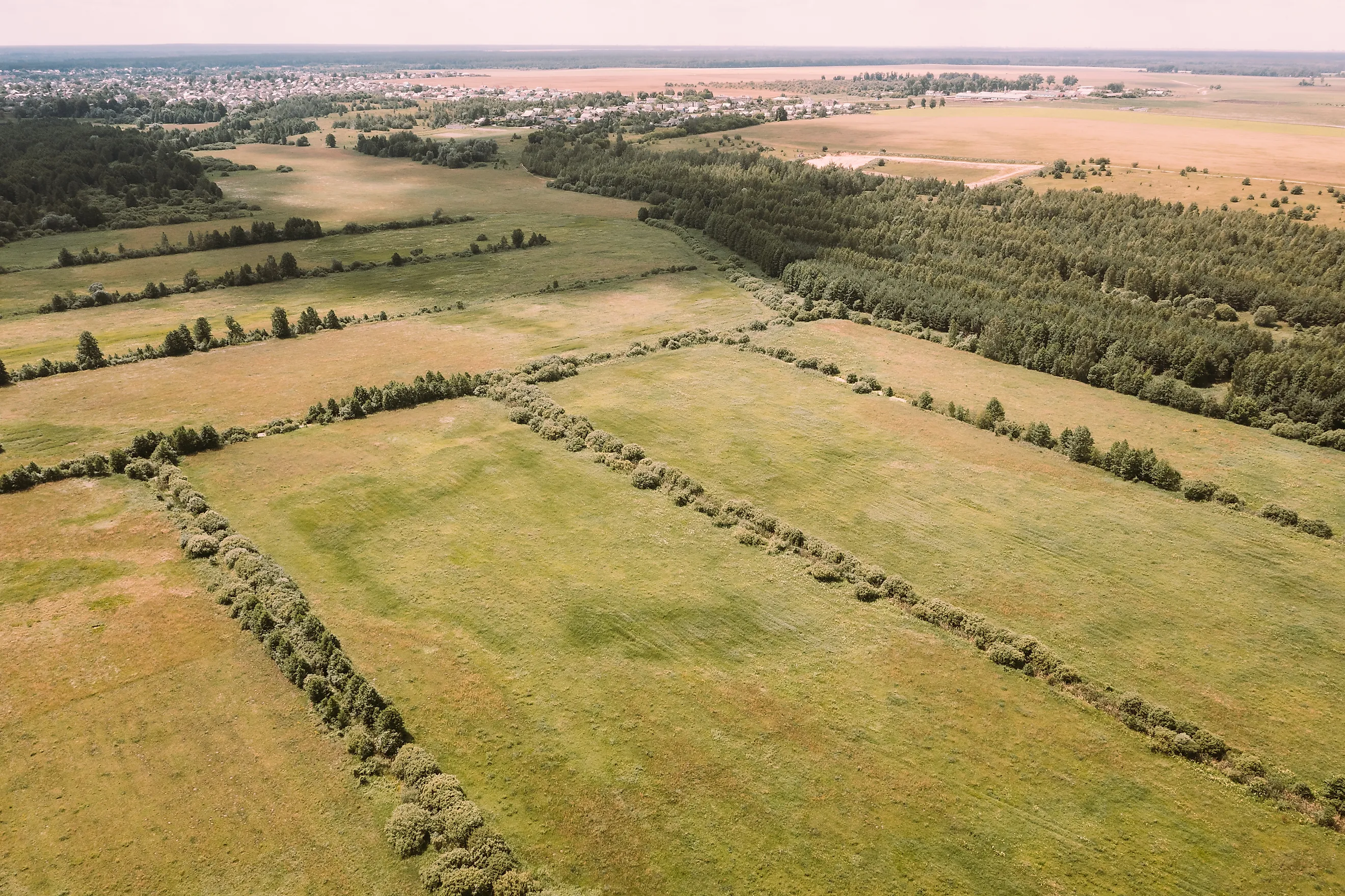
The effectiveness of the program came from the design. Rather than planting a single row of trees, the shelterbelts generally consisted of five to 10 rows of trees and shrubs of varying heights. Taller trees occupied the middle rows, while shorter trees and shrubs formed the outer edges. This helped slow wind at different heights and provided more comprehensive protection.
The benefits didn't end when the original program did. Shelterbelts continued to protect agricultural land, improve wildlife habitat, and help make farms and ranches more resilient to harsh weather.
Age and Decline

One of the biggest challenges facing the shelterbelt project was something planners could not prevent: time.
Many of the trees planted in the 1930s and early 40s were reaching the end of their natural lifespans by the late 20th century. Some species had shorter lifespans than others. For example, the Plains cottonwood has a lifespan of 80-90 years in favorable conditions. However, it grew quickly and had the height needed for wind protection. Drought, disease, insects, and harsh weather helped weaken older trees.
As individual trees died, gaps developed in the rows. Without replacement plantings, shelterbelts gradually became less effective as windbreaks. In some locations, entire sections deteriorated.

Maintenance was another concern. Shelterbelts required attention throughout their lives. They needed pruning, removal of damaged trees, and periodic replacements. The responsibility for the maintenance was left to the landowners, which eventually became more difficult as farms changed hands and agricultural priorities shifted.
The result was an uneven landscape. Some shelterbelts remained healthy and continued providing protection, while others became overgrown, damaged, or largely ineffective. Not every shelterbelt visible today contains trees from the original project. Many have been replaced over the decades and represent generations of conservation efforts.
Why Farmers Began Removing Shelterbelts

As agricultural technology changed, some of the features that helped protect farms started to conflict with modern farming operations.
The introduction of larger farm equipment made it increasingly difficult to navigate fields divided by long rows of trees. Farmers looking to maximize the amount of land available for planting sometimes viewed the shelterbelts as obstacles rather than assets.
The growth of center-pivot irrigation also contributed to their removal. These large irrigation systems require considerable open space to operate, and shelterbelts can interfere with the circular patterns used to water fields.
There were also economic considerations. Removing trees opened up more acreage for crops. As agricultural markets shifted, cultivating every available acre was more lucrative than maintaining windbreaks. There was also a cost involved with providing tree maintenance, which did not provide an immediate financial return.

This is not a new problem. An article in a 1978 edition of the Journal of Forestry noted that shelterbelts were already being removed in several states. The reasons cited were issues with the original placement or design, declining health of the trees, and the need to use the land for other purposes.
Research has since documented how agricultural changes can affect shelterbelt density. A 2019 study published in Remote Sensing looked at the shelterbelts in Grand Forks County, North Dakota. Using historical and modern aerial photographs, researchers found that the density of the shelterbelts doubled from 1962 to 2014. However, from 2014 to 2016, more than 1 million square meters of shelterbelt was removed. Researchers attributed the loss to changes in farming practices and fewer incentives to maintain the trees.
Restoration Efforts Are Giving Shelterbelts New Life

The story of the shelterbelts isn't simply one of decline. Conservation agencies and landowners continue to recognize their value, and efforts are underway to maintain existing windbreaks and establish new ones.
The USDA's Natural Resources Conservation Service provides technical assistance and conservation guidance for establishing and renovating shelterbelts. Its conservation practices include replacing damaged trees, removing unhealthy growth, and restoring sections that have become less effective.
Renovation doesn't mean removing an entire shelterbelt and starting over. In many cases, selected trees or rows can be replaced while healthier sections remain intact. This allows landowners to maintain some wind protection while younger trees become established.
New plantings also benefit from decades of research into what species are best suited to the challenging growing conditions presented in the Great Plains. Choosing trees and shrubs that can tolerate local soil, temperature extremes, and limited rainfall improves the likelihood that a new shelterbelt will survive.
Restoration takes patience. A newly established shelterbelt could take 20 years or more to become fully functional. That long-term commitment is one reason conservation programs and landowner participation remain important. Planting trees is only the beginning; maintaining them over the generations is what makes a shelterbelt successful.
The row of trees that once represented an ambitious response to one of the country's worst environmental disasters has become part of the Great Plains landscape. Although some of the original trees are gone, others have replaced them, and many shelterbelts continue to do the work they set out to do. Their continued presence is a reminder that conservation doesn't end when the planting is finished. It requires ongoing attention, adaptation, and a willingness to invest in the land's future.