11 Texas Towns Where Time Stands Still
Texas's small towns have stayed quiet and kept their original feel, while much of the rest of Texas has moved ahead rapidly. Texas has been shaped by at least 14,000 years of Native life, followed by Spanish colonization and a rapid series of upheavals, from revolution and statehood to war and oil booms. Through it all, a few towns changed very little.
These towns, all with populations under 50,000, are living communities where people still love to gather at the same courthouse squares, dance halls, creeks, and shops their grandparents knew. Visiting them is about slowing down and noticing how much of Texas history is still part of everyday life. Discover these towns where time seems to stand still.
Gruene

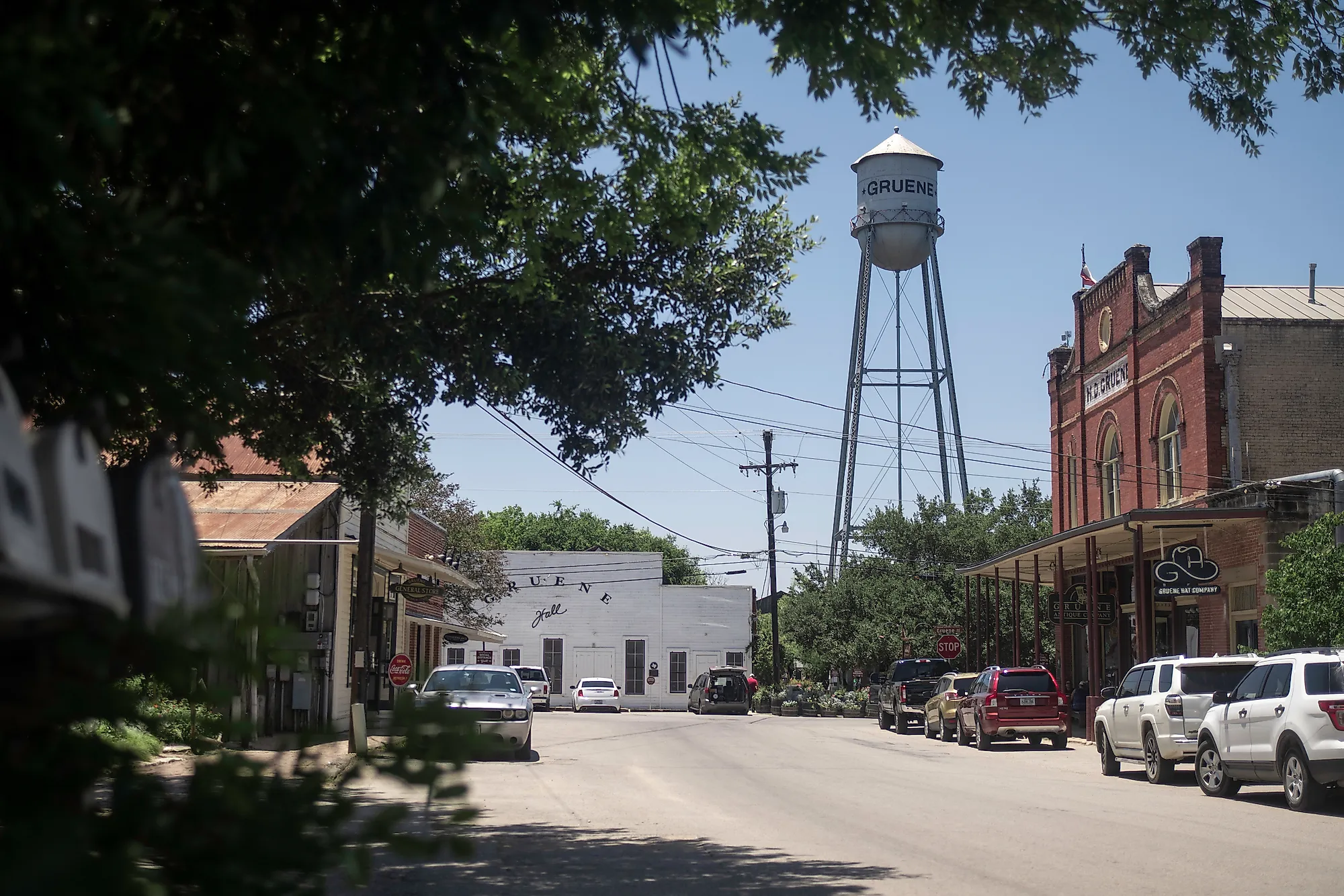
Gruene began when German farmers settled along the Guadalupe River in the mid-1840s and formed a small agricultural community. Henry D. Gruene built it into a cotton-farming and milling center by the 1870s. After his death in 1920 and a cotton gin fire in 1922, the town declined until preservation work in the 1970s revived it. Gruene was listed on the National Register of Historic Places in 1975.
Walk the Gruene Historic District to see original mercantile buildings, homes, and the old water tower that still stands above the riverbank. Gruene Hall, Texas's oldest continuously operating dance hall, draws people for live music on most weekends, just as it did when legends like George Strait played there.
Many visitors float or paddle the Guadalupe River to enjoy the clear water and scenic banks lined with cypress trees, often spotting turtles and herons along the way. A riverside meal at the Gristmill River Restaurant & Bar is a favorite, with the patio right above the water and historic ruins in view!
Comfort

It was in the early 1850s when German settlers moved in along Cypress Creek near the Guadalupe River. Ernst Hermann Altgelt, one of the German settlers, laid out the town in 1854. Agriculture, especially wool and mohair, shaped life for generations. Much of the original townsite and structures that survived Tropical Storm Amelia in 1978 are now on the National Register of Historic Places.
A walk along High Street in the historic district reveals preserved stone homes, half-timber buildings, and Victorian structures that have stood for over 150 years. The Comfort Heritage Foundation displays pioneer tools, documents, and photographs that show how the town ran without formal local government for many years.
The Treue der Union Monument, one of the few Union memorials in Texas honoring German-Texans who died in the Battle of the Nueces, stands nearby. Check out the Hygieostatic Bat Roost, one of the first 30-foot-tall bat colony structures built in 1918, to attract bats for natural insect control. For a fun day out, the James Kiehl River Bend Park along the Guadalupe River offers shaded trails, native grasses, and peaceful views of the water for hiking or picnicking.
Luckenbach

Luckenbach developed in the mid-1800s as a small farming community along Grape Creek. By the late 1800s, it had a post office, general store, dance hall, cotton gin, blacksmith shop, school, and churches. The population dropped steadily after 1900.
By the 1960s, only a handful of people remained. In the 1970s, Texas musicians embraced Luckenbach as a gathering place. Willie Nelson, Waylon Jennings, and Jerry Jeff Walker helped turn it into a symbol of stripped-down country culture.

Today, Luckenbach, Texas, remains centered on music and informal gatherings under large oak trees. Live music fills the air at Luckenbach Dance Hall on most evenings, where locals and visiting artists play under the stars. The General Store sells souvenirs, snacks, and cold drinks.
It's a short drive to Altstadt Brewery's Tractor Museum & Bar to enjoy craft beer and see their tractor museum collection. The surrounding Hill Country roads and creeks make for quiet drives and short hikes, with Fredericksburg only a few miles away.
Round Top

The town started as Townsend, named after settler Nathaniel Townsend, whose home still stands as the Texana Lodge. The name changed to Round Top after a postmaster's house with a round tower. It sits on a hill between Cummins Creek and Rocky Creek, with State Highway 237 running through the center.
One of the smallest incorporated towns in Texas, with a full-service public library called the Round Top Family Library, Round Top is whimsical, antique-filled, and full of Hill Country charm. The Round Top Antiques Fair is a massive biannual event that transforms a town of 100 residents into a popular tourist spot every spring and fall, featuring art and antique booths.
The Round Top Area Historical Society and nearby Winedale Historical Complex show restored 19th-century buildings that tell the story of early Texas farm life. Additionally, check out the nearby Texas Cotton Gin Museum (in Burton), which displays equipment and information on the region's agricultural past.
Washington

John W. Hall, one of the Old Three Hundred settlers, founded Washington in 1823. It was one of the earliest American-founded settlements in Texas under Mexican rule. Farmers raised cotton and corn on scattered land grants across the Brazos River valley.
The town’s most important moment came in 1836, when delegates met here to draft and sign the Texas Declaration of Independence. The town was briefly the capital of the Republic of Texas, but after the capital moved and transportation routes shifted, Washington slowly faded instead of expanding. However, Washington-on-the-Brazos is a historic heaven.
Check out the Independence Hall replica and the Star of the Republic Museum, which holds exhibits on the Texas Revolution and early government. The grounds and trails along the Brazos River are good for birdwatching, seasonal wildflowers, and views of the slow-moving river. Enjoy a picnic at Washington-on-the-Brazos State Historic Site, where open fields and mature shade trees create a quiet place to take a break.
Highland Park

Highland Park developed in the early 1900s as a carefully planned residential community just north of Dallas. The town was incorporated in 1915 and has remained independent, which helped preserve its early 20th-century street layout, architecture, and public spaces.
Walk through Highland Park Village, one of the country’s earliest outdoor shopping centers, where Spanish-style buildings house long-established stores and cafés. The nearby Lakeside Park provides shaded paths, quiet water views, and places to sit beneath mature trees.
The Meadows Museum is another highlight, holding one of the largest collections of Spanish art in the United States, with works ranging from medieval pieces to modern masters. When it is time to eat, local restaurants like Al Biernat's Oak Lawn focus on sit-down dining that fits the neighborhood’s calm, residential feel.
Palmer

Palmer took shape in the 1870s after the Houston and Texas Central Railway reached the area in 1872. The town was named for DS Palmer, a Houston physician and railroad stockholder. From the start, Palmer worked as a shipping point for nearby cotton and grain farms.
A post office opened in 1874, and by 1885, the town had about 250 residents and nearly 30 businesses, including a hotel, a bank, a school, and cotton gins. The population peaked around World War I and later declined before slowly rising again. Start at the nearby Ennis Railroad and Cultural Heritage Museum to learn how rail lines shaped towns like Palmer.
For a relaxed evening, head to Galaxy Drive-In Movie Theatre to watch films from the car or lawn chair, a rare experience that still feels rooted in mid-century Texas. For those who prefer something quieter, Sugar Ridge Winery sits nearby, where one can sample Texas-made wines, walk the vineyard grounds, and enjoy live music events on weekends.
Salado

Salado grew along Salado Creek in the early 1850s, where clear springs made it a natural stopping point long before modern roads existed. The creek was later designated the first Texas natural landmark in 1966.
When railroads bypassed Salado in the late 1800s, growth slowed, and the population dropped sharply. Walk Main Street to see the restored Stagecoach Inn, which reopened in the 1940s and became a well-known Texas landmark.
At the Salado Museum and College Park, Inc., explore a collection of artifacts that showcase the town’s history. For time outdoors, Pace Park has open green space, creek access, and shaded spots to sit near the water. A short walk away, the Salado Sculpture Garden is a popular spot to view artwork along creekside paths.
Woodville

The town was established in 1846 when Tyler County was separated from the Menard District. Dr. Josiah Wheat donated 200 acres along Turkey Creek for the townsite, and Woodville was named in honor of George Tyler Wood, the second governor of Texas. Early life here revolved around farming, stage lines, churches, and sawmills.
Timber later became the economic backbone. Sawmills dominated local life well into the 20th century, shipping poles, pilings, and lumber across the region. When exploring, start at the Heritage Village Museum, where restored log cabins, a church, and a schoolhouse show how early settlers lived and worked.
A short drive away is the Allan Shivers Library and Museum, which focuses on local history and the life of the former Texas governor through photographs, documents, and exhibits. Nearby, Big Thicket National Preserve has clearly marked trails that lead through pine forests, wetlands, and creek bottoms, with frequent sightings of birds, deer, armadillos, and occasional alligators.
Van Horn

Van Horn began in the 1880s as a railroad town along the Texas and Pacific Railway and later became the county seat of Culberson County. Its location later made it a steady stop along US Highway 80 and, eventually, Interstate 10.
The restored Hotel El Capitan now operates as a historic hotel and restaurant. Meanwhile, the Clark Hotel Museum in a nearby early-1900s adobe building showcases exhibits on local rail travel, ranching, and the town’s rough-edged past. Just outside downtown, the Mountain Time Zone Highway Sign marks the rare moment where Texas shifts time zones, making it a popular photo stop for road trippers.
For those craving outdoor space, Mt View RV Park sits on the edge of town with open desert views and easy access for walking and stargazing. A short drive away is Guadalupe Mountains National Park, where trails lead to high desert landscapes, fossil-rich rock layers, and mountain views.
Fulton

Fulton was founded in 1866 and named for George Ware Fulton Sr., an early developer who built a large home nearby between 1874 and 1876. The town’s name briefly changed to Aransas City in the late 1880s, then returned to Fulton by 1900 after the population declined.
The centerpiece is Fulton Mansion State Historic Site, a restored mid-1870s Second Empire-style house. Tour furnished rooms, learn about cattle barons and coastal life, and walk shaded grounds overlooking the water. A short distance away, the Official History Center for Aransas County helps one understand the region’s past through exhibits on ranching, fishing, hurricanes, and local families.
For quiet outdoor time, Linda S. Castro Nature Sanctuary has short trails, native plants, and good spots for birdwatching along the bay. Additionally, head to Rockport Beach Park, Texas’s first Blue Wave certified beach, where calm water, a long pier, picnic areas, and walking paths make it easy to spend an afternoon by the shore.
Together, these towns trace a quieter thread through Texas history, from early Native presence and German settlement to independence, statehood, railroads, and modern preservation. What connects them is not size or fame, but continuity. These towns still gather where they always have, along rivers, in parks, under oak trees, on main streets, and inside buildings that never lost their purpose. The past is not frozen here. It is present in everyday routines. Exploring these towns is not about chasing nostalgia. It is about seeing how Texas history continues to live in places that never rushed to become something else.
.jpg)

.jpg)
.jpg)
