11 Offbeat New Mexico Towns To Visit In 2026
Most small towns are content with a historic plaza and maybe a respectable roadside diner, but New Mexico’s towns took a stranger route. One built an entire identity around a possible UFO crash. One turned pie into a civic calling. One offers holy dirt to pilgrims, another greets travelers with a 30-foot pistachio, and another lets visitors sleep beside a 5,000-year-old lava flow. Add in Route 66 neon signs, off-grid Earthships, and a museum full of antique gas pumps, and it is clear that there is plenty to enchant visitors in 2026 in the offbeat towns across the state.
Pie Town
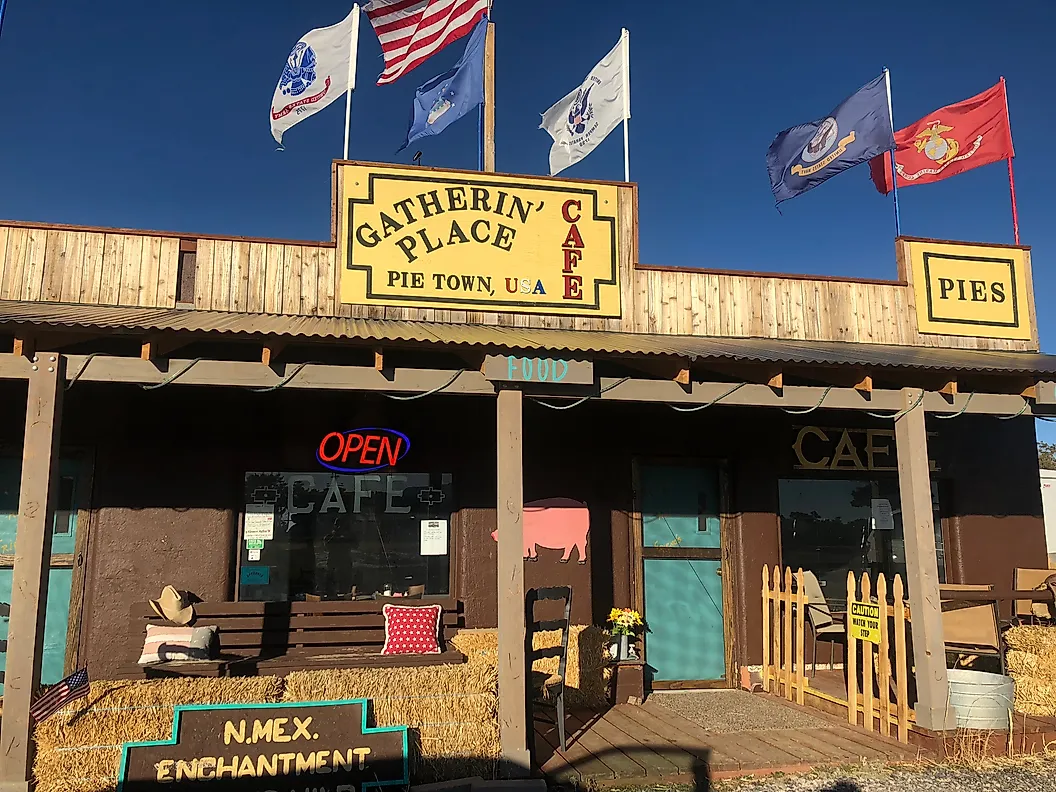
Founded in the early 1920s, Pie Town got its name from Clyde Norman, a miner and general store owner whose dried apple pies put the town on the map. The town’s mining and farming industries eventually dried up, and people began leaving, but resident Kathy Knapp has kept the town’s pie-based heritage alive. She first visited Pie Town in 1995 when it was little more than a post office, tax office, and a rundown trading post. Feeling called to rejuvenate the spirit of Pie Town, Kathy and her mother moved there and bought the old trading post, turning it into the Pie-O-Neer. With nothing but freshly baked pies on the menu, the Pie-O-Neer remains open today under new ownership. To really get a taste of all that Pie Town has to offer, the best time to visit is in September during the annual Pie Festival. Visitors will enjoy a pie-baking contest, games, races, music, food, and more.
Roswell

Roswell got its reputation as a destination for UFOs from an incident in July of 1947. Many people believe a flying saucer crashed on a rancher’s property in northwest Roswell on that day. That conspiracy theory and alleged cover-up of the incident continues to fuel visitors’ interest in Roswell, and the town has plenty of attractions for alien-curious tourists. The International UFO Museum and Research Center has an exhibit on the 1947 UFO crash, plus an archive of information on UFOs and aliens. The Roswell UFO Spacewalk and Gallery showcases an immersive blacklight art exhibit that takes visitors into space. Plus, each year in July, the town celebrates the anniversary of the 1947 incident with its annual UFO Festival. The festival includes a drone light show, art installations, an alien costume contest, a UFO parade, and more.
Chimayó

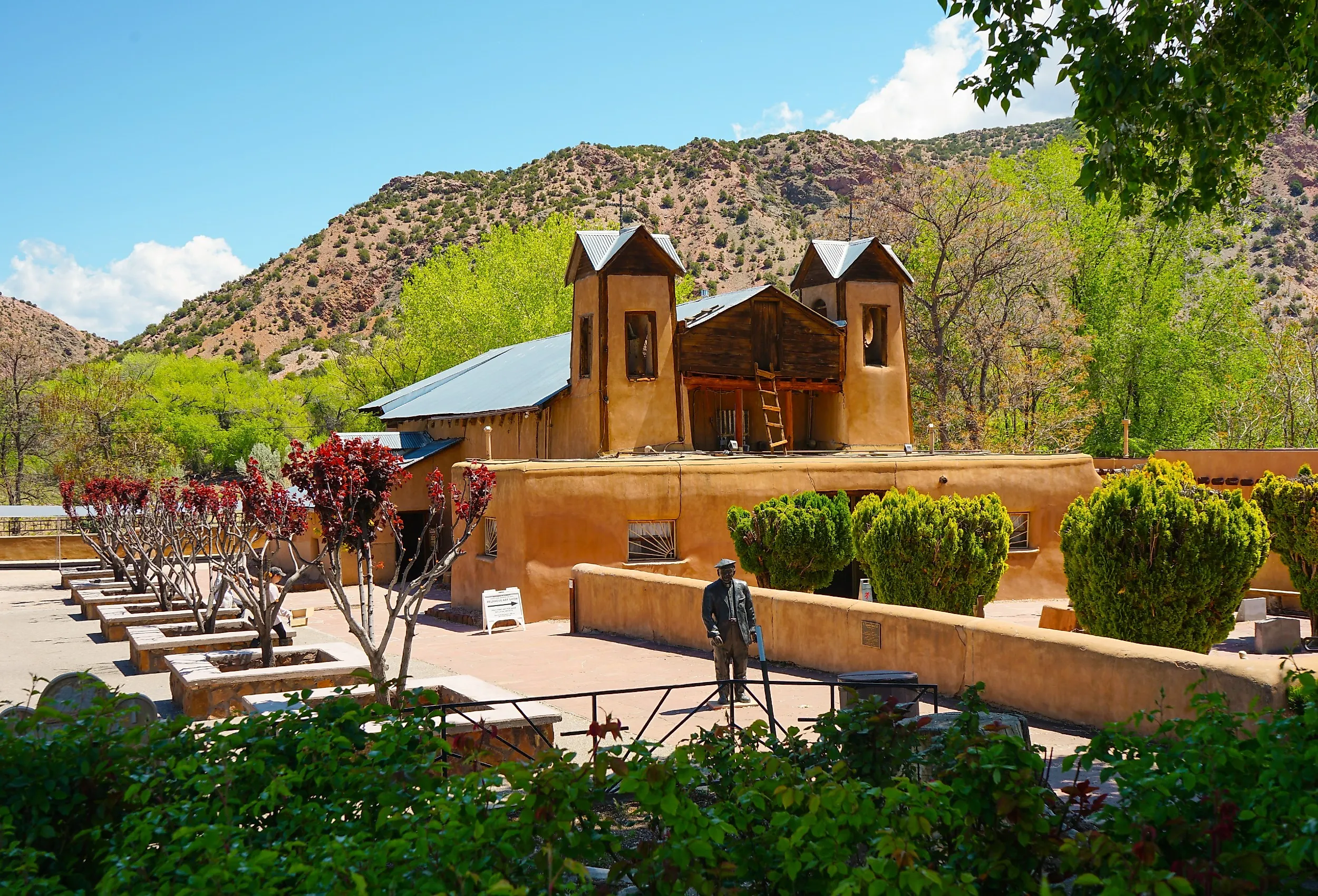
Most visitors to Chimayó come for the magical healing dirt at El Santuario de Chimayó. A national historic landmark, the sanctuary brings in around 300,000 pilgrims each year to access El Pocito, the small pit of holy dirt inside the chapel. Pilgrims will rub the soil on their bodies to cure ailments or take some home to loved ones in need. The legend of this healing soil dates back to the Pueblo Indians who inhabited this area. They considered the large hill northeast of where the sanctuary now sits sacred and its surrounding earth to have healing powers. In 1810, a man named Bernardo Abeyta discovered a glowing crucifix in the area and eventually built the mud-brick church there to honor it. Today, the sanctuary is one of the most significant pilgrimage sites in the United States.
Jemez Springs

Jemez Springs has a history of human activity dating back to 2,500 BC. One of the main draws, even that long ago, may have been the area’s abundant, mineral-rich hot springs. Many visitors believe these waters have healing properties and flock to the selection of both primitive and commercial hot springs. Another tourist favorite here is Jemez Soda Dam, an otherworldly rock formation that is at least 7,000 years old. While not actually a dam, the dome-shaped rock formation resembles one, as the Jemez River flows out of it. It was formed from calcium carbonate from the hot springs that has accumulated in layers over thousands of years. The dam reaches 50 feet tall, and 15 hot springs surround it that can reach temperatures up to 118 degrees. While you cannot swim in these springs, the area provides a beautiful vista for hikers.
Alamogordo

Alamogordo is the proud home of PistachioLand, a 111-acre pistachio orchard and vineyard founded by Thomas McGinn in 1980. McGinn started with 40 acres when he first built the farm, and it has since more than doubled in size. Today, the space houses 12,000 pistachio trees and 14 acres of wine grapes, which serve the adjacent Arena Blanca Winery. They harvest, roast, season, and package all their own pistachios, which visitors can shop for at the McGinn Country Store. Offerings include a wide variety of flavored pistachios, handcrafted pistachio candies and brittle, homemade pistachio ice cream, and more. The winery’s signature wine is Pistachio Delight, a semi-sweet, fruity white zinfandel with a nutty aftertaste. When McGinn passed away in 2008, his son built the World’s Largest Pistachio in his honor. The 30-foot pistachio sculpture is just one more draw to this delightful land of pistachios.
Carlsbad

The city of Carlsbad is the launching point for visitors to Carlsbad Caverns National Park, a site containing more than 119 caves. Formed when sulfuric acid dissolved underground limestone, these caves are special for their size, number, and spectacular mineral formations. New rock formations continue to form to this day, especially in Lechuguilla Cave. The star of the show is the Carlsbad Caverns, which contains the Big Room. This natural entrance to the caves is almost 4,000 feet long, 625 feet wide, and reaches 255 feet at the highest point. It ranks as the third-largest chamber in North America and the seventh-largest in the world. Other caves that visitors can tour include King's Palace, Queen's Chamber, Left Hand Tunnel, and Slaughter Canyon Cave. During the summer, stay until dusk to watch a horde of Brazilian free-tailed bats fly out of the caverns for their nightly hunt.
Tucumcari

For a blast to the past, visit Tucumcari along Route 66 for its retro motels, neon signs, and classic diners. Motels like The Blue Swallow, Motel Safari, and Roadrunner Lodge Motel are time capsules back to the glory days of Route 66 with their retro signs and colorful mid-century designs. At night, take in the classic neon signs around town that light up the city’s motels, restaurants, and shops. Classic diners like Del’s Restaurant, Rubee’s Diner, and SideKix on 66 are longtime staples that continue to pay homage to their Route 66 roots. The city is also home to the Tucumcari Historical Museum, which has a Route 66 exhibit, the New Mexico Route 66 Museum, the world's largest mural devoted to Route 66, and the Route 66 Monument along the side of the road.
Mogollon

Mogollon was a booming mining town with a wild reputation in its heyday. Located in the Gila Wilderness, the town became a destination for miners after the discovery of ore in the late 1800s. Due to its remote location and promise of riches, it was a lawless and rowdy place. Once boasting a population of 6,000 during its mining boom, today it has only a few permanent residents. It is a well-preserved ghost town, with many historic wooden and adobe buildings and remnants of the mining industry. Hiking up Graveyard Gulch is a journey to the past where visitors can view old mine workings, miners' shacks, mining artifacts, and the town’s historic graveyard. For accommodations, visitors can stay at the Silver Creek Inn, a former general store that was built in 1885. On weekends during the tourist season, the town’s few other attractions include an art gallery, a mining museum, an antique store, and a small cafe.
Taos

At the northwest edge of Taos, the Greater World Earthship Community occupies 600 acres of desert. The community consists of several whimsical dwellings called Earthships, designed to be environmentally friendly and function completely off the grid. Solar and wind energy power the buildings, and they implement water harvesting and recycling. The construction materials include recycled objects like old tires, car batteries, and glass bottles. Most of the homes are one story tall with a long, narrow shape and windows adorning one side. Each is a one-of-a-kind structure because the homeowners build their own Earthships, adding personal touches. The community took off about 50 years ago and is still a work in progress today. Some of the homes are available to rent for a short stay so visitors can experience an Earthship from the inside out.
Embudo

A small community along the Rio Grande River, Embudo’s most unique attraction is the Classical Gas Museum. Created by Johnnie Meier, a retiree from the Los Alamos National Laboratory, the museum is on his personal property. It is free and open to the public as long as Meier is at home. The museum is his personal collection of a variety of travel and gas station memorabilia from the early days of automobile travel. On display are neon gas station signs, vintage photos, maps, soda machines, toys, motor oil cans, cars and trucks, and tons of antique gas pumps. It is a showcase of both the history and art of the golden age of highway culture.
Carrizozo

In Carrizozo, visitors can tour a massive lava field. Little Black Peak erupted around 5,000 years ago, creating the Carrizozo Malpais lava flow, which covers 125 square miles, is four to six miles wide, and 160 feet thick. It is one of the youngest volcanic features in New Mexico. Surprisingly, the landscape still supports plenty of wildlife with flowers, cactus, trees, bats, roadrunners, quail, great horned owls, golden eagles, mule deer, barbary sheep, lizards, and more. Visitors can stay right alongside the lava field at the nearby Valley of Fires Recreation Area, which provides campsites, picnic shelters, and access to trails into the lava flow.
New Mexico’s abundance of wonderfully quirky towns is worth a detour. In Tucumcari, take in the state’s history as a neon-lit Route 66 destination. Stop through Carlsbad to explore the natural wonders underneath the desert. Veer off the beaten path in Mogollon to stay in a nearly 150-year-old ghost town in the wilderness. Or step forward into the future of eco-friendly living by exploring an Earthship in Taos.