11 Kansas Towns With Unforgettable Main Streets
Kansas is home to unforgettable main streets shaped by early cattle drives and frontier trails across the Great Plains. Many of these roads span the rolling terrain of the Flint Hills or the rugged bluffs of the Smoky Hills. Others cross vast tallgrass prairies. They feature masonary structures, public green spaces, and community halls rooted in early pioneer commerce.
In Council Grove, a limestone-built street acted as the final supply station for westbound wagon trains on the Santa Fe Trail. Lindsborg highlights its Scandinavian roots through painted storefront facades and folk art galleries, alongside outdoor festivals. Dodge City's commercial street displays the heritage of early frontier lawmen through local museums and historic saloons.
Hays

A historic building in Hays, Kansas.
Main Street in Hays is a brick-paved avenue lined with historic stone facades and colorful public artworks. The Fox Theatre dates to 1950, highlighting an Art Deco design with hand-painted murals and 25-foot ceilings. One exterior wall of this historic venue holds the Hays City Mural, displaying figures from the town's frontier past. Within the original auditorium, audiences watch live concerts and comedy nights. Down the commercial row, Tiger Station is in a renovated historic gas station. The kitchen prepares smash burgers and milkshakes directly inside the original service bays.
The southern foot of the pavement transitions into a public recreational green space. The Hays Aquatic Park borders the edge of the street sidewalk. This local facility provides lazy rivers and water slides for neighborhood residents. The open grounds also have landscaped lawns right next to the pedestrian path.
Lindsborg

Lindsborg's Main Street is a Swedish-heritage avenue decorated with colorful folk-art banners and hand-painted Dala horse sculptures. The thoroughfare also links directly to Scandinavian storefronts with art studios and craft workshops. The Red Barn Studio Museum preserves the working studio of mixed-media artist Lester Raymer. He transformed everyday, upcycled materials into regional art pieces. Its rooms display his paintings and ceramics. The space also exhibits distinct metalwork and woodcarvings spanning his career. At Hemslöjd, artisans hand-carve and personalize wooden Dala horses in an open workshop where people watch the process.
The street also holds a historic park and an old blacksmith forge along the commercial sidewalk. Swensson Park at the northern end of the avenue has a vintage band shell and towering shade trees alongside picnic pavilions. The Blacksmith Coffee Shop pours espresso drinks inside an 1890s forge. The property maintains its original brick walls and open wooden beams right against the pedestrian path.
Abilene

Buckeye Avenue in Abilene is a thoroughfare of Victorian street lamps and wide brick storefronts influenced by the Chisholm Trail and the legacy of President Dwight D. Eisenhower. The Eisenhower Presidential Library, Museum and Boyhood Home on Buckeye Avenue traces the life of America's 34th president. Its galleries display personal artifacts and military memorabilia alongside interactive exhibitions. Down the strip, the Greyhound Hall of Fame greets people at the door with two resident greyhounds and a self-guided tour of racing history.
A historic mercantile structure and an expansive antique mall line the pavement to give the corridor an active community presence. The Buckeye Antique Mall fills a historic brick storefront with frontier relics and vintage estate jewelry. The space also exhibits regional collectibles right along the sidewalk.
Council Grove

Downtown street in Council Grove, Kansas.
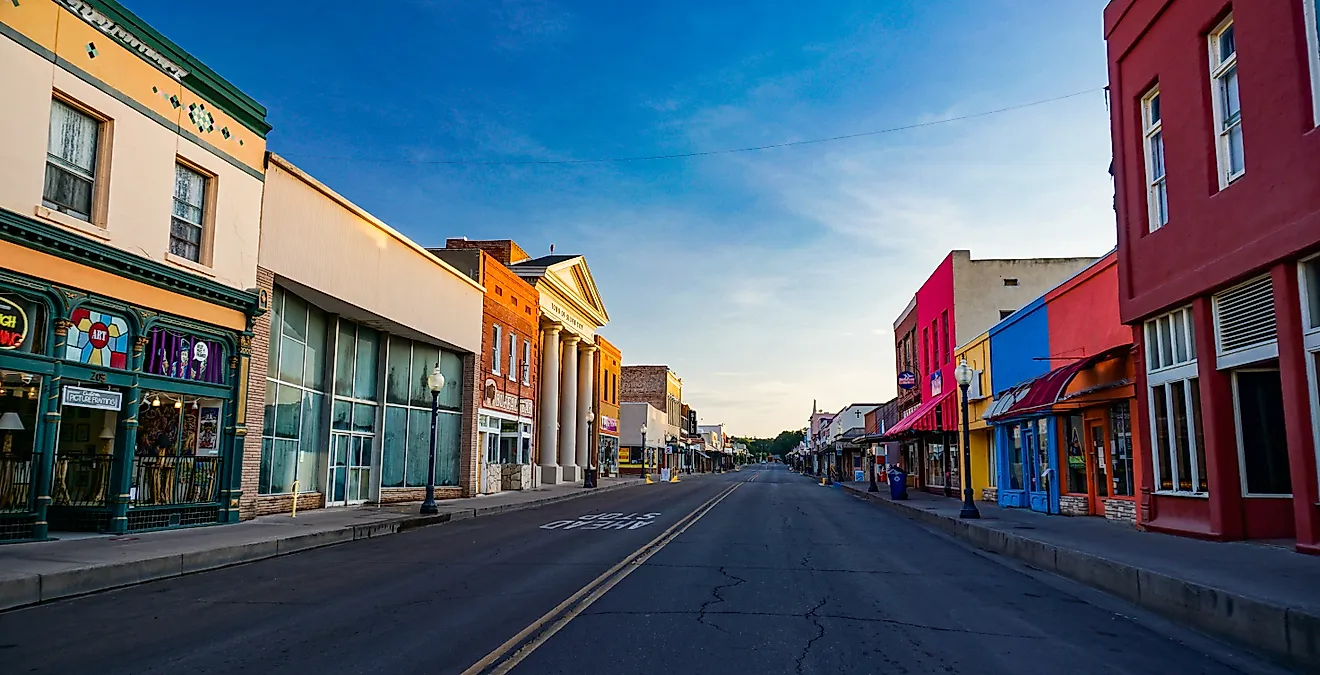
Over 20 Santa Fe Trail landmarks sit right along the Main Street in Council Grove. The Council Oak Shrine protects the remains of the historic tree where a crucial 1825 treaty with the Osage Nation was signed. Down the commercial strip, the Post Office Oak marks the spot where trail travelers once left notes in a hollowed tree trunk. These early pioneers used the site to warn others of upcoming road conditions.
The commercial avenue also holds what is billed as the oldest continuously operating restaurant west of the Mississippi River alongside a local microbrewery. Hays House 1857 at 112 West Main Street prepares country-fried steak and homemade pie on the avenue. A brief walk down the sidewalk, Riverbank Brewing pours locally crafted beers in a renovated historic storefront steps from the Neosho River.
Cottonwood Falls

Downtown Cottonwood Falls, Kansas. Editorial credit: Wikimedia Commons
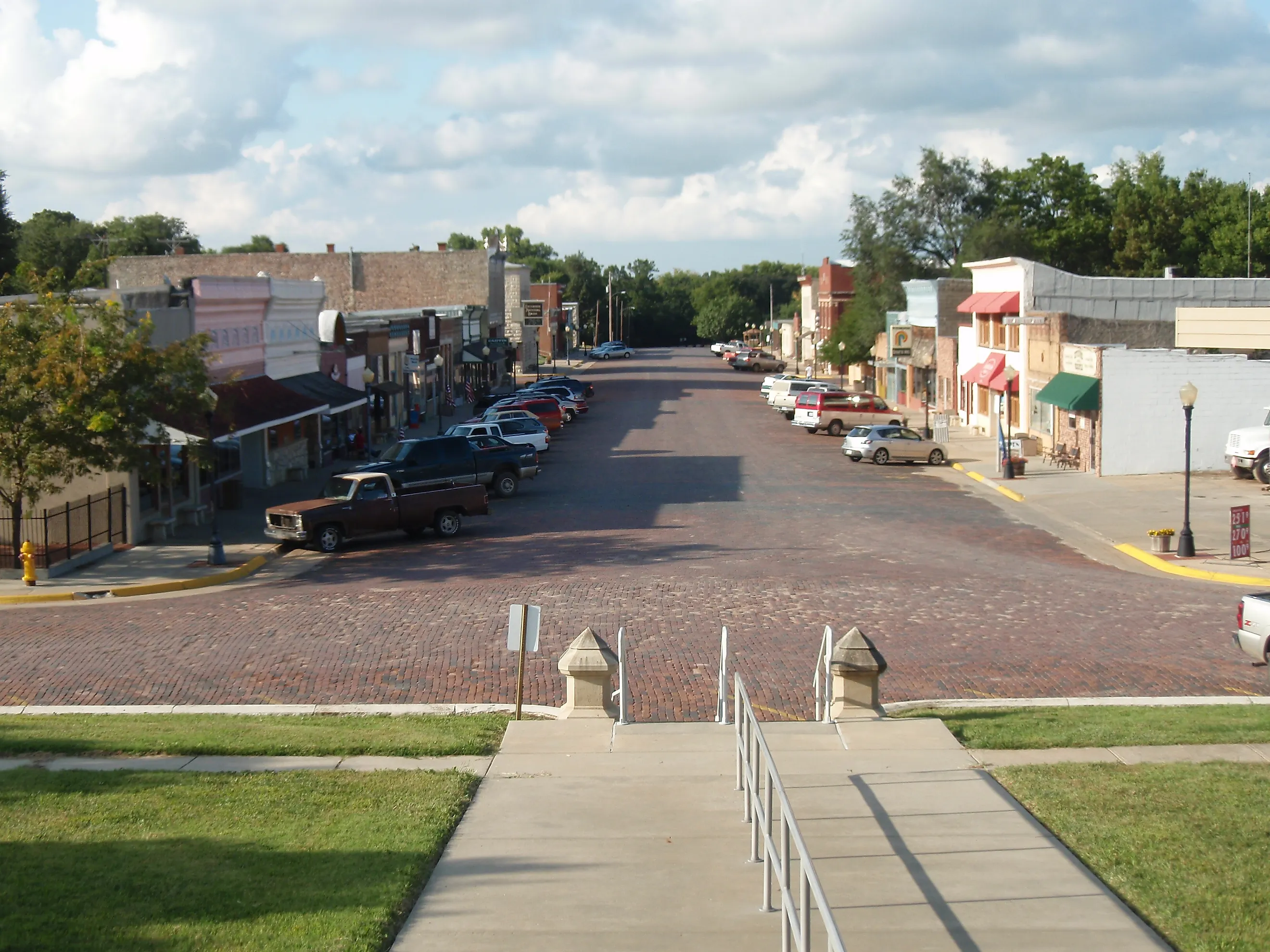
Broadway Street in Cottonwood Falls is a wide, brick-paved stretch of deep-set native limestone storefronts displaying views of the Flint Hills in the distance. The Chase County Courthouse, completed in 1873 in the French Renaissance style, is the oldest continuously active courthouse in Kansas. Its 113-foot limestone tower rises above the rooftops. The structure dominates the view from the street. Just behind the historic building, the 1914 Cottonwood River Bridge serves as a pedestrian walkway directly above the water below.
The main street also holds a historic hotel property and a prairie art gallery. The Grand Central Hotel & Grill at 215 Broadway Street, open since 1884, prepares Western dishes and cold drinks at a bar that has poured for over 140 years. The Flint Hills Gallery displays oil paintings of the surrounding tallgrass prairie by plein air painter Judith Mackey. Her rolling grassland scenes at available to view at no charge.
Wamego

The Oz Museum in Wamego, Kansas.
Lincoln Avenue in Wamego is a commercial block where brick storefronts align with a local Wizard of Oz design. The pavement displays painted sculptures and yellow brick sidewalk inlays along the path. The OZ Museum has thousands of pieces of original movie memorabilia, rare first-edition books, and early L. Frank Baum artifacts.
The avenue links a working stage venue directly with a local themed eatery on the same block. The Columbian Theatre, built in 1895, presents seasonal theatrical plays and live musical concerts. There are rare murals from the 1893 Chicago World's Fair mounted inside the hall. Right next door, Toto's Tacoz prepares Mexican food in a bright, themed space right next to the museum entrance.
Atchison

View of the Commercial Street Mall area of downtown Atchison, Kansas.
Commercial Street in Atchison is an avenue of ornate Victorian brick storefronts set against the bluffs of the Missouri River. This central corridor showcases the historic architecture that contributes to the city's standing as home to dozens of listings on the National Register of Historic Places. The Fox Theatre Building stands on the central block, highlighting a preserved Streamline Moderne design. The bronze Amelia Earhart Memorial Statue marks the town's connection to the famed aviator right along the pedestrian path.
The thoroughfare also connects a public waterfront park with a local antique merchant. The Atchison Riverwalk borders the riverbank at the eastern edge, providing a paved walkway where you can watch passing boats and regional wildlife. A short walk up the avenue, Backroad Atlas occupies a historic storefront. The interior displays regional artwork alongside vintage industrial furniture. There are old-fashioned collectibles inside the showroom.
Emporia

The Emporia Arts Center occupies the historic downtown Granada Theater.
Continuous clay-tile rooflines and Spanish Colonial Revival architecture define the brick-paved Commerical Street. The Emporia Granada Theatre is on the northern block, highlighting a 1929 landmark design with ornate plasterwork. The historic auditorium hosts live musical concerts and classic films. The Emporia Arts Center holds a public fine art gallery alongside an artisan gift shop supporting regional creators.
An open public pocket park and a family-run Mexican restaurant face each other across the central pavement to draw neighborhood foot traffic. The Commercial Street Pocket Park has floral planters and shaded benches. Directly across the street, Taquería Agaves prepares family recipes and traditional street tacos.
Colby

The Romanesque-style Thomas County Courthouse stands near large grain elevators in Colby, Kansas.
Franklin Avenue in Colby is a wide High Plains thoroughfare marked by monumental stone buildings and public murals. The towering clock tower of the Thomas County Courthouse rises directly above the parallel block of North Court Avenue. This masonry structure projects over the adjacent retail storefront lines of Franklin Avenue to establish a major architectural sightline of the thoroughfare. Down the street, the Colby Community Mural at the intersection of Franklin Avenue and 4th Street sweeps across a full brick facade to commemorate High Plains farming history.
An expansive public park and an independent retail store align with the commercial sidewalks of the avenue. Fike Park spreads across about 10 acres of green space featuring mature trees and public gazebos alongside open tennis courts. A short walk down the row, Nesting Boutique supports the retail community of the street with shelves of regional home decor. This local boutique sells custom gifts and handcrafted goods.
Fort Scott

Main Street in Fort Scott functions as a historic pathway where red-brick sidewalks frame a continuous view of towering nineteenth-century Victorian storefronts. The Lowell Milken Center for Unsung Heroes occupies a restored masonry building, with interactive media exhibits that detail overlooked figures from American history. The Liberty Theatre at 113 South Main Street displays an ornate brick exterior. This venue opened in 1919 as a single-screen movie theater with a balcony. Today, the space accommodates regional acoustic concerts and community gatherings.
The brick retail sidewalks open directly onto the wide, grassy parade grounds of an 1840s frontier military outpost at the edge of the avenue. Fort Scott National Historic Site sits at this northern foot of the thoroughfare. It has a 17-acre public park filled with preserved wooden barracks and officer quarters. There are museum rooms detailing early pioneer life.
Dodge City

Wyatt Earp Boulevard is a Western avenue lined with reconstructed wooden boardwalks and historic hitching posts. The layout also connects to traditional brick storefronts that honor early frontier lawmen. The Historic Dodge City Depot, completed in 1898, is the largest railroad depot still standing in Kansas. The building displays a large masonry facade that marks the eastern entrance of the roadway. Down the boulevard, the Boot Hill Museum displays an entire 1876 downtown streetscape with historical frontier items and live gunfight reenactments.
The street links a life-sized animal monument with a shaded public green space to commemorate the town's cattle-drive history. The El Capitan Monument sits at the intersection of Wyatt Earp Boulevard and Second Avenue. This bronze longhorn steer honors the millions of cattle driven through town in the late 1800s. Along the edge of the thoroughfare, Wright Park opens into a wide canopy of mature shade trees, public picnic areas, and walking paths.
A Memorable Sight at Every Turn
Kansas main streets carry the imprint of the geography, history, and culture around them. The Flint Hills, the High Plains, and the Santa Fe Trail route each produced a different kind of downtown. This history is clear in the limestone courthouses, cattle monuments, and local galleries that characterize these streets. Parks, band shells, and open green spaces keep these thoroughfares active well past their early architectural eras.