6 Quirky Little Towns In Kansas
Kansas hides some of its surprises in the places most travelers pass, small towns where unusual traditions, odd landmarks, and eccentric locals share space without hesitation. One minute you are standing beside a large Oz collection, the next you are looking at a mosaic restroom shaped like a giant toilet bowl. Black squirrels receive careful attention, Swedish dalahäst horses appear on corners, and Old West figures still fill museum halls as if they never left. This is a road trip through the unexpected, six Kansas towns that do not play it safe and do not tone it down, each with its own unfiltered character.
Wamego

Wamego does not hide its devotion to Oz; it acknowledges it block by block. The sidewalks give a nod to that familiar yellow road, and the real shift into fantasy appears at the Oz Museum, where props, replicas, and more than two thousand artifacts fill vivid displays. This spirit continues in nearby businesses such as Oz Winery, where bottles with themed names add a light twist to the town’s favorite story. Across Main Street, Friendship House Bakery contributes its own character with old-fashioned pastries, Dutch recipes, and a drive-thru that locals treat as a morning routine.

A short walk away, the Columbian Theatre maintains a link to Wamego’s 19th-century roots through stage productions in a building inspired by the 1893 World’s Fair. Outside, a trail of decorated Toto dog statues turns the streets into a casual scavenger hunt, each sculpture painted with local detail. In the city park, the Dutch Mill stands as a reminder of how Wamego blends different influences without losing its sense of place.
Lucas

Lucas is small in size but strong in eccentric spirit, a place where folk art climbs fences, fills yards, and appears even in public restrooms. The late S.P. Dinsmoor set that creative tone with Garden of Eden, his concrete sculpture garden anchored by a house carved from Post Rock limestone. The work is political as well as personal, and touring it feels like entering a visual statement shaped by one person’s imagination.
The same playful approach continues at Bowl Plaza, a mosaic-art public restroom that often surprises visitors with its detailed design. To understand the wider movement that shaped Lucas, the Grassroots Art Center brings together local self-taught artists with pieces ranging from carved limestone to whimsical assemblages. During August, the town’s Adam’s Apple Festival turns Main Street into a small community gathering focused on art, contests, and local participation.
Dodge City

Dodge City’s quirks come from its legends, stories of gunslingers, saloons, and the figures who shaped the late 1800s. That Old West identity still sets the tone at the Boot Hill Museum, where reconstructed buildings and narrated exhibits outline the atmosphere of the cattle trail years. Even the name Boot Hill reflects the wilder side of local history, although modern Dodge City meets visitors with a calmer sense of humor.

Beyond the museum, the town maintains its frontier character through the El Capitan sculpture downtown, a bronze steer commemorating the cattle drives that once moved through the region. A trolley ride allows visitors to see small landmarks across the historic district, and the Boot Hill Casino and Resort adds a contemporary element to the theme. When the sun sets on the plains, Wright Park and its trails create a quieter contrast to Dodge City’s larger historical reputation.
Marysville

Marysville may appear like a classic prairie town at first glance, but its focus on a certain small mammal gives it a distinct character. Black squirrels move through the streets with a confidence usually reserved for mascots, and their likeness appears in more than 30 decorated sculptures across town. The quirky side becomes clear quickly. Locals value the squirrels so much that harming one is illegal, and the Black Squirrel Bark Park gives town dogs a squirrel-themed space while real squirrels linger in the trees above.

History is equally present, especially at the Pony Express Museum, housed in the last remaining original station on the route. Nearby murals add color to the downtown blocks, including the well-known Love From Marysville wall. Trails extend in several directions, connecting to historic byways such as the California and Mormon Trails, and the path carries hints of past travel. Through it all, residents greet newcomers with a steady friendliness that reflects the community’s long attachment to its black squirrels.
Atchison

Atchison has a strong tradition of storytelling, some ghostly, some historic, all connected to the riverfront hillsides. The town’s reputation for paranormal activity draws visitors to places such as The Sallie House and the McInteer Villa, where evening tours focus on atmosphere rather than fear. This interest has become part of Atchison’s identity rather than a shadow over it.

The legacy of Amelia Earhart is equally influential. Her childhood home still stands on a bluff overlooking the river, and the Amelia Earhart Hangar Museum expands on her life through detailed exhibits. A short walk south leads to the Amelia Earhart Earthwork, a large portrait shaped into the landscape. Commercial Street Shopping District adds another layer with Victorian architecture and seasonal events that bring steady activity to the downtown area. Together, these elements show how Atchison balances its historical and cultural themes while maintaining a clear sense of place.
Lindsborg

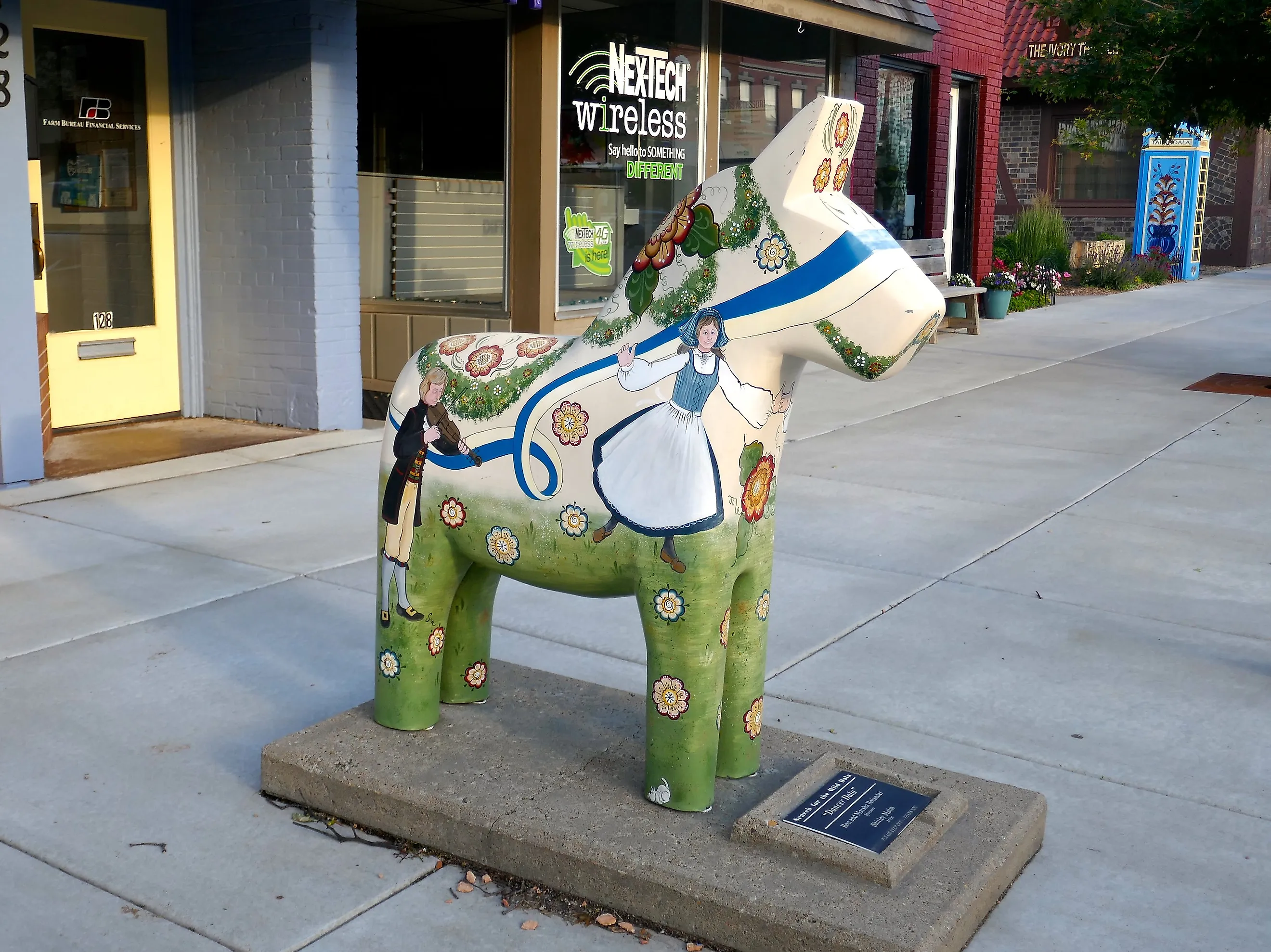
Lindsborg leans into its Scandinavian roots, shaping a Kansas town with a consistent thread of Swedish tradition. Colorful dala horses appear at corners and storefronts, setting a tone that reflects generations of cultural preservation. The Birger Sandzén Memorial Art Gallery highlights the work of the Swedish American painter through landscapes and prints, while the Old Mill Museum brings the region’s immigrant history into view with artifacts and restored buildings.

Walking through town often leads to smaller moments, including the Swedish Pavilion, originally built for the 1904 World’s Fair and now cared for as part of the local collection. Café patios fill during festival weekends, especially during the biennial Svensk Hyllningsfest, when folk dancing, traditional clothing, and music spread through the streets. Trails near the Smoky Hill River add a quieter balance, giving the cultural setting a connection to the surrounding prairie.
A Look at Kansas’s Unusual Town Traditions
Kansas has many places that greet visitors politely, but these six towns show a different side. They point toward black squirrel sculptures, limestone art, and collections that reflect each community’s interests. Across wizard memorabilia, Swedish street art, Old West history, haunted sites, and folk art installations, the Sunflower State shows that unusual details are part of daily life rather than a diversion. For travelers who want a change in pace and an occasional pause in routine, these towns offer settings shaped by local creativity and long-held traditions.