11 Easygoing Small Towns In The United States
The eleven towns featured below are spread across ten states and set against ocean harbors, lakeshores, desert plateaus, and mountain valleys. What they share is an easy-going vibe and a size that stays manageable, even in towns that draw big crowds for festivals or ski seasons. Gloucester still carries the character of one of the country's oldest working fishing ports. Eureka Springs follows the contours of the Ozarks rather than a square street grid. Taos has a living history that reaches back centuries, and Jackson remains closely tied to the wildlife landscape beyond its town square. Read on to explore the most laid-back small towns in the United States.
Gloucester, Massachusetts

Gloucester has been hauling fish out of the Atlantic since 1623, making it one of the oldest working seaports in the country. That history hasn't turned the town into a museum piece but instead, a lively hub of fishing boats still tied up alongside seafood shacks and art studios. The Rocky Neck Art Colony keeps a creative undercurrent running through a town most people know only for its harbor. With a population of around 30,000, Gloucester stays lively without becoming overwhelming for tourists and locals alike. Good Harbor and Wingaersheek beaches offer two very different flavors of shoreline, and deep-sea fishing charters remain a genuine local trade, not a tourist novelty reserved only for visitors.
Portsmouth, New Hampshire

Portsmouth's oldest neighborhood is spelled "Strawbery Banke" and yes that's, one r, and one e missing from each word, and no it's not a typo. It's the settlement's actual 1630s name, kept deliberately in place at the Strawbery Banke Museum, a ten-acre living-history site of more than 30 original buildings spanning nearly four centuries. That kind of unfussy attention to the real history, rather than a cleaned-up version of it, sets the tone for the whole town.
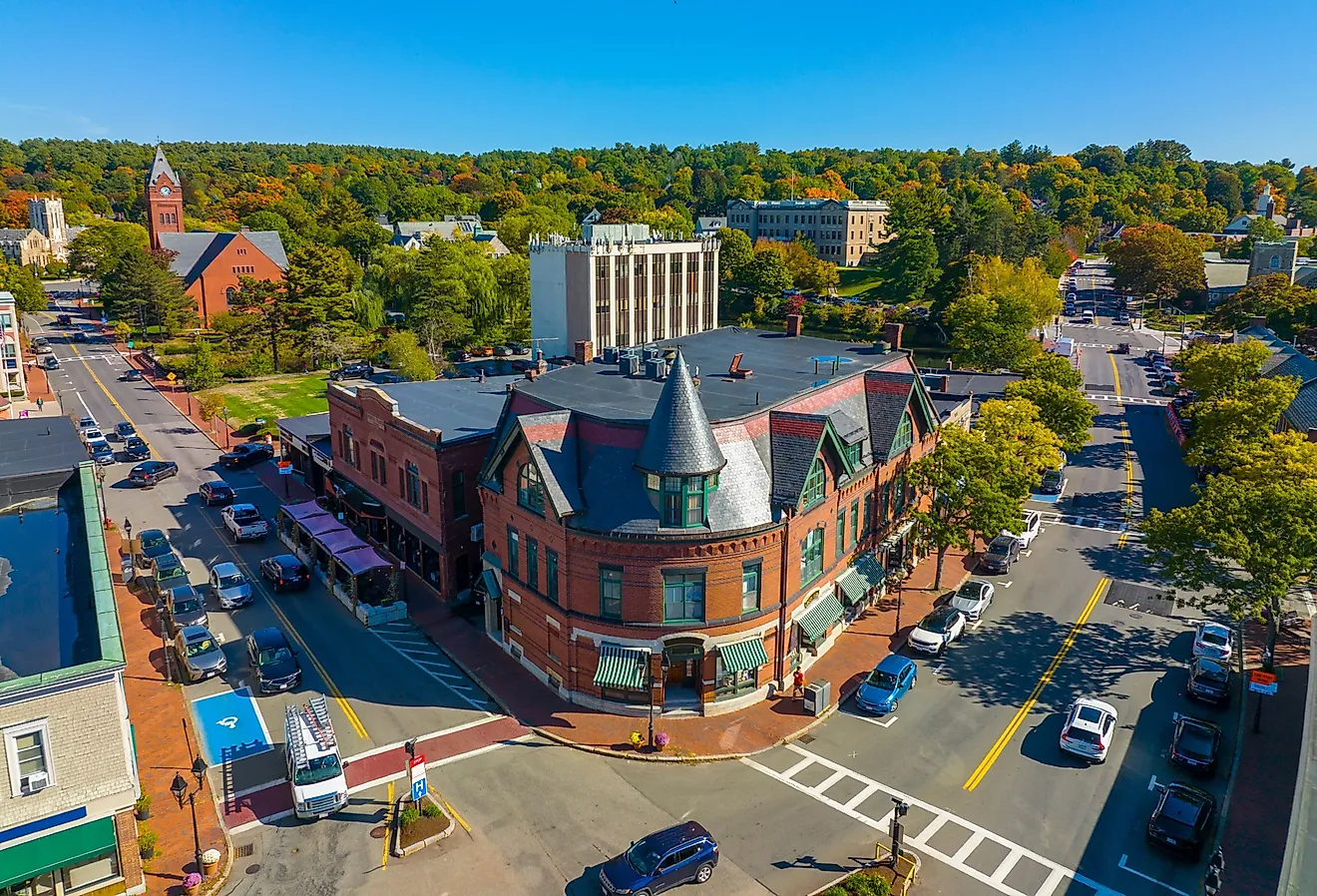
Downtown mixes brick colonial buildings with a food scene that's drawn national attention with a walkable downtown that holds more seats for food than it does regular residents. The walkability has made Portsmouth a genuine draw for remote workers who want independent shops and easy access to both the Maine coast and Boston. Market Square anchors the shopping. Prescott Park offers a slower riverside pace. The best way to top off an evening in Portsmouth is with cruises out to the Isles of Shoals.
Burlington, Vermont

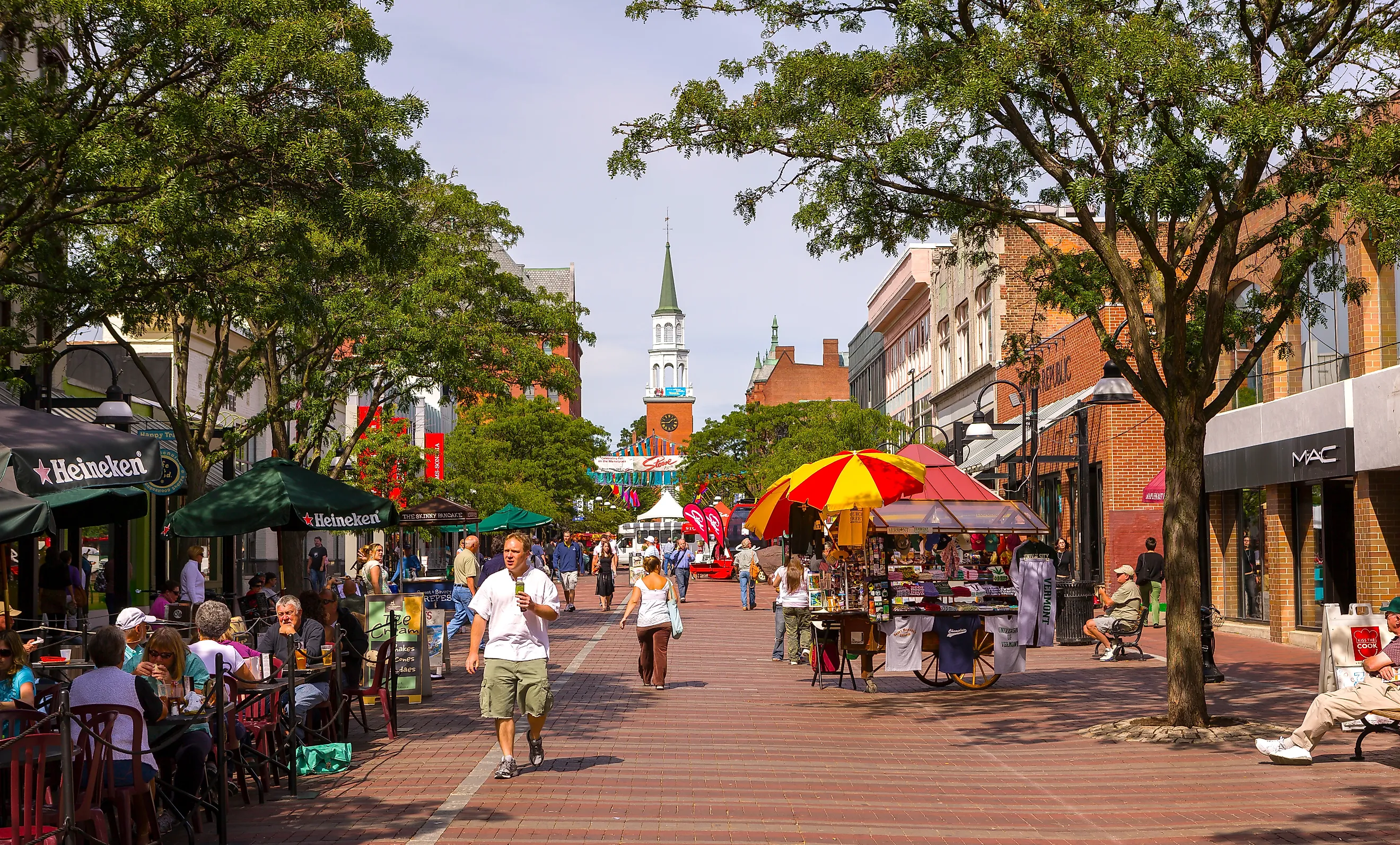
Burlington is unique in that you can be in Vermont watching the sun set over mountains in a different state. Across Lake Champlain you can view the sun set over the Adirondacks. Church Street Marketplace, a four-block pedestrian strip of red-brick buildings, is the social center of downtown, with buskers and farmers' markets. From there, it's a five-minute walk to Waterfront Park and the start of the 7.5-mile Burlington Bike Path, which runs along the lakeshore past Battery Park. Families and science-minded visitors gravitate to the ECHO Leahy Center, a lakeside museum built around Lake Champlain's ecology, while the University of Vermont's campus gives the north end of downtown its collegiate energy. In winter, Burlington empties out toward nearby Stowe and Smugglers' Notch for skiing; in summer, the same roads lead to hiking trails and swimming spots.
Taos, New Mexico

Taos Pueblo has been continuously inhabited for more than 1,000 years, making it older than most European cities. The town that grew up with its name has never really tried to build over that fact and instead it builds alongside it. Adobe architecture and a UNESCO World Heritage listing at the Pueblo give Taos a sense of permanence. Downtown, known locally as the Plaza, mixes galleries and studios with places to sit and enjoy the scenery. The Rio Grande Gorge Bridge spans a canyon most people don't expect to find in New Mexico, and the nearby Earthship Community, a set of off-grid homes built from recycled materials, adds a worthwhile detour.
Eureka Springs, Arkansas

Eureka Springs was built directly onto the hillside it sits on, with streets that follow the natural contours of the Ozark terrain rather than any grid. This makes the downtown easy to walk, but maybe not in a straight line. Victorian storefronts from the town's 1880s spa-resort heyday still line those winding streets, giving the whole place a storybook quality. People from all over enjoy Eureka Springs for its unique atmosphere blending hippie shops with biker bars and local places to eat and shop all along the streets. Turpentine Creek Wildlife Refuge rescues big cats and other exotic animals on a forested property outside town. The Thorncrown Chapel is a glass walled sanctuary built into the trees and draws visitors to the area every year. Basin Spring Park anchors downtown, and a strong local food and art scene fills in the rest.
Northampton, Massachusetts

Northampton's Main Street was built around a 19th-century department store that's now Thornes Marketplace, a multi-level warren of independent shops, cafés, and bookstores. Northampton is home to Smith College and its Botanic Garden and Art Museum. These stand as anchors of culture in Northampton. Farmers markets, live music, and a steady stream of readings and performances keep Northampton feeling intellectual, not only recreational.
Look Memorial Park, located a short drive from downtown, adds a more adventurous counterpoint to the culture of Smith College: paddle boats, a small children's zoo, and an outdoor amphitheater tucked into tree-lined grounds. Northampton is the rare college town that stays at a steady pace regardless of the time of year.
Telluride, Colorado

That single road in and out of Telluride's box canyon has kept the town's population under 3,000 even as its reputation has grown well past small-town scale. Telluride offers gondola rides that are free to ride and connect downtown to Mountain Village. These carry skiers and sightseers alike up into views of the San Juan Mountains. Bridal Veil Falls, Colorado's tallest free-falling waterfall, is at the canyon's far end offering an easy hike. The Telluride Bluegrass Festival and Blues & Brews are the best-known events on the calendar. About an hour away in the San Juan Mountains, Dunton Hot Springs, a restored 19th-century mining town turned luxury retreat, gives visitors willing to make the drive a genuinely remote soak.
Sedona, Arizona

Sedona's red rock formations get their color from iron oxide trapped in ancient sand dunes, which also makes Cathedral Rock and Devil's Bridge such reliable sunset spots. The Red Rock Scenic Byway threads through the formations for anyone who'd rather drive than hike, while Slide Rock State Park offers a genuinely different kind of outdoor time: natural rock chutes for swimming rather than another overlook. Tlaquepaque Arts Village and the cliffside Chapel of the Holy Cross round out a town that treats wellness, art, and geology as more or less the same subject.
Beaufort, South Carolina

More films have used Beaufort's waterfront as a backdrop than almost any small town in the South. Forrest Gump and The Big Chill both shot here, and it's not hard to see why once you're standing on the bluff. With around 13,000 residents, Beaufort keeps a strong sense of community even as it draws a steady stream of visitors chasing that same view.
Horse-drawn carriage tours through the historic district give you the chance to travel through the town's historic antebellum homes. Hunting Island State Park, a short drive away, offers a lighthouse to climb and one of the more dramatic beaches on the South Carolina coast.
Fredericksburg, Texas

Fredericksburg is roughly 250 miles from the nearest ocean, which makes it an odd place to find the National Museum of the Pacific War, until you learn the town is the boyhood home of Fleet Admiral Chester Nimitz, who commanded the entire Pacific Fleet in World War II.
His grandfather's steamboat-shaped hotel now anchors a six-acre museum campus, one of the more unexpected landmarks in Texas Hill Country. The rest of Fredericksburg leans into its German settler roots. The Main street in town is made up of walkable 19th-century limestone buildings, biergartens, and wineries that have turned the surrounding hills into a real wine-touring destination.
Just north of town, the Willow City Loop turns into a 13-mile ribbon of bluebonnets each spring, and Enchanted Rock State Natural Area offers a granite dome hike with views over the Hill Country. Locals will just as readily point a visitor toward Das Peach Haus for a slice of pie as toward the Nimitz museum, since the town holds both halves of its identity easily.
Jackson, Wyoming

The four arches framing Jackson's town square are built entirely from elk antlers, more than 2,000 per arch, collected each spring by local Boy Scout troops after the elk shed them naturally at the National Elk Refuge just outside town. Jackson Hole's identity is built directly out of the wildlife and land around it. Grand Teton and Yellowstone are close enough to be day trips, and the town leans into that access with rafting on the Snake River, horseback rides, and the National Museum of Wildlife Art.
What makes these towns easygoing is not that nothing happens there. Gloucester still works the sea, Northampton has a busy cultural life, and Telluride has its festivals and mountain traffic. The difference is one of scale and character. Each place has developed around its landscape and history rather than completely reshaping them, leaving harbors, historic streets, and mountain scenery woven into daily life.