12 Oldest Founded Towns to Visit in the Mid-Atlantic
In 1607, a hundred-odd English colonists stepped ashore at Jamestown and started the first permanent English settlement in America. Over the next century, the Mid-Atlantic filled in behind them, one Dutch trading post, Quaker port, and tidewater capital at a time. These twelve towns are the oldest of the bunch, each still standing, still worth a visit, and still wearing its founding century on its sleeve. We have lined them up in the order they were born, from a 1607 fort on the James River to a boomtown that arrived "late" in 1729.
Jamestown, Virginia (1607)

Where it all began. Founded in 1607, Jamestown was the first permanent English settlement in North America, a swampy, scrappy foothold on the James River that nearly starved out of existence more than once. Today the story is told in two places: Historic Jamestowne, the actual archaeological site where the original 1607 James Fort has been unearthed, and the nearby Jamestown Settlement, a living-history museum with a re-created fort and full-scale replicas of the three ships that carried the colonists over.
It is also where the intertwined histories of three peoples, English, Powhatan, and enslaved Africans (the first of whom arrived in 1619), converged to shape what became the United States. Pair a visit with the rest of Virginia's Historic Triangle, Williamsburg and Yorktown, just up the Colonial Parkway.
Albany, New York (1614)

Seven years after Jamestown, Dutch fur traders built Fort Nassau on the upper Hudson, the seed of what became Albany and one of the oldest continuously settled spots of European origin in the country. Chartered as a city in 1686 and made the New York State capital in 1797, it has been a seat of power for most of its long life.
History buffs can tour the ornate New York State Capitol, built over 32 years without a central dome, and stroll the landscaped acres of Washington Park. The Albany Institute of History and Art, founded in 1791, is one of the oldest museums in the nation and digs deep into the Hudson Valley's Dutch and Colonial past.
New York, New York (1624)

The Dutch established New Amsterdam at the tip of Manhattan in 1624, trading the island from the Lenape and building a fur-trading port that the English seized and renamed New York in 1664. Four centuries later, that colonial core is buried beneath the most famous skyline on Earth, but its bones still show.
Walk the narrow, un-gridded streets of Lower Manhattan, where Wall Street traces the line of the actual Dutch wall, and visit Fraunces Tavern, a 1719 building where George Washington bid farewell to his officers in 1783. The oldest borough on the map still rewards anyone willing to look past the neon of Times Square.
Lewes, Delaware (1631)

"The First Town in the First State," Lewes was founded by Dutch whalers in 1631 as Zwaanendael, the earliest European settlement in Delaware. The original colony lasted barely a year before a dispute with the local Lenape wiped it out, but the Dutch returned, and the town on Delaware Bay has been going ever since.
The Zwaanendael Museum, built in 1931 as a replica of a Dutch town hall, tells the founding story, while the surrounding streets are lined with preserved 18th- and 19th-century homes. Cape Henlopen State Park sits just outside town with beaches, dunes, and a WWII observation tower, and the Cape May-Lewes Ferry glides across the bay to New Jersey.
St. Mary's City, Maryland (1634)

Maryland's first colonial settlement and its original capital, St. Mary's City was founded in 1634 by English colonists who arrived aboard the Ark and the Dove, and it became an early proving ground for religious tolerance in the colonies. When the capital moved to Annapolis in 1695, the town faded into farmland, which is exactly why it survives so well.
Today Historic St. Mary's City is one of the country's premier archaeological sites and a living-history museum, with a reconstructed 1676 State House, a re-created Woodland Indian hamlet, and a sailable replica of the Dove tied up at the dock. It is as close as you can get to walking into 17th-century Maryland.
Annapolis, Maryland (1649)

Once called the "Athens of America," Annapolis was settled in 1649 by Puritan exiles from Virginia and took its modern name in 1694 for Princess Anne. It briefly served as the capital of the United States in 1783-84, and the Maryland State House, the oldest state capitol in continuous legislative use, is where the Treaty of Paris was ratified.
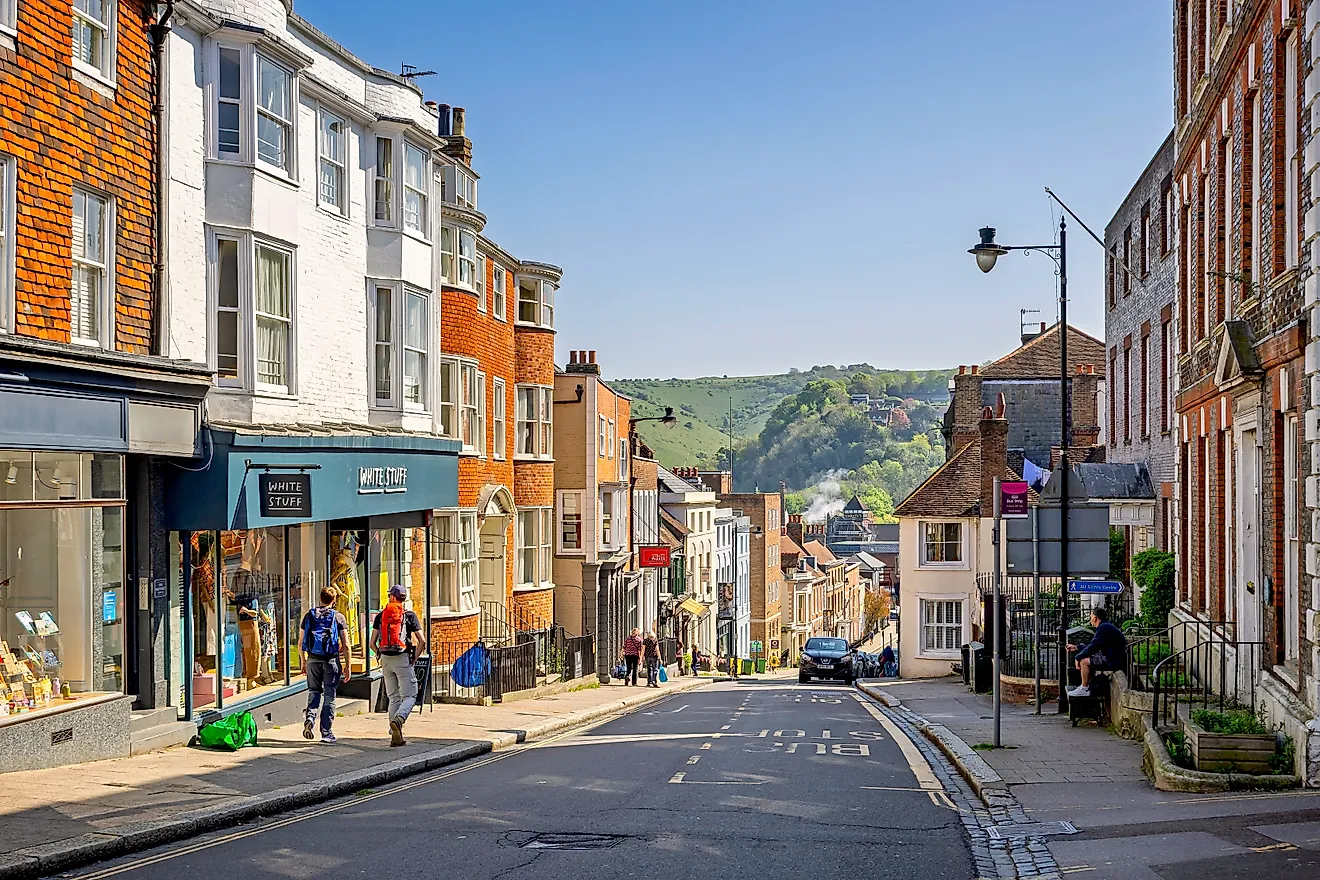
The compact colonial downtown runs on brick and cobblestone right down to the City Dock, and the U.S. Naval Academy, founded here in 1845, lines the waterfront with midshipmen. Sail the Chesapeake, tour the 1765 William Paca House, and eat crab within sight of the water.
Kingston, New York (1652)

Settled by the Dutch in 1652 as Wiltwyck, Kingston became New York's first state capital in 1777, a distinction that earned it a torching by the British that same year. Much of its Dutch-era stone architecture survived, and the four blocks of the Stockade District still hold one of the densest concentrations of pre-Revolutionary stone houses in the country.
The Senate House, where New York's first state senate met in 1777, is open as a museum, and down the hill the restored Rondout waterfront on the creek brims with galleries, restaurants, and the Hudson River Maritime Museum. Kingston makes a natural base for exploring the wider Hudson Valley.
Jersey City, New Jersey (1660)

New Jersey's oldest city, Jersey City, traces its roots to 1660, when Peter Stuyvesant organized a palisaded Dutch village called Bergen on the heights above the Hudson. Bergen Square, laid out that year in a grid of four quarters, is still a recognizable crossroads, making it one of the oldest planned settlements in the country.
Most visitors, though, come for the waterfront. Liberty State Park spreads along the harbor with unmatched views of the Statue of Liberty and the Manhattan skyline, and it is the jumping-off point for ferries to both Liberty Island and the Ellis Island Immigration Museum, where millions of Americans' ancestors first set foot in the country.
Newark, New Jersey (1666)

Founded in 1666 by Puritans from Connecticut who wanted a community built on their own religious vision, Newark grew into a 19th-century industrial powerhouse on the banks of the Passaic River. It was here, in 1818, that inventor Seth Boyden developed the first American process for making patent leather, one of many manufacturing firsts that built the city.
Today Newark anchors New Jersey's arts scene. The acoustically acclaimed New Jersey Performing Arts Center draws world-class concerts, the Newark Museum of Art is the state's largest, and in spring the cherry blossoms of Branch Brook Park, more trees than Washington, DC's Tidal Basin, erupt into bloom.
Burlington, New Jersey (1677)

Established in 1677 by English Quakers as part of William Penn's West Jersey, Burlington sits on the Delaware River and served as the capital of West Jersey beginning in 1681. Its riverside historic district is a well-preserved catalog of colonial and Federal architecture, including St. Mary's Episcopal Church (1703), the oldest surviving church building in New Jersey.
The town was also a working port that traded with Europe, and literary history runs through it, too: novelist James Fenimore Cooper was born here in 1789, and his birthplace is now a museum. The compact High Street core is made for an unhurried afternoon of colonial house-hunting.
Philadelphia, Pennsylvania (1682)

Laid out by William Penn in 1682 as a "greene country towne," Philadelphia became the young nation's most important city, the place where both the Declaration of Independence and the Constitution were debated and signed. It is also the country's first UNESCO World Heritage City, and its historic core is unmatched.
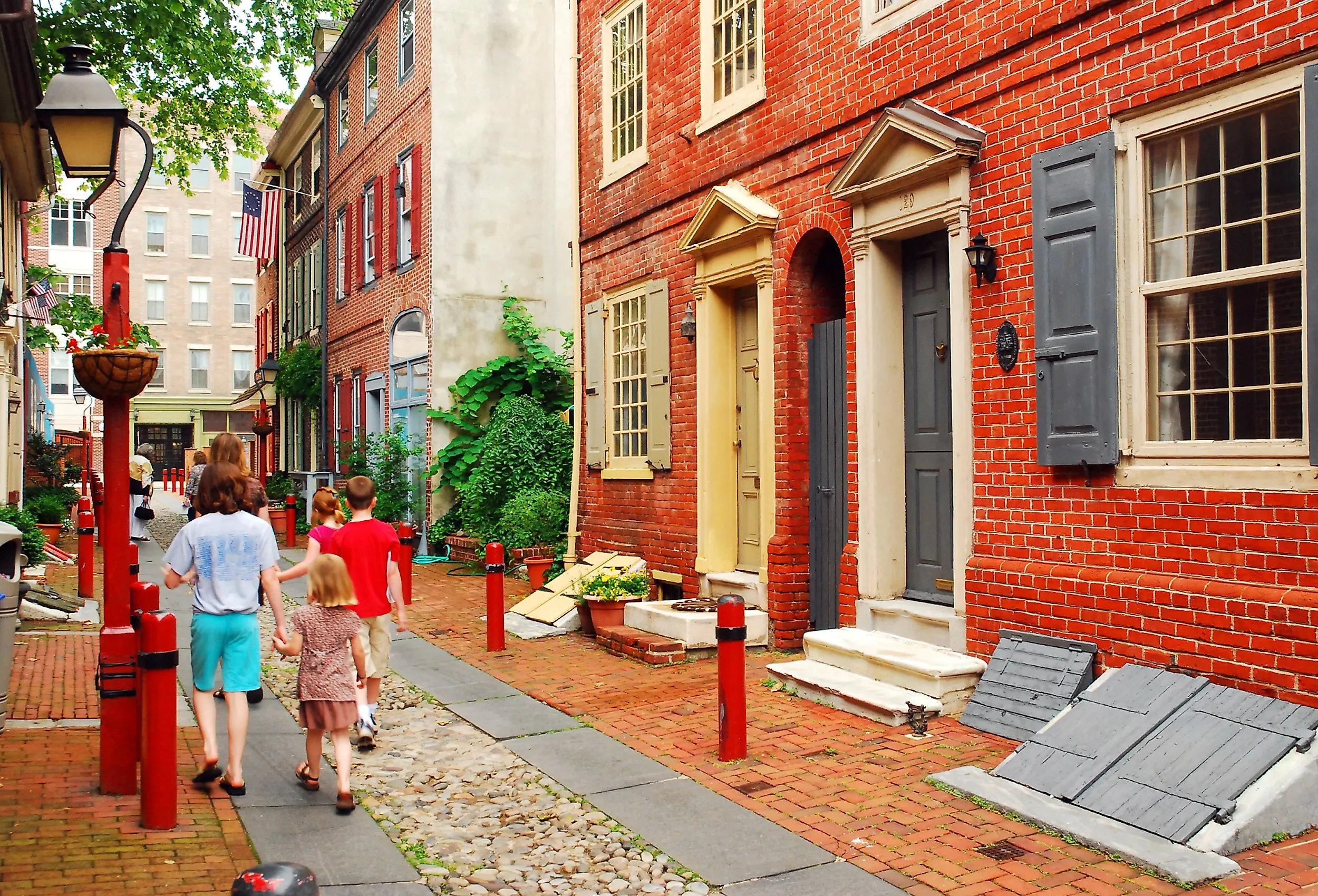
Independence National Historical Park packs Independence Hall, Congress Hall, and the Liberty Bell into a few walkable blocks. Nearby, the Betsy Ross House honors the flag's reputed maker, and Elfreth's Alley, cobbled and lined with homes from the 1720s, claims the title of the oldest continuously inhabited residential street in the nation.
Baltimore, Maryland (1729)

The "youngster" of this list, Baltimore was founded in 1729 and named for the Irish barony of the Calvert family, Maryland's founding proprietors. It grew fast as a tobacco and shipping port and earned a permanent place in history during the War of 1812.
It was the 1814 defense of Fort McHenry, visible today as a star-shaped national monument, that inspired Francis Scott Key to write "The Star-Spangled Banner." From Federal Hill, the view over the Inner Harbor takes in the whole city, and the National Aquarium and historic ships keep the waterfront busy. Baltimore proves the Mid-Atlantic kept minting great old cities right up to the edge of the Revolution.
Line these twelve towns up by birthday and you get a timeline of early America itself, from a desperate fort on the James in 1607 to a tidewater boomtown in 1729. Dutch traders, Quaker settlers, Puritan exiles, and English colonists each left their mark, and remarkably, you can still walk through all of it: an unearthed fort, a stone stockade, a colonial statehouse, a cobbled alley. The Mid-Atlantic does not just remember its origins. It lets you stand in them.