The National Forests With The Most Bald Eagles
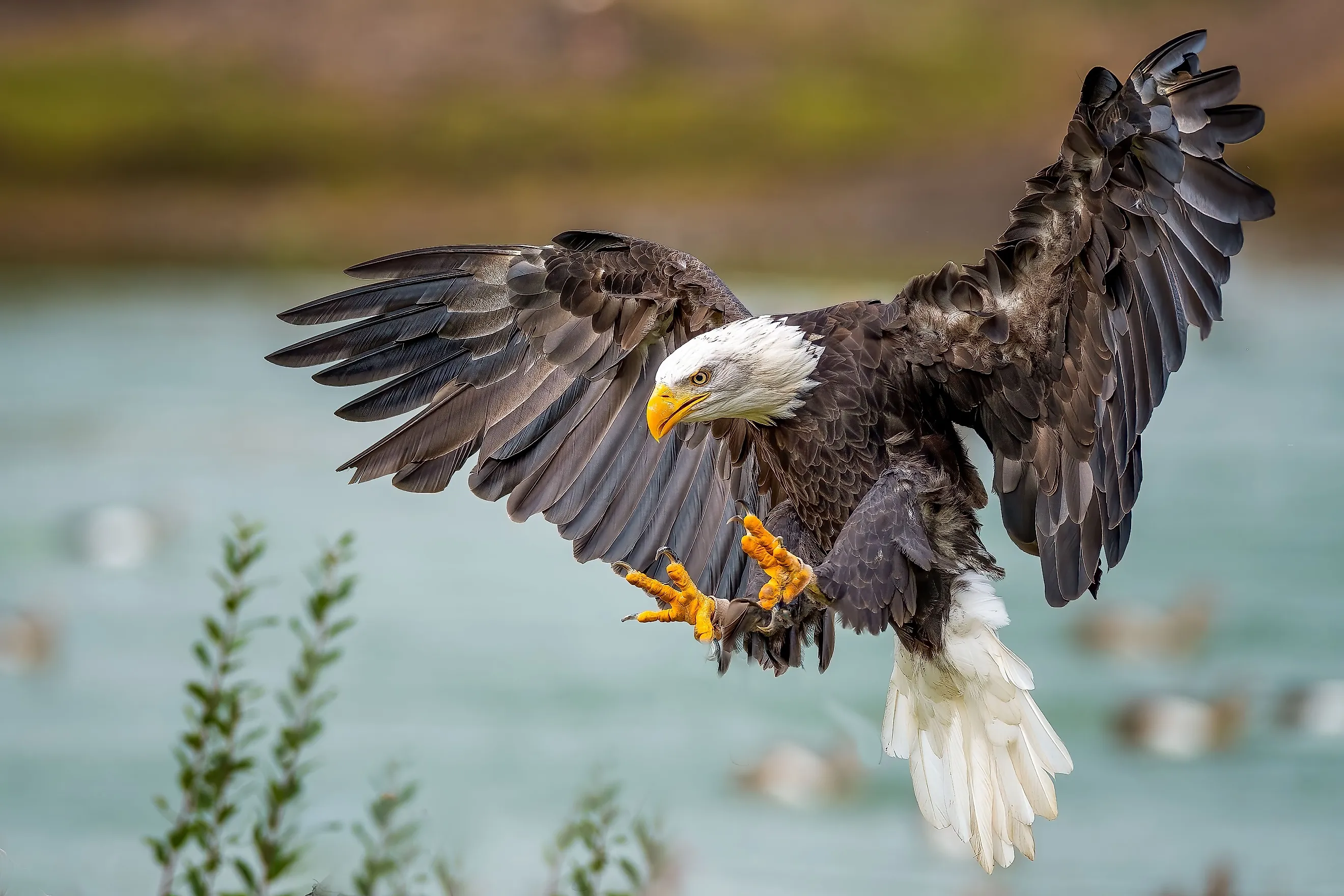
Nearly half of the bald eagle habitat mapped on America's national forest lands lies within just two forests in Alaska. A 2023 study examining 154 national forests found that the Tongass and Chugach together accounted for approximately 49% of the total, thanks to their extensive coastlines, salmon streams, and nesting habitat. Farther south, the lakes and mature pine forests of Minnesota and Michigan also support significant eagle populations. The five forests identified by the study offer some of the largest areas of suitable bald eagle habitat in the national forest system.
Tongass National Forest, Alaska

The Tongass National Forest contains more bald eagle habitat than any other national forest in the United States, according to the 2023 study. Covering nearly 17 million acres across Southeast Alaska, it is also the country's largest national forest. Its islands, sheltered fjords, and salmon-bearing streams provide extensive feeding grounds, while towering Sitka spruce and western hemlock trees offer suitable nesting sites.
The Tongass is especially important during salmon runs, when returning fish provide a concentrated food source for eagles. Birds gather along streams and coastal waterways, feeding on fish and perching in trees overlooking the water. Its approximately 11,000 miles of coastline create an unusually extensive network of suitable habitat. Bald eagles can frequently be observed around the Inside Passage, particularly near productive salmon streams.
The U.S. Forest Service manages the Tongass for several uses, including recreation, fishing, and timber production in designated areas. Protecting eagle nesting habitat is one consideration in those activities, especially where mature shoreline trees and salmon streams overlap with managed lands. Although exact forest-wide eagle counts are difficult to establish, the Tongass's habitat advantage over other national forests is well documented.
Chugach National Forest, Alaska

The Chugach National Forest contains the second-largest extent of mapped bald eagle habitat among national forests, according to the same 2023 analysis. Covering approximately 5.4 million acres in southcentral Alaska, the forest includes Prince William Sound, the Kenai Peninsula, and the Copper River Delta. Each of these areas provides important feeding habitat, particularly where salmon streams enter coastal waters.
The forest's combination of shorelines, river systems, and mature trees supports both breeding and wintering eagles. Bald eagles gather near productive fishing areas and use large trees along sheltered coastlines for nesting and roosting. The Copper River Delta is particularly important for migratory birds and fish, while the Kenai Peninsula offers numerous rivers where eagles can find food.
Forest management also influences the availability of suitable habitat. In 2020, the Forest Service recognized a partnership working to restore fish passage in the Copper River watershed. The project replaced undersized road culverts that had restricted salmon movement, improving access to upstream habitat. Maintaining productive fish populations helps sustain the food sources used by bald eagles and other wildlife. Visitors traveling along the Seward Highway or exploring Prince William Sound have opportunities to observe eagles along forested waterways.
Chippewa National Forest, Minnesota

The Chippewa National Forest contains one of the largest documented concentrations of nesting bald eagles in the contiguous United States. As of 2025, the U.S. Forest Service reported approximately 180 nesting pairs within the forest, alongside roughly 500 recorded nest structures. These figures describe different measures, since not every recorded nest is occupied in a given year.
The forest covers an extensive network of waterways in north-central Minnesota, including approximately 1,300 lakes and ponds, 925 miles of rivers, and 440,000 acres of wetlands. Three of Minnesota's largest lakes, Leech Lake, Lake Winnibigoshish, and Cass Lake, are located within its boundaries. These waters support fish populations, while mature shoreline pines provide suitable trees for nesting.
Bald eagle monitoring began in the Chippewa in 1963, when fewer than 12 nesting pairs were documented. The recovery that followed was closely associated with restrictions on the pesticide DDT and improved protection of nesting habitat. Forest Service personnel continue to monitor a selection of known nests each year, recording nesting activity and reproductive success.
Visitors have numerous opportunities to see eagles around the forest's larger lakes and river corridors. The Forest Service recommends watching near Leech Lake, Lake Winnibigoshish, and Cass Lake, particularly during the morning and evening. The Chippewa's combination of extensive waterways and longstanding nesting records makes it one of the country's best-documented national forests for bald eagles.
Superior National Forest, Minnesota

Minnesota's Superior National Forest is among the five national forests with the most mapped bald eagle habitat, according to the 2023 study. Covering approximately 3 million acres, it includes thousands of lakes, extensive wetlands, and the Boundary Waters Canoe Area Wilderness. These interconnected waterways provide feeding grounds, while mature white pines offer nesting locations.
Bald eagles are particularly associated with large trees near lakes and rivers. Forest Service research has documented a strong preference for eastern white pine nesting sites in the Superior, although red pines and aspens are also used. These tall trees provide sturdy branches capable of supporting nests that may be reused and enlarged over many breeding seasons.
The Forest Service maintains an active bird-monitoring program in the Superior. As of 2025, the agency identified 225 bird species using the forest, including 163 breeding species. Bald eagles are among the birds receiving targeted monitoring.
The forest also supports recreation and managed timber production, although logging is prohibited within the Boundary Waters wilderness. Maintaining suitable eagle nesting habitat involves considering the location of mature trees and protecting occupied nests from disturbance. Canoe routes through the Boundary Waters offer opportunities to observe eagles fishing or perched above the shoreline.
Ottawa National Forest, Michigan

Michigan's Ottawa National Forest is another of the five national forests identified for its extensive bald eagle habitat in the 2023 study. Covering approximately 1 million acres in the western Upper Peninsula, the forest extends southward from Lake Superior toward the Wisconsin border. Its landscape includes thousands of lakes, river valleys, and mature hardwood and conifer forests.
The forest's lakes and waterways provide feeding areas for bald eagles, while large trees along shorelines offer suitable nesting locations. Eagles also use forested areas for roosting, particularly where mature trees provide shelter and access to nearby open water.
One of the forest's notable wildlife habitats is the Sylvania Wilderness, an 18,327-acre protected area containing 34 named lakes. The wilderness preserves stands of mature red and white pine, along with habitat for bald eagles, loons, and ospreys. Visitors can explore the area by canoe or use its designated backcountry campsites.
Outside designated wilderness areas, the Ottawa is managed for several uses, including timber production and recreation. Forest management activities must account for protected species and known nesting sites. Although a recent forest-wide bald eagle population count is not available, the 2023 habitat analysis identifies the Ottawa as one of the national forest system's leading areas of suitable eagle habitat.
Why Bald Eagle Protection Still Matters
Bald eagles were removed from the federal endangered species list in 2007, following decades of population recovery. The U.S. Fish and Wildlife Service estimated approximately 316,700 bald eagles in the contiguous United States using data collected in 2018 and 2019. Despite that recovery, the birds remain protected under federal laws that prohibit harming eagles and disturbing their nests.
National forests help support these populations by managing nesting trees, waterways, and feeding habitat alongside recreational and commercial activities. Mature trees provide secure nesting sites, while healthy fisheries help sustain breeding and wintering birds. The Tongass and Chugach contain the greatest expanses of suitable habitat, while the Superior, Chippewa, and Ottawa demonstrate the importance of the Great Lakes region. Habitat acreage cannot establish exactly how many eagles occupy each forest at a particular time. Nevertheless, the documented concentration of suitable habitat within these five forests helps explain their importance to the long-term survival of America's national bird.