The State Parks With Redwoods
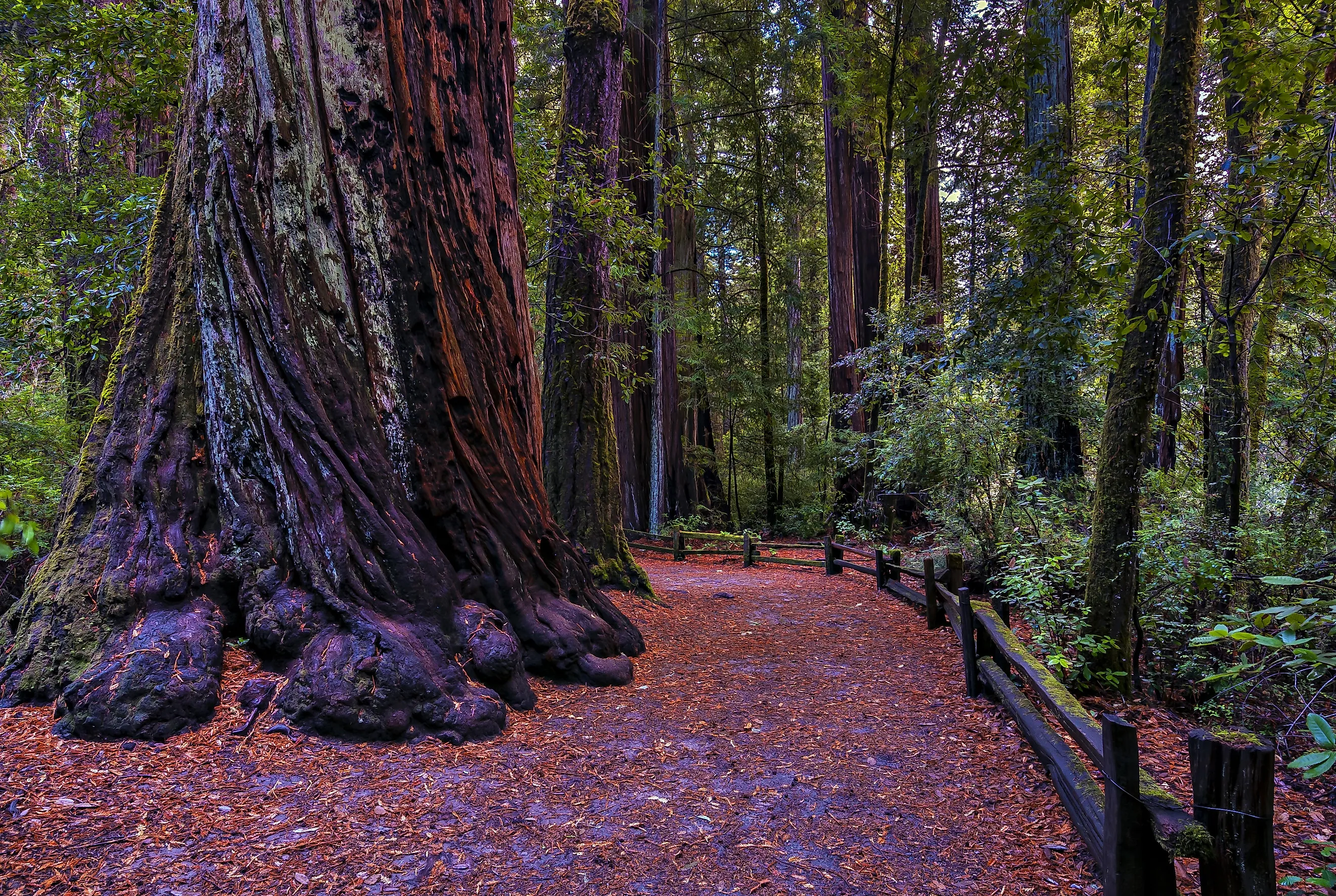
Coast redwoods grow wild along a fog-fed strip of Pacific coast roughly 500 miles long, from Brookings, Oregon, to the southern tip of Monterey County, and California is the only state with state parks built around them. Oregon's lone native grove near Brookings sits on national forest land, and Hawaii's redwoods were planted there. The biggest groves are all on or just off Highway 101 on California's North Coast.
Hendy Woods has the best inland grove in Mendocino County. In the Santa Cruz Mountains, Big Basin, Henry Cowell, and Portola each have ancient trees within about an hour of San Jose, and Pfeiffer Big Sur has the southernmost grove on this list. California State Parks counts 49 units with redwoods in all, and these ten are the ones where the trees are the whole point.
Jedediah Smith Redwoods State Park

On Howland Hill Road, enormous redwood trunks stand beside a narrow strip of gravel and dirt. The road crosses Jedediah Smith's forest east of Crescent City, passing trailheads that lead into some of the park's finest groves. Stout Memorial Grove is an easy place to start. A roughly half-mile loop winds through 44 acres of old-growth redwoods near the Smith River, with little elevation change to distract from the trees overhead.
The Grove of Titans is a separate stop. Here, an elevated walkway passes exceptionally broad redwoods, keeping foot traffic above the roots and surrounding vegetation. The boardwalk opened in 2022 after informal paths began damaging the grove. Together, the two walks take in some of the largest trees within the park's roughly 10,000 acres. Howland Hill Road has vehicle restrictions, so drivers of RVs and vehicles towing trailers need to check access before approaching. Jedediah Smith is also one of three state parks run jointly with Redwood National Park as Redwood National and State Parks, an arrangement dating to 1994, so visitor centers and trail information are shared with the National Park Service while the land remains a California state park.
Del Norte Coast Redwoods State Park

South of Crescent City, Del Norte Coast's redwood-covered slopes rise above eight miles of rugged shoreline. The terrain climbs to 1,277 feet above sea level, with steep ground separating much of the forest from the Pacific. Beneath the redwoods, dense vegetation includes rhododendrons and ferns. The inland Mill Creek area, added in 2002 when Save the Redwoods League bought 25,000 acres of logged watershed, also contains younger forest recovering from logging, so the park holds both ancient groves and developing stands.
Mill Creek Campground lies about two miles inland from Highway 101 and is open from May through September, so it is a seasonal base for this part of the coast. Wilson Beach, also called False Klamath Cove, is a half-mile shoreline stop below the forested hills, with tidepools at low tide and conditions too rough for swimming. As of fall 2026, access to the park's trails is limited. The Damnation Creek trailhead is closed while Caltrans works on Highway 101, and parts of the Mill Creek area are closed for road removal and forest rehabilitation, so current conditions need a check before any hike here.
Prairie Creek Redwoods State Park

The ten-mile Newton B. Drury Scenic Parkway runs through Prairie Creek's old-growth forest, with redwoods immediately beside the pavement. Trailheads sit at intervals along the road, so a walk can start from almost any pullout. Beyond those roadside stops, approximately 75 miles of trails extend through the park, enough for much longer hikes beneath the canopy.
Near Elk Prairie, the forest opens onto meadows where Roosevelt elk often graze. The campground sits nearby, so an overnight stay can combine morning walks among the redwoods with time watching elk at the meadow's edge. Keep plenty of distance, even when the animals appear unconcerned by passing visitors.
Fern Canyon is another reason to stay longer, with ferns covering its steep walls near Gold Bluffs Beach. Vehicle access to that day-use area requires a permit between May 15 and September 15. The approach along Davison Road is unpaved, vehicles over 24 feet are turned away, and trailers are prohibited.
Humboldt Redwoods State Park

At Humboldt Redwoods, a single roadside stop covers almost nothing. About 17,000 of the park's 53,000 acres are old-growth redwoods, and Rockefeller Forest is the world's largest remaining contiguous old-growth coast redwood forest. The 32-mile Avenue of the Giants is the usual introduction. It follows the Eel River past memorial groves, with frequent pullouts for parking and short walks.
Founders Grove is particularly convenient for a shorter visit. Its half-mile loop passes the fallen Dyerville Giant, a redwood that measured about 362 feet before it came down in 1991, without a demanding climb. Farther into the park, trails along Bull Creek run through the extensive forest beyond the main scenic road. A few hours cover a drive and a grove walk, while several nights leave time for longer hikes on the park's roughly 100 miles of trails. Camping also spares the visitor from fitting the entire park between stops on Highway 101.
Richardson Grove State Park

Individual trees are the point at Richardson Grove. Along the gentle path known as the racetrack, a chandelier-shaped redwood divides into multiple trunks above the ground. Nearby are a walk-through tree, a hollow bat tree where Yuma myotis roost, and other unusually formed redwoods, so children and adults have specific features to seek out during a short stroll. Some trees exceed 300 feet in height. The grove stands beside Highway 101 in southern Humboldt County, where the South Fork Eel River breaks the canopy with open gravel bars. Established in 1922, this was one of the North Coast's first redwood state parks. Visitors staying longer have about nine miles of hiking trails to explore, with campgrounds inside the park. In summer, rangers lead guided nature walks and campfire programs. The central grove is the main attraction, especially for travelers who want to see substantial redwoods without committing to a long hike.
Hendy Woods State Park

Hendy Woods sits inland in Anderson Valley, where summer days are generally warmer and less foggy than on the Mendocino coast. Its two old-growth groves, Big Hendy and Little Hendy, contain redwoods that can exceed 300 feet in height, and some may be close to 1,000 years old. The accessible, 0.6-mile Discovery Trail passes through Big Hendy, so the park is a practical choice for a gentle walk among ancient trees.
Big Hendy's Upper Loop extends the outing to about 1.6 miles. Between the groves, the Hermit Hut Trail passes shelters associated with a Russian immigrant who lived in the woods for about 18 years, including one made beneath a fallen redwood. A riverside meadow along the Navarro River has picnic tables outside the forest's shade. For an overnight visit, the park has campsites and four rustic cabins, so staying among the trees does not necessarily require bringing a tent.
Portola Redwoods State Park

Peters Creek Grove is the reason to set aside a full day at Portola. The park's suggested route covers about 13 miles round trip with roughly 1,800 feet of climbing, reaching old-growth redwoods well beyond the developed camping area. That distance is too much for a casual add-on to a short visit, but it is a substantial forest hike in the Santa Cruz Mountains.
There are much shorter options. The half-mile Old Tree Trail leads to a redwood estimated at 1,200 years old and about 300 feet tall near park headquarters, while other paths follow creeks beneath ferns and redwood sorrel. Portola has about 18 miles of trails across roughly 2,800 acres, with the approach road descending into the forest from a ridge.
The visitor center and family campground sit well below the more exposed uplands. Backpackers can also book one of six sites at Slate Creek Trail Camp and split the Peters Creek outing over two days instead of completing it in one.
Big Basin Redwoods State Park

Blackened bark and fresh green shoots are the first things a visitor notices on Big Basin's Redwood Loop. The flat, 0.6-mile trail passes some of the park's largest and oldest trees, many of which survived the 2020 CZU Lightning Complex Fire. The fire burned through approximately 97 percent of the park and destroyed its historic buildings. Most of the old-growth redwoods remained standing, and new growth now surrounds their scorched trunks.
Established in 1902, Big Basin is California's oldest state park, and the largest continuous stand of ancient coast redwoods south of San Francisco is still here. A walk through it is a close view of how those trees recover after severe fire. Restoration continues throughout the park, with trails reopening gradually. The Redwood Loop is a manageable starting point, but longer hikes need to be planned using the current trail map. As of 2026, a parking reservation is the only way to guarantee a space, first-come spots are limited, and the campgrounds have not yet been rebuilt.
Henry Cowell Redwoods State Park

A level, 0.8-mile loop circles Henry Cowell's 40-acre old-growth grove near Felton, a few miles from Santa Cruz. The largest trees reach roughly 277 feet tall, and some are around 1,500 years old. The short route leaves plenty of time to examine hollow trunks and the thick, deeply furrowed bark without needing to keep moving toward a distant destination. A few miles north, the park's separate Fall Creek Unit is a longer outing through second-growth redwoods. Trails follow a fern-lined creek canyon and pass the stone kilns of a lime industry that closed in 1919. The two sections are markedly different stages of redwood forest within the same park. The main grove is the choice for a first visit or a shorter walk; Fall Creek has nearly 20 miles of connecting trails for those wanting to spend more of the day hiking.
Pfeiffer Big Sur State Park

Redwoods grow along the Big Sur River at Pfeiffer Big Sur, with the slopes of the Santa Lucia Range rising above the wooded valley. Near the developed part of the park, the River Path passes the Redwood Deck and picnic areas beside the water. The Colonial Tree, fenced at its base and estimated at about 1,100 years old, is one of the park's standout redwoods. All of this is within a short walk of the day-use lots, with no need to head into the steeper backcountry.
Big Sur Lodge has rooms inside the park, and the campground includes sites near the river. With either one, an overnight in the valley is possible after a day on the surrounding Big Sur coast.
The park reopened on October 16, 2026, after a two-month closure during the Timber Fire, which burned about 517 acres inside the park while the campground served as a base camp for fire crews. The River Path, Redwood Grove Boardwalk, campground, and lodge are open again. Pfeiffer Falls Trail, the Big Sur River Gorge Trail, and several other trails stay closed for recovery work until further notice.
Where Else To Find Redwood State Parks
California State Parks counts 49 of its units as redwood parks, a figure that includes state natural reserves and recreation areas alongside the ten state parks above. Many lie in Humboldt and Mendocino counties, where protected forests occupy river valleys and coastal hills. Farther south, additional parks contain redwoods in Marin County and the Santa Cruz Mountains. Big Sur has another concentration, with groves growing in sheltered creek canyons below drier slopes.
Redwoods also reach inland into parts of Sonoma and Napa counties. There, streams and shaded ravines support stands within landscapes better known for oak woodland and vineyards. In some coastal parks, the redwoods occupy inland sections several miles from the beaches where most visitors go.
Native coast redwoods continue across the Oregon border near Brookings, where the northernmost grove in the country is a short walk from Alfred A. Loeb State Park on national forest land along the Chetco River. Hawaii has planted redwoods outside their natural range, including a grove at Koke'e State Park on Kauai. California remains the only state with dozens of state park units where the species grows wild.