5 One-of-a-Kind Small Towns in North Carolina
Some towns exist because of a single defining condition that shaped how people settled, worked, and lived. North Carolina’s geography includes the Blue Ridge Mountains, the Piedmont region, and a long Atlantic coastline, all of which influenced where communities formed and how they developed. The state’s early history, including its role as one of the original Thirteen Colonies and its admission to the Union in 1789, shaped patterns of settlement and industry that continue to influence towns today. Each of the towns featured here developed around a defining feature that remains difficult to find elsewhere in the United States. Together, they show how specific histories and local conditions created places with distinct identities.
New Bern

A single invention created here went on to become one of the most recognizable beverages in the world. In 1898, pharmacist Caleb Bradham developed a carbonated drink in his drugstore that he first called Brad’s Drink, later renamed Pepsi-Cola. The original pharmacy is preserved as the Birthplace of Pepsi-Cola, where exhibits trace the drink’s early development and rise to national popularity. The formula, which included sugar, water, caramel, lemon oil, and kola nuts, remains central to the site’s interpretation.

Beyond its soda legacy, New Bern reflects its role as an early colonial center. Tryon Palace, the restored eighteenth-century governor’s residence, anchors the historic district and illustrates colonial life in the region. Nearby, Union Point Park marks the meeting of the Neuse and Trent rivers, which shaped early trade routes. A short walk away, Carolina Creations showcases regional art and crafts, connecting the town’s historic foundations with its contemporary creative culture.
Bath

This town holds a singular place in state history as North Carolina’s first incorporated town, established on March 8, 1705. The area now known as Historic Bath preserves the original footprint of the colonial settlement, where early government, trade, and maritime activity shaped the region. Unlike later towns that expanded or were rebuilt, Bath retained its original scale, allowing visitors to experience one of the earliest planned communities in the state.
Many historic sites remain intact within the Historic Bath district. The most prominent is St. Thomas Episcopal Church, completed in 1734 and recognized as the oldest standing church in North Carolina. Nearby stands the Palmer-Marsh House, one of the state’s oldest residences, which offers insight into early domestic life. A short walk leads to Bonner’s Point, once an active waterfront for shipping and trade. Each year, Bath Fest celebrates the town’s colonial heritage with reenactments, music, and community events.
Seagrove

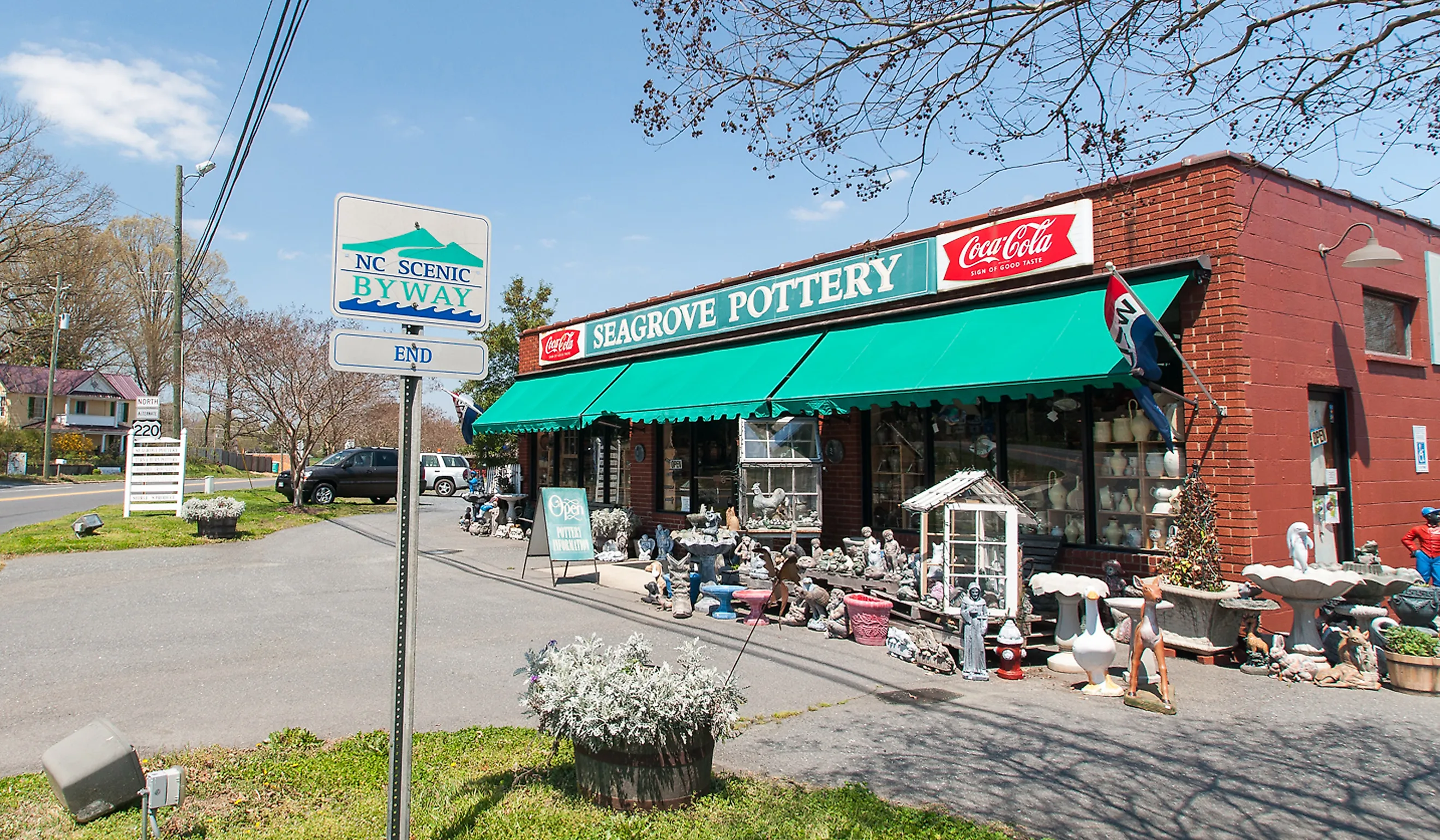
Known as the Pottery Capital of the United States, Seagrove is home to one of the largest concentrations of working potters in the country. Nearly one hundred active potters operate within the region, many from families who have practiced the craft for nine generations. Their work continues traditions rooted in local clay sources and long-established firing techniques, forming a living craft community rather than a recreated one.
Much of this activity takes place along North Carolina Highway 705, often called the Pottery Highway, where studios, kilns, and galleries line the road. Visitors can observe working studios and speak directly with artisans. The North Carolina Pottery Center documents the history of the craft and its influence on the region. Each year, the Celebration of Seagrove Potters brings together artists and visitors for demonstrations and sales at Historic Luck’s Cannery.
Wilson

Wilson is home to one of the most distinctive collections of kinetic folk art in the United States. The Vollis Simpson Whirligig Park features more than thirty large wind-powered sculptures made from salvaged metal, road signs, and industrial parts. Created by local mechanic and self-taught artist Vollis Simpson, the structures rise up to fifty-five feet and move entirely with the wind. In 2013, the installation was designated North Carolina’s official folk art, and in 2025, it was recognized as the second-best sculpture park in the country.

Beyond the park, downtown Wilson offers several complementary attractions. The North Carolina Baseball Museum explores the state’s long relationship with the sport through exhibits on players, teams, and leagues. Nearby, Casita Brewing Company serves as a local gathering place centered on craft beer and community events. The Wilson Botanical Gardens add a quieter dimension to the area, featuring landscaped paths and native plant collections that balance the energy of the town’s cultural core.
Franklin

This mountain town stands out nationally as the only community in the United States with a museum dedicated entirely to Scottish tartans. The Scottish Tartans Museum preserves an extensive collection of historic and contemporary tartans, including rare examples that trace family lineages and regional identities. The museum also documents the migration of Scottish settlers to the southern Appalachians and their influence on local culture. Displayed here are more than 500 tartan samples, including pieces dating back to around 1725, along with original and replica Highland dress that traces the evolution of kilt styles from the late sixteenth century to the present day.

Beyond the museum, Franklin offers additional points of interest tied to its setting and heritage. The Cherokee Ruby and Sapphire Mine allows visitors to search for gemstones in one of the region’s richest mining areas. Lazy Hiker Brewing Co. provides a gathering place rooted in mountain culture, while the Smoky Mountain Center for the Performing Arts hosts concerts and touring productions that contribute to the town’s cultural life.
Distinctive Towns Across North Carolina
These towns show how specific conditions shaped places in North Carolina into destinations that stand apart nationally. Bath holds its status as North Carolina’s first incorporated town and preserves Historic Bath with landmarks such as St. Thomas Church and the Palmer-Marsh House. New Bern anchors a global brand at the Birthplace of Pepsi-Cola, where Caleb Bradham first sold Brad’s Drink in 1898. Seagrove operates as the Pottery Capital of the United States, with studios clustered along the Pottery Highway and a major fall studio tour. Wilson centers downtown around Vollis Simpson’s wind-powered whirligigs, recognized as state folk art. Franklin hosts the Scottish Tartans Museum, linking rare collections and local civic identity through the Franklin Tartan.