10 Towns in South Carolina With the Best Downtown Areas
South Carolina does a downtown well. Hand the state an old railroad stop or a river landing, give it a few blocks of brick storefronts and a courthouse square, and somehow that adds up to a whole Saturday before you notice the afternoon is gone. The ten towns here across South Carolina are the ones that do it best, and no two do it the same way. One is where the Confederate cabinet finally called it quits. One trained the Tuskegee Airmen. One has a Ferris wheel taller than anything else on its skyline. Here is where to spend the day.
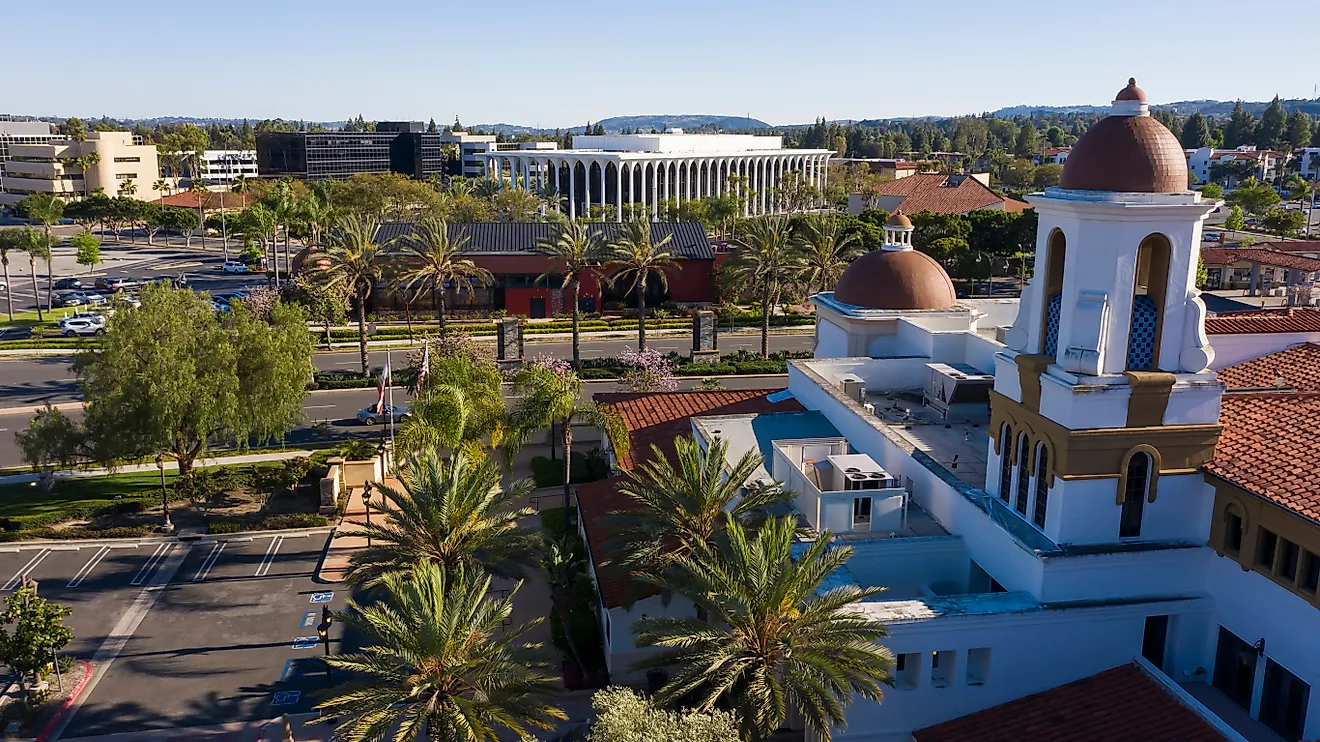
Abbeville

Abbeville bills itself as the birthplace and deathbed of the Confederacy, and it has the receipts for both. The first mass meeting calling for secession was held here in November 1860. Five years later, in May 1865, Jefferson Davis and his war cabinet met for the last time at the Burt-Stark Mansion, a Greek Revival house built in the 1830s, and admitted the war was lost. All of that sits within a couple of blocks of Court Square. The square also holds the Abbeville Opera House, which opened in 1908 and is the state's official theater. It still raises and lowers its scenery on the original rope-and-pulley rigging, the last working "hemp house" in South Carolina. Come in October and the Hogs and Hens barbecue festival takes over the whole downtown.
Aiken

Aiken has spent more than a century arranging itself around horses. In the late 1800s wealthy Northerners built a winter colony here for the mild weather and the riding, and the town still has more equestrian everything than places ten times its size. Downtown runs on brick sidewalks past The Willcox, a hotel that has been putting up presidents and old money since around 1900, and The Alley, a narrow lane packed with restaurants. A few blocks away, Hopelands Gardens spreads out under old oaks, and the Aiken Thoroughbred Racing Hall of Fame keeps the town's trophies. The giveaway to what Aiken cares about: several streets in the historic district are left unpaved on purpose, so the horses have something soft to walk on.
Georgetown

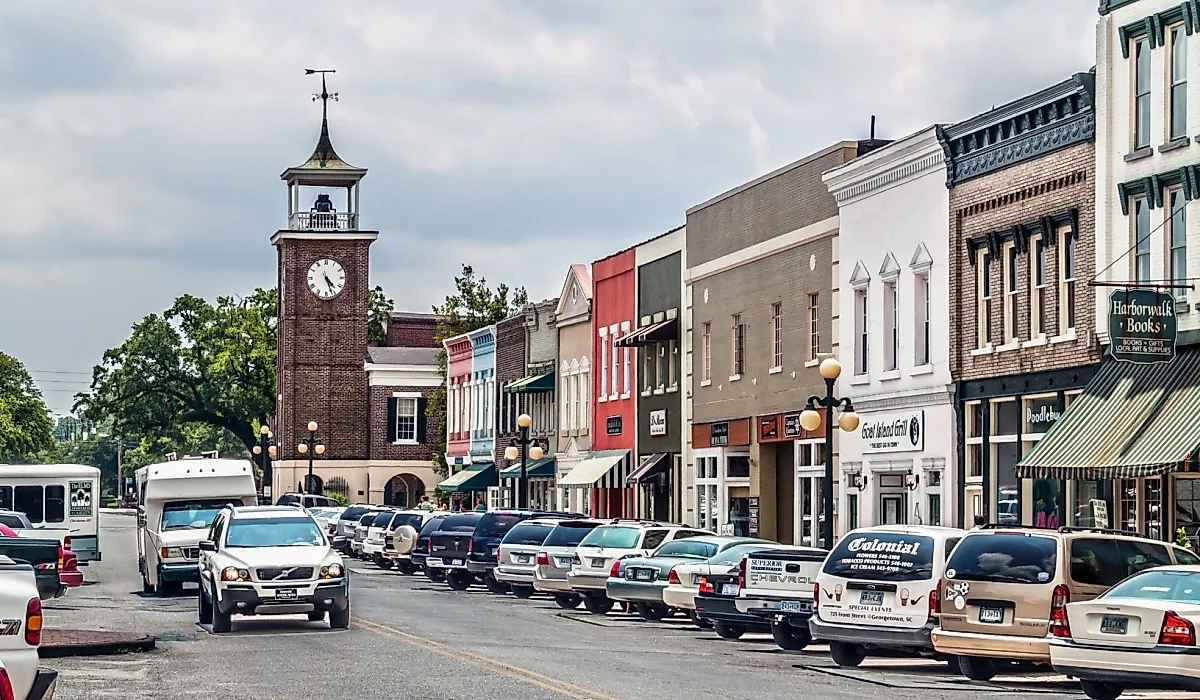
Georgetown is the third-oldest city in South Carolina, founded in 1729 on Winyah Bay where a knot of rivers meets the sea, and for a long stretch it was one of the wealthiest, all of it built on rice. By the mid-1800s the plantations around Georgetown grew more rice than anywhere else in the country. That history is the downtown's whole personality now. The Harborwalk runs along the water behind Front Street, where the shops and restaurants sit in old brick buildings, and the Rice Museum tells the story from inside the Old Market Building beneath the town clock. The Kaminski House, a merchant's home from 1769, still looks out over the Sampit River. It is a downtown you explore on foot, then from a bench.
Beaufort

Beaufort has played a lot of places it is not. The downtown bridge doubled as the Mississippi River in "Forrest Gump," and the town stood in for the settings of "The Big Chill" and "The Prince of Tides." That is what happens when you are the second-oldest city in the state, chartered in 1711, and you keep your antebellum district intact because Union troops occupied the town rather than burning it. It is pronounced "BYOO-fert," by the way; say "BOH-fort" and you have admitted you were thinking of the one in North Carolina. Downtown means Bay Street, the waterfront park along the Beaufort River, and streets shaded by live oaks the size of small buildings. The 1798 Arsenal now holds the town's history museum.
Conway

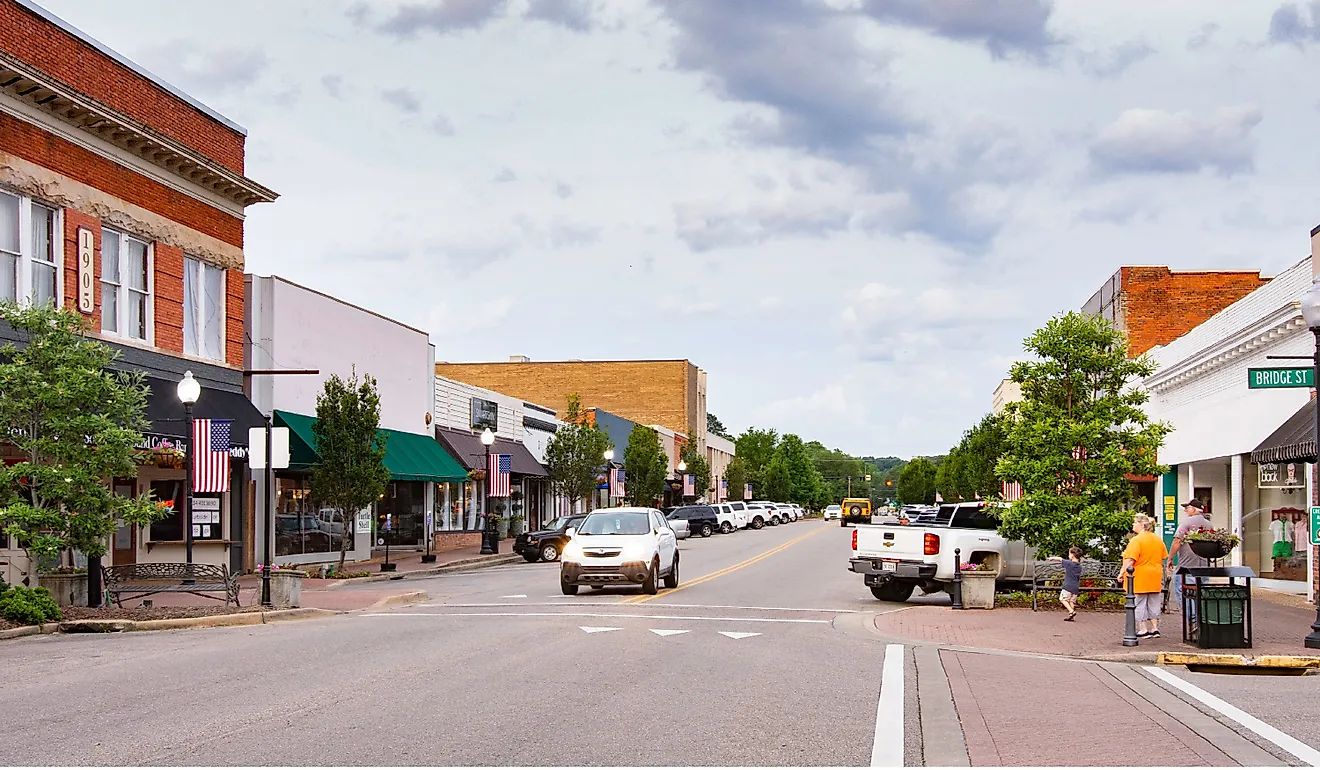
Conway wraps around a bend in the Waccamaw River under live oaks old enough to have opinions. Founded in 1732 as Kingston, it is one of the oldest towns in the state, and its downtown was rebuilt in brick in the early 1900s after a fire. The Riverwalk traces the black water of the Waccamaw, Main Street handles the shops and restaurants, and the Horry County Museum keeps the local history. Here is the detail that tells you how long this town has been standing: a live Civil War cannonball was found grown into the roots of a downtown oak, and when crews dug it out, it turned out to still be loaded, so the military took it away and detonated it. People had strolled past it for generations without knowing.
Camden

Camden is the oldest inland town in South Carolina, laid out in 1733 as Pine Tree Hill and later renamed for a sympathetic British lord, and it has been in the horse business almost as long. This is steeplechase country: the Carolina Cup runs at the Springdale Race Course, and downtown Camden has the National Steeplechase Museum, the only museum in the country devoted entirely to racing over fences. The town also spent the Revolution as a British headquarters, a story told at the Historic Camden site on the edge of downtown. On Broad Street, the 1825 courthouse is the work of Robert Mills, the South Carolina architect who went on to design the Washington Monument. The rest of the district fills in with galleries, an arts center, and the kind of long lunch that turns into an afternoon.
Myrtle Beach

Myrtle Beach is famous for the beach, obviously, but it also has a downtown, and lately it has been pouring real money into it. The Myrtle Beach Downtown Historic District collects the original buildings from the 1920s and 1930s, Art Deco and Mission styles, on the National Register, and the ongoing Arts and Innovation District project is rebuilding the blocks between the Boardwalk and Main Street. The signature landmark is the SkyWheel, an observation wheel on the Boardwalk that stands 187 feet tall, which made it the tallest Ferris wheel east of the Mississippi when it opened in 2011. That is the honest measure of a beach downtown: the tallest thing on the Myrtle Beach skyline is a Ferris wheel, and nobody is complaining.
Clover

Clover's official motto is "the town with love in the middle," which is the sort of thing you can get away with when your name is spelled c-L-O-V-E-r. The name is not sentimental in origin, though. The town began in 1876 as a railroad water stop, and the story goes that overflow from the locomotive tank kept a patch of clover green, so the crews called it the clover patch and it stuck. Downtown is a National Register district of one- and two-story brick storefronts built between the 1880s and the 1930s, anchored by Main Street and the Queen Anne Magnolia House and Gardens. Clover leans hard into its Scots-Irish roots, with a Highland games festival each fall and a sister city in Larne, Northern Ireland. Kings Mountain, where the Revolution turned in 1780, is about 13 miles west.
Orangeburg
Orangeburg answers to the Garden City, and the reason is about 175 acres of it stretched along the Edisto River. Edisto Memorial Gardens started in the 1920s as five acres of azaleas, added its first roses in 1951, and grew into an official rose test garden with thousands of plants, all of it free to walk and open dawn to dusk. The roses keep blooming until the first frost, and each May the town throws the Festival of Roses around them. Downtown is a few blocks off, and Orangeburg is also a college town, home to South Carolina State University and Claflin University, two of the state's historic Black colleges. One small, stubborn detail in the gardens: a 4,000-pound waterwheel installed in 1941 still turns without a drop of electricity, and after a tree crushed it in 2012, the town simply repaired it and set it back.
Walterboro

Walterboro calls itself the front porch of the Lowcountry, and it earns the porch part; this is a town built for sitting a while. Planters founded it in 1783 as a summer refuge from the malaria of their river plantations, and downtown still runs on shaded, walkable streets. East Washington Street is the antiquing strip, lined with shops that have been there long enough to qualify as antiques themselves, and the South Carolina Artisans Center shows off the state's craftspeople nearby. The heavier history is just outside town: more than 500 of the Tuskegee Airmen, the first Black military pilots in the country, trained at the Walterboro Army Airfield in 1944 and 1945, and a monument stands at the old field in their honor.
Ten Downtowns, One Habit
What these towns share is not a look, it is a decision: they kept their Main Streets instead of flattening them into parking lots, and it shows in a hundred small ways, from the rope rigging in Abbeville's opera house to the unpaved horse lanes in Aiken. The Confederacy ended on one of these squares. The Tuskegee Airmen trained beside another. A third let a Ferris wheel do the work of a skyline. Pick one, park once, and see how far you get on foot before the afternoon disappears on you.