10 Off-The-Beaten-Path Towns In Alaska
A Christmas-themed town, remote Aleutian islands, Gold Rush settlements, and communities serving as gateways to Glacier Bay and Denali reveal a lesser-known side of Alaska. Historic cultural landmarks and wildlife-filled coastlines offer experiences that feel far removed from the state's better-known destinations. Visitors can discover World War II and Native history in Unalaska, Russian and Tlingit heritage in Sitka, and traces of the Klondike Gold Rush in Skagway and Hope. These are ten off-the-beaten-path towns in Alaska that are worth going off the main trail to see.
Unalaska

Unalaska sits in the Aleutian chain of islands and contains some of the most intriguing historical places in the entirety of the state. The Unangan people have lived here for around 9,000 years, although the U.S. military briefly forced them out during World War II. Today, their history is preserved at the Museum of the Aleutians, including ancient tools, boats, baskets, and furs. The town also had a Russian presence, evident in the stunning Holy Ascension of Our Lord Cathedral, a Russian Orthodox church built in 1896, with gorgeous white walls and green domes. The area's World War II history, including battles between American and Japanese forces, is told at the Aleutian World War II National Historic Area Visitor Center. Visitors can enjoy hiking along old military roads by purchasing a recreational land-use permit from the Ounalashka Corporation.
Sitka

Sitka is one of the most culturally rich settlements in Alaska. Originally known as New Archangel, it served as the Russian capital of Alaska until it was handed over to the U.S. in 1867 as part of the Alaska Purchase. Visitors can experience Russian heritage at St. Michael's Cathedral, one of the oldest Orthodox cathedrals in the United States; the Russian Blockhouse; or Castle Hill, the site where the treaty was signed, transferring ownership of Alaska to the United States. The town also has a large collection of Haida and Tlingit totem poles at Sitka National Historical Park. The park is an all-in-one destination of Sitka culture, with a museum filled with Tlingit and Russian artifacts and a Tlingit arts studio that keeps the Native art forms alive.
Healy

Healy had its origins in mining, when the United States Geological Survey discovered rich coal reserves. By 1919, a coal mining company opened, and the Alaska Railroad came through the town, bringing in new workers. Much of the mining dried up in the 1970s, but the mill and several buildings are visible within Denali National Park and Preserve along the Stampede Trail, a track originally used by miners. Denali National Park is an absolute must-visit for mountain lovers, as it's home to the highest peak in North America, the 20,310-foot-tall Denali (federally designated as Mount McKinley). The six-million-acre park has a few marked trails, such as the 1.5-mile Oxbow Loop Trail that follows the Nenana River, but much of it is unmarked, allowing visitors to travel the wilderness at their own pace. In Healy proper, visitors can enjoy good food and drink from 49th State Brewing.
Skagway

Skagway gets its name from the Tlingit word Shg̱agwéi, which historically refers to "a place with solid core trees". In 1896, gold was discovered on Rabbit Creek, bringing thousands into the city. Today, that heritage can be found at the Klondike Gold Rush National Historical Park, which comprises the majority of the Skagway Historic District, including the 1900 White Pass & Yukon Route Railway Administration Building. Hikers also have the opportunity to walk in the footsteps of those prospectors along the Chilkoot National Historic Trail, a 33-mile journey from which one can see artifacts left behind by the original prospectors, preserved by the museum. For those who don't enjoy hiking, they can ride the White Pass & Yukon Route Railway, known as The Scenic Railway of the World, which climbs mountains and passes through tunnels along the border between Alaska and Canada. The route includes excursions such as the Bennett Scenic Journey, which covers 67.5 miles to Carcross, YT, with historic landmarks, a boxed lunch, and views of Lake Bennett.
North Pole

As befitting Alaska's wintry reputation, the North Pole always keeps a festive spirit. Located less than half an hour away from Fairbanks, North Pole even has Santa Claus on its city council. Children can go to the Santa Claus House to send a letter to St. Nick, purchase gifts, or take a photograph with Santa and live reindeer at the nearby Antler Academy. Visitors can feed and pet these fascinating creatures. The Santa Claus House is also known for its giant Santa statue, which stands more than 40 feet tall and is one of the town's most recognizable landmarks. Winter is one of the best times to visit the North Pole for its Winterfest & Holiday Bazaar, featuring craft and food vendors, holiday displays, and winter-themed activities.
Close to the North Pole is the Chena Lake Recreation Area, a 2,000-acre park with a swimming beach, birch forests, and trails. The recreation area also includes campgrounds, picnic shelters, and a large lake popular for kayaking and paddleboarding during the summer months. Visitors in the winter can rent a spot to try out ice fishing.
Whittier

Located under 60 miles southeast of Anchorage, Whittier has long served as a strategic port, with its deep waters free of ice, and it provides convenient access from Prince William Sound to Cook Inlet. The best way to learn about its role as a strategic port and military outpost in World War II is at the Prince William Sound Museum. Exhibits cover the town's military history, railroad development, and the construction of the harbor facilities that helped shape modern Whittier.
There are all manner of intriguing places to go exploring, both above and below ground, in Whittier. Kayakers can enjoy the calm waters of Prince William Sound and go searching for whales, sea otters, and harbor seals, while drivers can take their cars through the Anton Anderson Memorial Tunnel, the longest combined rail and highway tunnel in North America at 2.5 miles long, which passes through the base of a mountain. There are also several short hikes around Whittier, including the Portage Pass Trail, a roughly four-mile round-trip route that provides views of Portage Glacier and Portage Lake.
Hope

Hope is one of the earliest Gold Rush towns in Alaska. In late 1889, miners discovered gold nuggets in Resurrection Creek, which in turn drew in a huge flood of prospectors as part of the Turnagain Arm gold rush in the 1890s. Today, Hope is a much smaller community than it was during the Gold Rush, but it still preserves its Gold Rush heritage, Alaskan friendliness, and access to picturesque trails. The Hope & Sunrise Historical Mining Museum has restored historic buildings, artifacts, and stories of that time.
Visitors in town can pan for gold themselves at the gold panning zone on Resurrection Creek or explore the town's collection of preserved Gold Rush-era buildings, many dating to the late nineteenth century. One of the best ways to see Hope is to go out for a hike in the wilderness, such as the Hope Point Trail, which climbs more than 3,000 feet up a mountain, or the Gull Rock Trail, which follows the coast up the Turnagain Arm.
Gustavus

Gustavus is an intriguing town that, until fairly recently, was covered by a glacier. In the 1800s, the glacier retreated, and a spruce-hemlock forest began to grow, along with the town's tastiest treat: strawberries. To this day, the town is called Strawberry Point for the wild strawberries that grow in the fields and are available for humans (and bears) to pick. Gustavus serves as a gateway to Glacier Bay National Park & Preserve, a 3.2-million-acre wilderness known for its tidewater glaciers, snow-capped peaks, and abundant marine wildlife, including humpback whales, sea otters, and seals. In Gustavus itself, one can enjoy a pleasant stroll through the Gustavus Forelands Preserve, which passes along beaches, wetlands, and forests. The preserve is also a popular birdwatching area, particularly during seasonal migrations. Visitors can also pick up a variety of Native-made gifts, artwork, carvings, and jewelry from the Glacier Bay Lodge Gift Shop.
Wrangell

Wrangell, located on Wrangell Island, is unique among Alaska settlements for having been ruled by four nations in its history: the Tlingit people, Russia, Britain, and the U.S. The Tlingit culture has played a significant role in Wrangell's landscape, especially through totems. At Chief Shakes Island by the harbor, there is a collection of six house posts (similar to totem poles), along with Chief Shakes Tribal House, a traditional Tlingit clan house that hosts cultural displays and events. Residents have kept this totem-carving tradition alive through the Cultural Center & Carving Shed, which teaches how to make totems and other Native crafts and arts.
One of the region's most interesting historic sites lies just to the north at Petroglyph Beach State Historic Park, featuring rock carvings dating back thousands of years. These petroglyphs depict birds, fish, whales, and human faces, and more than 40 carvings have been documented at the site. Visitors can view many of them from a wooden boardwalk that runs along the shoreline.
Homer

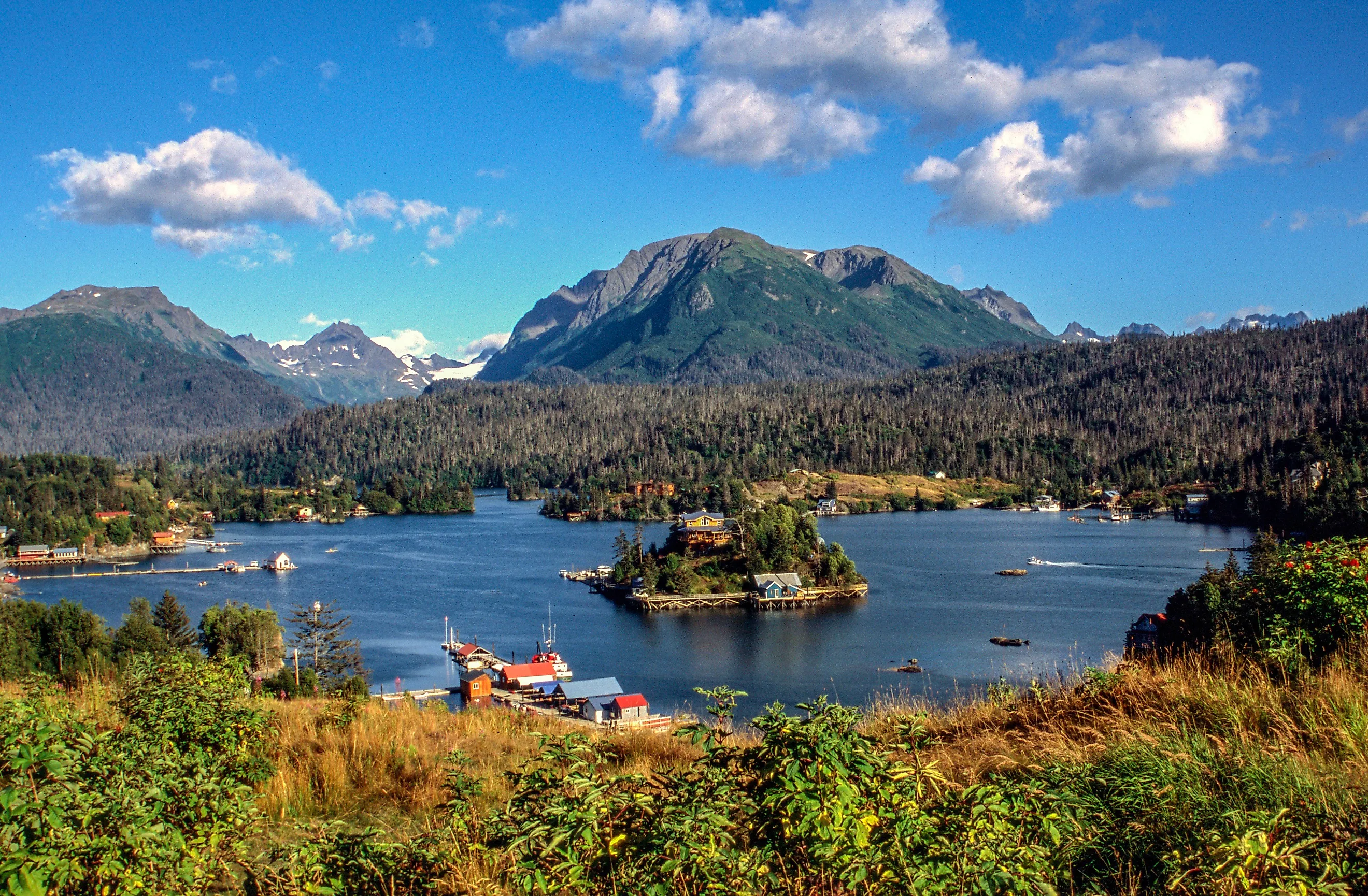
Sitting on Kachemak Bay, 200 miles south of Anchorage, Homer is renowned by fishers for its large population of halibut, which has earned it the title of Halibut Fishing Capital of the World. Fishing isn't the only activity in Homer, as visitors can take in any number of views through tour companies such as Alaska Bear Adventures, which takes guests on journeys to see grizzly bears throughout Katmai and Lake Clark National Parks. Those who prefer to view seabirds can venture out to the Alaska Maritime National Wildlife Refuge, which protects more than 2,400 islands across Alaska and provides habitat for millions of nesting seabirds. Its visitor center offers information on the region's coastal wildlife, ecosystems, and marine conservation efforts.
Downtown Homer has a rich arts scene, with the Bunnell Street Arts Center showcasing local artists through exhibitions, film screenings, artist talks, and other activities. Housed in a historic 1930s building, the center regularly hosts community events and rotating exhibits featuring artists from across Alaska.
These Offbeat Towns Have A Hidden Spirit
These Alaska communities have plenty to celebrate, which is why they have such a festive spirit. In the North Pole's case, that comes from its Christmas-themed attractions, while others get it from their Gold Rush culture, such as Hope and Skagway. Other communities, like Sitka, celebrate the heritage of the Tlingit and other Native cultures through both traditional and modern totem poles and Native crafts, while others challenge residents and visitors alike to go out and smell the wild strawberries. These towns are proof that the liveliest places can be found in the most remote corners of the U.S.