10 Best Places To Live In Ontario In 2026
Ottawa carries close to a million residents and one of the country's steadiest public-sector payrolls, while Kingston keeps housing costs well under the national average despite a waterfront address. Halton Region, meanwhile, has posted the lowest crime severity index among Ontario's largest policing jurisdictions for more than fifteen consecutive years. A strong and diverse employment base, affordable housing, low crime rates, and a thriving downtown that prioritizes local are what actually move households across Ontario. The ten communities below hold up on all four, most of them without the Toronto premium attached, and nearly every one fronts a lake, river, bay, or canal.
Ottawa

Ottawa is proof that a national capital does not have to feel stuffy. Home to about a million people, it carries major national museums and embassy-district streets. The careers are big-league too, in government, technology, and healthcare, all at a pace far gentler than Toronto. It lands near the top of Canadian quality-of-life rankings year after year, and its crime rate sits comfortably below the national average, which helps explain why so many families and retirees swap the big city for the Ottawa Valley. Neighbourhoods run the full range. The Glebe features tree-lined streets and cafes within walking distance of the canal, while Kanata and Barrhaven are home to newer family-friendly subdivisions on the western and southern edges.
When the workday ends, the capital turns into a playground. The Rideau Canal, a UNESCO World Heritage Site, fills with cyclists in summer and becomes the world's largest naturally frozen skating rink in the winter, running 7.8 km (4.8 miles) through the core, while Gatineau Park sits minutes across the bridge for hiking and cross-country skiing. Downtown, the National Gallery of Canada and the Canadian Museum of Nature make up one of the best museum scenes in the country, and the O-Train light rail keeps the whole thing easy to reach without relying on a vehicle.
Kingston

Sitting on the eastern end of Lake Ontario, where it narrows into the St. Lawrence River, Kingston combines relative affordability with a reputation as one of Ontario's safest and most walkable cities. Limestone streets, a "15-minute" downtown, and a compact, easy-to-explore core keep it a fixture on Canada's best-places-to-live lists. Prices stay well below the national average, which is unusual for a waterfront city with this much intact nineteenth-century stonework. Queen's University, Canadian Forces Base Kingston, and the region's hospitals keep the economy steady and the downtown full of students and young professionals.
History and water do a lot of heavy lifting in terms of cultural appeal and outdoor recreation. Fort Henry, a 19th-century fortification, keeps watch over the harbour and stages summer programming, while the Thousand Islands begin just east of town for boating and kayaking. The core hums year-round with independent restaurants and the historic Grand Theatre, and a waterfront pathway strings together lakeside parks for an easy evening ride.
London

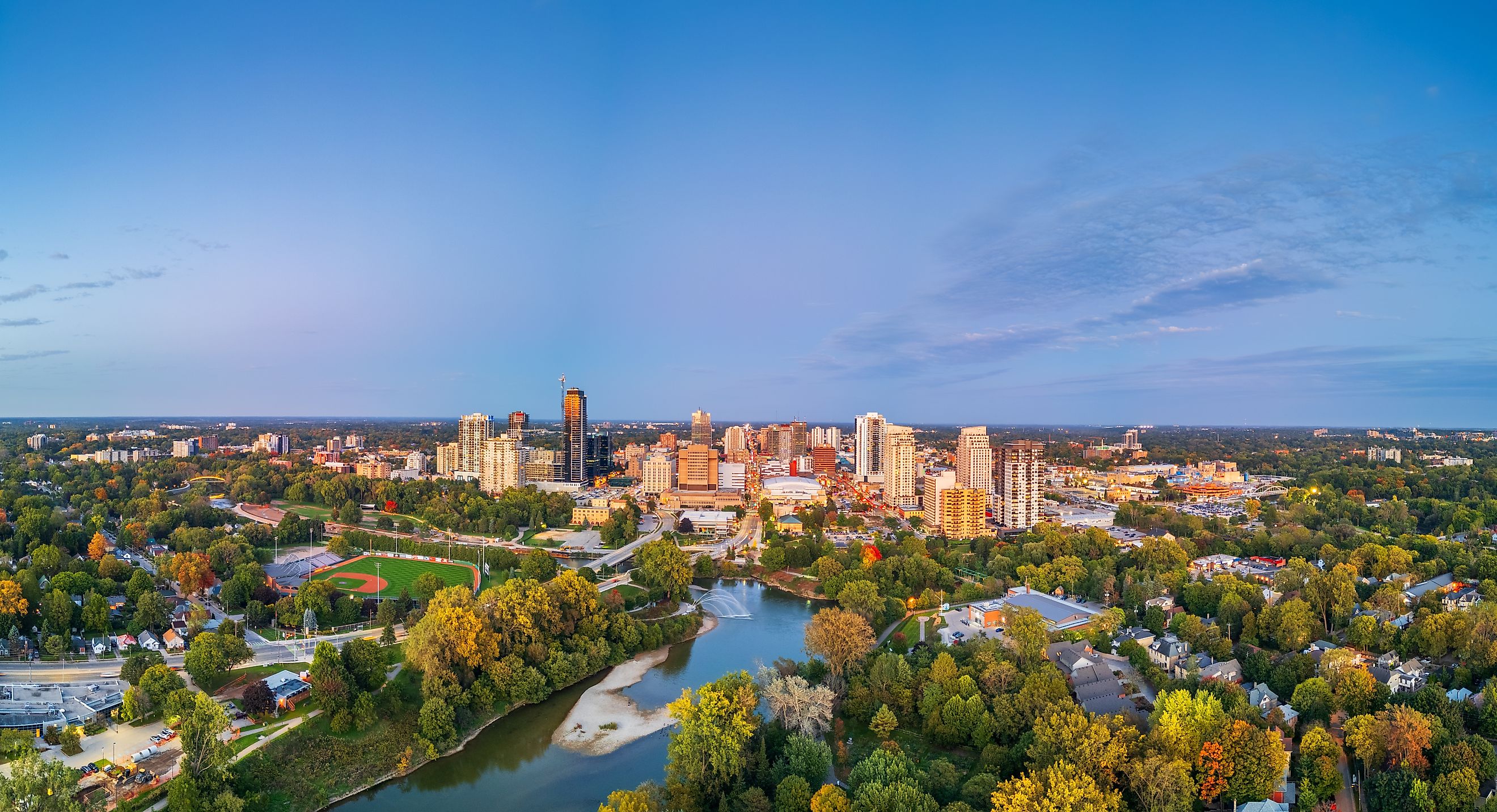
Nicknamed the Forest City for its leafy canopy, London sits along the Thames River in southwestern Ontario, balancing big-city amenities with small-city ease. Home to well over 400,000 people in the city itself, it sits close enough to Toronto to feel connected but far enough away to keep housing well below national prices. Buyers find real breathing room here. The heritage streets of Old North and the boutiques of Wortley Village, once named one of Canada's great neighbourhoods, sit a short drive from newer family subdivisions on the edges. Western University and London Health Sciences Centre employ thousands, with advanced manufacturers such as 3M Canada and General Dynamics Land Systems-Canada, and a growing tech sector rounding out the base. London Health Sciences Centre is one of Canada's largest acute-care teaching hospitals, home to the Critical Care Trauma Centre and a children's hospital, and the public system includes London Central Secondary School, regularly ranked among the province's top high schools.
Green space and culture define the lifestyle. The Thames winds through the city and feeds a network of pathways, while Springbank Park offers more than 120 hectares (300 acres) of trails and gardens along its banks. Residents fill Budweiser Gardens for concerts and hockey, and Museum London showcases regional art near the river forks. The flat terrain and parkland make it especially friendly for cyclists, young families, and retirees.
Collingwood

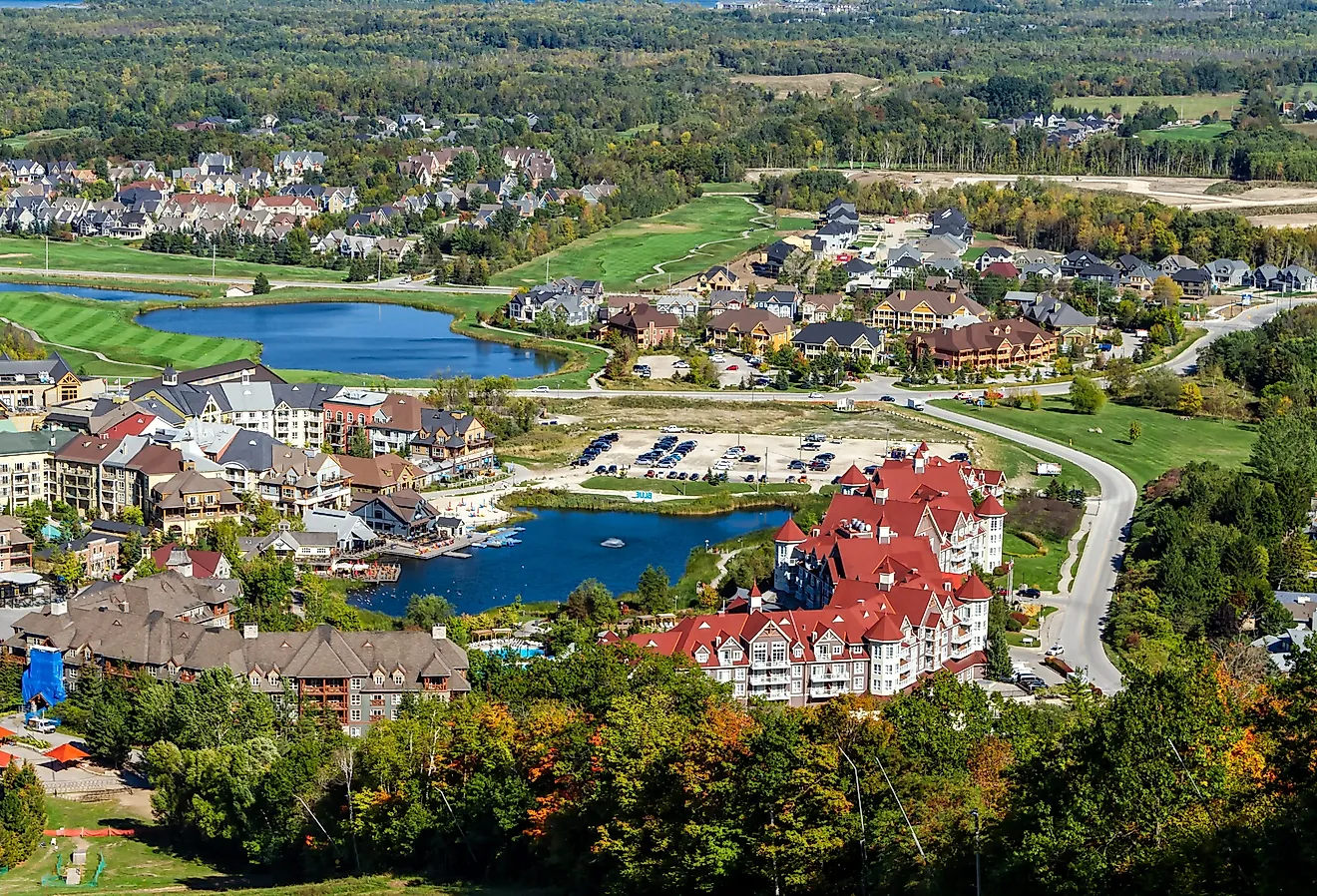
Collingwood is where southern Ontario goes to play. Perched on the shore of Georgian Bay, the large northeastern arm of Lake Huron, at the foot of the Niagara Escarpment, this four-season resort town trades big-city noise for a life measured in ski runs and shoreline walks. Fewer than 30,000 people live here, though it has been one of the province's fastest-growing communities, as remote workers and downsizers chase that slower pace. Once a shipbuilding and tourism town, it now supports an emerging tech and small-business scene, and the province recently poured millions into expanding Collingwood General and Marine Hospital to keep pace with the growth.
Recreation is the major draw. Blue Mountain Resort rises minutes to the west for skiing, snowboarding, and a busy pedestrian village, while Georgian Bay serves up boating, paddling, and beaches all summer. The Georgian Trail and the Bruce Trail run along the water and up the escarpment for cyclists and hikers, and the restored downtown along Hurontario Street places independent restaurants, cafes, and shops an easy stroll from the harbour.
Halton Hills

Halton Hills is the western edge of the Greater Toronto Area at its most easygoing, less than an hour northwest of downtown Toronto, yet still full of farm fields and church spires. Made up of Georgetown, Acton, and a scatter of rural villages in the Credit River watershed, the area is home to roughly 65,000 residents and sits in Halton Region, which has posted the lowest crime severity index among Ontario's largest policing jurisdictions for more than fifteen years running. That safety, plus quick GTA access, has made it a favourite with young families priced out of the city.
Life here prioritizes local. Families make good use of the Halton Hills Public Library branches in Georgetown and Acton, the Gellert Community Centre, and the Mold-Masters SportsPlex. The Niagara Escarpment and the Bruce Trail cut across town for hiking and cycling, and conservation areas protect the river valleys and waterfalls nearby. The arts hamlet of Glen Williams draws visitors to riverside studios, while Georgetown and Acton pack in breweries, cider houses, farm-to-table restaurants, and the long-running Georgetown Fair, proving an Ontario town does not need a lakefront to deliver a good quality of life.
Aurora

An affluent suburb and a historic small town share the same address in Aurora, set in the leafy heart of York Region, roughly a 50-minute train ride north of Toronto. Home to about 63,000 people, it ranks near the top of Ontario's best-places-to-live-and-work lists, helped by one of the lowest violent-crime rates in the country and a walkable, heritage-lined core. Aurora Village, the original settlement around Yonge and Wellington, still anchors the town, ringed by tree-lined streets of older homes and a growing crop of family-friendly subdivisions. The York Region District School Board runs top-rated schools such as Dr. G.W. Williams Secondary School, an International Baccalaureate site that moved into a new building in 2025 with room for more than 1,200 students. Residents are spoiled for community space between the Aurora Public Library, the Stronach Aurora Recreation Complex with its rinks and pools, and the Aurora Family Leisure Complex.
About 62 km (38 miles) of trails link the town's parks and neighbourhoods, the Aurora Community Arboretum spreads across riverside parkland, and the David Tomlinson Nature Reserve carries boardwalks and viewing platforms out over the ponds and wetlands on the east side of town. The Aurora Cultural Centre keeps the arts alive in a restored heritage building downtown, and a summer farmers' market at Town Park turns Saturday mornings into a community ritual. Fast trains and Highway 404 keep the big city within easy reach.
Barrie

Barrie sits 90 km (56 miles) north of Toronto on the shores of Lake Simcoe and has become a favourite for GTA commuters who want a beach within reach of the office. Home to roughly 150,000 people and growing fast, it pairs a working waterfront downtown with a commute that stays manageable. GO Transit trains run straight into the city, so plenty of residents work in Toronto and come home to the lake, while a diversified economy in healthcare, manufacturing, and retail supports a range of other employment options. Canadian Forces Base Borden sits a short drive west and pulls a steady payroll into the surrounding towns.
Lake Simcoe sets the pace. Centennial Beach draws swimmers and paddleboarders all summer, Kempenfelt Bay keeps sailors busy in the warm months and ice fishers happy in the cold ones, and skiers reach the slopes at nearby Horseshoe Resort within a half-hour drive, extending the outdoor season into winter. The revitalized downtown along the bay has added restaurants and a marina that keep the core active across seasons.
Peterborough

At the gateway to the Kawarthas, Peterborough offers small-city calm and cottage-country access without the big-city price tag, with typical homes running well below the national average. Sitting about 125 km (78 miles) northeast of Toronto, the city of roughly 85,000 spreads along the meandering Otonabee River, where tree-lined streets, safe neighbourhoods, and a genuinely lively arts scene give it real character. Trent University and Fleming College power a steady economy in education, healthcare, and light manufacturing, and keep the downtown young.
The Peterborough Lift Lock still raises boats 19.8 m (65 feet) in a single stroke on the Trent-Severn Waterway, and it has been the highest hydraulic lift lock in the world since it opened in 1904. A few blocks away, the Canadian Canoe Museum holds the largest collection of canoes, kayaks, and paddled watercraft anywhere, a nod to the city's paddle-building past. Downtown keeps independent stages like the Market Hall Performing Arts Centre busy, and the surrounding Kawartha Lakes open up boating and cottaging minutes from the front door.
St. Catharines

In the heart of Niagara wine country, St. Catharines is the Garden City, laced with parks, trails, and waterways just a short drive from Niagara Falls. Home to about 140,000 people, it is among the more affordable communities on this list, with prices sitting well under the national average. It comes wrapped in vineyards, orchards, and a mild microclimate that Canadians farther north can only envy. The economy blends manufacturing, agriculture, healthcare, and a growing wine-and-tourism trade, anchored by Brock University and a General Motors propulsion plant.
The Welland Canal runs through the city, and the viewing complex at Lock 3 puts spectators close enough to watch ocean-going ships rise and fall. Montebello Park, a Victorian green space designed by the Olmsted firm, hosts festivals and a summer concert series, the FirstOntario Performing Arts Centre headlines a revived downtown, and the celebrated wineries of nearby Niagara-on-the-Lake sit a short, scenic drive away.
Burlington

On the western edge of Lake Ontario, the smallest of the Great Lakes by surface area, Burlington sits in Halton Region but is counted in the Hamilton census metropolitan area, and it is consistently rated a top city for families. Home to about 190,000 people, it has topped work-life-balance rankings and is regularly named one of the safest and most livable cities in Canada. Tree-lined neighbourhoods such as Aldershot and lakeside Elizabeth Gardens run more affordable than Toronto proper, and sitting between two job markets, with GO trains running both ways, hands residents an enviable set of options in advanced manufacturing, life sciences, and tech.
As for free time, Spencer Smith Park lines the downtown lakeshore with gardens, a pier, and festival grounds. Just west, the Royal Botanical Gardens spreads over the marshes and headlands at the head of the lake as the largest botanical garden in Canada. Hikers reach the escarpment quickly at Mount Nemo Conservation Area for cliff-top views over the lake, and the compact downtown along the water means restaurants and shops are an easy walk apart.
Home Sweet Home In Ontario
The ten communities here are split along a practical line. The larger ones, Ottawa and London especially, carry the deeper job markets and the hospitals and universities that come with size. The smaller ones trade some of that for a shorter commute, a lower tax bill, and a downtown that can be crossed on foot in twenty minutes. Housing sorts them a second way. Peterborough, St. Catharines, and Kingston all sit below national prices, while the Toronto-adjacent towns carry the premium that comes with the commute. Anyone weighing a move is really choosing between those two trade-offs, because the shoreline and the trails come standard in all ten.