5 Most Snake-Filled Bodies Of Water In North Carolina
North Carolina's waterways are remarkably varied. They include coastal lakes, cypress swamps, and flooded forests. Many of them support some of the most diverse snake habitats in the Southeast. Paddle the open water of Lake Mattamuskeet or the cypress channels of Merchants Millpond and you cross habitats that feed and shelter dozens of species.
Nonvenomous watersnakes are especially common here. Venomous cottonmouths and copperheads turn up in selected wetlands and slow-moving waterways. This list explores five North Carolina bodies of water where snake encounters are particularly likely. It highlights the species present and the factors that sustain them.
Lake Waccamaw

Lake Waccamaw, one of the largest naturally formed lakes in North Carolina, at over 8,930 acres, is well known for its extensive adjacent wetlands, wooded shoreline, and abundant aquatic wildlife. These habitats also support healthy populations of water-associated snakes, with an alleged 22 species calling it home.
Among the most frequently encountered are banded watersnakes, heavy-bodied, nonvenomous snakes that are often marked with dark crossbands that help them blend into shallow water and submerged vegetation. They are skilled swimmers and feed primarily on fish and amphibians.

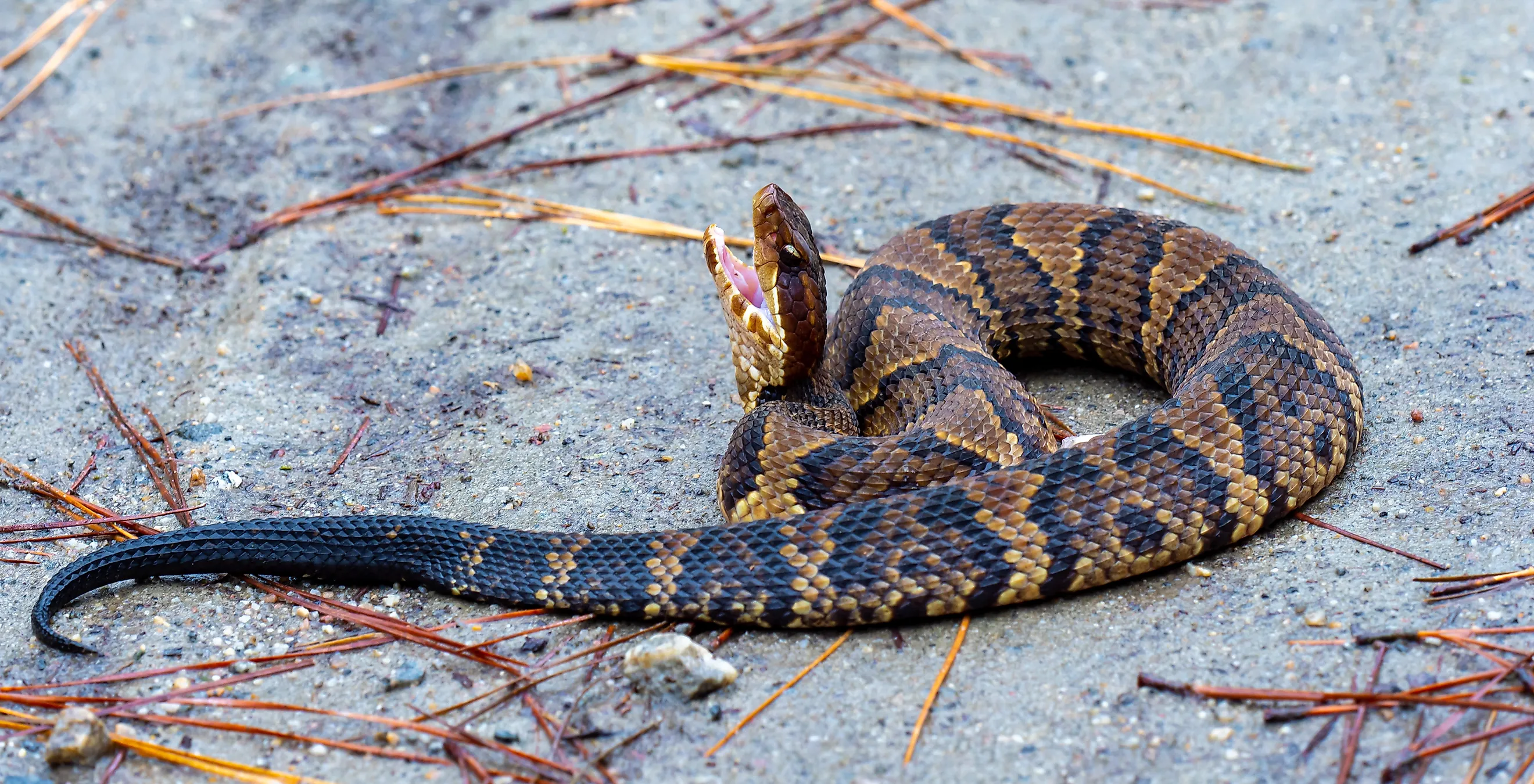
The lake also supports eastern ribbonsnakes, a slender species recognized by its long tail and distinct yellow stripes. Along marshy edges and drainage channels, venomous cottonmouths may linger as well. These are pit vipers that are highly common in the Deep South, visually notable for their triangular heads and alternating brown and beige bands. With their presence, vigilance about where you step is extra important.
Alligator River

As the name suggests, the waters of Alligator River are a haven for reptiles. Cutting through vast stretches of pocosin wetlands, flooded forests, and brackish marshes that eventually flow directly into the Atlantic Ocean at the northeastern corner of the state, this remote landscape hosts a remarkable diversity of turtles, snakes, and, of course, American alligators. But for now, let's focus on its native snake species for a moment.

With plenty of pristine wilderness along its banks good for both hiding and hunting, a notable resident is the brown watersnake, a large nonvenomous species often found resting on overhanging branches above creeks and slow-moving channels. Brown watersnakes are typically patterned with dark blotches and are particularly adept at catching fish. The river's marshes and adjacent wetlands also provide habitat for black racers and plain-bellied watersnakes, which frequently travel over shallow waters.
Cottonmouths and copperheads make up the bulk of the region's venomous snakes, occurring especially in secluded wetlands connected to the river.
Lake Mattamuskeet

Covering more than 40,000 acres, Lake Mattamuskeet is the actual largest natural lake in North Carolina, and a centerpiece of the state's coastal plain wetlands. Its shallow, warm waters and maze of canals create excellent habitat for several aquatic snake species along with countless other flora and fauna.
Among the most commonly encountered are common and brown watersnakes, which often patrol the lake's vegetated margins in search of fish, frogs, and other prey. Banded watersnakes are also present, particularly in marshy sections where their dark markings blend into reeds and shoreline vegetation. Cottonmouths, canebrake rattlesnakes, and Carolina pigmy rattlesnakes tend to stay further inland, but can be sighted slithering around portions of the surrounding wetlands, too, particularly in quieter backwaters and drainage ditches.

The region's same productive wetlands support numerous amphibians and fish throughout the year, providing a reliable food source for both the snake and avian populations that occupy the lake and its attached swamp systems. In fact, Lake Mattamuskeet is also internationally known for its enormous concentrations of migratory waterfowl during winter.
Cape Fear River

The Cape Fear River runs for around 200 miles through central and southeastern North Carolina, passing through a blend of landscapes including bottomland hardwood forests, floodplains, and slow-moving tidal sections before reaching the ocean near Wilmington.
Its varied hydrology supports a plethora of snake species adapted to brackish water, as this river's tidal lower stretches notably introduce fluctuating salinity levels. On the other hand, this limits some freshwater species but creates a transition zone where adaptable snakes can persist alongside estuarine wildlife.

Northern watersnakes are common along grassy banks and submerged log jams. These nonvenomous snakes stand out with their heavy bodies, dark marks, and the fact that they are highly aquatic, often seen hunting fish below the surface. Plain-bellied watersnakes and garter snakes also occur in calmer sections of the river, especially where dense shoreline vegetation provides cover for ambush hunting. Cottonmouths are present, too, mainly in slower tributaries and swamp-adjacent reaches, where they rely on both aquatic prey and terrestrial amphibians.
Merchants Millpond

Unlike North Carolina's large lakes and rivers, Merchants Millpond consists of a sprawling flooded forest where bald cypress, tupelo, and other foliage rise directly from the water. The 760-acre millpond and its surrounding wetlands actually form one of the state's most distinctive aquatic ecosystems, creating excellent habitat for a number of snake species. Canoeists regularly report sightings of snakes along narrow channels where overhanging vegetation creates shaded travel routes.

Rough green snakes, black rat snakes, cottonmouths, and garter snakes are just a few of the 21 species said to be frequently observed weaving through emergent plantlife and hunting frogs along the shoreline. In quieter backwaters, copperheads and cottonmouths can be encountered among floating vegetation and fallen timber, too. Brown watersnakes, again, also occur here, often basking on low branches over the water before dropping into the millpond when disturbed.
Watch Out for Snakes in These NC Hotspots
These North Carolina waterways include large natural lakes, blackwater rivers, and flooded cypress forests. While many tourists and residents alike understandably focus on the state's highly scenic Atlantic beaches and Appalachian mountains, these aquatic habitats should be of interest to anyone who loves nature, given their impressive variety of snakes and other wildlife. Regardless, understanding where these often misunderstood reptiles occur offers a better appreciation of the rich ecosystems that make North Carolina's numerous wetlands and waterways so biologically diverse.