4 Most Snake-Filled Bodies Of Water In New Hampshire
New Hampshire is a beautiful state with many bodies of water, some of which are home to 11 native snakes. There is the Smooth green snake, the Garter snake, the Ribbon snake, the Northern red bellied, the Brown snake, the Eastern hog nose snake, the Milk snake, the Northern black racer, the Ringneck snake, the Northern water snake, and the Timber rattlesnake.
While these snakes vary in their taste for environments, the ecosystem of many of New Hampshire’s lakes provides the perfect habitat. The following are the four most snake-filled lakes in New Hampshire.
Squam Lake

A paddleboarder's paradise, Squam Lake is actually two lakes connected by a small channel, one called Big Squam and the other called Little Squam. Squam Lake is 6,765 acres, and Big Squam, on average, is about 24 feet deep. Renowned for its natural beauty, Squam Lake had much to offer, including 35 named islands. With such a large environment, this area is perfect for a variety of snakes, including Northern Water snakes. Northern Water snakes can grow to 24 to 42 inches and are found in aquatic and semi-aquatic habitats, rarely far from water. They often enjoy basking on logs and branches, especially when digesting a meal of fish or small amphibians. They can birth up to 20 to 40 young from August to October. Though they're popular residents around Squam Lake, most visitors won’t see them in winter, as they hibernate.

Northern Water snakes can be mistaken for Cottonmouths or Copperheads, even though neither is native to the state. They also look similar to Milk snakes, which can also be found in Squam Lake. They enjoy using logs and stones as cover, and they can lay around 6 to 24 eggs during the summer. The biggest threats to their survival are people killing them out of fear, despite them not being venomous. Milk snakes are known to shake their tails, which can sound like a rattle, leading some people to confuse them with the venomous but rare Timber Rattlesnake. A good way to distinguish a Milk snake from other species is that they often have a Y-shaped spot on their head with the V of the Y pointing towards the tail. With plenty of activities for lake goers to do, like boating, visiting the beaches, traversing the natural preserves, and hiking, there is a high likelihood of running across one of these scaly friends. Just remember, they are an important part of the ecosystem, and if you let them be, they will let you get on with your day.
Lake Winnipesaukee

At 72 square miles, Lake Winnipesaukee is the largest lake in New Hampshire. There is plenty to experience around this behemoth of a lake, including zip lining, high ropes operations, playing at the largest arcade in the world, hiking, fishing, boating, and even seeing a concert or two. Guests can also visit one or two of the 200+ islands scattered throughout the lake. One of these islands is even called Rattlesnake Island for the snakes that once lived there. In the 1900s, a man named Jesse Whitten considered himself a healer and would cut off the rattlesnake tails on Rattlesnake Island and use them in his so-called medicine. People tried to rid the island of snakes by setting it on fire, but when that failed, they introduced razorback hogs, which eliminated most of the rattlesnakes.

Today, the Timber rattlesnake is one of the animals you may see while exploring Lake Winnipesaukee. They are at risk of habitat loss and disease, making them one of the most critically endangered animals in the state. Aside from the rattlesnakes, Northern Water snakes can also be spotted around the lake, sunning on the rocks and hiding in small crevices. Guests should always be on the lookout as they hike around the lake and its island for any animals in the vicinity, and keep an ear out for any rattling.
Chocorua Lake

With an average depth of about 12 feet, Chocorua Lake may be shallow, but it has much to offer visitors. There is the Narrows Bridge, one of the most photographed scenes in New Hampshire, and guests can visit the Basin View Lot to take in the beauty of Mount Chocorua. There is also the Frank Bolle Nature Reserve, which spans 247 acres and extends to the northern shores of the lake, offering opportunities to view much of the area's wildlife, including snakes. Northern Water snakes abound in Chocorua Lake, where the watery environment is perfect for this species.

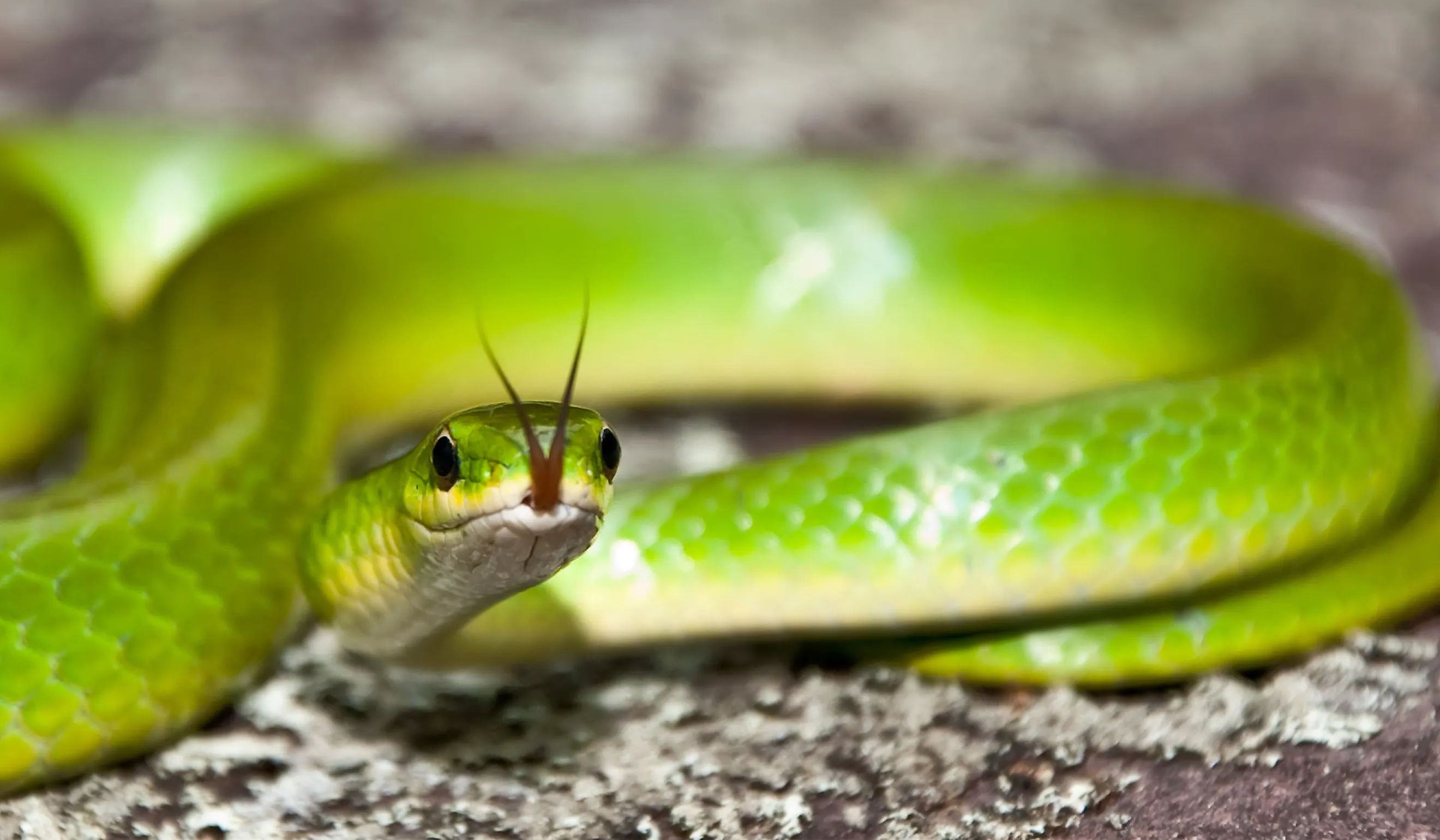
Guests have also spotted the Smooth Green snake in Chocorua Lake. This snake is named for its bright green color and usually grows to about 10 to 20 inches long. The environments they can be found in range from pastures to old fields to marsh borders to coastal grasslands. The Smooth Green snake is listed in New Hampshire as a species of concern because it is incredibly vulnerable due to habitat encroachment and snake fungal disease. Stewards of the land work hard to make sure the environment around Chocorua Lake is suitable for wildlife, and when a Smooth Green snake can be found sunning itself on a rock, it’s a good sign of their hard work paying off.
Umbagog Lake

Umbagog Lake is a beautiful lake with much to offer for both people and snakes. The area has a park campground with 27 sites offering electrical and water hookups, two cabins, 33 remote campsites, and four cabins accessible only by boat. Aside from camping, there is also a beach area where guests can swim, fish, view the wildlife, and go boating. Canoes and kayaks can be rented to explore Umbagog Lake, and paddlers also love to visit and coast through the waters.

Boaters are sure to spot the popular Northern Water snakes that can be found along the shoreline. Another snake that can be spotted sunning itself on the rocks near the water is the Garter snake. Gartner snakes are small striped snakes that typically measure between 18 and 26 inches, and around 10 to 40 snakes are born from around July to September. They are incredibly common snakes, so it's no surprise to spot them around Umbagog Lake. It is a great place where both snakes and people can enjoy sunning themselves on the beach.
Snake-Filled Waters
While snakes may make some people’s skin crawl, they are an important part of the ecosystem and incredibly fascinating creatures. Unfortunately, out of the 11 native snakes in New Hampshire, the Timber rattlesnake, Eastern Hognose snake, Northern Black Racer, Smooth Green snake, and ribbon snake were identified as species that are critically imperiled and in the greatest need of conservation. While conservationists are doing their part to protect these creatures, it is also important for people who come across these snakes to let them be. Both people and snakes can enjoy the beauties of New Hampshire lakes.