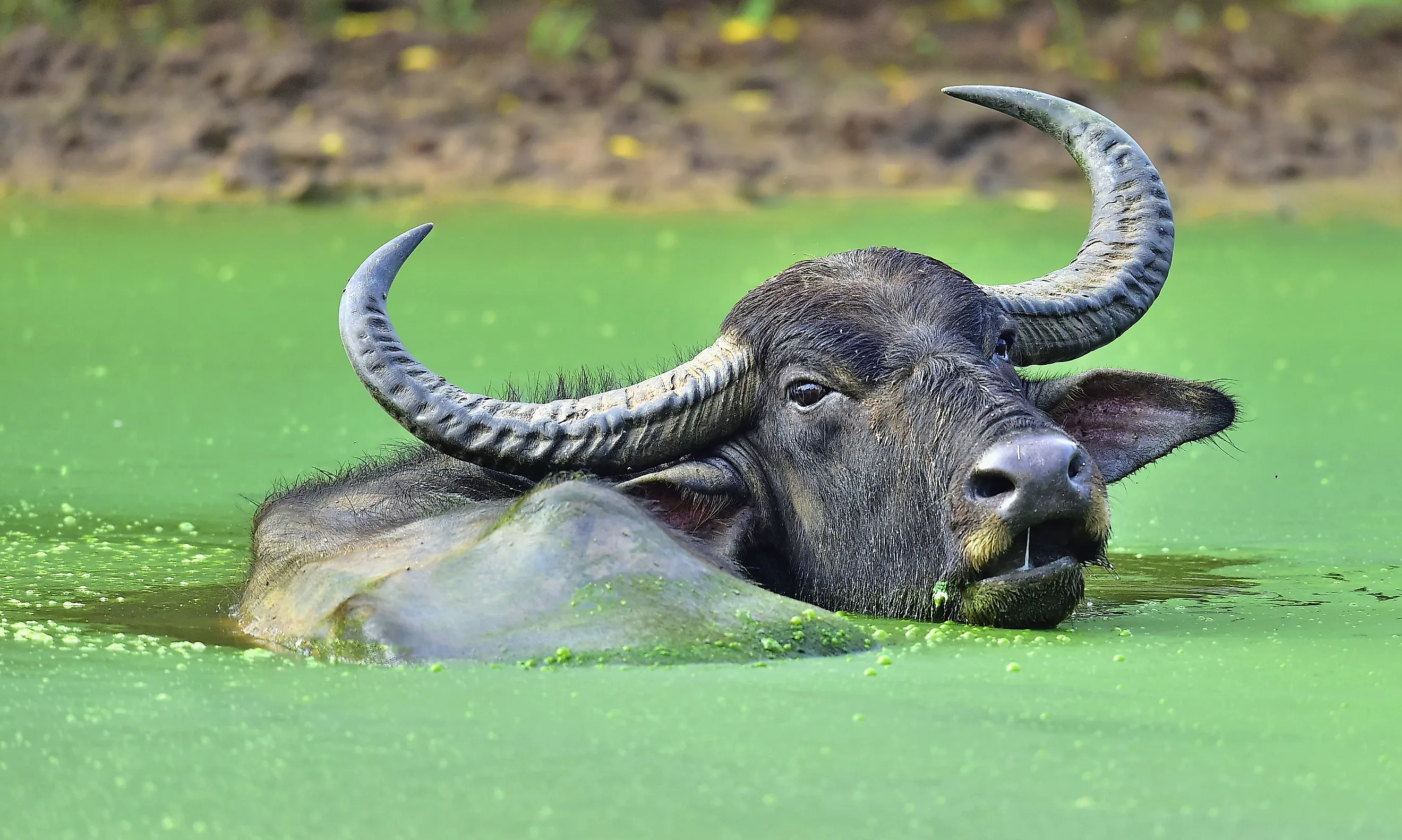
Water Buffalo
Water buffalo are among the largest bovines in the world, dwelling in tropical and subtropical wetlands and river valleys. Wild water buffalo now survive mainly in northeastern India, especially in Assam, with smaller populations in Nepal, while domesticated herds are especially common in India, Pakistan, China, Nepal, and Egypt, and also support mozzarella production in Italy. Their lives are closely tied to water. Access to rivers, marshes, and floodplains shapes their daily behavior and survival. These powerful mammals play key roles in wild ecosystems and within human agriculture. Wild populations are rare and endangered, while domesticated herds provide food, leather, and labor for millions of people. Adapted to challenging landscapes, these animals combine remarkable strength and social intelligence. Exploring them and their influence on the world reveals why they are vital across the regions they inhabit.
Taxonomic Classification

Many experts, including the IUCN, treat the wild water buffalo (Bubalus arnee) and domestic water buffalo (Bubalus bubalis) as separate species.
Domestic populations are further divided into the river and swamp types. River types have dark coats, leaner builds, and are prized for their high milk yields. Swamp buffalo are stockier and lighter in color. They are bred primarily for draft work. Genetic studies show that river and swamp buffalo diverged thousands of years ago during early domestication.
Wild buffalo once ranged across a much wider swath of Asia. Today, their numbers and territorial range have declined sharply. Small populations survive mainly in India and Nepal, where conservation programs focus on maintaining these remaining wild herds and preserving their genetic diversity.
Physical Description

There's nothing subtle about water buffalo. Adult males can reach nearly 6 feet at the shoulder and weigh over 2,000 pounds. Females are slightly smaller but still formidably built.
One of their most recognizable features is their massive curved horns. In wild males, these horns sweep outward and backward in dramatic arcs that can span more than 6 feet from tip to tip. Domestic types tend to have smaller horns, though shape varies widely among breeds.
Their build is extremely well-suited to their environment. Thick legs carry their massive frame through mud and shallow water. Their hooves splay outward under pressure, keeping them from sinking into waterlogged ground. Their skin is thick and tough and their hair is sparse. These animals also have a long tufted tail made to constantly swat away insects.
Range and Habitat

In the wild, these bovines stick to river valleys and wetlands across pockets of South and Southeast Asia. The largest surviving groups live in northeast India, particularly within protected reserves in Assam. Currently, over 90% of remaining individuals live in India. Smaller populations persist in Nepal.
Domesticated buffalo have expanded far beyond the natural distribution of their wild kin. A global population of over 200 million exists. Large numbers are especially concentrated in Asia. Smaller populations are in Europe, South America, and Africa.
These animals depend heavily on water-rich environments. They have relatively few sweat glands, so wallowing in mud or shallow pools is how they keep cool and fend off parasites and insects. Marshes and slow-moving rivers provide food and relief from heat. Seasonal flooding also encourages plant growth. This constant renewal of grasses and aquatic vegetation keeps herds well fed throughout the year.
Diet

Water buffalo are herbivores and enthusiastic ones at that. Their wide mouths let them scoop up large quantities of vegetation in one go, and their powerful molars make short work of tough stems and fibrous leaves. In wetter habitats, they will wade in and pull up aquatic plants directly.
Domesticated herds also chow down on agricultural crops. Farmers frequently feed hay or cut grasses to supplement their natural grazing. Some animals browse on leaves and shrubs during periods when grasses become less abundant.
Like cattle, they rely on specialized gut microorganisms to break down cellulose. This lets them extract nutrients from plant matter that many other herbivores simply can't digest.
Behavior

Water buffalo are social animals. A typical wild herd is built around females and their young, accompanied by one or more adult males. Mature bulls can spend time living alone outside the breeding season, though they may join the same herd later.
They communicate through vocalizations and body posture, as well as scent. Deep, resonant calls help keep the herd connected or signal aggression during disputes.
How individuals hold their horns and position themselves can convey social rank at a glance. Confident bulls may raise their head, hold their horns forward, or stand broadside to appear larger. In turn, less imposing animals usually respond by stepping aside. They will also lower their head and avoid direct eye contact. When two bulls have a serious disagreement, they will challenge each other with threatening postures to reduce the chance of physical combat. This can look like circling each other, pawing the ground, and making dramatic sweeps with their horns.
When a predator shows up, the herd closes rank. Adults quickly come together to form a protective wall of horns, hooves, and muscle around the calves. This collective response goes a long way toward keeping the babies safe.
Reproduction

Females usually reach reproductive maturity at about two to three years of age. Males compete for breeding access through displays of strength. When rivals are evenly matched and particularly determined, posturing and bellowing give way to horn clashing.
Pregnancy lasts 10 to 11 months. Usually only a single calf is born, weighing between 55 and 80 pounds. Newborns stand soon after birth and begin nursing within a couple of hours. Mothers time their pregnancies to ensure babies are born when there is plentiful vegetation. This timing ensures that mothers receive lots of nutrition while they nurse their young.
Young animals spend their first year in close orbit around their mothers. During this time, they learn where to eat, the ins and outs of herd behavior, and how to recognize potential threats. Growth continues steadily for the first few years. Young males typically drift away from their mothers' herds around three years old to join or form bachelor groups.
Importance to the World

Water buffalo play an important role in agriculture across many parts of the world. They have shaped the agricultural landscape of Asia for millennia. Their extraordinary strength makes them indispensable in regions where the terrain or economics put machinery out of reach. Across flooded paddies and steep hillsides, they do the work no tractor can.
Milk production represents another major contribution, containing high levels of fat and protein. In Italy, that rich buffalo milk is the secret behind traditional mozzarella cheese. In many rural communities, domesticated water buffalo represent both food and a form of financial security.
Beyond farms, the wild species engineers the natural ecosystems they inhabit. Grazing shapes plant communities across wetlands and grasslands. Nutrient-rich manure fertilizes soil and encourages plant growth. Their heavy hooves churn soil and create wallows in marshy areas. This churning breaks surface mats, opening up space for new plant growth, and the movement of water.
Threats Faced

Wild buffalo are in serious trouble. They are listed by the IUCN as endangered, with fewer than 4,000 individuals estimated to remain in the wild. Across much of South Asia, agricultural and urban expansion is steadily reducing their habitats.
Poaching also threatens surviving populations. Hunters sometimes target them for meat or horns. In addition, diseases carried by domestic livestock can spread to wild animals living nearby.
Another challenge is genetics. When domestic animals interbreed with wild buffalo, the distinct identity of the wild species begins to blur. Once that genetic heritage is changed, it cannot be easily recovered. Preservation efforts focus on defending key habitats and reintroducing animals to areas where they have been lost. Wildlife reserves in India and Nepal play a major role in safeguarding the species.
Ecosystem Engineers and Friends of the Farmer

Few animals have done as much quiet, unglamorous work in shaping both the natural world and human civilization as water buffalo. In the wild, they keep wetlands healthy in ways that ripple outward to countless other species. On the farm, they feed families and power agriculture across some of the most challenging terrain on Earth.
Restoring wild herds and supporting the health of domestic populations play crucial roles in the future of these animals. Conservation actions help preserve and restore the remaining wild buffalo populations and their environments. Sustainable farming practices and high welfare standards ensure the domesticated buffalo continue to benefit rural farming communities. Both efforts help ensure these remarkable animals still have a place in the world for centuries to come.