The 8 Venomous Snakes Of Georgia
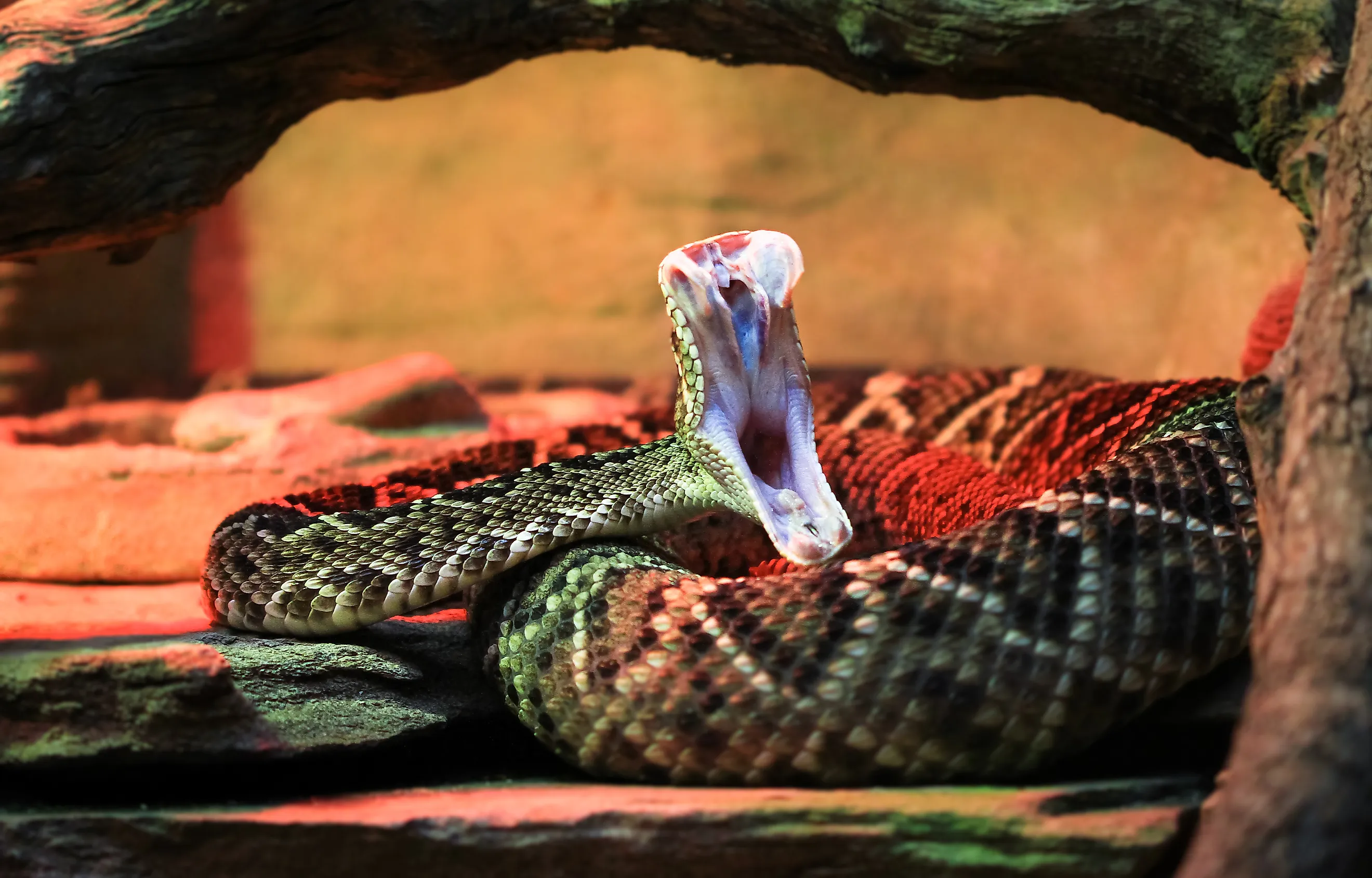
Georgia’s venomous snakes are precision-built hunters with sensory gear that mammals can’t match. Pit vipers such as copperheads, cottonmouths, and rattlesnakes read the world in infrared, tracking warm-blooded prey through darkness and leaf litter. Juveniles even fish with their tails, wiggling bright tips like worms to lure frogs within striking range. Coral snakes play a different game: small, fixed fangs deliver neurotoxic venom meant to shut down nerves fast, and their bold rings advertise it.
Each species occupies a specific slice of habitat, from cypress swamps to sandy pinelands, shaping food webs by thinning rodents and other small wildlife. Knowing who’s who turns fear into smart caution. Most bites happen when feet accidentally surprise them.
Carolina Pygmy Rattlesnake

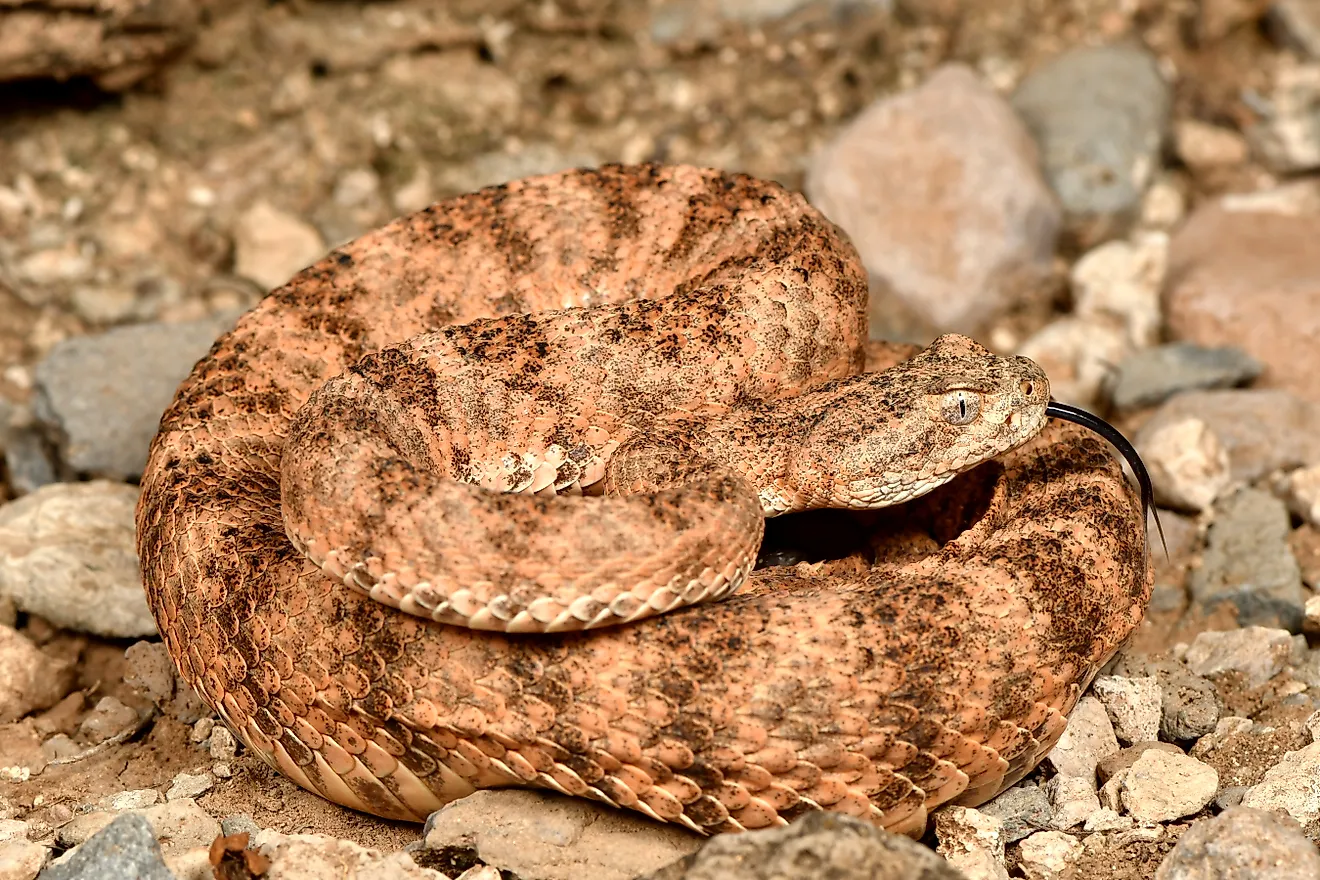
The Carolina pygmy rattlesnake (Sistrurus miliarius miliarius) may be small, but it demands respect. Usually between 1 and 2 feet long, it has a gray or reddish body with a rust-colored stripe along its spine and dusky splotches. Its sides feature dark markings, and a notable dark stripe from eye to jaw gives it a distinctive appearance, occasionally edged in white. Key features include nine enlarged head scales, vertical pupils, and heat-sensing pits, which make it an effective predator.
This rattlesnake inhabits woodlands, swamps, and meadows. It tends to seek out secluded spots like rocky outcrops, dense forests, and rural areas to avoid humans. Its faint rattling may go unnoticed, but it is venomous. Though generally shy, if you encounter one, approach cautiously.
Dusky Pygmy Rattlesnake

The dusky pygmy rattlesnake (Sistrurus miliarius barbouri) is a compact, thick-bodied rattlesnake measuring between 1 and 2 feet, with some record-setters reaching just 30 inches. Its brown or gray body features a distinctive reddish-orange stripe along the back, accompanied by dark brown or black blotches. Dark cheek stripes extend from the eyes to the jaw, sometimes outlined in white, with additional dark markings on its sides. Its tail rattle is relatively small, producing a faint buzzing resembling an insect. Key features include nine enlarged head scales, cat-like pupils, thermal pits, and a broad, triangular head that appears wider than its neck.
This rattlesnake favors dense forests, swamps, and grassy areas near water. It is an expert at camouflage, blending seamlessly into leaf litter and underbrush in rural, wooded regions. Most active during dusk and at night, it uses heat-sensing pits to locate small prey like rodents and frogs. While generally avoiding confrontation and not aggressive, it is venomous, and a bite can be intensely painful. If you encounter it, observe from a safe distance.
Eastern Coral Snake

The eastern coral snake (Micrurus fulvius) is slender and vividly colored, typically measuring between 2 and 3 feet, with some rare individuals reaching about 50 inches. Its distinctive black, yellow, and red rings make it easy to identify, with thin yellow bands touching red and black. This pattern helps distinguish it from the harmless kingsnake, which has similar coloring but does not have red touching yellow. A common rhyme can assist in telling them apart: "Red touch black, friend of Jack; red touch yellow, kill a fellow." Additionally, its black nose is a helpful clue. Eastern coral snakes are highly venomous, and unlike pit vipers, their fangs are fixed rather than hinged.
These snakes inhabit wooded, sandy areas, swamps, and scrublands. They are adept at blending into their surroundings, often moving unnoticed beneath leaves, logs, or soil to avoid humans. When threatened, they hide their head beneath their body and raise their tail to confuse predators by mimicking a second head. Usually solitary, they rarely bite unless accidentally stepped on or handled. If you see one, it’s best to observe from a safe distance.
Eastern Cottonmouth

The eastern cottonmouth (Agkistrodon piscivorus), commonly called the water moccasin, is a large, intimidating snake. Usually measuring 2 to 4 feet, some can grow over 6 feet. Its coloration varies from dark olive and brown to nearly black, often with shadowy patterns along its back and sides. It features a distinctive dark stripe from each eye running down its head, bordered by a lighter pinstripe on top and a contrasting light shade below. With vertically elliptical pupils and infrared sensors situated between the nostrils and eyes, it exhibits classic pit viper features. Juveniles display brighter patterns and have a yellow-tipped tail they wiggle to attract prey like frogs and lizards.
This snake prefers freshwater environments such as lakes, rivers, ponds, and swamps. It is the only venomous water snake native to North America, typically inhabiting rural and wetland areas rather than suburban regions. Known for its boldness, it often stands its ground rather than retreating, adopting a defensive posture by coiling and opening its mouth to reveal the cotton-white interior. While not highly aggressive, it bites only if cornered or threatened. Despite sharing habitats with many nonvenomous water snakes, the eastern cottonmouth is distinguished by keeping its head high above the water while swimming.
Eastern Diamondback Rattlesnake

The eastern diamondback rattlesnake (Crotalus adamanteus), is a real heavyweight in the snake world, holding the crown as the largest rattlesnake species — and one of the heaviest venomous snakes — in the Americas. Adults stretch between 3 and 6 feet long, but some have hit a jaw-dropping 7 feet or 8 feet. Its body is covered with dark diamond patterns along its spine, each filled with brown and outlined in beige, fading to banding or disappearing as they near the tail. Dark streaks run along each side of its broad, triangular head, bordered by stripes, while its elliptical pupils and heat-sensitive receptors mark it as a classic pit viper.
You’ll find the eastern diamondback prowling across sandy woodlands, pine flatwoods, coastal dunes, and scrublands. Its impressive camouflage helps it blend into these environments, staying relatively hidden from the eye. It prefers the peace of rural and undeveloped areas over bustling suburban or urban spaces. This is a mostly solitary snake that’s active by day — though, in the peak of summer, it might switch up its schedule to cooler nights.
When threatened, the eastern diamondback doesn’t hide its power; it tightens and raises that rattle to deliver a clear, unmistakable warning. They're not aggressive by nature, but they're more than capable of defending themselves if pushed, packing a painful and dangerous bite that it saves as a last resort or for taking down prey like small mammals, birds, and reptiles.
Florida Cottonmouth

The Florida cottonmouth (Agkistrodon conanti), also known as the water moccasin, is a thick-bodied, venomous snake that can grow up to 6 feet in length; however it normally only reaches 3 feet or 4 feet. With a dark olive, brown, or nearly black body, it often has faint serrated bands and a distinctive dark stripe on each side of its head, bordered by a pinstripe. Its belly is a yellowish white to tan shade, dotted with dark blotches, and its triangular head is topped with slit-shaped pupils. Like other cottonmouths, the young come with a brighter pattern and a yellow or green-tipped tail, which they wiggle to entice prey.
This snake loves to be around freshwater spots like lakes, ponds, rivers, and swamps. Cottonmouths usually stay in the countryside, though they occasionally wander into suburban spaces near water. Known for its theatrical defensive display, the Florida cottonmouth coils up, opens its mouth wide to reveal its cotton-white interior, and might even release a musky odor to ward off threats. While these snakes have a scary reputation, they’re reported to be passive, only striking if provoked, and usually only pose a risk if stepped on or otherwise disturbed. However, its venom is powerful and can be lethal.
Copperhead

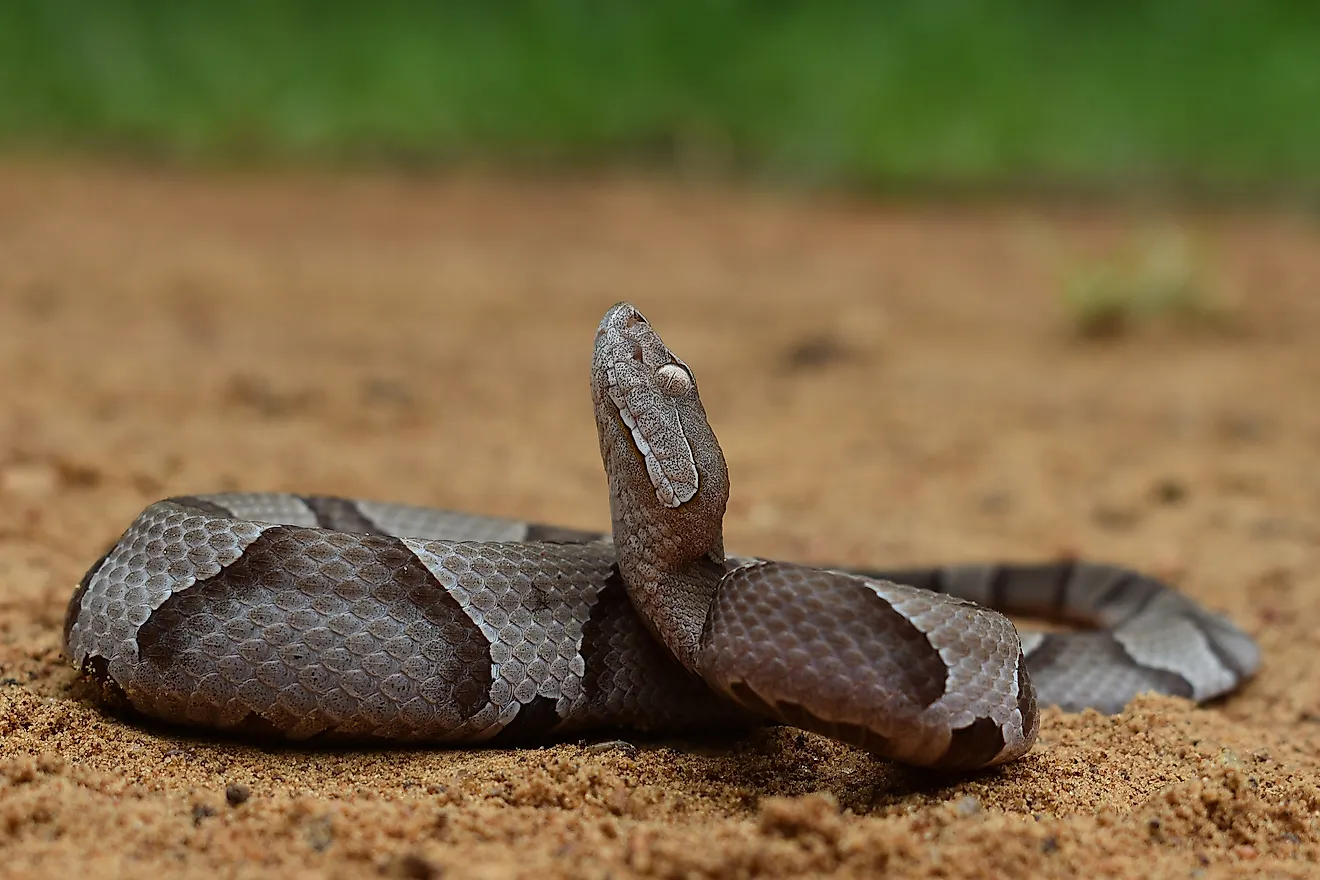
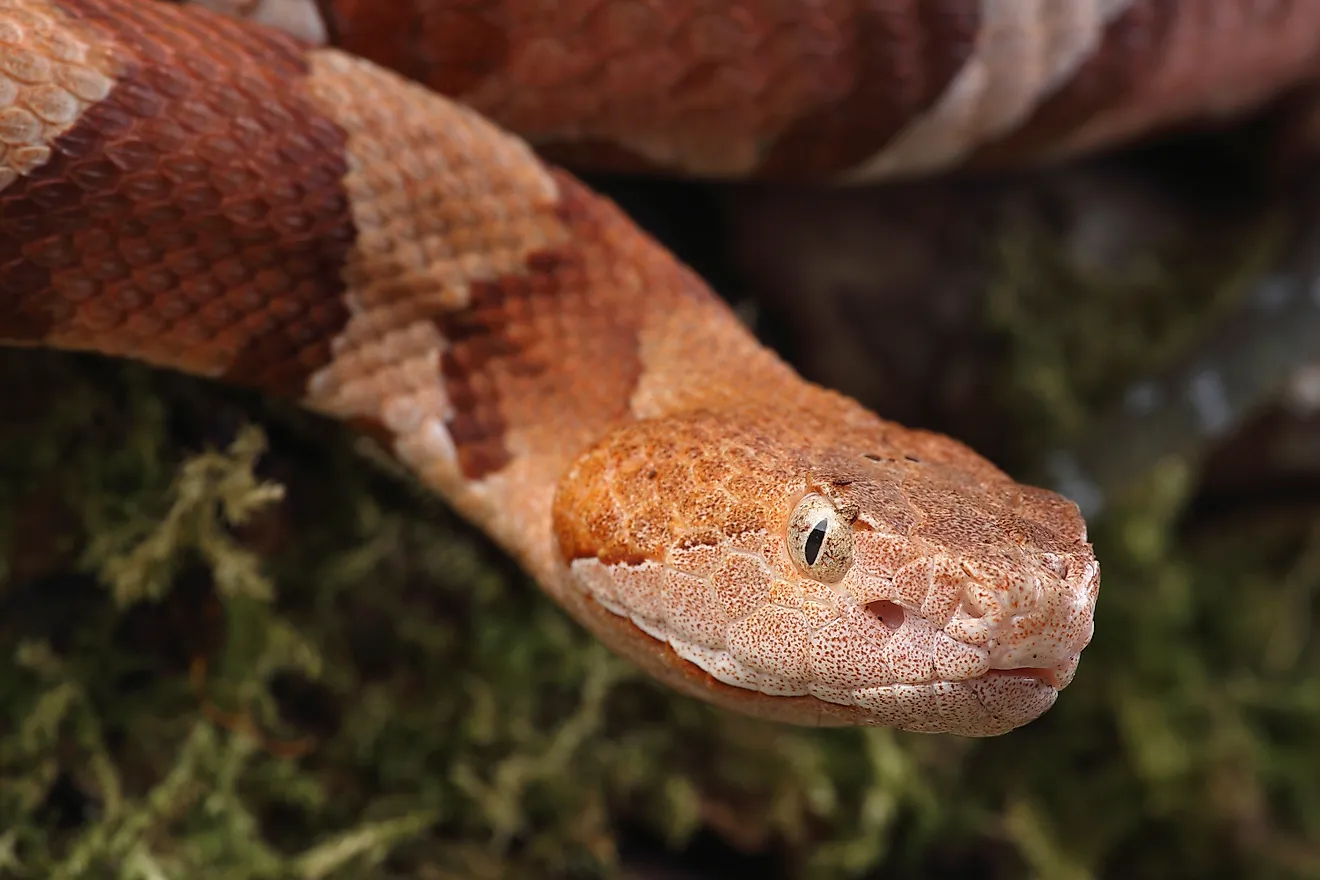
The copperhead (Agkistrodon contortrix), aptly named for its copper-red head, can grow to 2 feet or 3 feet in length, though a few giants reach up to 4 feet. Draped in tan to light tan or pinkish tan to reddish brown, it’s decorated with dark brown to reddish-brown hourglass bands that pinch in along its spine and widen out along its sides. In many copperheads, these bands don’t quite meet in the middle, giving each side a row of dark triangles instead. Young copperheads have the same stylish pattern but are grayer; with a flashy, yellow-tipped tail they wiggle like bait to attract frogs and lizards. And, like a pit viper, it has those iconic elliptical, cat-like pupils and pit organs for tracking down dinner.
This adaptable serpent is right at home basking in forests, hiding among rocky outcrops, and even in suburban areas where nature provides some cover. When it feels threatened, the copperhead may freeze, relying on its camouflage to protect it. However, it can put on quite a defensive display, winding up and raising its head at a 45-degree angle while vibrating its tail. They're more likely to strike as a last resort, usually reserving bites for situations when they're threatened.
Timber Rattlesnake

The timber rattlesnake (Crotalus horridus) is a heavyweight among rattlers, typically spanning 3 feet to 5 feet, but some are up to a full 6 feet. This snake is a true chameleon of the eastern US, showing off colors that vary by region. In the north, it’s usually decked out in yellowish-brown or gray with dark, blotchy patches that morph into bands along its body. Down south, this rattler’s commonly known as the canebrake with a pinkish-gray or brown tone, complete with a reddish-brown racing stripe down its spine, topped with bold, black chevron-shaped bands and a pitch-black tail.
Timber rattlesnakes are homebodies of serene forests, rocky spots, and grasslands, but they’re known to show up in open fields or even near suburban edges when they’re on the move. They’re patient hunters, armed with thermal receptors that make them effective predators from spring through fall. If threatened, the timber rattlesnake takes a defensive stance, rattling away with nature’s own warning alarm. Though mild-mannered, this is one snake you don’t want to rile up; its venom is highly toxic.
Despite their potential danger and ability to cause fear, Georgia's venomous snakes play an essential role in maintaining ecological balance by regulating prey and encouraging biodiversity. It is important for both locals and visitors of all ages to learn more about these animals' identities, behaviors, and habitats in order to reduce accidental encounters and enhance safety during outdoor activities. Recognizing their importance and respecting their natural environments can support conservation efforts aimed at protecting these species and preserving Georgia's diverse natural landscape. The next time you venture outdoors, remember that coexisting peacefully with these fascinating reptiles found throughout the Peach State relies on awareness, understanding, and respect.