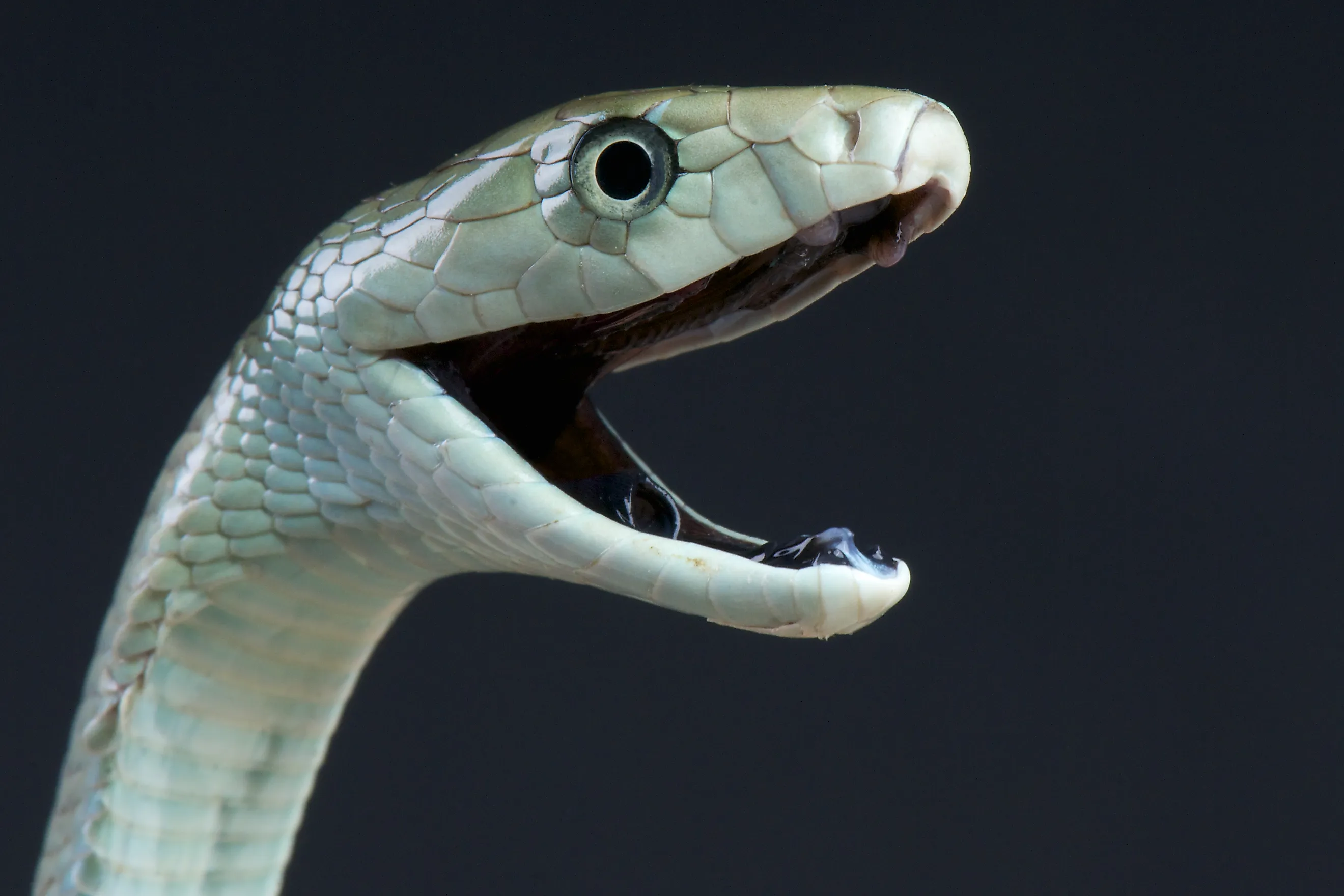
Black Mamba
The black mamba (Dendroaspis polylepis) is one of Africa's most feared snakes and is widely regarded as one of the world's most dangerous venomous reptiles. Renowned for its speed, potent neurotoxic venom, and imposing size, the black mamba's reputation precedes it. But although it is capable of delivering a fatal bite, the species is generally shy and prefers to avoid confrontation whenever possible. Found throughout much of sub-Saharan Africa, the black mamba plays an important ecological role by regulating populations of rodents and other small animals across its range. Read on to discover more about this fascinating, and perhaps misunderstood, creature.
Taxonomic Classification

The black mamba (Dendroaspis polylepis) is a reptile belonging to the order Squamata, which includes all snakes and lizards. It is a member of the family Elapidae, a group of highly venomous snakes that also includes cobras, kraits, coral snakes, and sea snakes. The black mamba belongs to the genus Dendroaspis, which contains four extant species: the black mamba (Dendroaspis polylepis), the eastern green mamba (Dendroaspis angusticeps), Jameson's mamba (Dendroaspis jamesoni), and the western green mamba (Dendroaspis viridis).
Physical Description
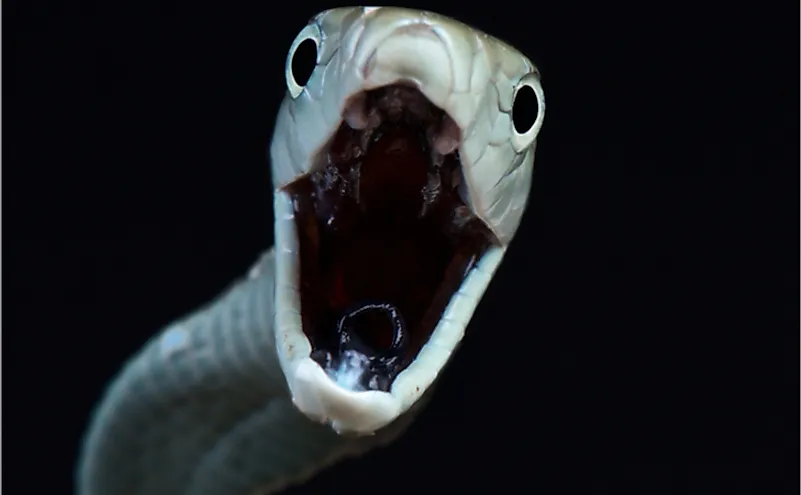
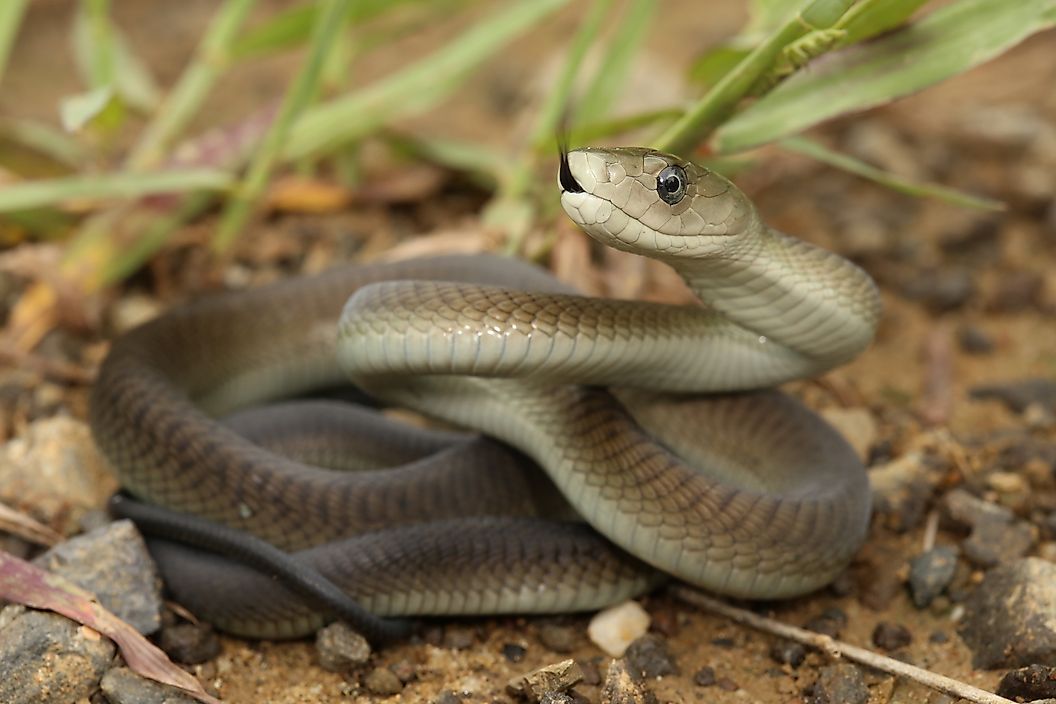
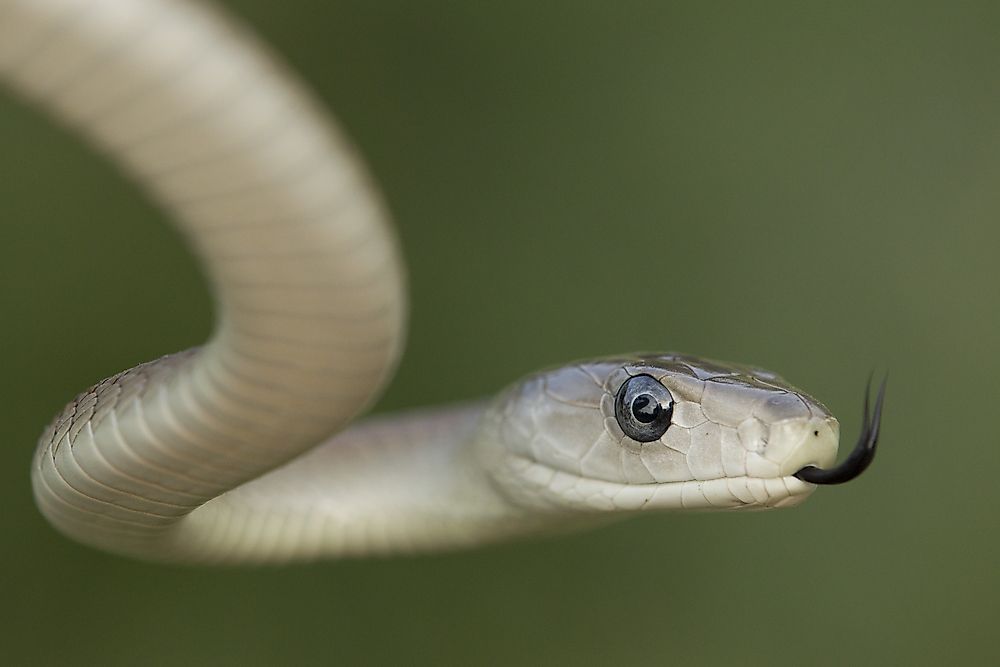
Despite its name, the black mamba is rarely black in color. Rather, the species derives its name from the dark coloration inside its mouth. Most individuals are olive, gray, brown, or khaki, with juveniles typically appearing lighter gray or olive before darkening slightly with age. The underside is usually cream-colored, though it may also be yellowish or pale green. Some individuals display darker mottling or alternating light and dark scales toward the rear portion of the body.
Its eyes are generally dark in appearance, with a distinctive silver-gray or yellowish iris surrounding the pupil. Adult black mambas typically reach lengths of 2-3 m (6.6-9.8 ft), making them among the longest venomous snakes in Africa. Exceptionally large individuals may exceed 4.3 m (14.1 ft), and rare reports describe specimens approaching 4.5 m (14.8 ft) in length.
Range and Habitat
Black mambas (Dendroaspis polylepis) are widely distributed throughout much of sub-Saharan Africa. Their range extends from parts of southern and eastern Africa northward to Eritrea and Ethiopia, and westward into portions of central and western Africa, although they are generally less common in the western regions of their range.
They are most frequently associated with savannahs, open woodlands, rocky hillsides, scrublands, and lightly forested areas. As members of the genus Dendroaspis, which is derived from Greek words meaning "tree snake," black mambas are capable climbers and may occasionally be found in trees. However, unlike the more arboreal green mamba species, black mambas spend much of their time on the ground. Black mambas typically seek shelter beneath rocks, inside tree hollows, within termite mounds, or in abandoned burrows. Many individuals establish a favored refuge and may repeatedly return to the same shelter over long periods of time.
Food
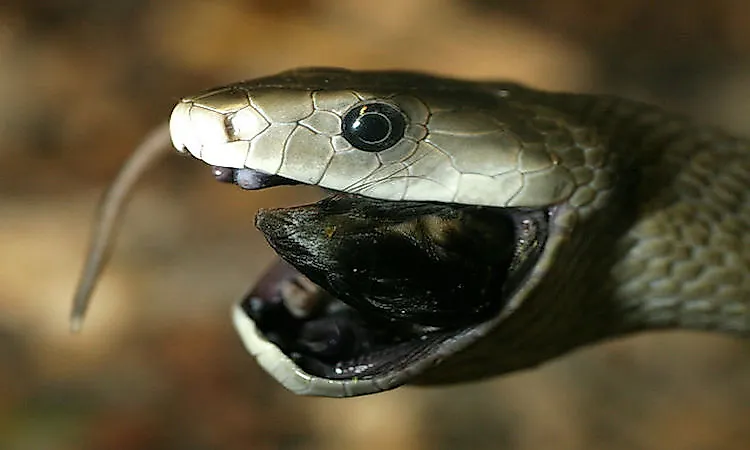
Black mambas are carnivorous predators that feed primarily on small mammals, particularly rodents. However, their diet also includes birds, bats, hyraxes, bushbabies, and other small vertebrates when available. When hunting, a black mamba relies on its speed, keen eyesight, and highly potent venom. It typically strikes its prey and injects a powerful neurotoxic venom that rapidly affects the nervous system. Depending on the size and type of prey, the snake may either release the animal and track it or maintain contact while delivering additional bites. Once the prey has been immobilized or has died, the black mamba swallows it whole, as snakes cannot chew their food. Like many snake species, black mambas possess a highly flexible lower jaw connected by elastic ligaments, allowing them to swallow prey much larger than the diameter of their heads.
Behavior

Black mambas are generally described as shy, alert, and secretive snakes that prefer to avoid confrontation whenever possible. When given an escape route, they will usually retreat rather than engage a perceived threat. However, if cornered or prevented from reaching shelter, a black mamba may become highly defensive. In such situations, it may raise the front portion of its body well above the ground, open its dark mouth in a warning display, spread a narrow hood, and produce a loud hiss. If the threat continues, the snake may deliver multiple rapid strikes. In most cases, however, a person who slowly backs away will allow the snake an opportunity to retreat.
Black mambas are diurnal, meaning they are active during the day. They spend much of their time basking, hunting, and moving between shelters. Although they maintain home ranges and often return to the same refuge, they are not generally considered territorial animals. Renowned for their speed, black mambas are among the fastest snakes in the world and have been reported to reach speeds of up to 20 km/h (12 mph) over short distances. When moving quickly, they often hold the front portion of their body above the ground, allowing them to survey their surroundings.
Reproduction

Humans are not the only animals that would just as soon avoid contact with a black mamba. Black mambas are generally solitary snakes and usually interact with one another only during the breeding season. During courtship, a male black mamba may follow a female by tracking her scent trail. Once he finds her, he investigates her body by repeatedly flicking his tongue, using chemical cues to assess whether she is receptive. If she accepts him, mating occurs, with the male using one of his hemipenes, which are paired reproductive organs found in male snakes and lizards.
Rival males will sometimes engage in ritual combat, intertwining their bodies and raising their heads as much as 1 m (3.3 ft) off the ground while attempting to overpower each other. Because of the way their bodies coil together, this behavior is sometimes mistaken for mating. Black mambas provide no parental care. After mating, the male leaves, and the female later lays a clutch of eggs in a concealed, warm location such as a burrow, termite mound, hollow tree, or decaying vegetation. Clutch sizes are usually reported at around 6-17 eggs, though some sources give higher estimates. The young hatch after about 2-3 months and are fully independent from birth.
Threats
Black mambas face the greatest risk from predators during the egg and juvenile stages of their lives. Their eggs, which are laid in concealed locations such as burrows, termite mounds, and hollow trees, may be eaten by a variety of opportunistic predators. Monitor lizards, mongooses, and other scavenging animals are known to prey upon both eggs and young snakes.
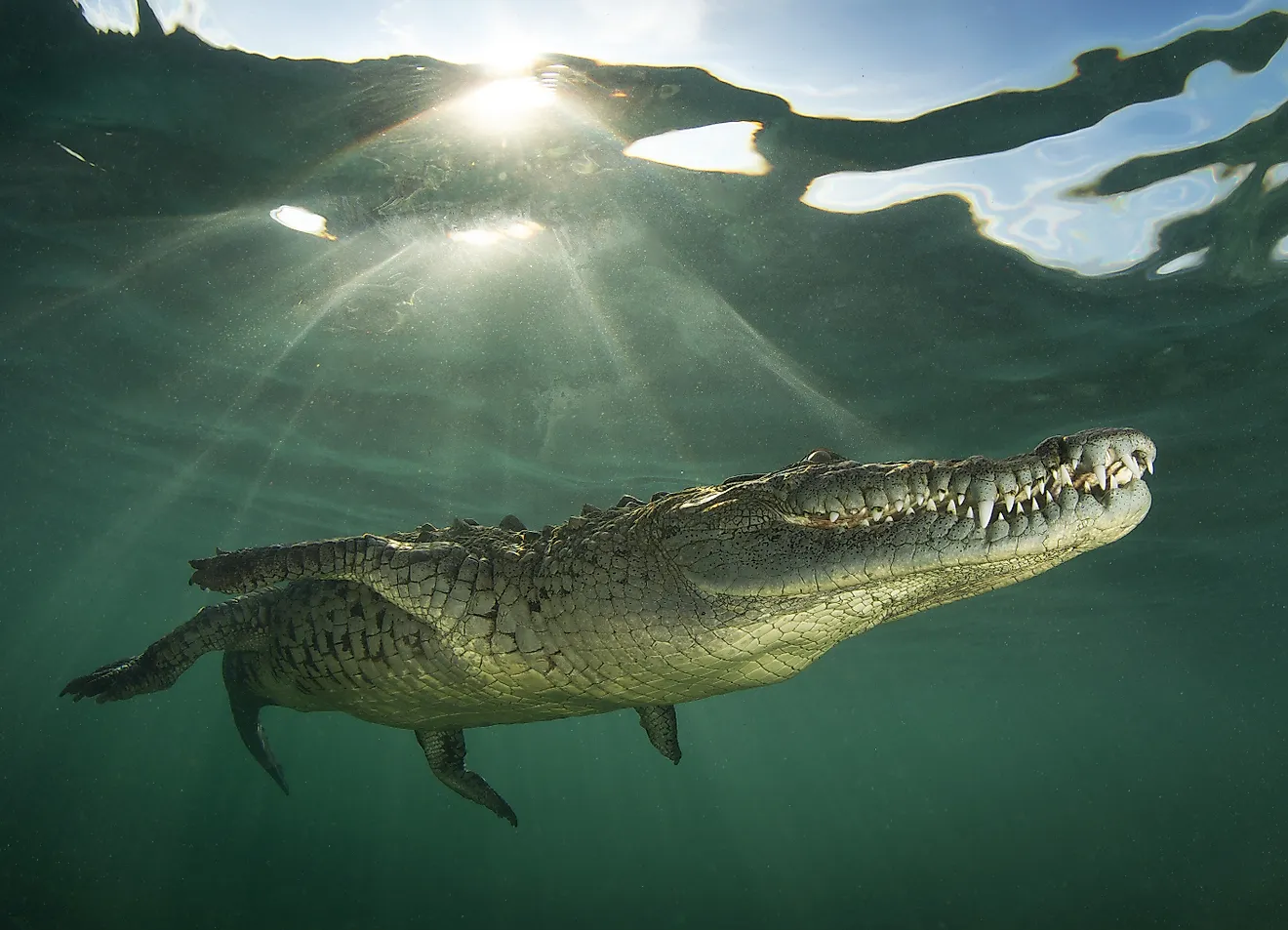
Hatchlings and juvenile black mambas remain vulnerable to a wider range of predators than adults. Birds of prey, including snake eagles and other raptors, may hunt young black mambas, while monitor lizards, mongooses, and some larger reptiles may also prey upon them. Although adult black mambas have fewer natural enemies due to their size, speed, and highly potent venom, they are not entirely free from predation. Large birds of prey, crocodiles, and particularly agile mongooses have all been documented
Importance

Despite its fearsome reputation, the black mamba is not currently considered endangered and is classified as a species of Least Concern by the International Union for Conservation of Nature (IUCN). However, habitat loss resulting from agricultural expansion, urban development, and increasing human settlement can negatively affect local populations and bring people into more frequent contact with these snakes. Such encounters often result in the snake being killed out of fear, despite its important ecological role.
Because of their highly potent venom, exceptional speed, and defensive capabilities, black mambas are not commonly found in the pet trade and are considered among the most dangerous snakes to maintain in captivity. In the wild, black mambas serve as important predators, helping to regulate populations of rodents and other small animals. By controlling these prey species, they contribute to the balance and health of the ecosystems in which they live.