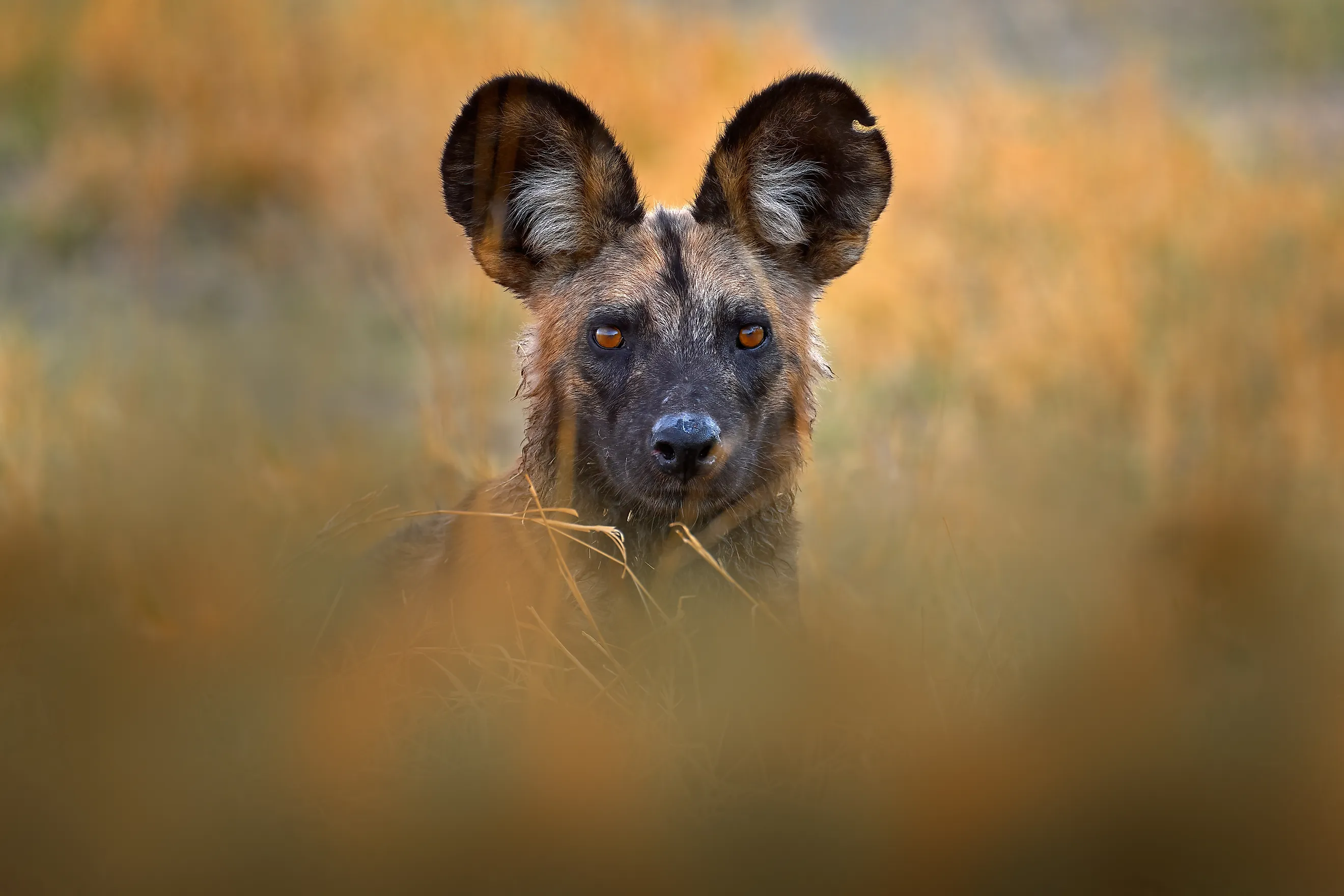
African Wild Dog
Best not to give this dog a pat. The African wild dog is a canine native to sub-Saharan Africa, mostly found in patchy distribution throughout East Africa. It’s a specialized hunter of ungulates like antelope and impalas and has strong social bonds within its pack. Its conservation status is considered endangered as it faces challenges from habitat fragmentation, persecution by humans, competition for food with stronger animals like lions, and disease, and populations continue to decrease across its range. In an effort to combat the negative connotation of the name African wild dogs, conservationists have turned to calling it the painted dog or the Cape hunting dog to put it in a more positive light. Read on to learn more about this fascinating creature.
Taxonomic Classification
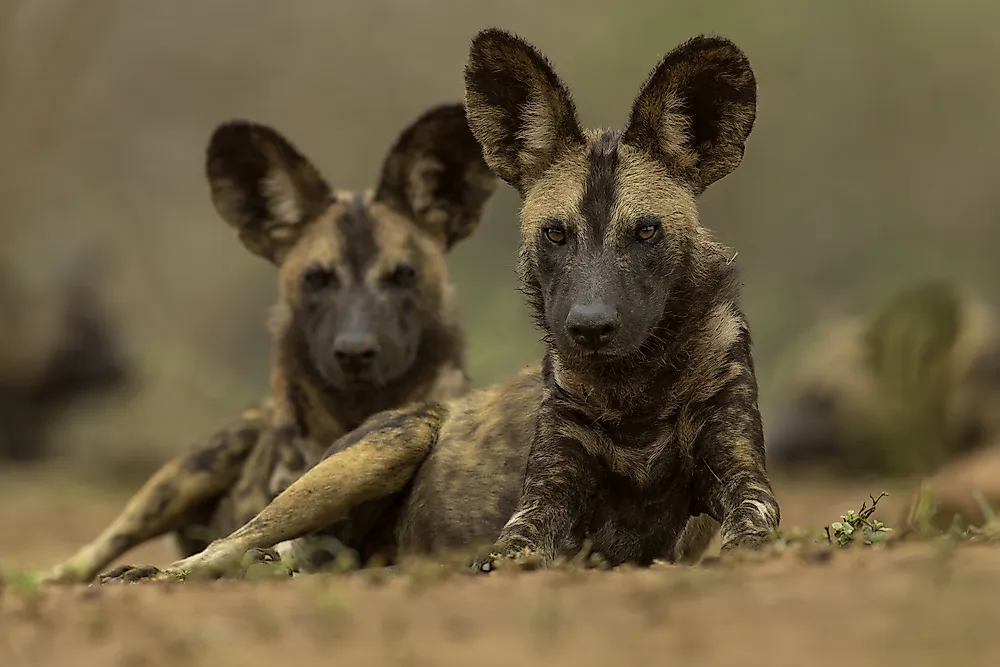
The African wild dog (Lycaon pictus) is the largest wild canine in Africa and the only extant member of the genus Lycaon, which is distinguished from other Canis genuses by dentition for a highly specialized carnivorous diet and by a lack of dewclaws, setting it apart from other canine species like wolves or dogs. It’s also recognized by its unique mottled coat, large, round ears, and specialized hunting behaviors. Its DNA evidence shows Lycaon diverged from other canids about 1.7 million years ago. Various subspecies have been proposed, although their validity has been greatly debated. For example, paleontologist George Simpson placed the African wild dog, the dhole, and the bush dog together in the subfamily Simocyoninae on the basis of similar teeth, but others have argued there are too many other differences among the three species to group them together.
Range and Habitat

The African wild dog is found mostly in Southern and East Africa, and mainly inhabits savannas and arid zones, usually avoiding forested areas, though a forest-dwelling population has been recorded in the Hareena Forest in Ethiopia. It is sometimes found in North Africa, but it’s very rare, and is mostly absent from West Africa, though there is a pack known to be in Senegal’s Niokolo-Koba National Park. They are not deterred by altitude and will follow prey wherever they need to. One pack was sighted on the summit of Mount Kilimanjaro, while others have been found as high as 9,000 feet. In 1995, one dead individual was found at 13,290 feet on the Sanetti Plateau. There are an estimated 6,600 adults who live in 39 subpopulations, with the largest subpopulation consisting of about 250 individuals.
Food

African wild dogs hunt in packs, and some studies show that they have a success kill rate of 80%. They eat mostly medium-sized ungulates like impalas (their favorite), antelopes, gazelles, and kudu, but have been recorded hunting wildebeest calves and even African buffalo. As opportunistic hunters, these dogs will also hunt warthogs and zebras, or smaller prey like rodents and birds, if hunting alone. Adults eat up to six kilograms of meat per day. While meat makes up the vast majority of their diet, they will occasionally forage on fruit like jackalberry. Using pack teamwork, African wild dogs use high-stamina, coordinated chases to hunt, reaching speeds of up to 40 miles per hour to match their prey, wearing them down over long distances. Because of this, they require substantial energy and eat daily, often consuming more meat relative to their size than lions. African wild dogs frequently regurgitate their food to feed pack mates, especially pups and the older, weaker adults guarding them. This behavior is a social and nutritional act, allowing adults to transport food from hunting grounds back to the den without having to carry it.
Physical Description

The root word of Lycaon is the Greek word lykaios, meaning wolf-like, while pictus is Latin for painted. The African wild dog is a distinct, slender dog characterized by its unique painted coat of mottled black, yellow, and white patches, a white-tipped tail, and a black muzzle and strip between the eyes. As endurance hunters, they have long legs with four toes per foot, and they lack dew claws. The fur is short and coarse, often showing the black skin beneath. Adults stand about 24 to 30 inches in height at the shoulder, and they are slender and tall, and weigh between forty and eighty pounds. The African wild dog’s most distinguishing feature is its ears, which are very large and round, and are believed to assist the dog’s hearing and heat regulation. Save for the hyena, the African wild dog’s premolars are the largest of any carnivore, allowing them to easily crush bone and consume prey quickly.
Behavior

African wild dogs are highly social, cooperative predators known for tight-knit packs, endurance hunting, and intense care for pack members. Each pack is led by a dominant pair of male and female dogs, and they communicate by high-pitched barks and yips and sneeze-like sounds, which has been determined as a vote on when to initiate a hunt. Packs usually consist of two to thirty individuals, and they rarely, if ever, exhibit aggression toward other pack members. Pups and elder dogs are cared for by the entire pack, and they frequently groom each other, show affectionate greetings, and care for the sick or injured by sharing food. They are mostly active at dawn and dusk, and rest during the day to avoid exertion in the heat.
Reproduction

Packs have separate male and female hierarchies. While subordinate females may become pregnant, their offspring are rarely allowed to survive, and they often help lactate for the alpha female’s pups. As a result, reproduction within a pack is typically monopolized by a single alpha pair within a pack. They are seasonally monoestrous, often breeding once a year with a gestation period of about 75 days, resulting in large litters of six to twenty pups, though around ten is the average. Pups are raised by the entire pack, and are born in underground dens (often abandoned aardvark holes) and stay inside for three to four weeks. They reach sexual maturity between twelve and eighteen months, but don’t usually mate until they are older.
Importance

As highly efficient and specialized apex predators, African wild dogs maintain ecological balance by regulating prey populations, preventing overgrazing, and promoting biodiversity. One of Africa’s most successful predators, they cull the sick, old, and weak from herds, strengthening the health of herds. Their presence in an area indicates a healthy, functioning ecosystem, as they require large areas to roam and hunt. They also benefit humans, as their rarity makes them a significant tourist attraction, providing income and job opportunities for locals.
Threats

With only about 6,600 individuals left in the wild, the African wild dog faces critical threats from human activity, including habitat loss and retaliatory killing by farmers, infectious diseases like rabies and distemper, and competition with larger predators like lions. Expanding human agriculture and settlements reduce hunting grounds and split populations, forcing packs to travel through dangerous, human-dominated areas, making their conflicts with farmers more likely. Illegal poaching for the bushmeat trade also poses a significant threat, as they are often caught in snares designed for other animals. With such a low population and fragmented habitats, inbreeding and the inability to recover from sudden disease outbreaks or environmental changes threaten the African wild dog’s long-term survival.
Fight for survival
Formerly widespread through sub-Saharan Africa, African wild dogs (or, more preferably, painted dogs) face an uphill battle for survival. Because of their highly specialized hunting skills, preferred habitat, and loyalty to their respective pack, these animals meet challenges from humans, disease, and competitive predators together. Their unique appearance is unmatched in nature, and their importance in helping create balance in the ecosystem in which they choose to live is imperative for other species to succeed. Among Africa’s most efficient hunters, they fight for survival through tight-knit social structures, taking care of pack members, and highly communicative, high-endurance hunting. Humans are also helping with a massive, coordinated international effort to save them from extinction through high-tech monitoring, community engagement, anti-poaching patrols, and habitat expansion.