Mojave Rattlesnake
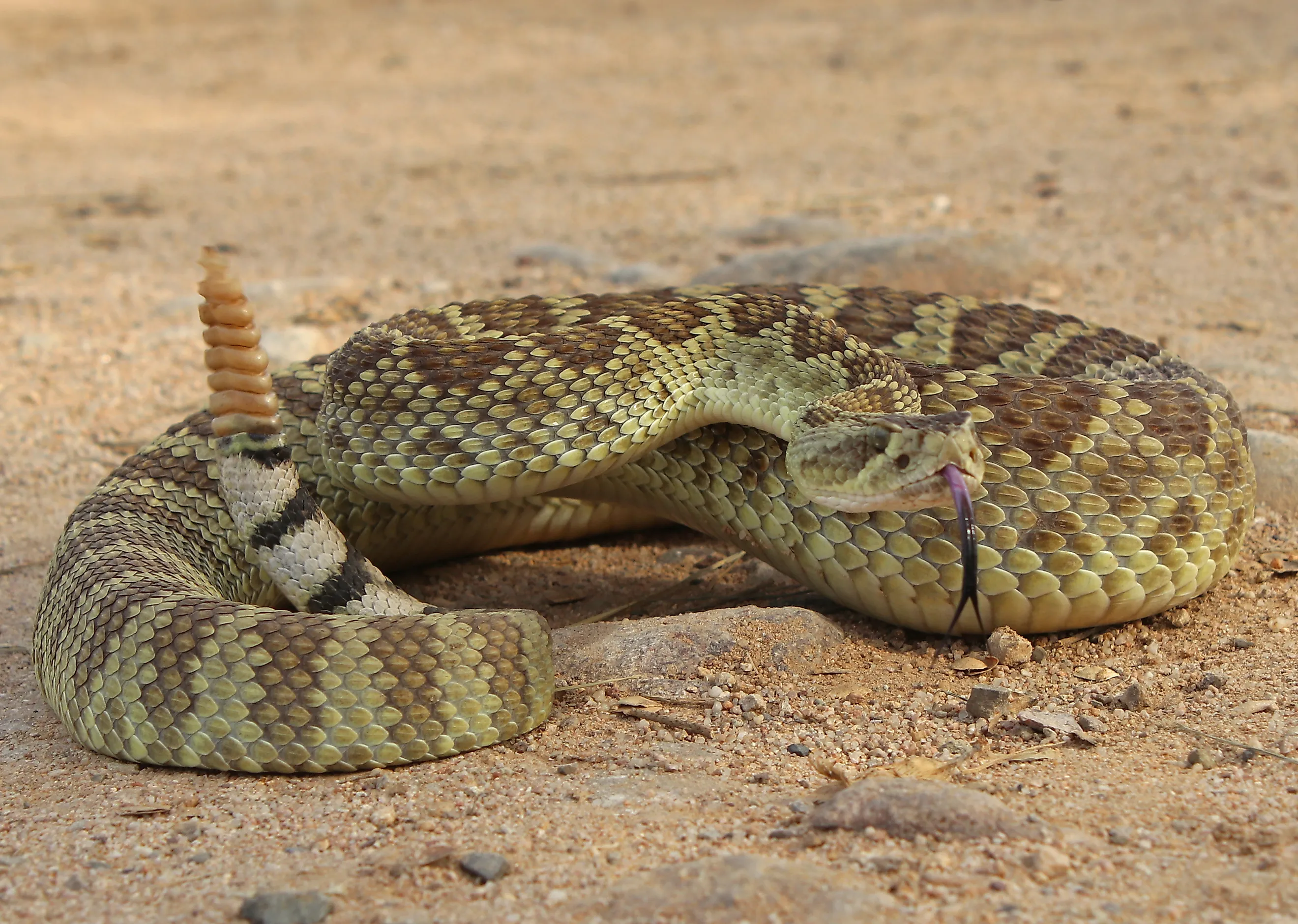
The Mojave rattlesnake stands out among its relatives not for its size, but for the potency of its venom. That venom can affect both the bloodstream and the nervous system, helping it subdue prey quickly. It is strong enough to kill a person, too, though the snake has no interest in people. It would rather keep to itself, hunting alone in the deserts of the American Southwest and central Mexico, except during its two mating seasons. The snake takes its name from the Mojave Desert, one of the arid landscapes it is built to survive.
Taxonomy

The Mojave rattlesnake's scientific name is Crotalus scutulatus. The genus Crotalus includes many rattlesnake species found throughout the Americas, though some rattlesnakes belong to the related genus Sistrurus. The word itself comes from the Greek word for rattle, while its species name, scutulatus, is Latin for shield-shaped patch, referring to the snake's dorsal patterns.
The Mojave rattlesnake has two subspecies: the northern Mojave rattlesnake (Crotalus scutulatus scutulatus) and the Huamantlan rattlesnake (Crotalus scutulatus salvini), which lives in parts of south-central Mexico.
Both of these rattlesnakes belong to the family Viperidae, a large group of venomous snakes found throughout the world, except Australia, Antarctica, Ireland, Madagascar, Hawaii, and some isolated islands.
Range and habitat

As the name suggests, the Mojave rattlesnake lives in the Mojave Desert, which spans southeastern California and parts of Nevada, Arizona, and Utah. However, the Mojave rattlesnake's range extends beyond that desert, through much of Arizona, including areas around Phoenix and Tucson, and south into mainland Mexico to the southern Central Mexican Plateau. It can also be found in a tiny corner of southwestern Utah. The Huamantlan rattlesnake lives to the south of the Northern Mojave Rattlesnake in the mountains and deserts of central Mexico.
The Mojave rattlesnake prefers arid desert environments, including scrub brush with sagebrush and mesquite. It may also venture into grassier plains and sparsely vegetated areas. The snake inhabits upland desert and lower mountain slopes as well as other open, arid habitats.
Compared with many rattlesnakes, the Mojave rattlesnake avoids both rocky regions and densely covered forests. It prefers to be out in the open in shrublands or deserts. Despite this open environment, Mojave rattlesnakes still find places to hide and stay cool, such as burrows dug by rodents or under brush. Despite their preferences, Mojave rattlesnakes’ U.S. range reaches Arizona, California, Nevada, New Mexico, Texas, and Utah.
Huamantlan rattlesnakes can live in a wider range of habitats than the northern subspecies, including lava beds, grasslands, and pine-oak forests.
Physical traits

The Mojave rattlesnake typically measures 24 to 48 inches, but reported maximum lengths are around 50 to 54 inches. The rattlesnake can move at three miles per hour while slithering on the desert ground.
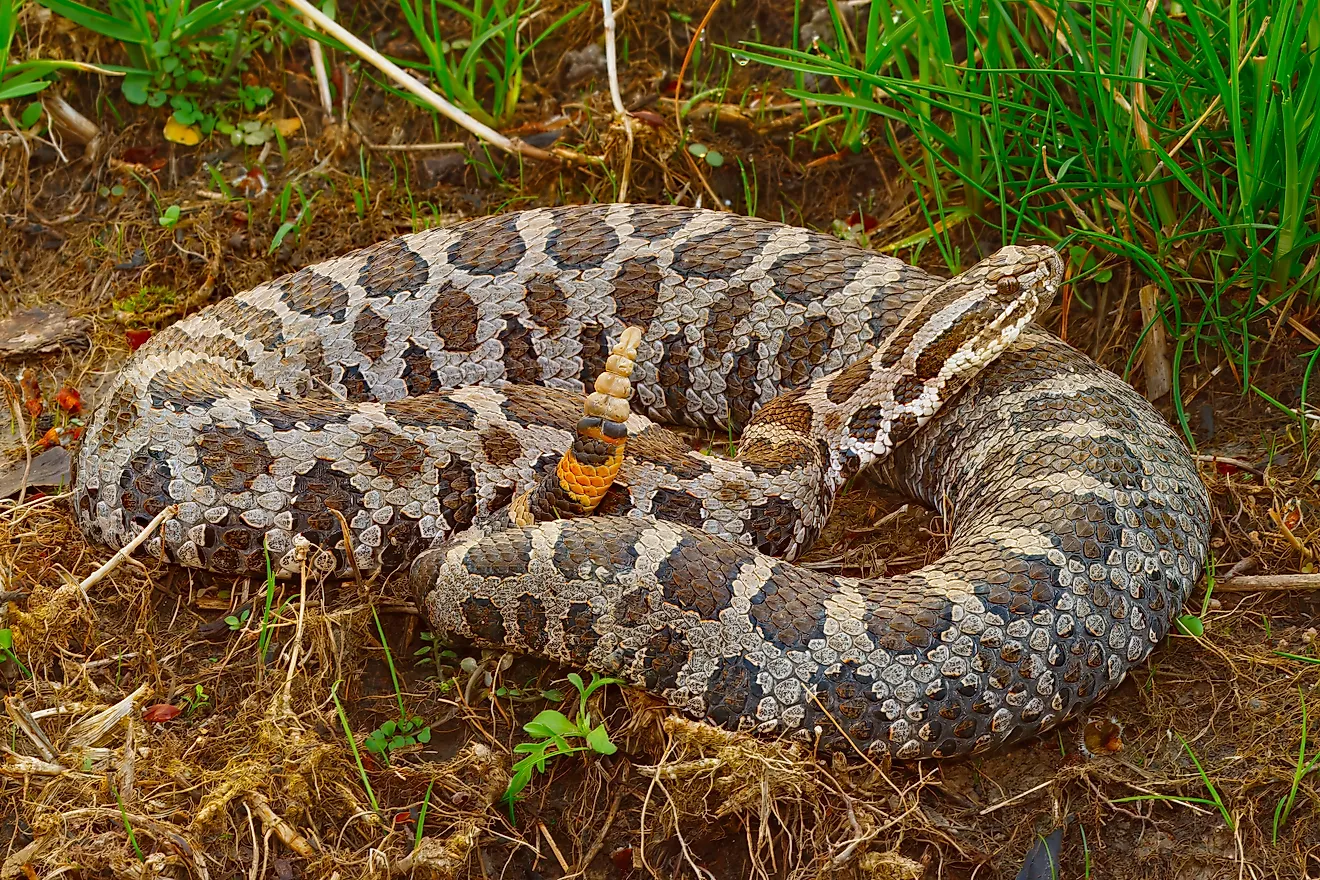
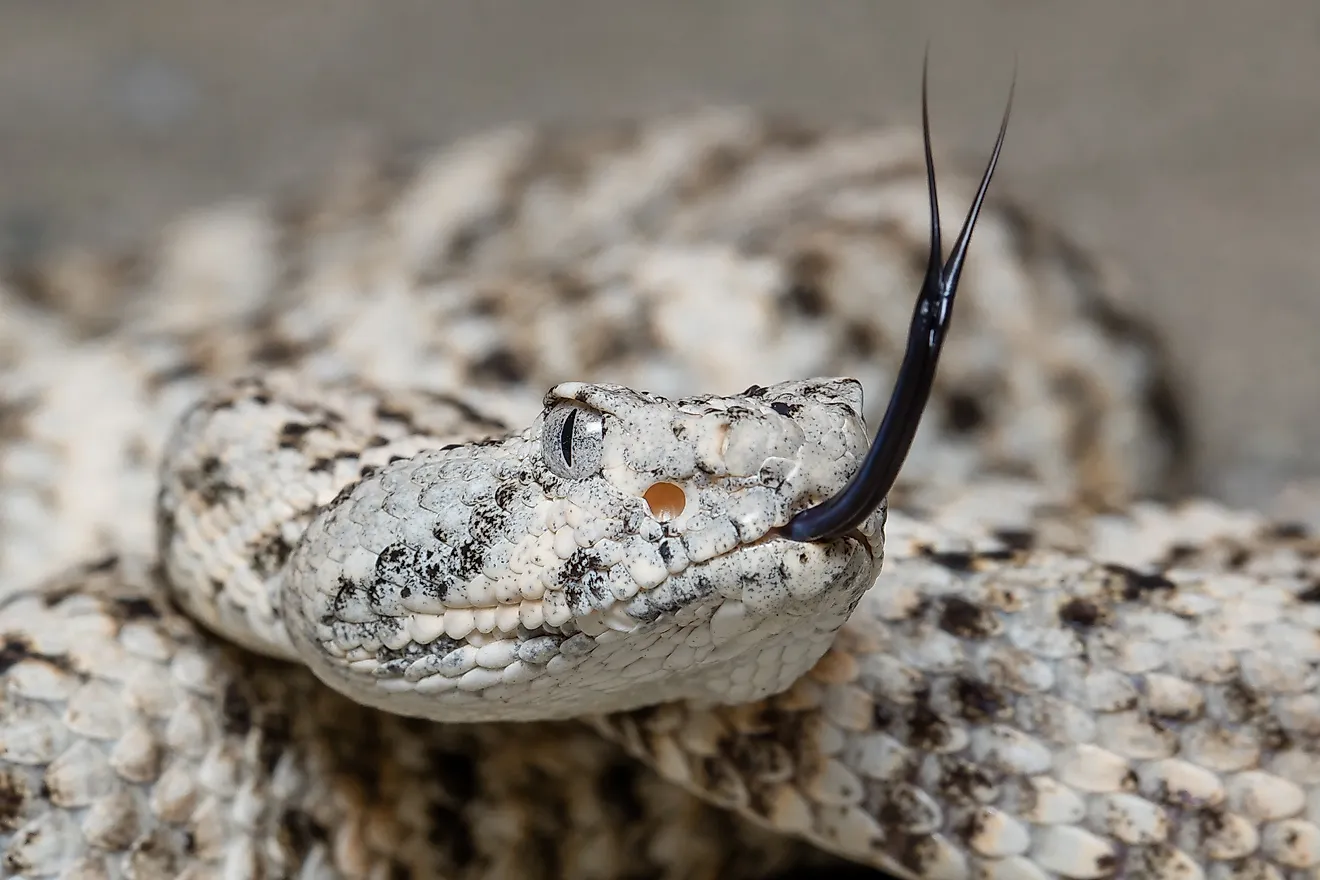
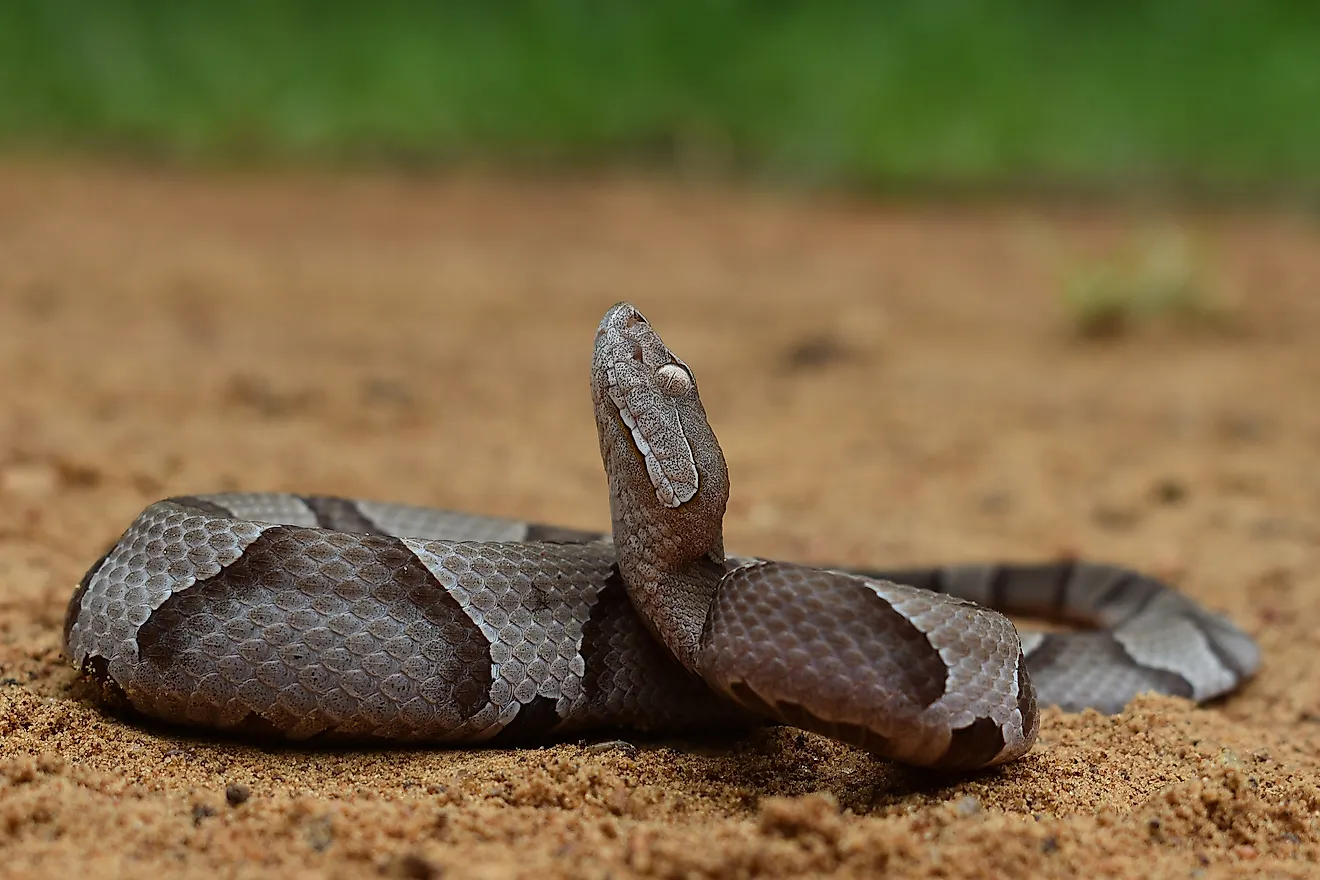
The Mojave rattlesnake is also called the Mojave green rattlesnake because of a slight green tint on its yellow, gray, or light brown body. They have shield-shaped blotches on their dorsal scales that range from orangish-brown to tan. The dorsal patterns also have pale borders around the blotches.
Huamantlan rattlesnakes are darker than their northern cousins. They lack the pale borders on their dorsal blotches and may have light red tints on their heads, especially around the cheeks.
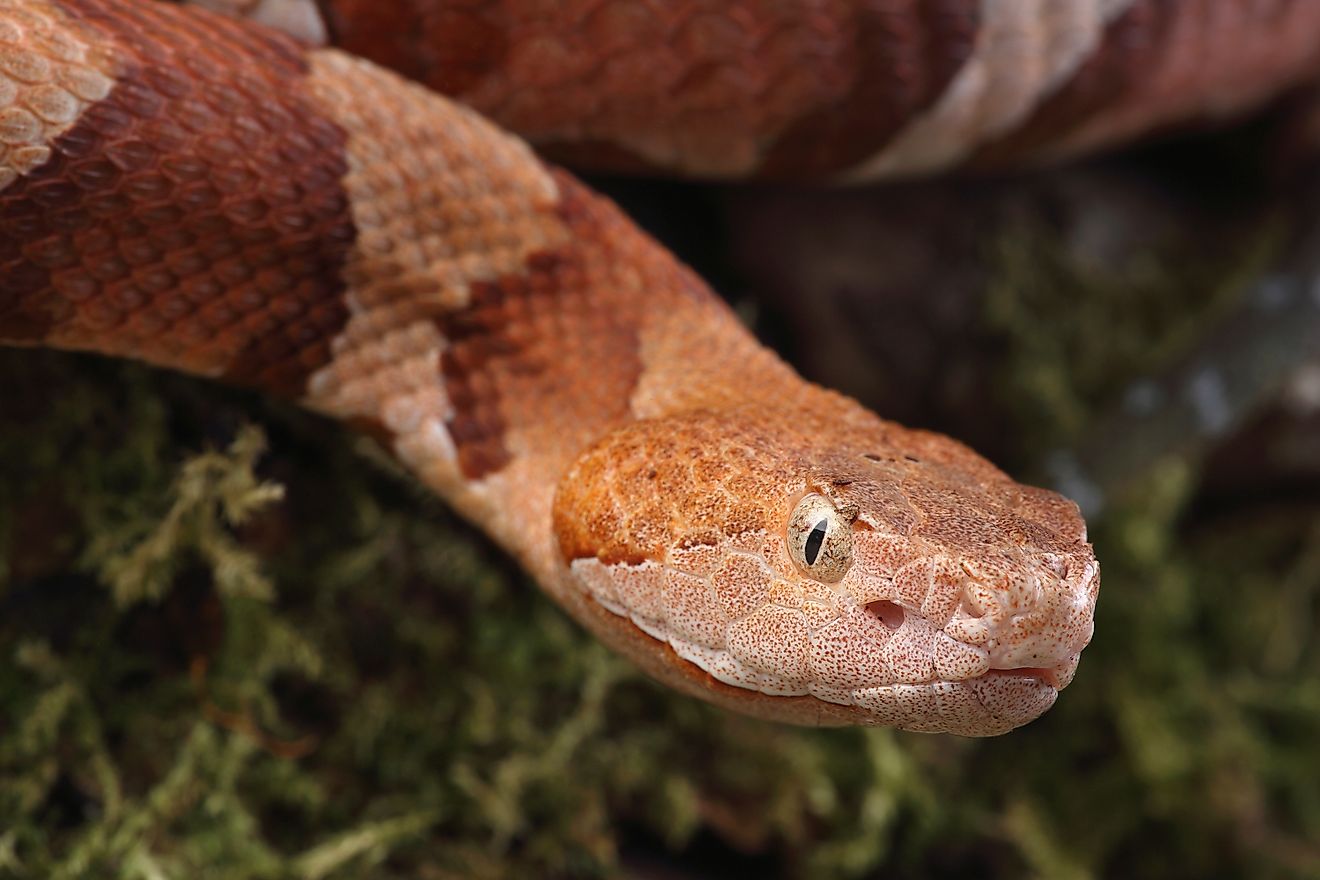
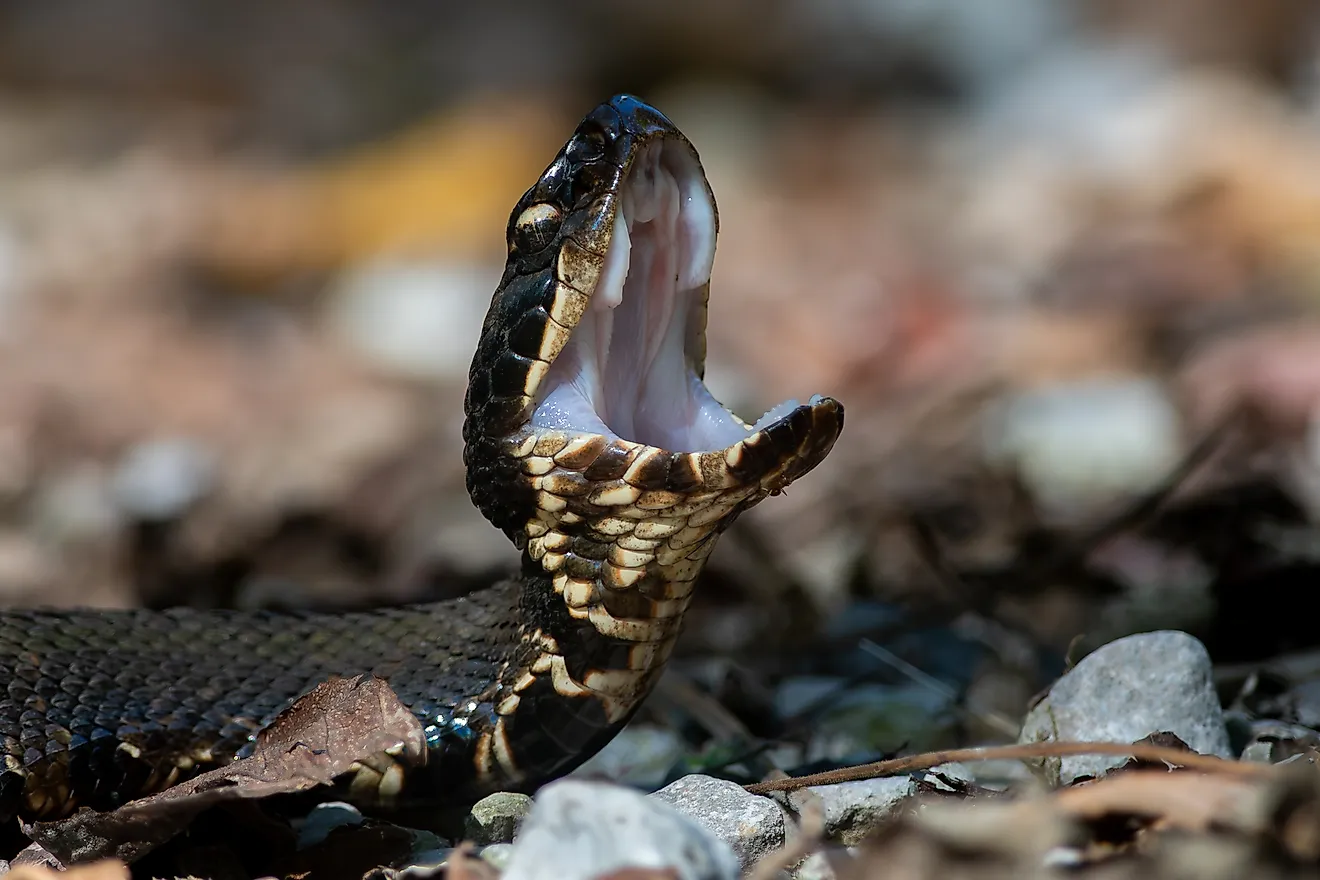
Like other venomous snakes, such as copperheads, Mojave rattlesnakes have triangular-shaped heads. Their rattle segment is yellow or a mix of yellow and black, according to a ScienceDirect article, which they use to signal their presence to potential threats, such as humans.

The rattlesnake injects its venom into prey via its hollow fangs. Depending on the population, the venom may be predominantly neurotoxic, predominantly hemorrhagic/proteolytic, or a less common combination of both, meaning its effects can vary by region. Some believe that younger rattlesnakes are more dangerous, but studies indicate juvenile rattlesnakes can control venom release, while adults generally carry and deliver far more venom.
The venom consists of several specific toxins, including a neurotoxin called Mojave Toxin (MTX), which disrupts neurotransmission, especially nerve-to-muscle transmission, and snake venom metalloproteases (SVMPs), which cause hemorrhage in the bloodstream. Another element is cytotoxic venom, which can directly kill or damage cells. The composition of these toxins varies across environments and Mojave rattlesnake populations, with some studies showing that central Arizona Mojave rattlesnakes contain large amounts of both types of venom.
Scientific studies have divided Mojave rattlesnakes into Type A and B based on their venom. Type A rattlesnakes are high in MTX and have smaller amounts of SVMPs, while Type B rattlesnakes have no MTX, the neurotoxin, but high levels of SVMPs, the hemotoxins, and C-type lectins, a protein commonly found in snake venom. However, some populations have high degrees of both toxins, thus earning the label Type A+B.
The study Phenotypic Variation in Mojave Rattlesnake (Crotalus scutulatus) Venom Is Driven by Four Toxin Families notes that some Mojave rattlesnakes in a central Arizona intergrade zone possess both MTX and cytotoxic and hemotoxic components, which researchers classify as Type A+B.
The Huamantlan rattlesnake's venom has not been as closely studied, but one study found it contains a neurotoxin similar to that of Type A Mojave rattlesnakes.
Food

Both subspecies of Mojave rattlesnakes prefer to eat small mammals, but they will eat anything they can catch, including lizards, smaller snakes, birds, and even rabbits. Studies have shown that Mojave rattlesnakes will target small mammals first and lizards secondly. It may also eat bird eggs if they find them.
Like most ambush predators, the snake will seek to blend into its surroundings, such as under a bush or near known prey hotspots. When a prey animal comes within their range, they will lash out and inject it with their venom. For smaller prey, they can swallow them whole after capturing them. For larger prey, they release the animal, which may wander away before the venom takes effect. The snake will track the dead animal down and eat it whole. This helps the snake both conserve energy and avoid fights with prey. Mojave rattlesnakes may, at times, forage for dead animals.
The snake can collect and drink rainwater from its body by flattening and tightly coiling itself to increase the water-catching surface area
Some snakes hunt more during the day during cooler months or at higher altitudes, but Mojave rattlesnakes at lower altitudes display more nocturnal behavior to stay cool.
Behavior/reproduction
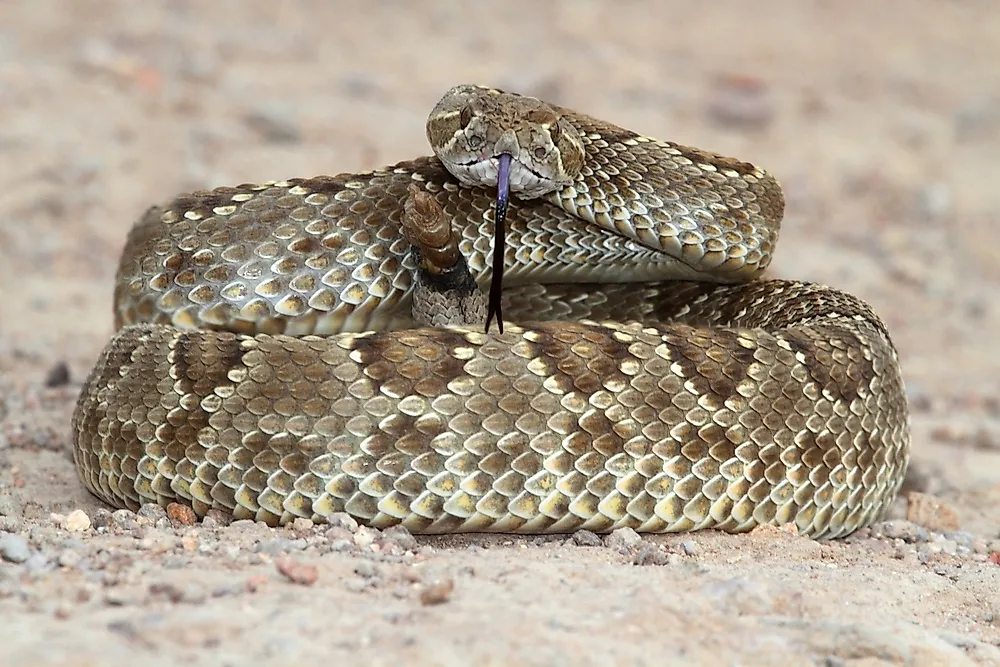
The Mojave rattlesnake is a solitary snake, unlike the more social copperhead. It will only seek out other members of its species during mating seasons. While other snakes mate for one particular season, Mojave rattlesnakes perform a bimodal mating pattern, beginning in the spring from March to May and the fall from late August to early October, according to the Journal of Zoology.
Female snakes can breed every 2 to 3 years, as pregnancy can be quite hard on their bodies, causing them to lose 30 to 50% of their body mass. The gestational period lasts about 170 days, just shy of 6 months.
Female Mojave rattlesnakes give birth in July through September, with neonates frequently seen in August and early September in southern Arizona. The snake's eggs hatch inside the mother, and she gives birth to live snakes in litters of 2 to 17. These juvenile snakes are commonly reported at about 9 to 11 inches at birth. They are fully venomous upon birth and can fend for themselves immediately. They receive no food or extended care, but mothers may remain nearby briefly until the young’s first shed.
Threats to humans

The Mojave rattlesnake's venom is powerful enough to kill a human and can quickly cause severe symptoms. For example, a Mojave rattlesnake bite can cause bleeding, lightheadedness, nausea, and difficulty breathing. However, older literature reported that envenomation by certain Mojave rattlesnake populations may cause fewer local effects and more neurologic effects, whereas newer clinical studies show geographic variation and indicate that neurotoxic respiratory failure is extraordinarily rare in Arizona rattlesnake-bite data. One of the most common times for bites is during mating season, when Mojave male rattlesnakes are more active, increasing their contact with humans.
Symptoms of these bites include blood blisters, necrosis, lowered blood pressure, difficulty speaking or swallowing, and double vision.
There is no direct data on how many bites come from Mojave rattlesnakes, but reports point to an early increase in rattlesnake activity and bite reports in parts of California and Arizona in 2026. California's poison control center received 77 snakebite calls from January to March 2026, and Arizona has seen twice as many snakebite reports. There have also been three reported rattlesnake-related deaths in California in 2026, according to a report by ABC 7. Experts believe the rise in these bites is linked to an unusually warm spring, heavy winter rains, and increased rodent activity, which drew snakes out earlier than usual.
How to stay safe in Mojave rattlesnake habitat
Due to these deaths, some have called for the Mojave rattlesnake to be exterminated. However, such calls do not reflect the rarity of fatal rattlesnake bites or the snake’s role in desert ecosystems. Modern medical professionals keep antivenom in stock to help save people's lives, as seen in 2018, when a man from Barstow, California, was bitten by a Mojave rattlesnake and flown to Loma Linda Hospital for treatment.
In addition, Mojave rattlesnakes are not particularly aggressive; they prefer to avoid human contact and will shake their rattles to warn humans of their presence. They are highly defensive when threatened, but the evidence does not show that they behave any differently from other rattlesnakes; they are unlikely to seek out and attack hikers. The best way to avoid any incidents is to keep a close eye on one's surroundings if hiking through desert parks in Mojave rattlesnake territory, and to always wear proper clothing for such outings, including good footwear.
If bitten, seek medical attention immediately, as the venom can be fatal if left untreated. In remote areas, traveling with a group can make it easier to get help or reach emergency care.