The 6 Venomous Snakes Of Florida
Florida’s venomous snakes follow Florida’s water map. Where rain collects and frogs call (ditch edges, cypress knees, palmetto flats) specialized hunters read the world with senses humans don’t have.
Pit vipers “see” warm-blooded prey through heat-detecting pits between their eyes and nostrils, turning nighttime movement into a glowing target. Coral snakes play a different game, delivering a nerve-disrupting venom through small, fixed fangs that encourage a quick, quiet bite. Even the smallest rattlesnake in the state carries a rattle that can sound like an insect’s buzz, easily missed in summer noise. Knowing these six species means understanding Florida’s habitats as much as its wildlife.
Dusky Pygmy Rattlesnake

The Dusky Pygmy Rattlesnake (Sistrurus miliarius barbouri), sometimes called the "Ground Rattler," grows to 12 to 24 inches as an adult. Its color ranges from light to dark gray or brown and can be distinguished by the rows of black running across its body, mixed with reddish-brown stripes. This heavy-bodied rattlesnake has a thick, triangular head, usually larger than the neck, and a black diagonal streak running behind either eye. Its slim tail culminates in a tiny rattle that warns approaching enemies. Despite this, the rattle is diminished and sounds more like an insect buzz.
Dusky pygmy rattlesnakes thrive in the southern Coastal Plain and prefer marshes, creeks, ponds, swamps, sandhills, and upland forest habitats. They occur throughout much of Florida but are absent from the Florida Keys. While some snakes demonstrate aggression and strike with fury, others are relatively lethargic and don't even rattle. Nevertheless, the snake packs a haemotoxin, and bites result in a painful wound. Fortunately, they are not considered life-threatening.
Eastern Coral Snake

The Eastern Coral Snake (Micrurus fulvius), commonly known as the American cobra, belongs to the family Elapidae and is among the ones that can possibly be found in Miami. It typically reaches 18 to 30 inches in length, with males growing lengthier tails but females overall longer. The eastern coral is a colorful snake and pleasant to look at. It has distinguishing yellow, black, and red around their bodies, with the yellow rings notably smaller than the red and black ones. On the lower end of the body, the ring colors are restricted to black and yellow.
Eastern coral snakes prefer habitats like wiregrass flatwoods, slash pine, and live oak hammocks. They occur in most parts of the Florida peninsula in areas that are not densely vegetated. These snakes are shy and docile; you don't easily encounter them. During human encounters, they bury their heads under the body and coil their tails in fear. Nevertheless, they carry a potent neurotoxin and will bite when you invade their space. You may not feel any symptoms immediately after a bite, but these manifest later on through drowsiness, headache, euphoria, and vomiting.
Eastern Diamondback Rattlesnake

The Eastern Diamondback Rattlesnake (Crotalus adamanteus) is the largest venomous snake in North America, growing to be 72 inches or more as an adult. It has a thick and heavy body and gets its name from the dark diamond-shaped patterns that run along the spine. Often, the diamonds are brown around the center, with a cream outline that fades as you move toward the tail. At the end of the tail is a typical rattle the snake shakes to wade off intruders. The snake's head is usually thick and triangular, while heat-sensing pits between the eyes and nostrils assist the snake in finding its way and hunting.
Eastern diamond rattlesnakes are a native species inhabiting the Florida pinelands. They prefer habitats around coastal forests, scrublands, barrier islands, and pine flatwoods. Although they don't like water, they are great swimmers and will occasionally exist along swamp edges. Meanwhile, their venom has strong haemotoxic effects, damaging tissue and disrupting normal blood clotting. Their bites can be fatal without immediate medical attention, but such incidences are generally rare.
Timber Rattlesnake

The Timber Rattlesnake (Crotalus horridus) is a species native to many eastern states and among the venomous snakes of Florida. Adults often grow to 60 inches and feature blackish to grayish coloration. Their heavy, thick bodies have dark blotches from the head to the back and sides. Meanwhile, cat-like eyes and a heat-sensing pit put the timber rattlesnake in the pit viper subfamily. These snakes are stealthy hunters and will usually stay put and wait for the prey to get close before ambushing them.
Timber rattlesnakes exist in an array of habitats, from hilly forests and swamps to river floodplains and lowland thickets. They are not aggressive and rarely bite unless they feel intimidated and cornered. But before that, they will rattle their tails to give you an opportunity to back down.
Florida Cottonmouth

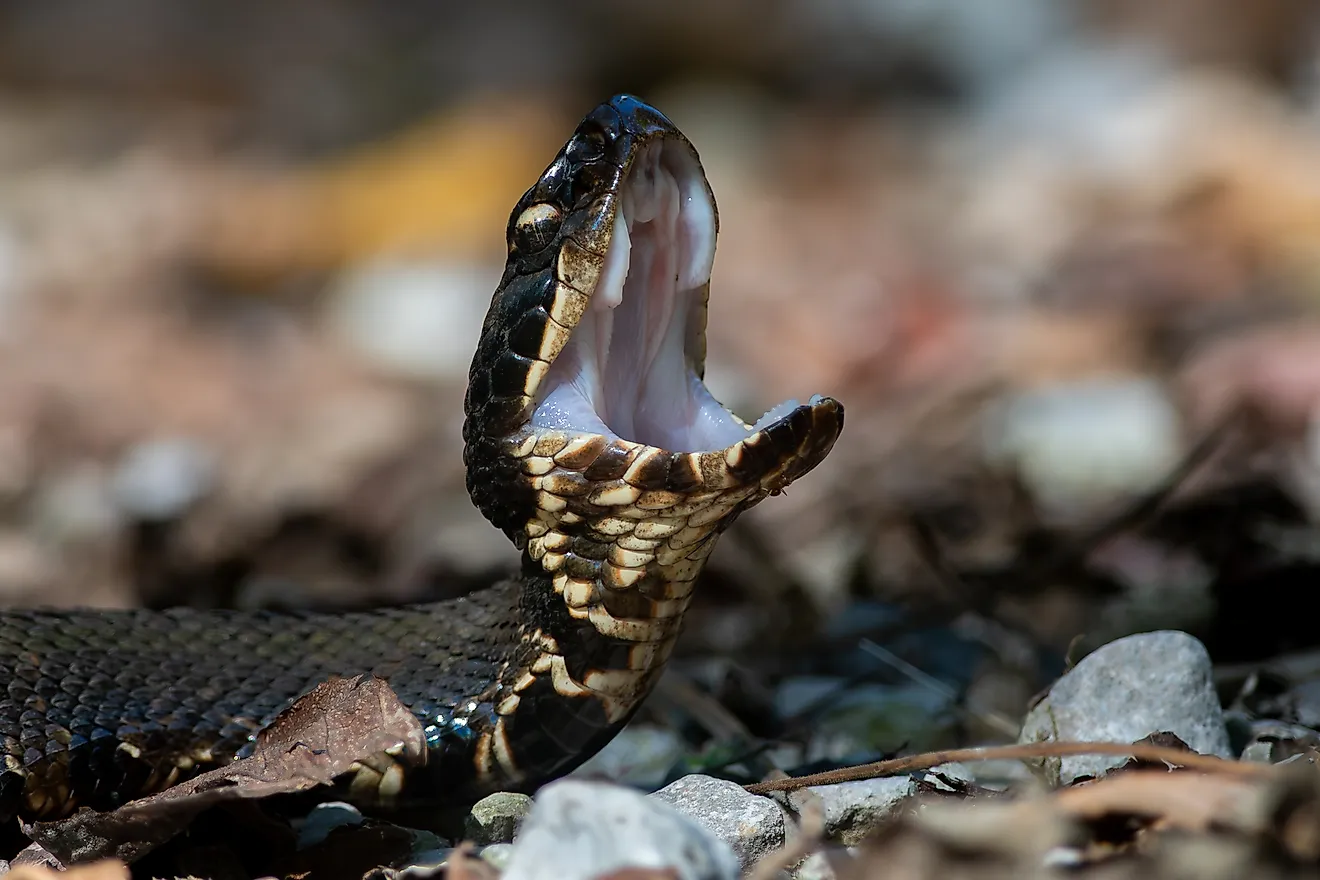
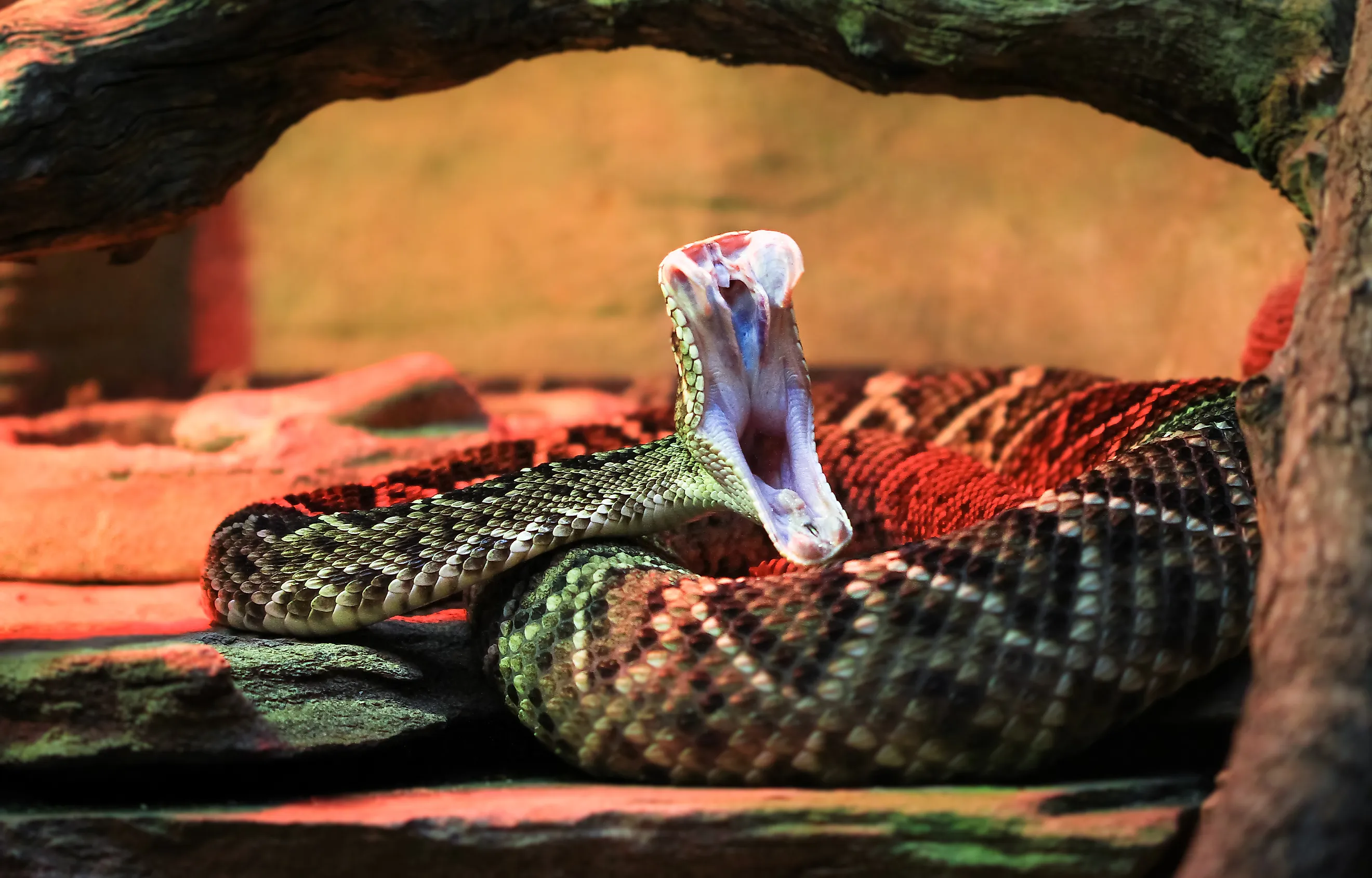
An adult Florida Cottonmouth (Agkistrodon conanti) typically measures between 30 and 48 inches, though the longest recorded specimen in Florida reached 74.5 inches. Known as the Water Moccasin, these snakes have thick bodies in shades of brown or dark brown, marked by similarly colored bands along their sides and back. These bands feature serrated edges, which can be hard to distinguish from a distance. A key identifying trait is the dark facial stripes that run from the nostrils through the eyes to the back of the head, along with a yellowish-white underside. The Florida cottonmouth is a pit viper, equipped with a heat-sensitive pit to help locate prey, and has a large, triangular head. You’re likely to find it in freshwater habitats like rivers, swamps, lakes, and ponds. When threatened, it often opens its mouth wide as a warning, exposing a white interior and backward-facing fangs. Bites are uncommon and generally occur only when the snake feels trapped or threatened. Its venom affects the blood and can be deadly if medical treatment is delayed.
Southern Copperhead

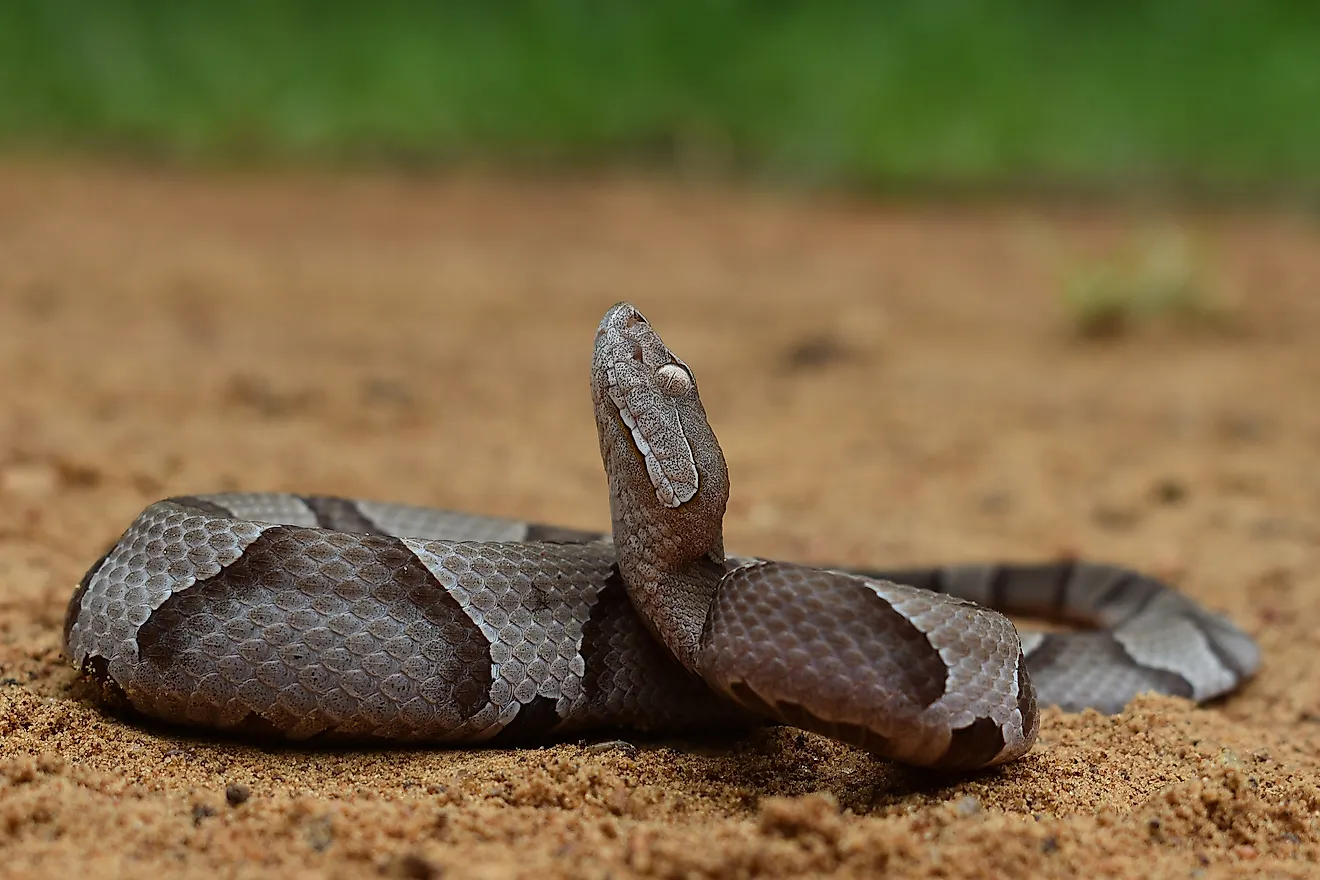
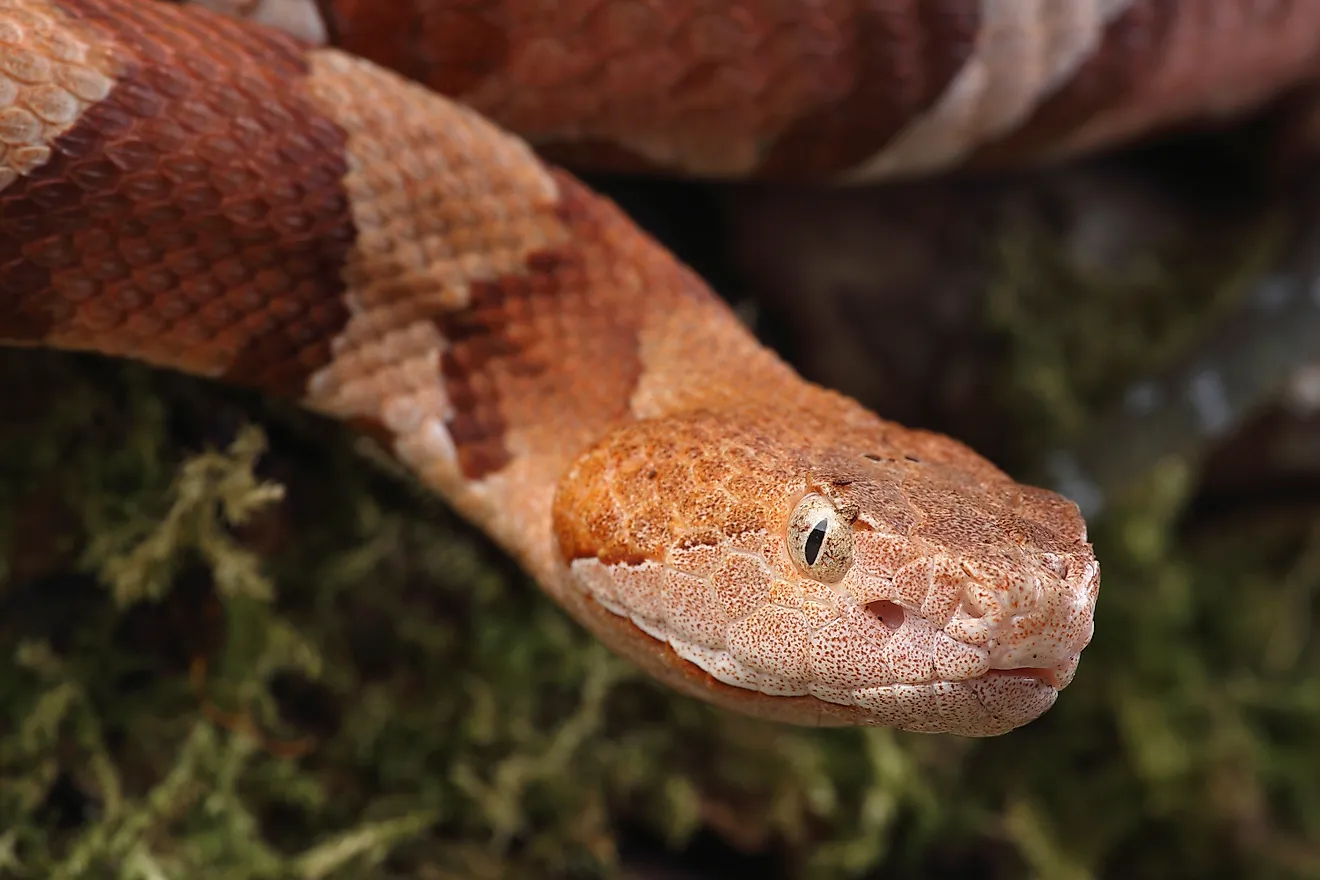
The largest Southern Copperhead (Agkistrodon contortrix contortrix) recorded in Florida was 53 inches long, though adults usually measure between 22 and 36 inches. Its name derives from the coppery-reddish color on its head, similar to a penny. Its body features a tan hue with distinctive reddish-brown hourglass-shaped bands. As pit vipers, Southern copperheads hunt by detecting heat through pits located between their eyes and nostrils. They have a triangular head and elliptical pupils, resembling a cat's eyes, which completes their distinctive appearance.
These snakes favor wooded lowlands and mixed pasture areas within river bottoms, but they can also be found in wooded suburban areas. When threatened, a southern copperhead typically coils defensively, with its head held at a 45-degree angle and tail vibrating. Notably, they can bite from birth and deliver a relatively mild venom.
Final Thoughts
Florida's diverse landscapes have supported many snake species for centuries, and education is crucial for safe coexistence between humans and reptiles in this snake-filled region. By understanding which snakes are venomous and their habitats, residents and visitors can avoid unexpected encounters during swamp walks or backyard gatherings. Ultimately, respecting these snakes from a safe distance fosters ongoing appreciation for Florida's venomous serpents. Knowledge is essential for safe coexistence with snakes across the state's varied terrain.