The Most Lucrative Trade Goods of the Ancient World
Used to power more than 90% of global transportation energy, oil runs the modern market as one of the most lucrative resources in the world. Whoever controls the oil controls real geopolitical power and money. There was a time before oil powered everything, and it was far from the first resource people fought over. It is worth asking what counted as precious before oil and what trade networks had to be built to move those goods. Below are several goods from the ancient world that were considered the most lucrative of their day.
Tin

The Bronze Age lasted between roughly 3000 and 1200 BC, and the use of tin mixed with copper shows up in artifacts starting around 2000 BC. Tin replaced arsenic in copper alloys because it was less detrimental to an ancient smith's health.
Many historians agree that there was a long-distance tin trade during the Bronze Age, but the nature of the trade has been difficult to discern. There are no known well-established deposits of tin in the Middle East or Near East. The known tin deposits were located in northwestern Italy, Sardinia, Portugal, Brittany, and Cornwall. Despite how far Cornwall was from Greece and the Near East, tin was still being used in those areas.
In the early second millennium BC, tin was considered a precious material on par with gold, silver, iron, and more. Despite not knowing where the tin came from originally, Assyrian merchants appeared to hold a monopoly on it and sold it for silver and gold in Anatolia. In the early eighteenth century BC, a letter written by a man called Meptú describes a caravan carrying tin toward Mari out of Eshnunna, and it also mentions locations like Hidan and Der. Other places like Susa and Sippar appear in texts as part of this tin trade route, with no clear origin. In Greece around 420 BC, Herodotus mentions tin islands but does not expand on where they might be located.
In new studies published in 2025, testing on several ancient artifacts revealed that tin from Cornwall and Devon turned up in ingots used on Mediterranean ships. Other testing showed that ingots from shipwreck sites near Israel are almost identical to ingots found in southwest Britain. This evidence leads historians and archaeologists to theorize a pan-European tin trade, with tin potentially carried up to 2,485 miles. There is still much more to learn before anything can be said for certain.
Despite the mystery of where tin came from and how it reached places like Greece and the Near East, tin was used frequently not just for bronze alloy but also as payment for lodging and for fines. It may not have the same shine as silver or gold, but merchants were willing to trade those precious metals for even a small amount of tin.
Silk

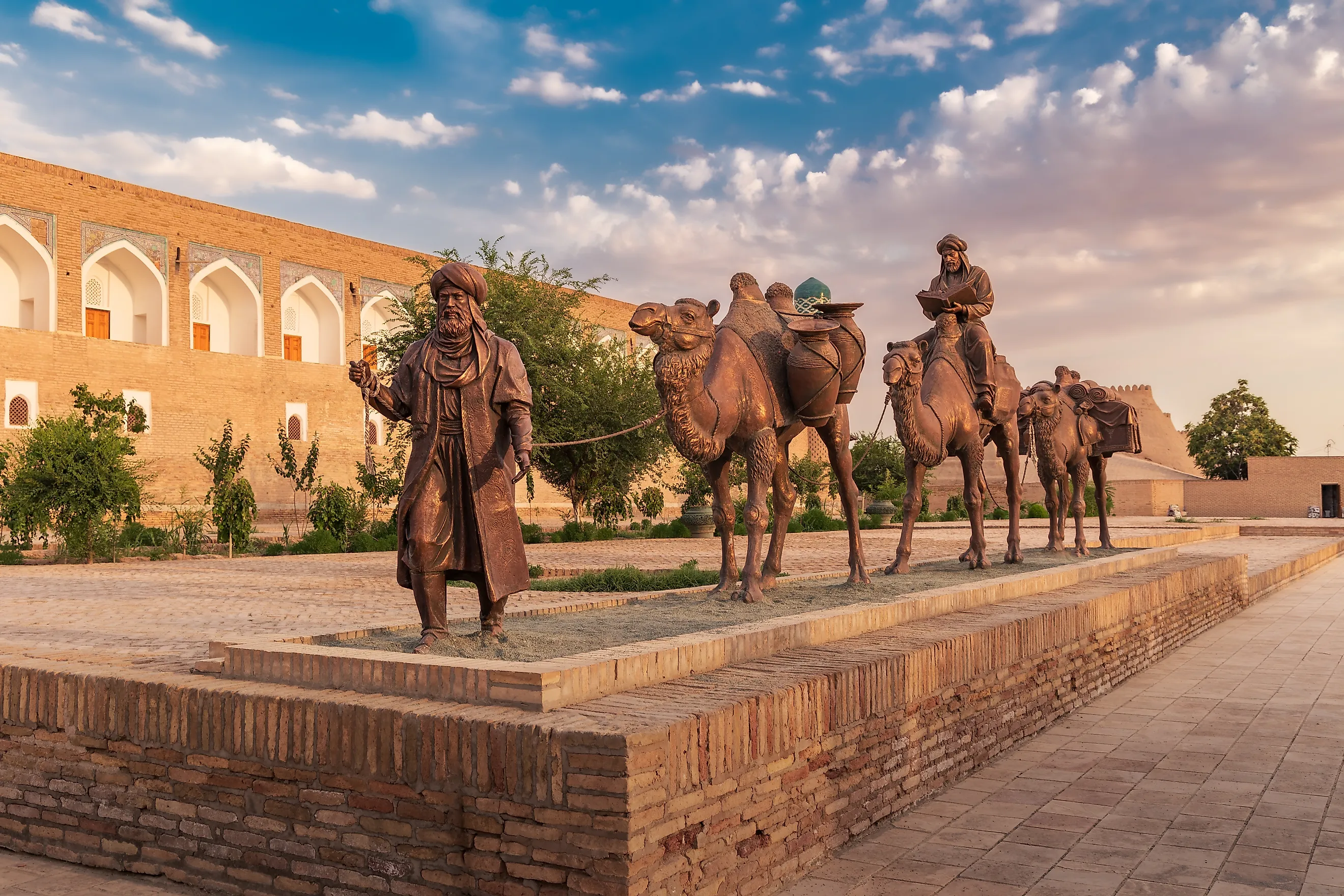
The Silk Road is considered one of the most important commercial trade routes in history, linking China with the Mediterranean Sea through business. Much was traded along it, including pearls, jade, and glass, but most importantly, silk was what started the boom.
Through analysis of soil samples from tombs at the Neolithic site of Jiahu, silk fibroin has been found dating back as far as 8,500 years. That makes silk older than Chinese writing, which developed around 1200 BC. Weaving tools and bone needles turned up at the site as well.
Between 202 BC and 220 AD, China produced more than 20,000 pounds of woven silk a year, made possible by the domestication of the silkworm Bombyx mori. The Chinese also kept a degumming process secret, which helped give their silk its high quality.
During the Han dynasty, there is evidence that China traded silk to the Xiongnu for protection against invasions by other nomadic tribes. Silk was then traded more broadly along the Silk Road. It was ideal for trade because it was both highly valued and incredibly light to carry, unlike heavier precious goods. The Roman elite prized silk for their clothing so much that the Roman Senate passed laws limiting it, seeing it as decadent and an economic threat. Pliny the Elder wrote about silk around 70 AD, noting that its price drained the wealth of his empire. In Buddhist cultures, silk served as a canvas for paintings and ritual banners.
Silk may not be a precious metal or stone, but it was a highly valued trade item, prized for political advantage as much as for wealth.
Spices

Though spices sit in almost every kitchen today, they were far harder to get in the past. In fact, spices were a way to mark who was wealthy and who was not. Being able to afford them showed how economically secure a person was. Several were considered coveted, and one of the oldest was sesame. It is theorized that sesame was traded during the Bronze Age, with evidence preserved in microremains and proteins in the dental tartar of individuals who lived in the second millennium BC. Those individuals lived in the Southern Levant, which covers modern-day Israel, Jordan, and Palestine, along with parts of Lebanon, Syria, and the Sinai Peninsula. Because the sesame was found with them, it is thought to have been part of an Indo-Mediterranean trade route.
It is no surprise that sesame was coveted, used in both food and wine. Between about 860 and 850 BC, a tablet recorded that the Assyrian gods drank a wine made with sesame. The Greek historian Herodotus, writing in the fifth century BC, noted that sesame seed went into cakes and wines, as well as medicines and even perfumes. In traditional Indian medicine, sesame oil was used for body massage between 700 and 1100 BC.
While sesame was coveted, so were many other spices. Around 1500 BC, Queen Hatshepsut sent an expedition of five ships down the Red Sea to a place called Punt, believed to lie between modern-day Ethiopia and Sudan. Punt was known for its many goods, including spices. Around the same time in Egypt, medical treatments used spices like caraway, coriander, fennel, and poppy.
Arab merchants who dealt in spices often invented myths to hide where their goods truly came from. One told of cinnamon birds that built their nests out of cinnamon sticks. The merchants claimed they collected the cinnamon when a bird returned to its nest and the sticks rained down. These stories helped the merchants keep a tight grip on the spice trade. With spices so woven into human life, it is no wonder they were such a sought-after commodity.
Why Tin, Silk, and Spices Still Matter
Though tin, silk, and spices may seem mundane today, they were highly sought after in antiquity. The trade routes built to obtain them also carried information and knowledge that helped lay the foundation of a more globalized world. What do we value today that might seem trivial in the future? And what more might we learn from one another with the passage of time?