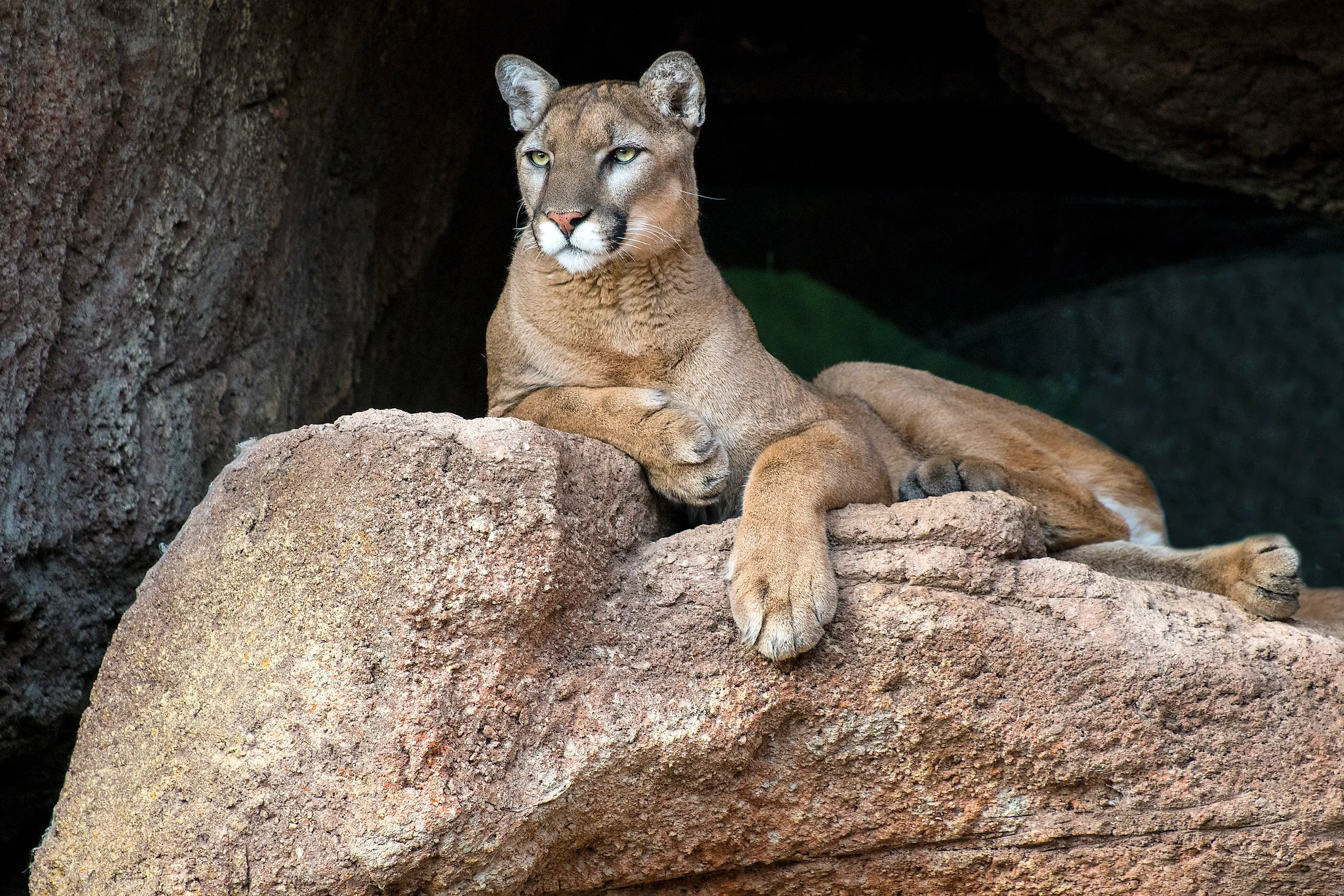
The State Parks With The Most Mountain Lion Sightings
Nearly 100 mountain lions wear GPS collars in the hills around Los Angeles, and hikers still almost never see one. That gap is the whole point. No national database ranks sightings park by park, so this list sticks to hard evidence: collar data, trail cameras, and documented encounters, at seven parks spanning the California coast and the New Mexico high country. A few have seen rare, serious attacks, told here with real numbers. Falls and heat still hurt far more visitors than these cats ever do.
Malibu Creek State Park, California

Malibu Creek State Park, roughly 8,000 acres of oak woodland and volcanic rock in the Santa Monica Mountains west of Los Angeles, is the focus of one of the longest-running mountain lion studies in the country. Since 2002, National Park Service biologists have GPS-collared dozens of lions in the surrounding range as part of an ongoing research project, reaching their 99th tracked cat in 2021, according to a report on the milestone. Researchers use the data to study how the animals survive boxed in by two of the busiest freeways in the country.
The park has also had a rare, serious encounter on record. In August 2024, a mountain lion grabbed a 5-year-old boy by the head during a family picnic; adults in the group charged the animal and forced it to let go. The boy was airlifted to a hospital and recovered from significant but non-life-threatening injuries. The California Department of Fish and Wildlife determined the lion posed a public safety threat and had it euthanized.
Encounters like this stay rare against the steady flow of hikers heading to the park's Rock Pool and Century Lake, or the meadow once used as the M*A*S*H filming site. Rangers recommend hiking in groups, keeping small children close, and never running from a mountain lion.
Cuyamaca Rancho State Park, California

Cuyamaca Rancho State Park, roughly 25,000 acres of oak and pine forest in the mountains east of San Diego, holds one of the more sobering mountain lion histories of any state park in the country. In December 1994, 56-year-old hiker Iris Kenna was killed by a mountain lion while hiking alone near the intersection of the Lookout Fire Road and Azalea Springs Fire Road, close to Cuyamaca Peak. A memorial bench near the site is engraved with her name today. A year earlier, in September 1993, a young cougar bit a 10-year-old girl at the park's Paso Picacho Campground, causing minor injuries.
Both incidents appear on California Fish and Wildlife's own verified attack log, which lists the 1993 nonfatal attack and the 1994 fatality at "Cuyamaca State Park," San Diego County, the same park's shorthand name. They remain the exception. The state's list records only a handful of fatal mountain lion attacks across more than a century of record-keeping, and most of the park's roughly 100 miles of trails, including the popular climb up Stonewall Peak, go a typical year without a lion encounter.
Standard California State Parks guidance for mountain lion country still applies here: hike in groups, keep children within sight, make noise on the trail, and never run from a lion.
Franklin Mountains State Park, Texas

Franklin Mountains State Park, roughly 27,000 acres of rugged desert peaks rising straight out of El Paso, is regularly cited by park and tourism officials as one of the largest urban wilderness parks in the country. The terrain around 7,192-foot North Franklin Mountain also forms a wildlife corridor linking Texas, New Mexico, and Mexico. In July 2015, one of the park's wildlife cameras captured a mountain lion at close range in the park's northeast section. Then-superintendent Cesar Mendez described it as "a beautiful lion almost looking right into the camera in the middle of the night." That same lion was struck and killed by a vehicle on Transmountain Road the following week, a reminder that the busy roads bordering the park are a real hazard for the lions that move through it.
Confirmed sightings inside the park's boundaries are otherwise uncommon. In the years following that 2015 capture, park staff had not confirmed additional lions there, though residents in nearby neighborhoods including Canutillo and the city's west side have periodically reported sightings. Texas Parks and Wildlife notes mountain lions still range across the state's Trans-Pecos region, which the Franklin Mountains sit at the edge of.
Hikers on the park's more than 100 miles of trails should store food securely and keep dogs leashed.
Custer State Park, South Dakota

Custer State Park covers 71,000 acres of granite peaks and rolling grassland in South Dakota's Black Hills, and it sits inside the range of one of the only self-sustaining mountain lion populations found east of the Rocky Mountains. Mountain lions were nearly wiped out of the Black Hills by unregulated hunting in the early 1900s, but South Dakota Game, Fish and Parks confirms that a breeding population re-established itself in the region. Today the mountain lion is one of the species the department manages through a regulated hunt that includes areas within the park itself, alongside bison, elk, deer, pronghorn, and turkey.
GFP does not publish a lion count specific to the park, and the department manages the Black Hills harvest conservatively: the season closes once hunters take either 60 total lions or 40 females, whichever comes first, a sign of how closely the population is tracked rather than how large it has grown. Most visitors come to drive the park's Wildlife Loop Road or photograph the free-roaming bison herd rather than to look for lions, and the park's own safety materials focus mainly on staying at least 100 yards from bison and elk.
Still, the documented cougar population in the Black Hills makes Custer one of the few state parks outside the traditional Rocky Mountain lion range with a confirmed breeding presence.
Eldorado Canyon State Park, Colorado

Eldorado Canyon State Park, a roughly 1,400-acre canyon carved by South Boulder Creek just southwest of Boulder, is world-famous for rock climbing on formations like The Bastille and Wind Tower, and it is also documented mountain lion habitat. Colorado Parks and Wildlife confirms that mule deer, black bear, bobcat, and mountain lion all live in the canyon. In January 2021, wildlife cameras near the park recorded mountain lion activity in the area, prompting CPW to remind visitors to keep dogs leashed.
Colorado does not publish sightings by individual state park, but the Front Range foothills around Boulder, where Eldorado Canyon sits, count as established mountain lion habitat according to state wildlife officials. Actual encounters stay uncommon: most of the roughly 500 technical climbing routes here see climbers, not cats. If one is spotted, CPW's standard statewide advice holds: do not run, make noise, and back away slowly, the same as anywhere else in mountain lion country. Hikers on the historic Fowler Trail, built along an old narrow-gauge railroad grade, are far more likely to spot mule deer or a golden eagle than a lion.
Fees and any seasonal access rules can change year to year, so it is worth checking current conditions before a visit
Riverside State Park, Washington

Riverside State Park, more than 9,000 acres of pine forest and basalt cliffs along the Spokane River just outside the city of Spokane, has become an unlikely hub for cougar research. On October 31, 2023, a mountain biker was followed by a cougar on one of the park's trails; he shook his bike and shouted, and the animal backed off, though it approached again before he escaped unharmed.
That cougar became part of an ongoing study led by the Kalispel Tribe's wildlife program, which tracks how cougars respond to human voices and hazing techniques as a nonlethal way to reduce conflicts near people. Program lead Bart George has said that by the end of repeated approaches, "the cats are not letting us get as close to them," suggesting the technique works. The Washington Department of Fish and Wildlife estimates about 2,400 cougars statewide, and a WDFW sergeant involved in the research described the project as giving wildlife managers "a nonlethal tool" for handling cougars that get too comfortable around people.
The park's Bowl and Pitcher rock formation and swinging suspension bridge remain the biggest draw for most visitors, but the basalt canyons along the Spokane and Little Spokane rivers are prime cougar habitat. Sightings stay uncommon, and WDFW encourages hikers to report encounters rather than approach.
Cimarron Canyon State Park, New Mexico

Cimarron Canyon State Park stretches for about 8 miles along the Cimarron River in northern New Mexico. Hemmed in by the volcanic cliffs of the Palisades Sill and surrounded by the Colin Neblett Wildlife Area, this is prime habitat for the state's mountain lion population. New Mexico Game and Fish does not publish a single statewide lion population count; the department manages cougars through regional zones based on habitat and prey abundance instead, but it confirms this part of the state is established range.
In 2025, campers at the park reported a mountain lion walking through their campsite; they stood their ground, gave the animal space to move on, and it left without incident, a textbook example of the state's recommended response to an encounter.
The park is better known among visitors for trout fishing in the Cimarron River and its tributaries, Clear Creek and Tolby Creek, than for wildlife encounters, and confirmed lion sightings inside the park itself remain infrequent. Still, its location inside a designated wildlife area makes an encounter somewhat more plausible here than in New Mexico's lower desert parks.
Respecting The Range, Not Fearing It
None of these seven parks are dangerous by the numbers. Falls, heat exhaustion, and drowning still send far more state park visitors to the hospital each year than mountain lions ever will. Confirmed attacks, like the ones at Cuyamaca Rancho and Malibu Creek, remain rare enough to make national news precisely because they are so unusual. What these parks share instead is documentation: GPS collar data, trail camera captures, research partnerships, and logged encounters that set them apart from the guesswork filling most "best places to see a mountain lion" lists online.
Fees, trail closures, and safety advisories can change quickly at any of these parks, so it is worth checking the relevant state agency's current conditions page before a visit. Go with a group, keep young kids close, make noise on the trail, and if you do see one, do not run. There is a good chance the cat was watching you first, and it can certainly run faster.