The State Parks With The Best Horseback Riding
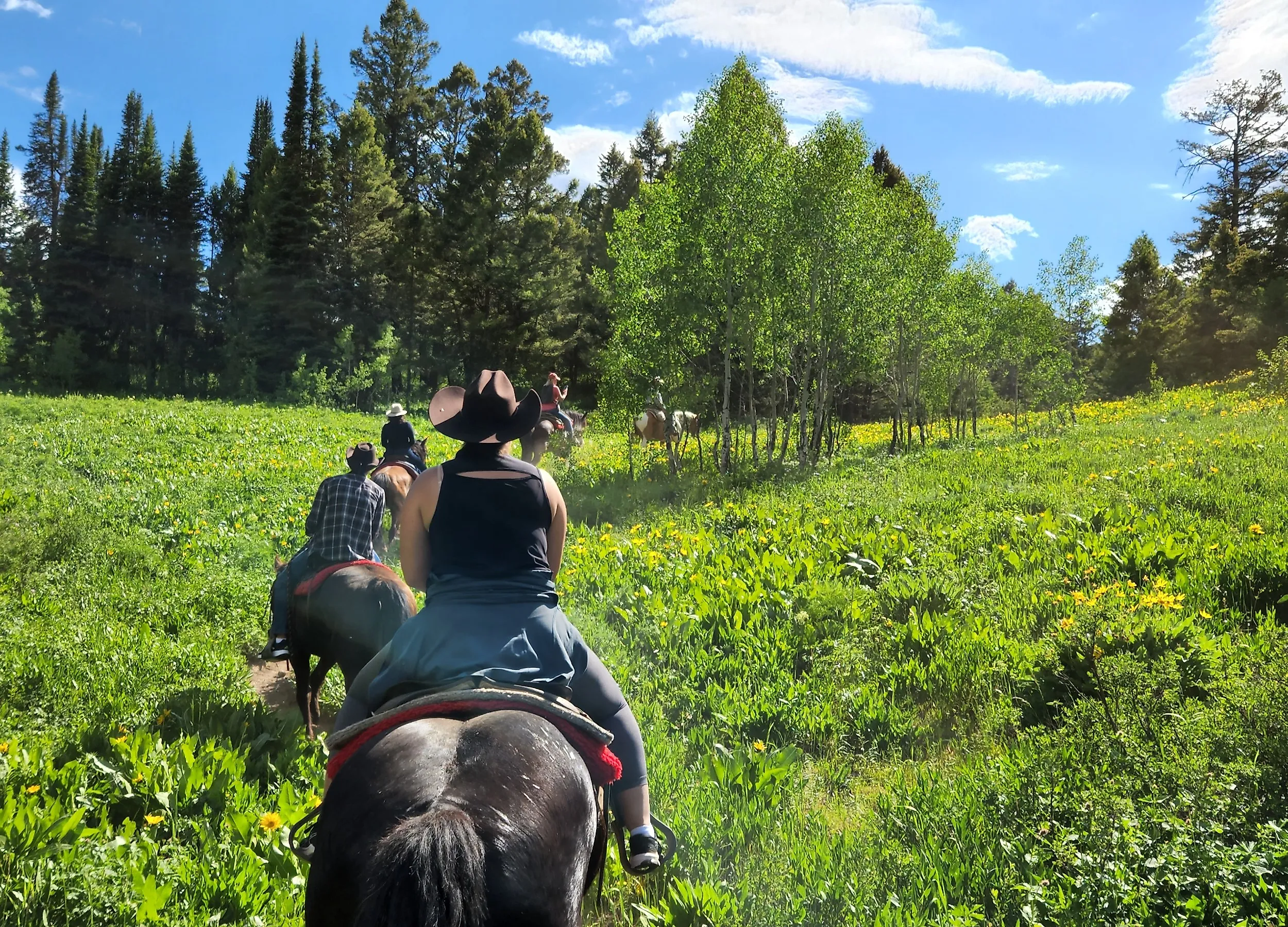
Horse people know the good stuff never happens on the interstate. A wrangler in South Dakota drives 1,300 bison past your saddle every September. A concessionaire in Arizona walks you across the Verde River toward the Sedona red rocks. Nebraska is the only state park system in the country that still runs its own trail rides. Some of the parks below hand you a horse and a guide, others want you to haul in your own to a campsite wired with corrals and hookups, and the best of them do both. A negative Coggins test and sometimes a health certificate are the price of admission for a bring-your-own trip. What follows is scenery, trail mileage, and the odd trail name worth the drive.
Fort Robinson State Park, Nebraska

Fort Robinson began as a US Army camp in 1874 near the Red Cloud Agency and later became a major military post involved in federal control of the Lakota and Northern Cheyenne. Levi Robinson was an American lieutenant who was ambushed and killed while escorting a wood train out of Fort Laramie in February 1874, a month before the camp that carried his name was authorized. Crazy Horse surrendered with about 1,100 followers at Camp Robinson in May 1877, less than a year after he helped Lakota and Cheyenne forces defeat the US Seventh Cavalry at the Battle of the Little Bighorn. He was mortally wounded at the post that September. Officially designated Fort Robinson in January 1878, the post took on a quartermaster remount depot in 1919 and became the largest of the Army's permanent remount depots. It received, trained, bred, and issued horses and mules for military service. The US Olympic equestrian team trained here from 1935 through 1939.
Nebraska is the only state park system in the country that runs its own trail rides, and Fort Robinson is one of the properties where they continue. In February 2026, Nebraska Game and Parks announced that guided rides would continue at Fort Robinson, Platte River, Eugene T. Mahoney, and Niobrara state parks and at Buffalo Bill Ranch State Historical Park, while ending at Ponca and Chadron. Wrangler-led rides operate during the summer, although longer guided excursions are currently unavailable. Visitors who bring their own horses can access trails across more than 22,000 acres of Pine Ridge terrain.
Custer State Park, South Dakota

The Black Hills take their name from the Lakota description "Paha Sapa," meaning "hills that are black," though they are not actually black. Custer State Park is located in the western part of South Dakota, adjacent to the Black Hills National Forest. Covering about 71,000 acres, Custer is South Dakota's first and largest state park and one of the country's better-known large state parks. Blue Bell Lodge Stables is the center of horseback riding recreational activity within Custer and the only riding stable inside the park boundaries. Guided trail rides depart from the stables and travel through portions of the French Creek Natural Area. Splitting from these are even more trails delving further into the wilderness, such as Big Tree Draw, Robber's Roost, and Lame Johnny.
Rides run mid-May through the end of September in 30-minute, 1-hour, half-day, and full-day increments. The half and full day rides push deep into the French Creek backcountry and are not built for beginners, while "Lil' Buckaroo" rides at the stables cover the youngest visitors. Campers can bring their own horses, provided they have health certificates, to the French Creek Horse Camp, where every site comes with two corrals, water, and electricity. Picketing and portable corrals are not allowed there, though an electric fence is permitted in designated areas. On the last Friday of September, the "Buffalo Round Up and Arts Festival" puts wranglers on horseback to drive roughly 1,300 bison into the corrals for sorting and branding, with as many as 150 arts and crafts vendors set up alongside it.
Brown County State Park, Indiana

The ride continues in the "Hills o' Brown" at Brown County State Park, a few miles south of Nashville, Indiana. The Saddle Barn at the center of the riding operation carries the "Parks Rustic" classification, dating back to 1936, when it was first constructed by the Civilian Conservation Corps (CCC) during the Franklin Roosevelt administration. It is billed as "a place where human dreams ride on equine wings," offering classic horseback adventures that play into a nostalgic, pastoral setting. The park features trail and pony ride options, and nearly 70 miles of bridle trails meander through its almost 16,000 acres. Brown County's saddle barn operates seasonally, with current hours and closure days posted by Indiana DNR, and rides remain first-come, first-served for riders at least seven years old. There is a 2.2-mile trail ride and a longer one that extends for 3.3 miles. The terrain has forested hills called the "Little Smokies" because of their tree-covered resemblance to the Smoky Mountains, with scenic overlooks that are especially popular when the leaves change colors in the fall. There are many streams and 2 lakes.
Campers are also welcome to bring their own horses and choose between sites with utilities and more primitive options within the Horseman Campground, though a May 2025 tornado tore through the area, and some sites remain without electricity. Riders should also plan around a scheduled shutdown: the equestrian campsites close on November 9, 2026, and stay closed through the 2027 season for an electrical upgrade. Brown County State Park is the largest state park in Indiana and consistently has approximately 1.2 million visitors a year.
Wind Creek State Park, Alabama

Wind Creek State Park lies along the northern end of Lake Martin, about seven miles south of Alexander City, Alabama. The lake covers roughly 40,000 acres and has more than 700 miles of shoreline, which makes it one of Alabama's largest human-made lakes. The park has one of the largest state-operated campgrounds in the United States, with 586 sites inside a lakeside area of 1,445 acres, and many of them face the water. There are 20 dedicated horse camper-oriented sites with electrical and water hookups, but there are no provided corrals. Campers who bring in horses must provide their own portable pens for them. Camping in this area is by walk-up only, and no reservations are possible. Guided horseback riding is operated by Rockin' K horse services, currently by reservation only for groups of up to four riders, so visitors should contact the concessionaire for availability. Guided trail rides are offered in 1-hour and 2-hour increments, plus a sunset ride. Wind Creek advertises roughly 30 miles of horse-friendly trails overall, while its Jeff Reed Horse Trail page describes the named Blue and Orange routes as totaling about 20 miles. Lake views and trails through thick pine forests are the big draws.
Dead Horse Ranch State Park, Arizona

Dead Horse Ranch State Park offers horseback riding within 423 acres along the Verde River in Cottonwood, Arizona, between the red rocks of Sedona and the Jerome historic mining town. Trails within the modestly sized park extend to 20 miles of mixed-use loops for riders, bikers, and hikers, with names like the Lime Kiln, Thumper, and Raptor Hill trails, which penetrate adjacent portions of the Coconino National Forest. The Lime Kiln Trail runs all the way to Red Rock State Park on the outskirts of Sedona. The park got its odd name from the Ireys family in the 1940s, who were searching for a ranch to buy after moving into the Cottonwood area from Minnesota. At one of the prospective properties, they saw a dead horse lying in a field. Later, when the father, Calvin "Cap" Ireys, asked the family which ranch they liked the best, they answered, "The one with the dead horse!" When the family sold the ranch to the state of Arizona in 1973, one of the stipulated terms of sale was to keep the name. Trail Horse Adventures is the concessionaire in charge of leading trail rides. The Outlaw Trail ride comes in one-hour and one-and-a-half-hour versions, both featuring a Verde River crossing, with the longer option climbing into higher desert country where the Sedona red rocks show up in the distance. Small children too young for the trail sometimes get a supervised turn around the corral instead. Horse corrals are available for overnight use on a limited basis with advance arrangements through the park.
Humboldt Redwoods State Park, California

Cuneo Creek Horse Camp serves riders bringing their own horses to Humboldt Redwoods State Park, about 45 miles south of Eureka. The camp sits on an old homestead on Mattole Road, eight miles west of the 32-mile Avenue of the Giants, and the park keeps designated multi-use trails open to equestrians. Though it does not offer a trail ride service, there is a 100-mile trail system here running through redwoods across more than 50,000 acres, with the Grasshopper and Look Prairie multi-use trails climbing out of the camp itself. 17,000 acres of the park are considered old-growth forest, and Rockefeller Forest is the largest area of contiguous ancient redwoods in the world. There are five family sites for up to eight people and two horses each, plus two group camps: Site A geared towards larger groups of up to 65 people with 22 corrals and Site B for up to 25 people with 12 corrals. The corrals are 12 by 12 metal pipes, and there is a large BBQ pit for cookouts. Cuneo Creek Horse Camp is open from May through September, with site-specific reservations available Memorial Day through Labor Day. The annual Cuneo Creek Endurance Ride is limited to 90 riders across all distances and has historically filled that limit, while the "Triple Crown," "High Five," and "Four the Glory" are multi-event achievement programs.
Pipestem Resort State Park, West Virginia

Pipestem Resort State Park offers guided horseback riding through the R&R Stables concessionaire. The 4,050-acre park sits on the east rim of the Bluestone River Gorge along the Summers-Mercer county border. The resort offers 107 rooms and suites at McKeever Lodge, 30 seasonal rooms at Mountain Creek Lodge, and 82 campsites. This park is built around wrangler-led experiences on company horses based at Pipestem Stables rather than around hauling in your own, so riders traveling with horses should call the park before booking anything. Pipestem Stables currently offers half-hour, one-hour, and two-hour guided trail rides for riders at least seven years old. There are also hayrides that can be scheduled in advance and a pony ride ring for smaller children. Pipestem was formed as a result of President John F. Kennedy's love of the natural beauty of southwestern West Virginia after a family trip there during a primary campaign right before the election of 1960, when he promised that if he became president, he would facilitate the development of a resort there. Though he never lived to see it, grants made possible during his administration brought the park to completion by 1970. While Pipestem is a rider's park set in exceptional natural terrain, many visitors are coming to enjoy horses amidst a wide array of activities. The list includes the rebuilt aerial tramway that drops 1,200 feet into the gorge in about six minutes, championship golf, ziplines, boating, fishing, archery, cross-country skiing, and a full-service spa.
Natchez Trace State Park, Tennessee

Natchez Trace offers around 250 miles of public horseback-riding trails across the state park and adjoining state forest. The park sits inside a larger 48,000-acre landscape of park, state forest, and wildlife management area in the western part of the state, spread across portions of Carroll, Henderson, and Benton counties. The Natchez Trace itself was a 440-mile woodland highway used by Native Americans and early frontiersmen in the 18th and 19th centuries for travel and trading purposes between Nashville, Tennessee, and Natchez, Mississippi. There are no guided trail rides or third-party horse services. Many visitors will bring horses into the park for day rides. Overnight equestrian camping is based at the Wrangler Campground, which has more than 60 sites with 50-amp electric and water, two bathhouses, and posts to picket horses, but it is closed for renovations as of the park's current notice, so call before hauling in. Horse campers also have the option of getting a backcountry camping permit from the Visitor Center for primitive camping, or of boarding at the Natchez Trace Equestrian Center, which rents 15 stalls by advance arrangement. The Overnight Trail is a 20-mile trek intended for multi-day rides and backcountry camping with horses, providing a truly rugged old-school adventure. Other popular horse trails in the park include the Cub Lake Trail (3.5 miles), Pin Oak Lake Trail (5+ miles), South Fork Bench Trail (4.9 miles), North Fork Cub Creek Trail (4.8 miles), and the Withe Bottom Trail (4.1 miles).
F.D. Roosevelt State Park, Georgia

F.D. Roosevelt State Park is Georgia's largest state park, covering 10,874 acres near Pine Mountain and offering 28 miles of horseback-riding trails. President Franklin Delano Roosevelt was not from Georgia, but owned a small cottage in Warm Springs called the "Little White House." He enjoyed visiting the lookout point known as Dowdell's Knob, along the Pine Mountain Ridge inside the current park's boundaries, for picnics, respite from polio, and peaceful deliberations while navigating difficult decisions during World War II. Roosevelt Stables, privately operated inside the park, offers the Creek Trail ride (about 45 minutes), the Mountain Overlook Trail ride (about 2 hours), and the Cowboy Trail ride (3 to 3.5 hours), with riders welcome from age six up. Visitors are allowed to bring their own horses in for day rides. Normal camping is spread across 115 tent and RV sites, 21 cabins, a large group campsite for up to 75 people, and 5 Pioneer campgrounds. Roosevelt Stables offers primitive camping for riders with personal horses, but Georgia rules require horses to stay in designated camping areas and prohibit tie-lines and temporary corrals. Special lunch group rides and even overnight horse trips under the stars can also be scheduled.
L.L. Stub Stewart State Park, Oregon

Known as "Stub Stewart" for short, this state park, 34 miles west of Portland, has 30 miles of multi-use trails and 1,800 acres total. The park has dense forests containing evergreen Douglas fir, western red cedar, and western hemlock trees that provide attractive shade for cool rides. Fun trail names abound, such as the Boomscooter Trail, the Swing Donkey Trail, the Barberchair Trail, the Bark Spud Trail, and the Widowmaker Way. The park's internal trail system connects with the Banks-Vernonia State Trail, which passes through Stub Stewart on its way between the towns of Banks and Vernonia. That 21-mile route was Oregon's first rails-to-trails state park and follows an abandoned railroad bed. Next to the 8 ft wide paved trail is a 4 ft wide soft chip path for horses so that riders, hikers, and bikers can all participate without congestion. The Hares Canyon Horse Camp is the place to go for horse campers with 13 full hookup sites with 4 stall and 6 stall corral options. This section is closed during the winter months. The Clayhill Horse Staging Area is where trail access begins for riders in the park.
Paynes Prairie Preserve State Park, Florida

Though ancient fossils dating back as far as 55 million years and as recently as roughly 12,000 years ago suggest that horses once thrived in North America, in the historical record of the modern world, it is the Spanish who brought horses from Europe beginning in the 15th and 16th centuries. Paynes Prairie Preserve State Park is home to feral Florida Cracker horses descended from that Spanish stock, a heritage breed now preserved as part of the state's history. The park's herd began with six horses acquired from John Ayers's breeding herd and released on the prairie in 1986. Designated Florida's first state preserve in 1971, the park protects nearly 23,000 acres of wet prairie, hammock, and pine flatwoods, and visitors can also bring their own horses to ride portions of it. There are eight total trails maintained by park services. The Chacala Trail (6.5 miles) and the Gainesville-Hawthorne State Trail (16 miles) are popular with riders, but not all park trails are open to horses. The park is geared more to day use with a few hitching posts, but does not have dedicated facilities like corrals or potable water available. However, primitive "ride-in" camping 1.5 miles from the parking lot to three small sites is allowed for campers with horses that have a health certificate with proof of a negative Coggins test.
For Love of the Trail
At the state park level, there is a wide diversity of horseback riding options and countless trails with those idiosyncratic names that show the color, character, and flair of the old riding spirit, much more than highway and interstate sign numbers shortened to be visible and legible when speeding by seem to do. Yet slowing down the pace, coordinating energy with animals, and reconnecting with nature will never be phased out in places where the journey is more important than the destination. Though the roles of horses in the culture have shifted towards recreational pursuits, riding remains a powerful tradition and tonic for humanity to rediscover its wilder roots here in North America. Happy Trails!