The State Parks Where You Can See Wild Horses
For those who don't bridle at the thought of spending time in the great outdoors, state parks can be the top attraction to hoof it to. But for horse lovers, the "mane" event at some state parks isn't hiking, fishing, or camping. It is getting a view of some of America's wild horse populations. For those who haven't heard, there are state parks across the country where wild horses roam free. Provided that safety protocols are followed, park visitors can see them in person for themselves. So, take a look at these state parks where seeing free-roaming wild horses is possible, or even likely:
Assateague State Park

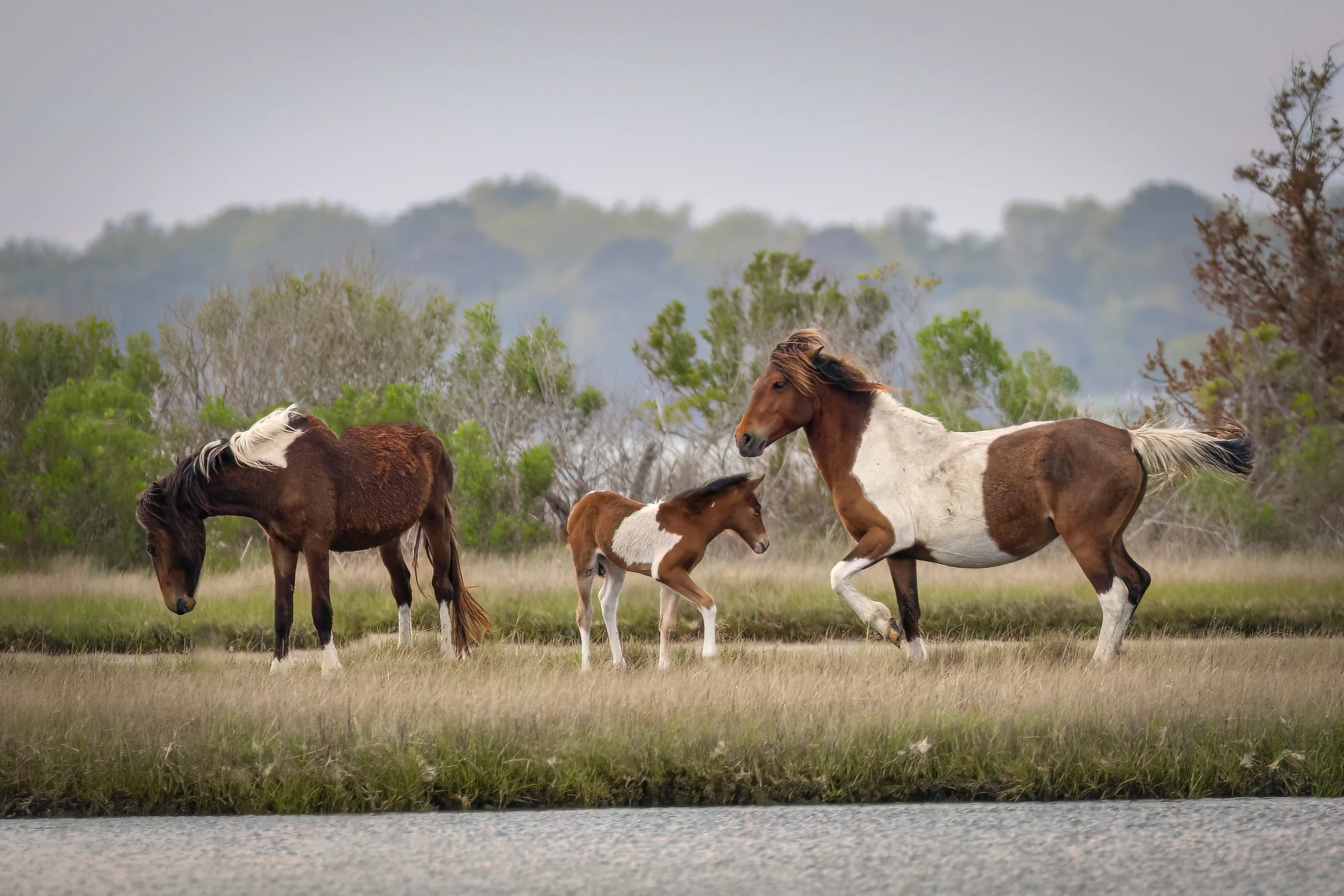
Located on and island off the coast of Maryland, Assateague State Park is the only one of Maryland's state parks to include an ocean coast. That's not what makes this state park famous, though—that would be the horses. The herd of wild horses at Assateague aren't actually strictly "wild," in a technical sense; they're feral. The Assateague horses are the descendants of domestic horses brought to the area by Europeans in the 1600s. Since then, they've continued to live on the coastline, developing shorter, stockier builds and thicker winter coats to suit the relatively harsh marshland environment.

Thanks to the four-legged inhabitants, Assateague State Park has become one of the most popular spots in the state for visitors, especially for fans of the beloved children's book "Misty of Chincoteague," which features the horses heavily. Over one million people visit the park each year, so planning a trip should include accounting for crowds, especially during the warmer months. There's never any guarantee where the horses might be, so stay patient, and take care not to approach them too closely, as they're wild animals, and the park staff does not allow visitors to feed or pet them. In addition to the famous horses, the park is also a great spot to enjoy the beach, and for fishing and camping.
Echo Bluff State Park

Located in the Ozarks in Missouri, Echo Bluffs State Park is known as a family-friendly, relaxed vacation destination. Less well-known, though, is that it's also visited by a mysterious herd of wild horses, who have a rare color pattern unique to the Ozarks. These shy, elusive equines are born with very dark black coats, and eventually lighten to grey and then white as they age. As with many other wild horses in America, the Echo Bluff horses are feral, the descendants of horses abandoned by farmers in the Great Depression who could no longer afford to feed them.
While there's no guarantee that visitors to Echo Bluff State Park will see the wild horses, there are plenty of other attractions there to enjoy. Visitors can enjoy hiking, swimming, kayaking, and biking during their time at the park. To stay over, the park has campsites and cabins for rent, as well as the Betty Lea Lodge, a rustic hotel with full modern amenities.
Grayson Highlands State Park

In the hills of southwestern Virginia lies Grayson Highlands State Park. The park is beloved for its high peaks which visitors can hike and climb, and its fly fishing spots, but especially for its herd of wild ponies. Unlike most wild horses in state parks, the ponies at Grayson Highlands State Park were introduced to the park deliberately. In 1974, the Forest Service brought in the horses as a natural way of controlling overgrown vegetation, and they've been beloved fixtures of the park ever since.

Seeing the Grayson Highlands ponies is far from a guarantee, but park service members recommends hiking the 2.5 mile Rhododendron Trail for the best odds. Remember, do not approach the ponies, or attempt to pet or feed them—that's unsafe and unhealthy for them, as well as for visitors. Instead, enjoy them from a distance, and feel free to take photos.
Paynes Prairie Preserve State Park

Located in Florida's Alachua County, just South of Gainesville, Paynes Prairie Preserve State Park is Florida's oldest state preserve. The park is famous for its diverse array of wildlife, including not only turtles, alligators, bison, and nearly 300 bird species, but also free-roaming wild horses.
The Paynes Prairie Preserve wild horses have been a part of the landscape for centuries. They are the descendants of the horses brought by the Spanish to Florida, and today, the small herd can be seen by visitors to the park. In fact, the odds of getting up-close and personal with the horses are high, as they share walking trails with guests, even relatively narrow ones. Just be careful on a trail with them—they can be aggressive if they feel threatened, so keep as much distance as possible.
Wild Horse Island State Park

Wild horses on Wild Horse Island? Possibly not the most shocking combination, but still a great one. The largest island in Montana's Flathead Lake, Wild Horse Island is a state park full of, that's right, wild horses. But how did horses get to an island in Montana to begin with? Well, history suggests they were brought there by Native Americans, specifically the Kootenai, who used the island's relatively difficult-to-reach location as a spot to pasture horses without the risk of their being stolen.

Today, there's still a small herd on Wild Horse Island, and visitors may see them in person if they're lucky. The park is also full of other wildlife, including deer and bighorn sheep, as well as the occasional bear, so keep all food secure during a visit, and remember, access is day-only, with camping prohibited. The park is accessible only by boat, and would-be anglers should be aware that to fish in the park, a tribal fishing license is required, due to the nearby Flathead Reservation.
Wild Horse State Recreation Area

In another case of "the clue is in the title," there are indeed wild horses at Nevada's Wild Horse State Recreation Area. Located on the banks of the Wild Horse Reservoir, in northern Nevada near the Idaho border, Wild Horse State Recreation Area is a 120-acre state park that was once home to large numbers of wild mustangs.
Today, wild horses are actually a rare sight at the park, thanks in part to the construction of a dam in the 1930s, but are sometimes spotted, especially in the far distance in the nearby desert. However, the park itself is still immensely popular for fishing in the well-stocked reservoir, hiking, camping, or staying a while in one of the park's available cabins.
One of the best things about the state parks where wild horses roam is how diverse they are. From the East Coast to the Mountain West, to America's southeast, a wide variety of states have parks with equine residents. That means that not only is there no need to stampede to any particular park, but also that a leisurely canter around any part of the country is likely to lead towards at least one spot. So, don't say "neigh" to a trip, but saddle up and get ready to see the nearest wild horses in a state park as soon as possible!
.jpg)


