The State Parks With The Best Beaches In America
State parks preserve the country's best beaches by keeping them in their natural state. In place of Ferris wheels and tourist traps, the pier at Gulf State Park favors fishing and sightseeing. Honeymoon Island is also strict with concessions, keeping its beaches pristine and unobstructed. At Assateague State Park, wild horses roam oceanside campsites. Meanwhile, the beaches at Crystal Cove and Ecola State Park unveil underwater worlds at low tide.
Warren Dunes State Park, Michigan

Massive dunes frame eastern Lake Michigan at Warren Dunes State Park. Tower Hill is the park's highest point, standing 260 feet above its 3-mile shoreline. Beachgoers can climb the dunes for striking views of the Great Lakes region. With the proper permits, thrill-seekers can also hang-glide from the top to soar above the park.
"Surfing" down the dunes is a non-permit thrill, with sandboards and surf sleds available for rent through Third Coast Paddling. In the winter, the snow-covered dunes can also be skied and snowboarded. As for classic beach pastimes, summer is the best time to lounge and swim in salt-free Lake Michigan. Third Coast Paddling also rents kayaks, paddleboards, and loungeboards to explore the Great Lake's interior.
Honeymoon Island State Park, Florida

The award-winning shores at Honeymoon Island draw over 1 million beachgoers annually. Running 2.5 miles through Gulf waters, the Dunedin Causeway makes it easy to reach this serene Florida park. After the scenic drive in, Honeymoon Island's 4 miles of beachfront are even more beautiful. Detached from the mainland, the barrier island's shores are undeveloped and unspoiled.
The Main Beach at Honeymoon Island is a favored swimming spot. Families love the shore's shallow waters and proximity to main parking lots. Further south, Dog Beach lets beachgoers enjoy the park's soft sands and blue-green waters with four-legged friends. On the opposite end, Honeymoon Island's North Beach narrows into a sand spit. This stretch is more secluded, attracting seashell hunters and quiet beachgoers.
Gulf State Park, Alabama

The beaches in Gulf State Park look like they belong on a tropical postcard. This popular summer retreat is located in southern Alabama, featuring 3.5 miles of quartz sand and emerald waters. On land, the Appalachian sand is powder-white and soft underfoot. During the summer months, Gulf currents keep swimmers warm, with water temperatures averaging in the early- to mid-80s °F.
Creative beachgoers can learn to sculpt like a pro with Sand Castle University. When a break from the sand is needed, the Gulf State Park Pier is attached to shore. Extending 2,448 feet into the Gulf, the 24-hour pier doubles as a fishing and sightseeing hub. Bait and tackle can be purchased on-site, with plenty of room to cast a line. For sightseers, coastal sunsets and dolphin spotting are also unforgettable highlights.
Crystal Cove State Park, California

3 miles of cliffs and sandy coves border the beach at Crystal Cove State Park. While swimmers and surfers enjoy the mellow Pacific, low tide shines for its tidepools. Filled with marine life, the micro-habitats are fascinating and fun to explore. Offshore, an underwater park protects a giant kelp forest and rocky reefs. The ecosystem supports over 1,000 marine species, making it a colorful dive.
Back on land, the paved Crystal Cove Trail winds atop coastal bluffs. The 2.5-mile hike offers a bird's-eye view before leading back to the beach below. Near the shore's northern coves, beachgoers can see a small seasonal waterfall spilling from cliffs after recent rain. Further south, beachgoers can find the Crystal Cove Historic District. Built in the 1930s and 40s as a seaside colony, the pastel cottages are scattered across the sand and lower bluffs.
Assateague State Park, Maryland

Wild horses roam Assateague State Park, Maryland's only state park on an ocean. Sinepuxent Bay separates this barrier island from the mainland, keeping its shores wild and natural. The horses that live on Assateague Island can often be seen roaming its beaches in the early morning or late afternoon. Assateague's bayside is also rich with wildlife, including white-tailed deer and over 200 bird species.
Paddling secluded coves is a hot bayside activity. The beachfront is more popular with swimmers and beachcombers, with lifeguards on duty between Memorial Day and Labor Day. Oceanside camping lets guests extend their stay. At Assateague, guests can pitch a tent right behind the park's main dunes, mere steps away from the Atlantic. Campers frequently recount waking to see curious horses outside their tent, making this a memorable experience.
John Pennekamp Coral Reef State Park, Florida

Located on Key Largo in the upper Florida Keys, John Pennekamp Coral Reef State Park is home to the nation's first undersea park. Sheltered inside Florida's Largo Sound, Cannon Beach is a human-made shore with crystal-clear, shallow waters. With the bay shielding it from harsh waves, families love Cannon Beach for snorkeling and swimming. 100 feet offshore, snorkelers can even swim to see the remnants of an early 18th-century Spanish shipwreck.
The park's main coral reef is too far to swim to, so boat tours are required. A glass-bottom boat departs 3 times daily, while a separate snorkel boat offers 4 daily trips. Both tours include about 1.5 hours to explore the reef and its marine life. The underwater park has more than 70 kinds of coral and over 600 species of fish to see, including the rainbow-hued parrotfish.
Ecola State Park, Oregon

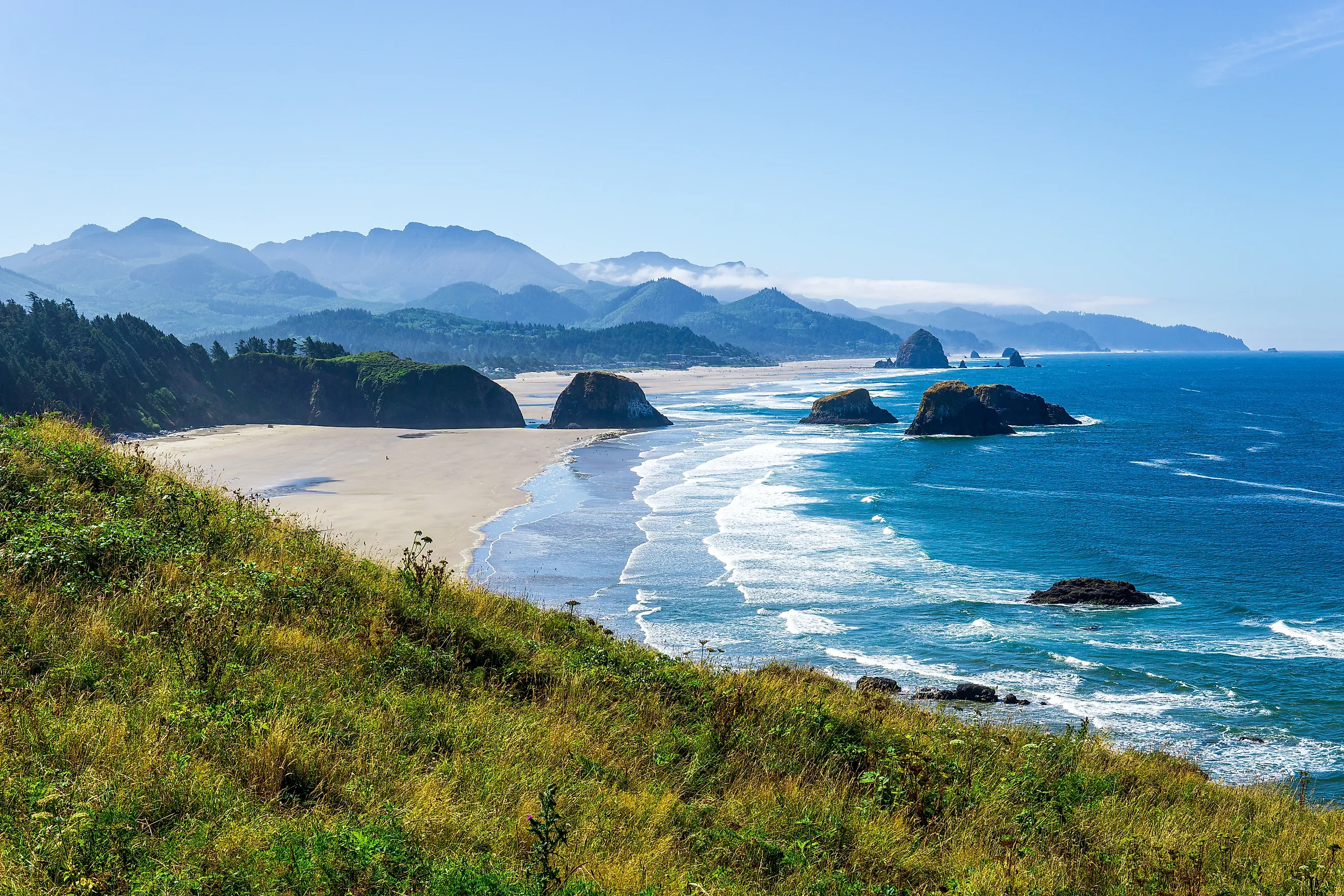
Ecola State Park's iconic coastal landscape is immortalized in films like The Goonies and Twilight. The 9-mile seashore overlooks the Pacific, sandwiched between high basalt cliffs and sea stacks. Indian Beach is the park's main stretch of sand, attracting sightseers and surfers. On its back end, the semi-circle cove is lined with forested headlands. Oceanside, beachgoers can observe sea stacks and the distant Tillamook Rock Lighthouse.
Tidepools are another favored feature of Indian Beach. At low tide, the shore's southern end features pools on full display, revealing sea stars, anemones, and crabs. In the winter and spring, beachgoers can turn their gaze out to sea for the chance to spot gray whales passing through. For a better perspective, Indian Beach connects to the Tillamook Head. The 3-mile Clatsop Loop Trail climbs the epic headland for sweeping ocean views.
Beaches Beyond the Boardwalk
America's state parks limit development and protect nature, keeping beaches clean, wild, and the best in the country. Warren Dunes State Park has no hotels or boardwalk rides to hide views of Lake Michigan. Likewise, Honeymoon Island keeps campers at bay to protect its coastal wildlife and fragile ecosystem. While camping is allowed at Assateague State Park, the island's natural state keeps its wild horses thriving. Even with boat tours at John Pennekamp Coral Reef State Park, enforced sanctuary zones keep the reefs full of life.