The State Parks With Lighthouses You Can Visit
Before GPS and modern navigation technology transformed travel at sea, lighthouses served as guides for ships navigating dangerous coastlines, rocky channels, and unpredictable waters. These structures were more than just tall towers with flashing lights. They were homes, workplaces, and lifelines for the keepers who maintained them through storms and isolation. Today, many lighthouses have found new life inside state parks and preserved coastal landmarks. Visitors can climb spiral staircases, explore former keeper quarters, walk along windswept shorelines, and learn about the maritime communities that depended on these coastal sentinels. Some still operate as active navigational aids, while others have been transformed into museums preserving centuries of stories.
Stretching across frozen Great Lakes, rugged Pacific headlands, and sandy Gulf Coast islands, these 10 state parks offer a chance to experience some of the country's most memorable lighthouses.
Each destination combines natural beauty with a glimpse into the challenges faced by the men and women who kept these beacons shining.
Split Rock Lighthouse State Park, Minnesota

Split Rock Lighthouse stands on one of the most dramatic stretches of Lake Superior shoreline, perched atop a 130-foot cliff overlooking the lake. Built in 1910 after a series of shipwrecks highlighted the need for a safer navigation system along Minnesota's rugged North Shore, the lighthouse quickly became one of the Great Lakes' most recognizable landmarks.
Split Rock Lighthouse State Park preserves one of Lake Superior's most iconic maritime sites, where self-guided tours lead through the restored lighthouse tower, fog signal building, oil house, and keeper residences. Guided tours reveal the challenges of building, supplying, and maintaining a remote light station perched on an isolated cliff during its first 24 years of operation.
Beyond the lighthouse, the park offers hiking trails, photography opportunities, and scenic overlooks of Lake Superior. The surrounding landscape of forests, rocky cliffs, and crashing waves helps explain why this location was both breathtaking and challenging for those who worked there.
The lighthouse no longer serves the same navigational purpose it once did, but it remains a powerful reminder of the relationship between Lake Superior and the people who depended on its waters.
Tawas Point State Park, Michigan

Tawas Point State Park, on the eastern shore of Michigan's Lower Peninsula, is home to the Tawas Point Lighthouse, a Victorian-era beacon overlooking Lake Huron. Constructed in 1876 and operated until 2016, the lighthouse helped ships navigate around the sandy peninsula that extends into the lake and creates challenging conditions for boat traffic.
The lighthouse is known for its distinctive design, including its attached keeper's residence, which was common during the 19th century when lighthouse families lived on-site year-round. Today, guests can tour the building, climb the tower, and see exhibits that explain the responsibilities of lighthouse keepers and their families.
Often called the "Cape Cod of the Midwest," Tawas Point is also popular for its beaches, camping, and coastal scenery. Birdwatching is one of the park's biggest draws, especially during spring and fall migration, with birders often seeing a wide variety of species. The shallow waters around the point create a unique environment where guests can enjoy Lake Huron without the steep drop-offs found along other parts of the shoreline.
The restored lighthouse, sandy beaches, and peaceful lakeside setting make Tawas Point State Park a destination that blends Michigan's maritime past with outdoor recreation.
Hunting Island State Park, South Carolina

Hunting Island Lighthouse rises above the maritime forests and beaches of Hunting Island State Park, offering one of the most unique lighthouse experiences on the East Coast. Located near Beaufort, South Carolina, the lighthouse is the only publicly accessible lighthouse in the state.
The original lighthouse was completed in 1859 but was destroyed by Confederate forces during the Civil War to keep it from aiding Union ships. It was rebuilt in 1875 as a tower of interchangeable cast-iron sections, a design that later allowed the whole structure to be dismantled and moved. In 1889, the lighthouse was moved inland nearly a mile because erosion threatened its foundation, an impressive engineering effort that helped preserve the structure.
After an extensive restoration project, the lighthouse reopened to visitors in 2026, allowing guests to once again climb the 167 steps to the observation deck. The repairs strengthened the staircase, improved safety features, and helped preserve one of South Carolina's most recognizable coastal landmarks for future generations.
Beyond the lighthouse, Hunting Island State Park is known for its undeveloped beaches, tidal creeks, maritime forests, and abundant wildlife. The park's natural areas provide opportunities to search for shells along the shore, spot coastal birds and marine life, and experience one of South Carolina's most scenic barrier islands. The island's landscape may also look familiar to movie fans, as several Vietnam scenes from Forrest Gump were filmed here.
The lighthouse's survival is a story of resilience, adaptation, and preservation, qualities that mirror the ever-changing coastline it has watched over for more than 150 years.
Gasparilla Island State Park, Florida

At the southern end of Gasparilla Island, the Port Boca Grande Lighthouse has watched over Florida's Gulf Coast since 1890. Built to guide ships through the entrance of Charlotte Harbor, the lighthouse played an important role in one of the region's busiest maritime areas and can be seen up to 12 miles away.
Unlike the towering brick and stone beacons found along many coastlines, Port Boca Grande Lighthouse has a more intimate design. Built as a keeper's residence with an octagonal lantern rising from the roof, the structure resembles a coastal cottage transformed into a working navigation station.
In contrast to many isolated coastal towers, the Port Boca Grande Lighthouse became closely connected with the community around it. Over the years, it served as a navigation point and a symbol of the island's relationship with fishing, shipping, and coastal trade.
The building now houses exhibits that tell the story of the area's maritime past, while the surrounding park offers sweeping views of the Gulf of Mexico. Beyond the lighthouse, Gasparilla Island's beaches, trails, and natural areas invite exploration through swimming, biking, and wildlife viewing.
Yaquina Bay State Recreation Site, Oregon

Overlooking the entrance to Yaquina Bay near Newport, Oregon, the Yaquina Bay Lighthouse is one of the state's most unusual coastal beacons. Completed in 1871, it is the only surviving wooden lighthouse in Oregon and one of the few in the country with living quarters built directly into the tower.
Although it operated for only a short time before being replaced by newer navigation technology, the lighthouse remained an important part of Oregon's coastal history. After years of neglect, it was restored and eventually opened to visitors.
Today, the lighthouse welcomes visitors to tour its restored interior and exhibits about the keepers who once maintained the light. Its unusual design reveals how a lighthouse could serve as both a workplace and a home, with the living quarters built directly into the structure. Local legends claim the spirit of a young child still wanders the site, adding another layer of intrigue to its story.
The surrounding state recreation site provides sweeping views of the Pacific Ocean, Yaquina Bay, and the rocky coastline. The area is also popular for watching waves, seabirds, and marine wildlife.
Yaquina Bay Lighthouse stands as a reminder that not every important lighthouse needed decades of service to leave a lasting mark. Its short operational history and distinctive architecture make it one of Oregon's most fascinating coastal landmarks.
Point Cabrillo Light Station State Historic Park, California

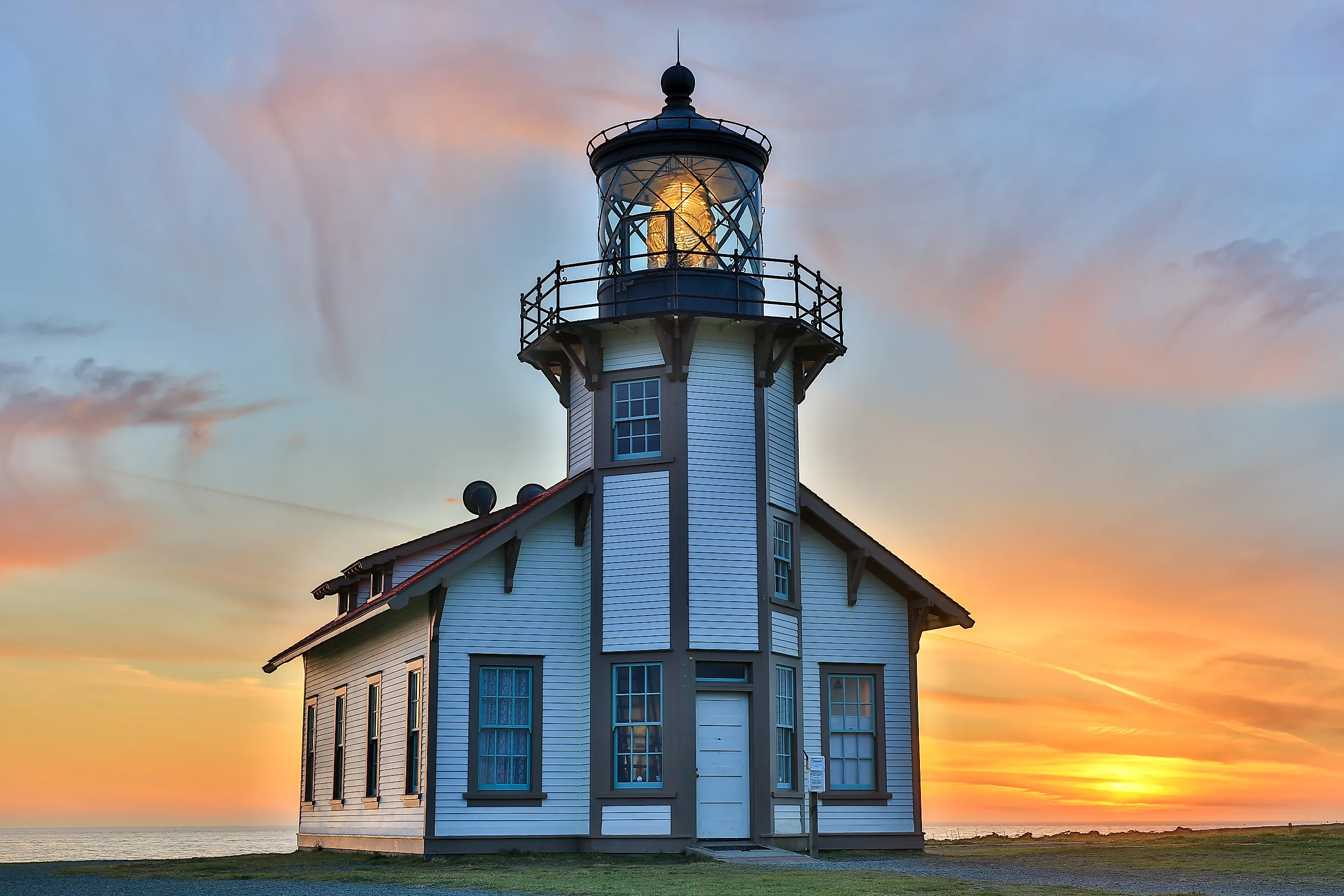
California's rugged Mendocino Coast is home to Point Cabrillo Light Station, a preserved lighthouse complex surrounded by dramatic coastal scenery. Built in 1909, the lighthouse helped guide ships traveling along a dangerous section of the Pacific coastline known for rocky waters and heavy fog.
Unlike many lighthouse sites that preserve only the tower, Point Cabrillo preserves an entire light station. The restored keeper's homes, barn, and other buildings provide insight into the lives of the families who maintained the light.
Although modern technology has changed maritime navigation, the lighthouse remains an active aid to ships along the coast. Scheduled tours offer a glimpse inside the tower, while exhibits detail the evolution of coastal shipping, lighthouse engineering, and the lives of the keepers who kept the light burning.
The landscape surrounding Point Cabrillo is as compelling as the lighthouse itself. Trails pass through coastal prairie and along ocean bluffs, where marine life appears against a backdrop of the Pacific. Here, preserved maritime history meets one of Northern California's most scenic stretches of coastline.
Fort Wilkins Historic State Park, Michigan

At the northern tip of Michigan's Keweenaw Peninsula, Fort Wilkins Historic State Park preserves military and maritime history along the shores of Lake Superior. The park is home to the Copper Harbor Light Station, a complex that includes two lighthouses built in 1800s to help ships navigate one of the Great Lakes' most important harbors.
The first lighthouse at Copper Harbor was established in 1848 as shipping increased during the region's copper boom. The original structure was replaced by the 1866 lighthouse that still stands today, while the later range light helped improve navigation into the harbor.
A few years after the United States established Fort Wilkins to protect the growing copper mining industry, Copper Harbor became a vital shipping point, and the lighthouse helped guide boats carrying people and materials through the area's unpredictable waters.
While the Copper Harbor Lighthouse has seasonal tours that reveal its history and connection to Great Lakes shipping, the range light serves primarily as a reminder of the evolving technology used to guide vessels into the harbor. Its role was important, but it does not offer the same visitor experience as the main lighthouse.
The park also preserves military and mining history, with 19 surviving buildings, including 12 original log and frame structures dating to the 1840s.
Set at the northern edge of Michigan's Keweenaw Peninsula, Copper Harbor preserves the sense of isolation that shaped life at a Great Lakes light station. The surrounding forests and waters reveal the challenges faced by the keepers who lived and worked in this remote corner of the country.
Cape Disappointment State Park, Washington

Despite its name, Cape Disappointment State Park is one of Washington's most impressive coastal destinations. Located where the Columbia River meets the Pacific Ocean, the park contains two lighthouses, including Cape Disappointment Lighthouse, which has helped ships navigate one of the most dangerous entrances on the West Coast.
The area earned a reputation among sailors as the "Graveyard of the Pacific" because of powerful currents, shifting sandbars, storms, and heavy waves where the river meets the ocean. The lighthouse, completed in 1856, became an essential landmark for vessels entering the Columbia River.
The lighthouse's remote setting is part of its appeal. Trails pass through coastal forests and open onto viewpoints overlooking the Pacific, where the beacon stands above the waters once considered among the most dangerous on the West Coast. Although the tower interior is not widely accessible, the surrounding landscape remains one of the park's defining features.
The park also includes the North Head Lighthouse, another beacon overlooking the Pacific. Together, the two lighthouses tell the story of a coastline where navigation was challenging and where reliable guidance could mean the difference between reaching shore safely and disaster.
Bullards Beach State Park, Oregon

On Oregon's southern coast, Bullards Beach State Park provides access to the restored Coquille River Lighthouse, a cultural landmark that reflects the changing relationship between communities and their coastlines.
Completed in 1896, the lighthouse stood near the entrance of the Coquille River, helping ships navigate the narrow channel as they carried lumber, agricultural products, and supplies between coastal communities and larger ports. Over time, changes in shipping patterns and the construction of newer navigation systems made the lighthouse less essential.
Saved from years of deterioration through preservation efforts, the Coquille River Lighthouse now tells the story of a changing Oregon coastline. Exhibits explore the work of the keepers who maintained the beacon, while trails and viewpoints reveal the dunes, beaches, and river channels that shaped its history.
The setting gives Coquille River Lighthouse a distinct character. Rather than sitting on a dramatic cliff or isolated island, it reflects the relationship between a small coastal community and the river that supported its economy.
The Coquille River Lighthouse now serves a different purpose than it did during its working years, preserving the story of the coast while the surrounding park provides opportunities for hiking, wildlife watching, horseback riding, and beach exploration. Its survival reflects the lasting value of preserving landmarks even after technology makes them obsolete.
Pemaquid Point Lighthouse, Maine

Perched on Maine's rocky coastline, Pemaquid Point Lighthouse is one of New England's most recognizable seaside landmarks. Set within Pemaquid Point Lighthouse Park, the lighthouse overlooks Muscongus Bay and the Atlantic Ocean, where weathered granite ledges, powerful waves, and centuries-old coastal structures reflect the enduring character of Maine's coast.
The original lighthouse dated to 1827, but poor construction led to the current tower being completed in 1835. For generations, it helped guide fishing boats, merchant vessels, and coastal travelers through the waters surrounding the Pemaquid Peninsula.
Seasonal tours provide access to the lighthouse tower, while exhibits highlight the area's maritime history. Surrounding viewpoints showcase sweeping ocean vistas, making the park a favorite setting for coastal photography.
Unlike some larger lighthouse complexes, Pemaquid Point feels closely connected to the community around it. The nearby village, rocky shoreline, and working coastal traditions create an atmosphere that reflects Maine's long relationship with the sea.
Its combination of accessibility, scenery, and history has made Pemaquid Point one of the most beloved lighthouse destinations in the Northeast.
Conclusion
Across the United States, historic lighthouses continue to stand as reminders of a time when maritime travel depended on careful observation, skilled keepers, and reliable landmarks. While technology has changed the way ships navigate, these structures remain valuable pieces of coastal and Great Lakes history.
State parks have helped preserve these buildings, allowing visitors to climb towers, explore keeper quarters, and understand the lives of the people who maintained them. Each lighthouse tells a different story of storms survived, communities built around the water, and landscapes that shaped human activity for generations.
Whether overlooking a frozen Great Lake, a Pacific headland, or a sandy Gulf Coast island, these lighthouse parks offer more than beautiful views. They provide a chance to step into the past while experiencing some of the country's most remarkable natural settings.