State Parks With The Largest Black Widow Populations
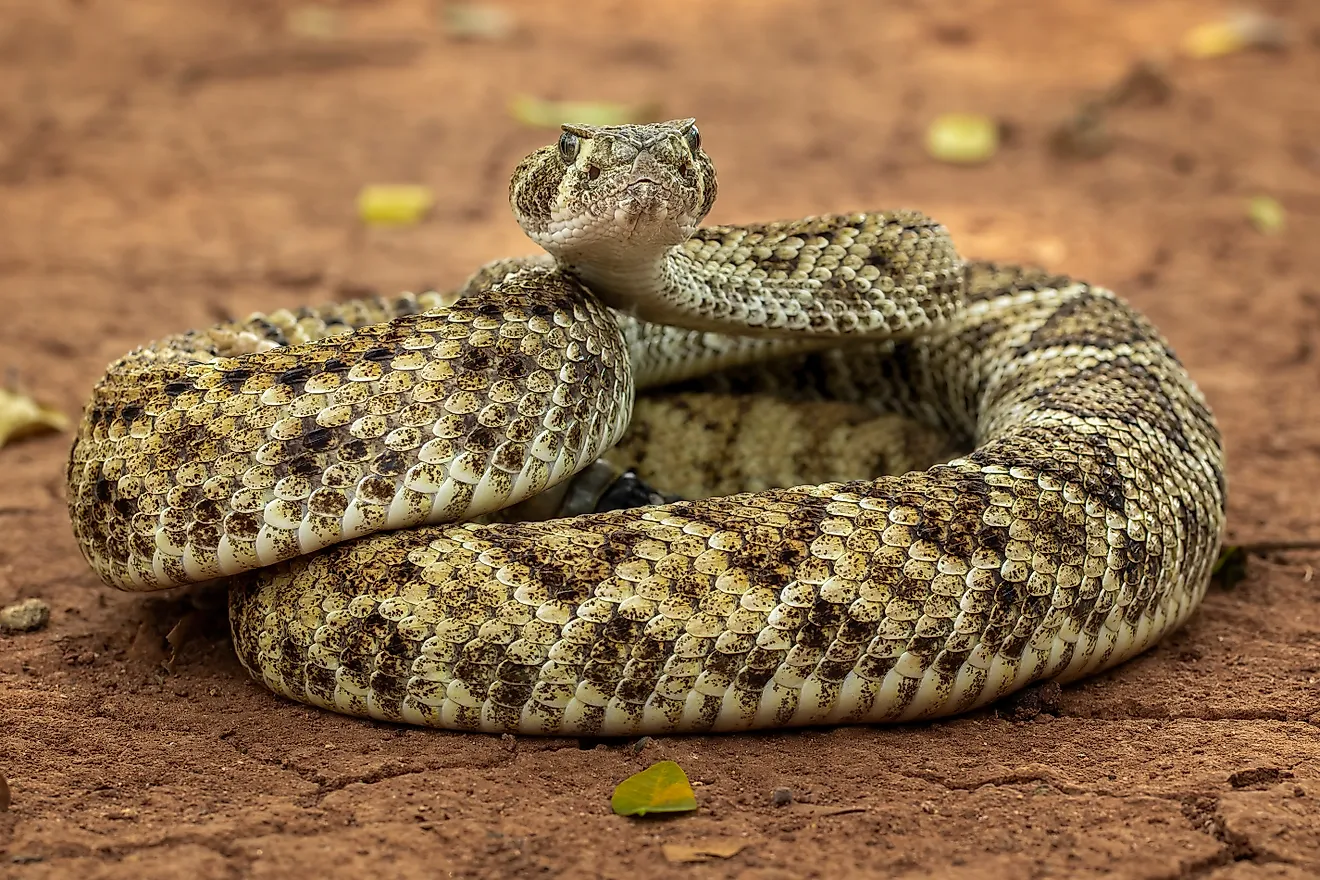
Black widows are easier to find where people have built something rather than in raw nature. Florida's Department of Agriculture notes that the southern black widow usually lives under rocks and logs in the wild, but readily moves into sheds, barns, privies, water meter holes, and long-untouched grills when available. A state park offers all of those potential hiding places: picnic tables, campground hookups, restrooms, and woodpiles, scattered across wild land. No agency counts widows park by park, so the seven parks here are the ones where state park staff, park naturalists, volunteer surveys, or emergency crews have put black widows on the record. National parks such as Arches National Park flag the black widow for young visitors, and Indiana Dunes National Park notes the northern widow at its Dunewood Campground. At state parks, the documentation is scattered and the crowds are thinner, but the spiders are just as real. Bites remain rare, and University of California pest experts note that they are uncommon even where widows are abundant. The list runs from Hawaii to Florida, and it ends with a twist: one Florida park is home to a widow that isn't black at all, and lives nowhere else on Earth.
Nā Pali Coast State Wilderness Park, Hawaii

On October 29, 2025, a 57-year-old Kauaʻi resident sent a text to 911 from the Kalalau Trail inside Nā Pali Coast State Wilderness Park. He reported fever and weakness and said he could not hike out. Kauaʻi Fire Department crews flew him by helicopter from the Kalalau Beach landing zone to Waimea, where an ambulance took him to a hospital. The county described a rapidly worsening infection from an apparent spider bite.
The species was never identified. That uncertainty is typical of Hawaii, where the state Department of Health lists two spiders of concern: the southern black widow and the brown widow. The department notes that while the brown widow's venom is twice as potent, it injects less and defends its web less aggressively than the black widow.
The setting raises the stakes. The Kalalau Trail runs 11 miles along the cliffs above the Pacific Ocean, and hikers need a state camping permit to go past Hanakāpīʻai, even for a day hike. The park has no drinking water, trash service, or cell service, and the Division of State Parks warns that rescues along the coast happen frequently. Its composting toilets at the campsites are the kind of quiet, sheltered structures widows favor. On a remote trail like this, even a minor bite can turn into an evacuation.
Mount Diablo State Park, California

Each fall, Mount Diablo State Park draws crowds hoping to see male tarantulas crossing the trails, and the park has posted tarantula crossing signs at its entrances. Yet the spider that matters medically is far less famous. A naturalist writing for the Mount Diablo Interpretive Association, the park's nonprofit partner, called the western black widow the only spider of any medical significance in Contra Costa County. He wrote that it can be found around any campground, building, outhouse, or woodpile on the mountain.
That matches what the University of California's pest management program reports for California as a whole. The western black widow is the only black widow species in the western United States. It is very common around homes, barns, outbuildings, and rock walls, where it builds its web in holes, crevices, and clutter.
The park covers about 20,000 acres around a 3,849-foot summit visible from most of the San Francisco Bay Area. Its campgrounds, picnic sites, and historic buildings give widows plenty of shelter. While the tarantula draws the crowds and the camera phones, the widow stays tucked under a table. Bites remain rare, but anyone reaching into a woodpile or under a bench here should look first.
Antelope Island State Park, Utah

In late summer, Antelope Island State Park naturally looks like it has been decorated for Halloween. Park naturalist Trish Ackley told Fox 13 that from July into August, "every shrub, every building is just draped with spider webs." The cause of this explosion is the Great Salt Lake. Brine flies hatch in the lake and emerge along the shore, and spiders gather wherever the flies are thickest.
Most of those webs belong to western spotted orb weavers, which Utah State Parks calls the most commonly encountered spider on the island. But the park's own invertebrate list also includes the western black widow, and Ackley has called it the only medically significant spider in Utah. She has also stressed that medically significant does not necessarily mean deadly.
Rather than hiding its arachnids, the park celebrates them with its annual Spider Fest, held each summer and featuring guided spider walks, presentations, and a statewide spider-spotting challenge. The arachnid celebration has grown into the park's second-largest event after the Bison Roundup, according to the Davis Journal. In 2024, participants logged 373 observations of 61 spider species across Utah. The black widow is less conspicuous than the orb weavers draped across the sagebrush, but it is part of the same summer boom, and the island's buildings and rock offer it shelter.
Picacho Peak State Park, Arizona

Picacho Peak State Park is one of the few state parks that names the black widow on its own wildlife page. Arizona State Parks lists the western black widow alongside the giant desert centipede, desert hairy scorpion, tailless whip scorpion, and fiddleback spider among the invertebrates found in the park. The same page notes that bark scorpions and sun spiders appear year-round and that desert tarantulas are most often seen in fall.
The park covers more than 3,700 acres of Sonoran Desert along Interstate 10, between Phoenix and Tucson, around a peak that rises about 1,500 feet above the desert floor. Its rocky slopes, boulders, and campground give widows the dark, undisturbed corners they need. University of Arizona Cooperative Extension names the shy and secretive western black widow as one of the two most common venomous spiders in Arizona, along with the Arizona recluse.
The park recommends October through May as the best season for wildlife viewing, when cooler temperatures bring more animals out. The wildlife page lists rattlesnakes, scorpions, and black widows without specific safety advice for each. For visitors, the practical takeaway is simple: on a trail built on broken rock, look closely before putting a hand on a ledge or into a crevice.
Catalina State Park, Arizona

At the base of the Santa Catalina Mountains north of Tucson, Catalina State Park protects about 5,500 acres of desert and nearly 5,000 resident saguaros. During a 2011 visit, a traveling biodiversity team reported finding one, and sometimes two, black widows under nearly every picnic table in the campground. The electrical hookups were popular hangouts too, and the photographer who documented the trip also found widows on tree trunks and around the restrooms.
Then comes the surprising part. According to the same photographer, the park reported zero spider bites of any kind in more than 20 years. That claim is secondhand, but it matches what extension scientists say about the species: black widows are shy, stay tucked into their webs, and bite mainly when pressed against skin.
Catalina's campground sits in the Sonoran Desert of southern Arizona, where warm nights and undisturbed structures suit widows well. The park's science page already celebrates another arachnid, the camel spider, which hunts insects drawn to the campground lights. Widows take the opposite approach. They stay put under the furniture and let their prey come to them. Anyone reaching under a picnic table or around a hookup at Catalina should take precautions and assume a widow may already be there.
Brazos Bend State Park, Texas

Signs at Brazos Bend State Park take care to warn visitors about alligators. American alligators are commonly spotted enjoying the park's lakes and marshes. The park holds about 5,000 acres along the Brazos River, roughly 28 miles southwest of Houston, Texas. After dark, the George Observatory, run by the Houston Museum of Natural Science inside the park, opens its telescopes to the public.
The park's black widow is a quieter resident. The Brazos Bend State Park Volunteer Organization compiled a list of 41 common spiders collected in the park, describing them as species visitors may come in contact with. Exactly one widow appears on it: Latrodectus mactans, the southern black widow. That makes Brazos Bend the only park on this list where a survey of the park itself names the southern black widow. University of Florida extension says the southern black widow typically lives outdoors in sheltered spots, including stumps, rodent burrows, and the undersides of park benches and tables.
A Texas Parks and Wildlife Department outdoor education specialist has named black widows among the common dangers in Texas state parks. At Brazos Bend, campers come to watch the alligators all weekend. Take a glance under the picnic table for a widow, too.
Jonathan Dickinson State Park, Florida

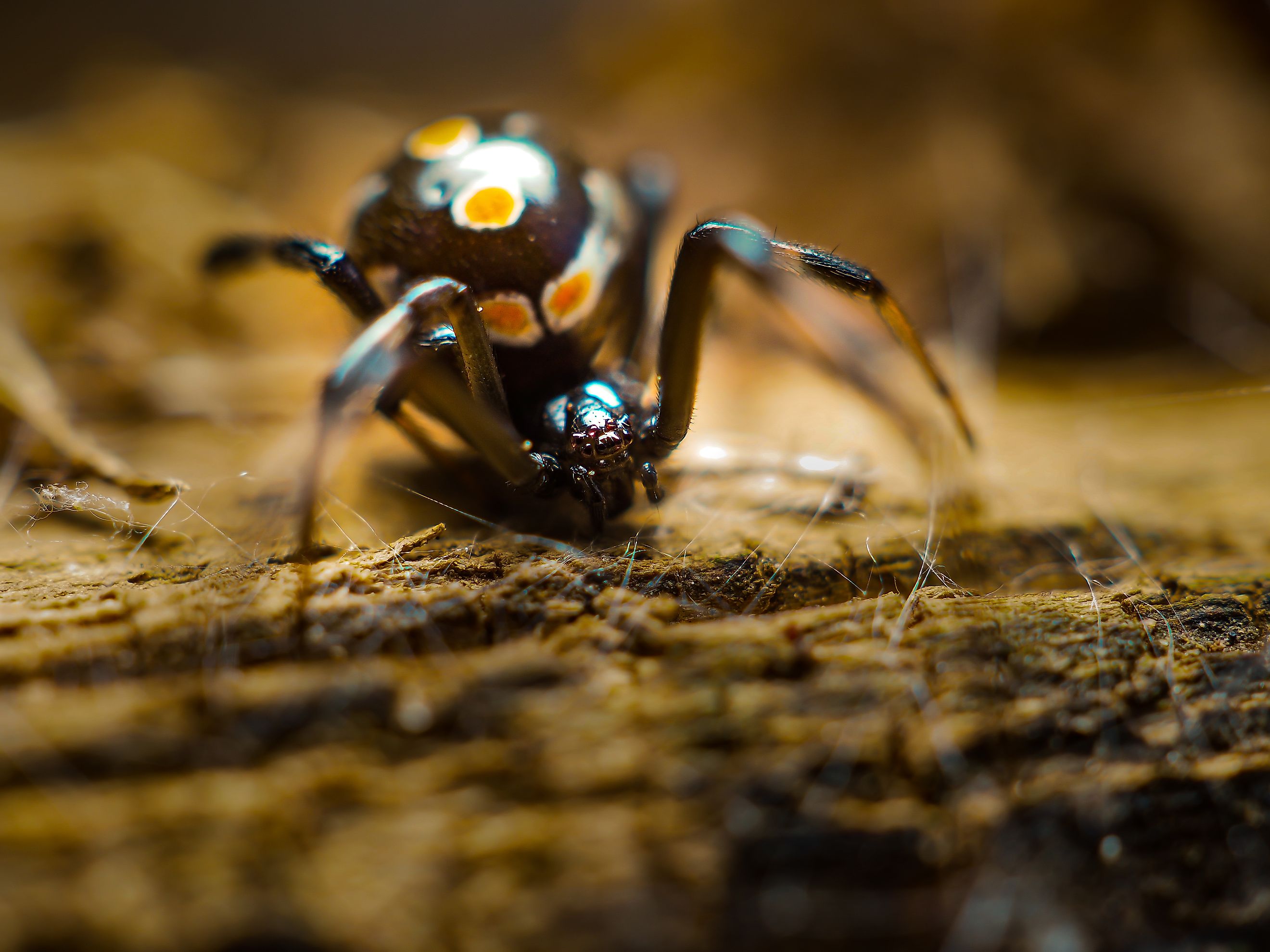
The widow at Jonathan Dickinson State Park is not black. The red widow has a red-orange head and legs, a black abdomen with rows of red spots ringed in yellow, and a single red triangle underneath instead of the familiar hourglass. Florida's Department of Agriculture lists it as endemic to Florida, found only in sand pine scrub from Marion County to Martin County. The park sits in Martin County, at the southern end of that range.
A Florida State Parks staff profile names the park's ancient scrub community, with its evergreen oaks and sand pines, as a place to find scrub jays, Florida mice, and the red widow spider. The spider's habits here are unusual. The Florida Natural Areas Inventory reports that its webs are built almost exclusively in saw palmetto or scrub palmetto, up to four feet off the ground, where the spider rolls a frond into a cone and ties it with silk. Researchers studying red widows in Florida scrub found that they feed heavily on scarab beetles that are themselves found only in that habitat.
The park covers more than 10,000 acres along the Loxahatchee River, Florida's first federally designated Wild and Scenic River, and its highest point is Hobe Mountain, an ancient dune that rises 86 feet. The red widow is venomous, but in Florida it is far easier to admire than to meet.
Where Widow Bites Actually Happen

Across all seven parks, the pattern is the same. Widows stay in their webs, and bites happen when a hand or foot presses one against the skin. Florida's Department of Agriculture lists the usual scenarios: reaching under objects, or putting on clothing, gloves, or shoes with a spider inside. Symptoms typically begin one to three hours after a bite and can include intense pain, cramping, rigid abdominal muscles, sweating, and nausea, usually lasting three to five days without treatment. At any of these parks, the simplest habits do the most good: look under the picnic table before sitting down, wear gloves to gather firewood, and shake out boots left outside overnight. For anyone bitten, the Poison Help line at 1-800-222-1222 is the number to call.