The National Parks With The Most Dangerous Plants
At Bryce Canyon National Park, a small white wildflower can be deadly if mistaken for an edible plant. Mountain death-camas looks harmless beside the park's famous red rock formations, but every part of it is poisonous. Other dangerous plants don't even need to be eaten to cause harm. Poison oak can leave hikers with blistering rashes, while the deceptively soft-looking teddy bear cholla has barbed spines that painfully attach to skin. These plants are found in some of America's most visited national parks, and knowing how to recognize them can help visitors avoid an unpleasant or potentially dangerous encounter.
Acadia National Park, Maine

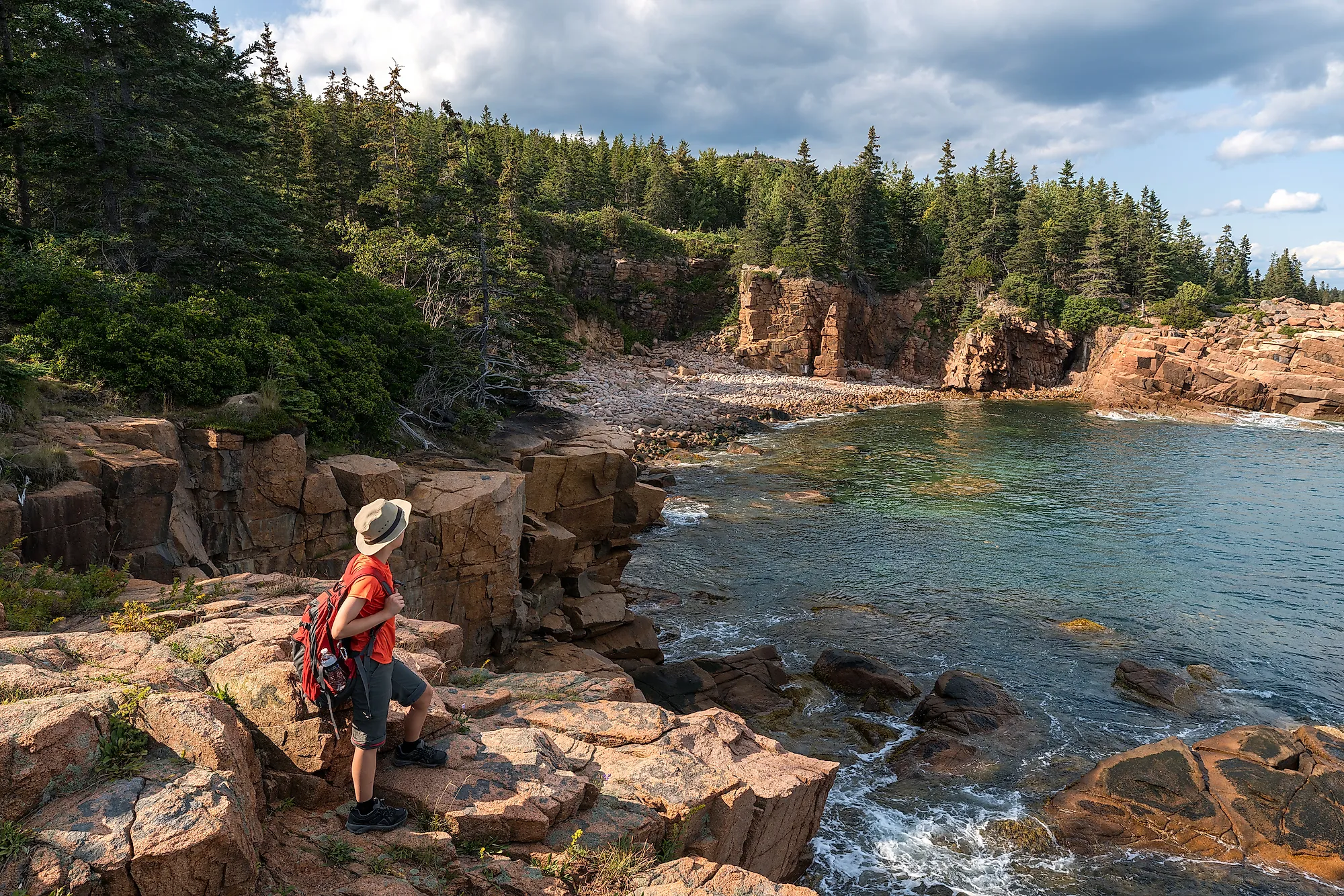
Acadia National Park occupies much of Mount Desert Island off Maine's coast, where visitors explore rocky shorelines, forests, and mountain trails. However, poison ivy is one native plant that hikers should learn to recognize. Poison ivy is native to Acadia and protected, as its berries provide food for animals, and the vine helps prevent soil erosion.
Poison ivy typically has leaves grouped in threes and may grow as a small shrub or climbing vine. Its leaves turn shades of red, orange, and purple in autumn, making it easy to mistake for harmless vegetation. The plant contains an oily substance called urushiol, which can cause an itchy, blistering rash after contact with the skin. If exposed, visitors should wash the affected area promptly with soap and water and clean any contaminated clothing. Despite its irritating properties, poison ivy plays an important role in Acadia's ecosystem. Its berries provide food for birds and other wildlife, while its roots help prevent erosion.
Indiana Dunes National Park, Indiana

Indiana Dunes National Park protects more than 16,000 acres along Lake Michigan, with landscapes ranging from sandy beaches to wetlands, forests, and prairies. These diverse habitats support several potentially harmful plants, including poison hemlock, poison ivy, and poison sumac.
Poison hemlock is an invasive species that can grow between five and 12 feet tall. Its small white flowers appear in umbrella-shaped clusters, while its smooth stems often have distinctive purple spots. The National Park Service reports that the plant is particularly abundant along disturbed roadsides and trails, including portions of the Marquette Greenway Trail through Portage and Burns Harbor. Unlike poison ivy, poison hemlock is primarily dangerous when ingested. Its toxic compounds can affect the nervous system, causing paralysis, respiratory failure, and potentially death. Handling the plant can also irritate the skin, so visitors should avoid breaking its stems or leaves.
Indiana Dunes also has poison ivy along many trails and poison sumac in some wetland areas. Poison sumac grows as a shrub or small tree, usually with seven to 13 leaflets arranged in pairs along a central stem. Like poison ivy, it contains urushiol, which can cause painful inflammation, swelling, and blistering. Staying on established trails and avoiding unfamiliar plants can help reduce the risk of exposure.
Pinnacles National Park, California

This national park is in central California and has landscapes of canyons and rocky peaks created from volcanic eruptions millions of years ago. The park is popular for hiking the caves and along cliffs, distinctive rock formations, and gigantic boulders.
Poison oak is plentiful in the park, and visitors can see it along most of the park’s trails. It is easy for the oils on the leaves to get onto the skin when brushing against the plant. If this happens, soap and water should be used to wash off the oils immediately. The oils can cause skin irritation, rashes, and blisters. It is best for visitors to learn how to recognize poison oak and its different appearances. The plant’s leaves of three are red in the spring and then turn green. It can look like a small tree, vine, or shrub.
Pinnacles also has stinging nettle. While not as dangerous as poison oak, it will cause discomfort. The stinging nettle leaves have tiny hairs, so when one brushes against the leaves, the tiny hairs get stuck in the skin and create a painful sting. The sting disappears in an hour or two. Stinging nettle is in Pinnacles at the Balconies Cave entrance and on the trail below Bear Gulch Cave.
Voyageurs National Park, Minnesota

In northern Minnesota this park sits between two large lakes and attracts visitors for its botanical garden, deciduous and coniferous forests, and for having various water activities during each season. Wild parsnip can grow up to four feet tall and produces broad clusters of small yellow flowers during summer. Originally introduced from Europe and Asia, the plant escaped cultivation and became established across much of the United States. At Voyageurs, it can grow in disturbed areas and compete with native vegetation.
When wild parsnip is cut, broken, or otherwise disturbed, its sap can transfer to exposed skin. Chemicals in the sap react with ultraviolet light, causing a condition called phytophotodermatitis. The resulting injuries can resemble severe burns, sometimes producing painful blisters and discoloration that persists long after the skin heals.
Great Smoky Mountains National Park, Tennessee and North Carolina

This is one of the country’s most popular parks because of its diverse wildlife and Southern Appalachian Mountains that are covered with forests. The park’s environmental diversity includes an assortment of dangerous plants. Poison ivy is common here, located next to roads and in heavily visited areas in low and mid-elevated lands. Poison oak is more uncommon in the park, and wild parsnip survives but is rarer.
One of the park's most dangerous plants is spotted water hemlock. This native species typically grows in wet habitats and produces clusters of small white flowers resembling those of several harmless plants. However, spotted water hemlock contains cicutoxin, a powerful poison that affects the central nervous system. Ingesting any part of the plant can cause severe seizures and potentially death, with the roots containing particularly high concentrations of the toxin.
Bryce Canyon National Park, Utah

Bryce Canyon National Park is famous for its colorful hoodoos, but among its rocky slopes and mountain meadows grows a plant with a particularly ominous name. Mountain death-camas produces delicate white or cream-colored flowers that can be attractive to hikers, although every part of the plant is poisonous.
Growing between six and 28 inches tall, mountain death-camas has narrow leaves and clusters of star-shaped flowers, each with small green markings near the base of its petals. It inhabits mountain meadows, rocky slopes, and forests at elevations between 6,000 and 12,000 feet. According to the National Park Service, visitors may encounter it along the Mossy Cave Trail, a 0.8-mile round-trip hike with approximately 150 feet of elevation gain.
The greatest danger comes from ingesting the plant, particularly its bulb. Historically, people have mistaken death-camas bulbs for edible wild onions or other similar-looking plants, sometimes with fatal consequences. The plant's toxic alkaloids can affect the nervous system and cardiovascular system, and it is also highly poisonous to livestock, especially sheep.
Joshua Tree National Park, California

Joshua Tree National Park in southern California appeals to visitors because of the desert landscape containing granite pillars, canyons, and the famous Joshua trees. The park also has the peculiar-looking teddy bear cholla cactus.
Teddy bear cholla resembles a small tree with thick, cylindrical branches covered in golden spines. Although the spines can appear soft from a distance, they contain microscopic barbs that make them extremely difficult and painful to remove. The cactus is also known as jumping cholla because its stem segments detach easily and can cling to clothing, skin, and animal fur. However, the plant doesn't actually jump.
This unusual adaptation also helps the cactus reproduce. Many of its seeds are infertile, so new plants often develop from detached stem segments that take root in the surrounding soil. Visitors should wear closed-toed shoes and remain on the designated dirt trail when exploring the garden. Even fallen cactus segments can present a hazard, and attempting to touch the seemingly soft branches can result in painful puncture wounds.
Be Smart and Informed for an Enjoyable Park Visit
The best defense is awareness and preparation. Poison ivy and poison oak cause allergic skin reactions, wild parsnip can produce severe burns when its sap is exposed to sunlight, and plants such as death-camas and water hemlock are potentially fatal when ingested. Others, including teddy bear cholla, injure visitors through their physical defenses rather than toxins. Many of these species are native plants that contribute to healthy ecosystems, while invasive species may require active management by park staff. Learning how to identify hazardous vegetation, staying on established trails, and avoiding unfamiliar plants can help visitors explore these national parks without unnecessary risk.