8 Picture-Perfect Main Streets In Northern California
On market Saturdays in Healdsburg, California, growers fill the Foley Family Community Pavilion just off the Plaza while tasting rooms and cafés open onto the surrounding blocks. That everyday traffic is what makes a main street come alive, turning old storefronts into working places rather than museum pieces. In Locke, Chinese merchants built an entire Main Street on land the law would not let them buy. In Ferndale, dairy wealth still shows in the gingerbread trim above the shop windows. Along Sausalito's Bridgeway, ferries and sailboats set the pace for the cafés facing the water. Each of these streets carries its history in plain view, and each rewards anyone willing to linger long enough to read it.
Winters, Yolo County

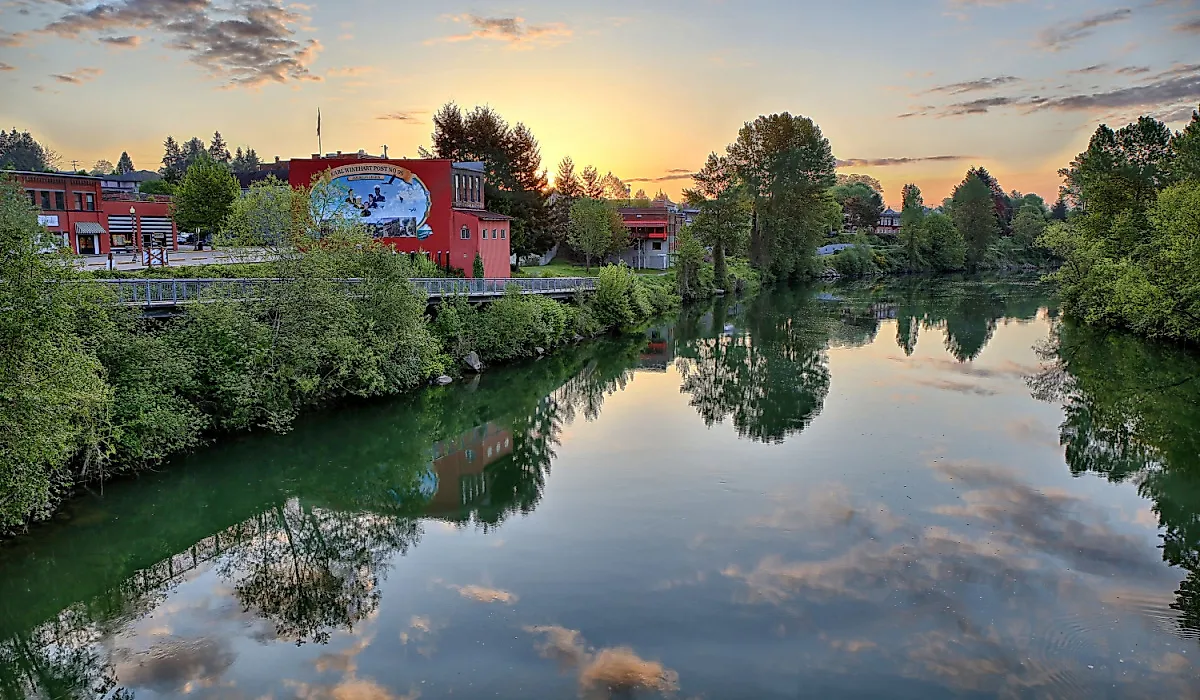
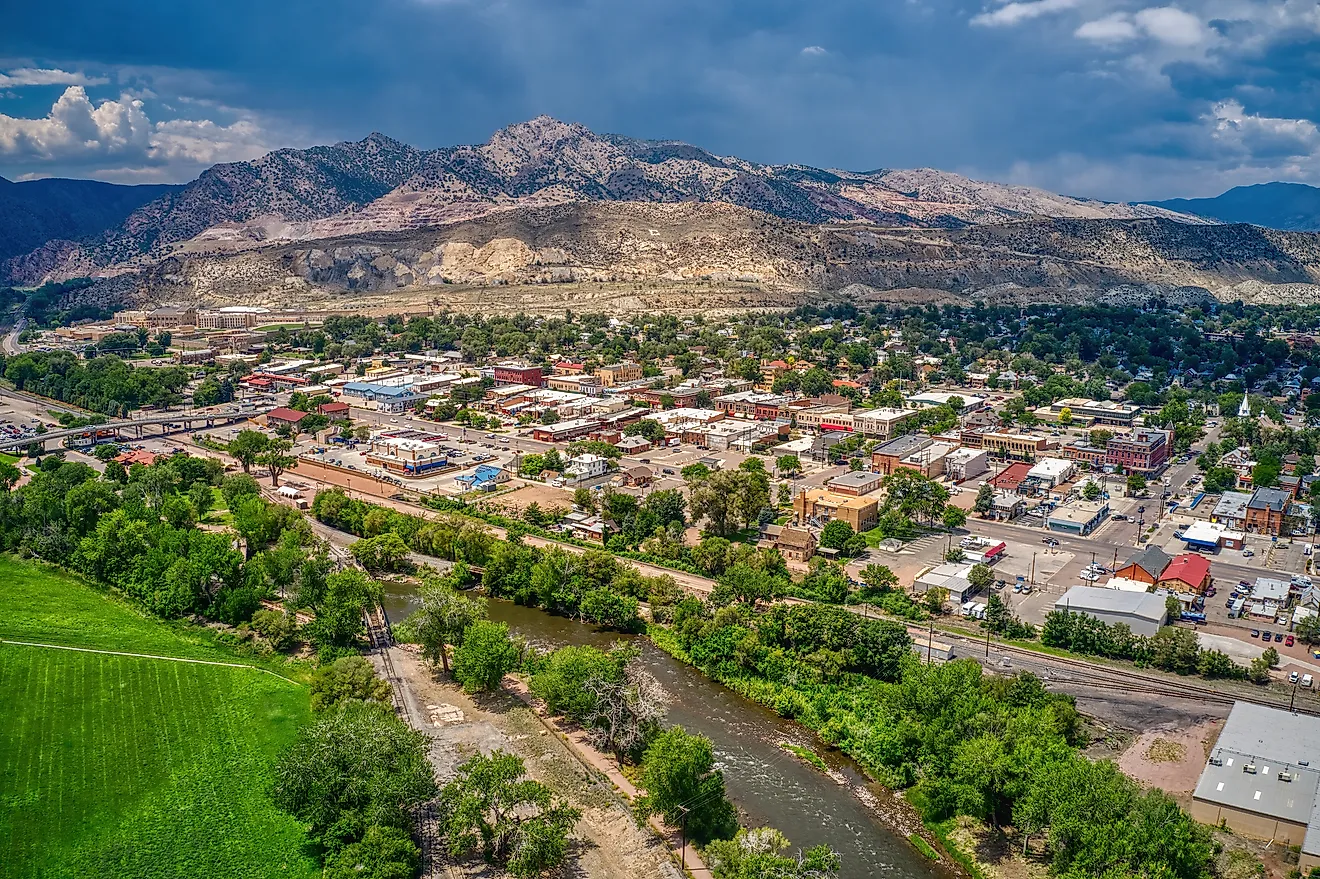
Winters is a town built to move the harvest. Apricots, plums, peaches, and other fruit once traveled from surrounding farms by rail, making this community of approximately 7,800 residents an agricultural hub. The Vaca Valley Railroad bridged Putah Creek in 1875, and the town of Winters grew up around the new line. This prosperity took physical form along Main Street, where hotels, merchants, and produce businesses served the travelers and farmers who kept the town moving. An earthquake during 1892 damaged much of its commercial district, but left behind a resilient collection of late-19th century stone and brick buildings that continue to anchor the block. Its bond between town and countryside remains prevalent today, giving the tree-lined corridor a serene, orchard-town feel. Inside the historic Buckhorn building, the Buckhorn Steakhouse serves thick, mesquite-grilled steaks and classic saloon-era hospitality beneath pressed-tin ceilings and vintage western memorabilia.
Just steps past the storefronts, the preserved 1906 steel Pratt truss railroad bridge spans Putah Creek. Built by the Southern Pacific to replace the original 1875 wooden trestle, it now carries walkers and cyclists toward the shaded willow and cottonwood trails of Putah Creek Nature Park. Winters continues to hold the memory of rural California, where weathered brick facades, rustling walnut trees, and small-town hospitality refuse to fade even as modernity prevails.
Ferndale, Humboldt County

Stepping onto Ferndale's Main Street feels less like walking through a modern California town and more like stumbling onto a living, breathing film set straight out of the 1800s. Located in Humboldt County's lush Eel River Valley, this Victorian village of approximately 1,400 residents does not subtly nod to its past; rather, it wears it in full, unapologetic completeness. Towering false-front storefronts are crafted with intricate gingerbread trim, hand-carved cornices, and jewel-toned facades that have stood against the coastal fog since the late 19th century. Behind that architecture lies the town's surprisingly humble economic engine of dairy farming. Danish, Irish, Swiss, Italian, German, and Portuguese settlers were drawn to the area by its prime pastureland, mild coastal climate, rich alluvial bottomlands, and abundant rainfall. Escaping crowded conditions and limited land ownership in their homelands, these immigrants brought generations of Old World herding and cheesemaking expertise to the locale. As their herds prospered, that newfound creamery wealth poured directly into town, allowing dairy barons to create hyper-ornate Queen Anne and Eastlake mansions dubbed "Butterfat Palaces" that still anchor the neighborhood today.
Main Street remains the focal point of everyday life in Ferndale, with independent businesses now occupying the same historic storefronts that originally defined the street's appearance. The Ferndale Arts Gallery and the nearby Blacksmith Shop lend an artistic vibe to the commercial district, showcasing local artwork, art glass, and hand-forged metalwork alongside more traditional storefronts. Cafés and antique stores, amongst other local stopping points, give the street a lived-in quality, with activity spilling between the old facades and onto the sidewalks. More of the town's history can be found at the Ferndale Museum, where agricultural equipment and 19th-century interiors document the dairy industry that originally shaped the community. For a change of scenery, Russ Park protects over 100 acres of Sitka spruce and grand fir forest, with trails winding beneath the canopy and scenic views across the valley. Wrapped in valley fog and framed by emerald pastures, its faded but preserved Victorian aesthetic still lingers long after its history began, glowing like a forgotten postcard pressed inside the pages of Northern California's coast.
Mendocino, Mendocino County

Along California's rugged North Coast, Mendocino occupies a narrow headland above the Pacific, with the forests that once sustained its economy rising inland. The village started as a lumber settlement back in the early 1850s, drawing merchants and workers to its mills along the Big River. These settlers built churches, homes, and shops in the New England architectural styles they had left behind, using the region's abundant native redwood. That heritage continues to define its Main Street, where weathered wooden buildings and independent galleries stand within sight of the open ocean. Mendocino Headlands State Park wraps around the village on three sides, preserving the dramatic cliffs and coastal trails that make the natural landscape part of its downtown experience.
The 1854 Ford House, currently the park's visitor center, offers a glimpse into the settlement's early years through historic photographs and a scale model of the village as it appeared in the late 1800s. Nearby, the Temple of Kwan Tai recalls the Chinese community that helped shape Mendocino's lumber industry, adding yet another layer to the story of its beginnings. As timber production began to decline in the mid-20th century, the Mendocino Art Center, founded in 1959, helped to establish a new identity for the village and attracted craftspeople and artists who animated its historic streets with studios and exhibition spaces. All of this contributes to the town's modern appeal, showcasing a unique transformation of a redwood-built lumber village that became an artists' community perched at the edge of one of the state's most dramatic coastlines.
Sausalito, Marin County

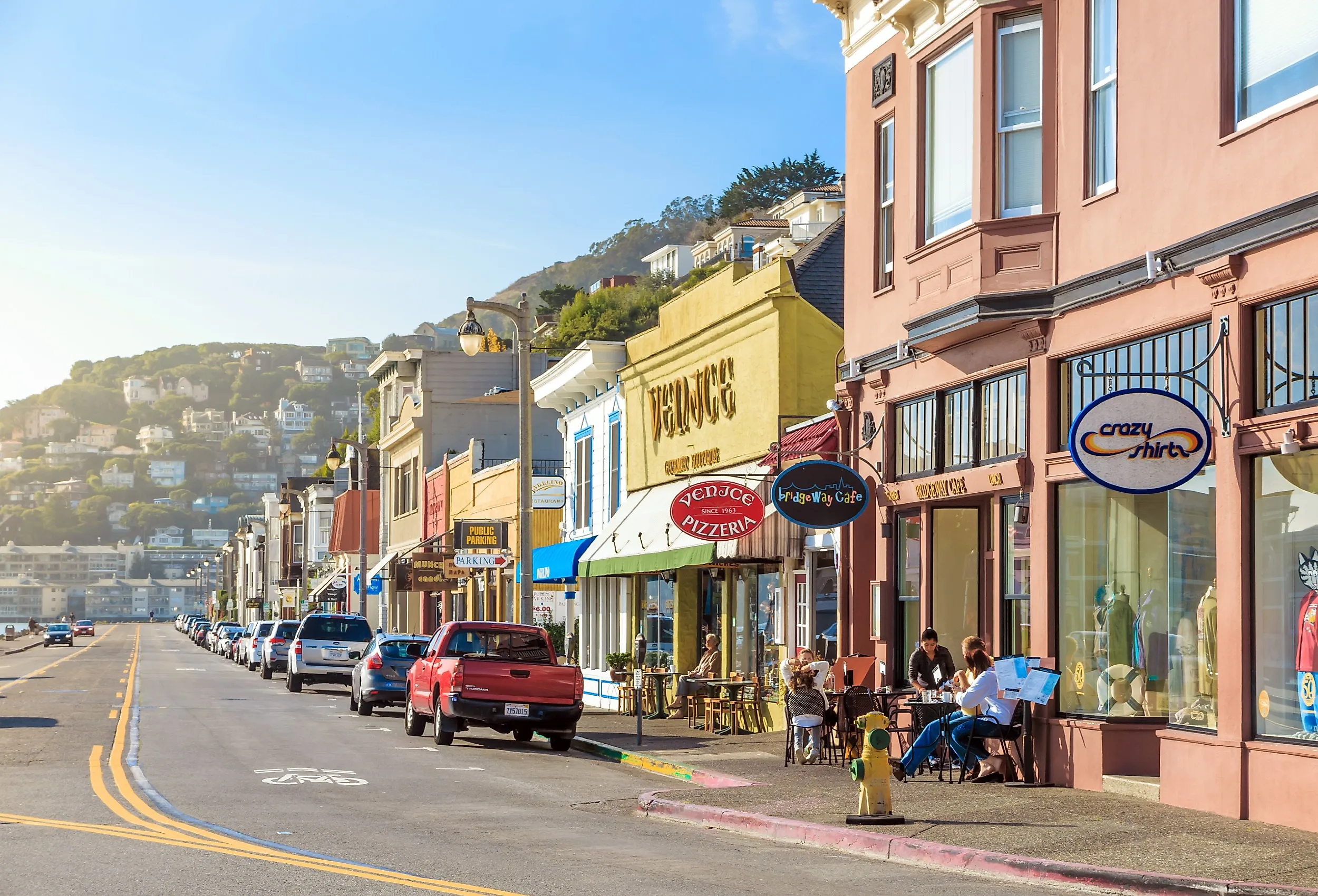
On Bridgeway, the city's main street, the bay has a way of stealing the scene. Café windows and gallery storefronts face towards the water, with ferries crossing toward San Francisco and sailboat masts rising above the docks. Homes climb the steep hillsides behind the shopping area, giving the commercial district a backdrop distinctly different from the open valley around Ferndale. Plaza Viña del Mar adds an unexpected landmark to the downtown streetscape, with two elephant statues and a fountain originally created for San Francisco's 1915 Panama-Pacific International Exposition. The Sausalito Ferry Landing also keeps the waterfront connected to the city across the bay, with Golden Gate Ferries carrying passengers to San Francisco. Sausalito has a bit over 7,000 residents, but its shoreline has long connected it to a much larger world. Once known as Water Street, Bridgeway grew alongside the railroad and ferry links established in the area during the 1870s, when boatbuilders, ranchers, merchants, and railroad workers made their living along the waterfront. World War II brought the need for even more transformation, with the Marinship shipyard on the northern waterfront building 93 Liberty ships and tankers, and wartime activity temporarily swelling the town's population to about 30,000.
Boats remain part of the view today, but Sausalito's maritime identity has since taken on other forms as well. Its floating-home community consists of roughly 400 colorful, individually built houses lining narrow docks with decks, gardens, and walkways that make the marinas feel like neighborhoods sitting on the water. This community grew from a much older tradition of living aboard vessels in the bay and eventually started attracting artists, musicians, and boatbuilders. Another part of that waterfront history can be found at the Bay Model Visitor Center, where a 1.5-acre working hydraulic model recreates the Sacramento-San Joaquin River Delta and San Francisco Bay, allowing visitors to watch how tides and currents move through the system. The center also houses exhibits on the aforementioned Marinship, tying together the town's wartime shipbuilding past to the water that continues to define it.
Nevada City, Nevada County

Gold Rush stories tend to begin with a prospector panning for treasure, but Nevada City's history also belongs to the people who built the machinery that made mining possible. Established as a mining camp in 1849, the town eventually became a center of engineering and metalworking in the Sierra foothills. Along steep Broad Street, wooden balconies and brick facades frame a commercial district that has retained much of the ingenuity that helped build the town. After a series of destructive fires in the mid-1800s, residents increasingly turned to brick construction while covered balconies and deep storefront awnings offered shelter from the mountain weather. Some of the street's most recognizable buildings have since remained in use for generations. The National Exchange Hotel, which opened in 1856, still welcomes guests beneath its historic balcony, and the Nevada Theatre has staged performances for more than 160 years in its 1865 building.
Between these landmarks, independent businesses like Golden Era Cocktail Bar and Brothers Art & Antiques bring contemporary life to the old commercial blocks. The street's preservation is no accident. A 1968 historical ordinance helped protect its architecture, leading to restored facades, underground utilities, and the installation of traditional gaslights. Broad Street has thus evolved past its Gold Rush origins into a thriving historic downtown, where restored 19th-century storefronts now house stores, restaurants, and gathering places that keep the district lively and inviting while still honoring the heritage that created it.
Calistoga, Napa County

At the northern end of Napa Valley, Calistoga grew around a geothermal hot spring that shaped its downtown before it had a downtown at all. For generations, the Wappo people had visited the valley's warm waters, which held cultural and healing significance long before they became a tourist attraction. That relationship changed in the mid-1800s, when San Francisco businessman Sam Brannan "purchased" more than 2,000 acres around the springs, seeing an opportunity to turn a public natural resource into a profitable resort. He subdivided and sold off portions of the land to help finance his development, and in 1862 it officially opened, catering to wealthy visitors with the intention of rivaling New York's Saratoga Springs.
In the years after the resort opened, Lincoln Avenue developed as the commercial street leading toward the springs, and its storefronts continue to carry the imprint of this early spa trade. At Indian Springs Calistoga, the site of Brannan's original resort, four thermal geysers supply mineral water for the steam rooms and pools, while naturally occurring volcanic ash, blended with spring water, is used for the resort's signature mud baths. The tradition continues at Dr. Wilkinson's Backyard Resort & Mineral Springs, where travelers can immerse themselves in the original mud-bath treatment and view the founders' vintage neon sign and 1952 Buick outside its doors. Another reminder of their resort roots stands at the Calistoga Depot, a railroad station built by Brannan in 1868 to welcome visitors arriving for the hot springs. Although its prosperous hospitality scene is built on geothermal springs that Indigenous peoples honored centuries before an entrepreneur capitalized on their commercial appeal, Calistoga retains the feel of a tight-knit town with a layered and unusually enduring sense of place.
Healdsburg, Sonoma County

Healdsburg does not have a single main street; instead, it has a town square that draws the surrounding streets into its orbit. At the center, Healdsburg Plaza brings together fountains, benches, shaded paths, and a wooden gazebo while tasting rooms, restaurants, and independent shops fill the blocks around it. Its arrangement dates back to the mid-19th century, when founder Harmon Heald commissioned a town plan built around a Spanish-style plaza. The railroad arrived around 1871, bringing more commerce and visitors to the growing agricultural community. The square continues to provide downtown with its rhythm, whether people are meeting for lunch or simply settling on a bench beneath the trees. Healdsburg contains roughly 11,000 residents, but its allure reaches far beyond them. The town sits at the crossroads of three of Sonoma County's premier wine regions: Russian River Valley, Alexander Valley, and Dry Creek Valley. Rolling vineyards blanket the encompassing landscape, while downtown tasting rooms pour the best of these neighboring terroirs right in the town center. Its culinary pedigree is just as formidable. Local flagship SingleThread retained its three Michelin stars in 2026, crafting seasonal menus featuring ingredients harvested straight from its nearby farm.
Its agricultural identity comes into sharper focus at the Healdsburg Certified Farmers' Market held at the Foley Family Community Pavilion, where local makers and growers sell seasonal produce, cheeses, olive oil, honey, flowers, and fresh bread into the downtown mix. The nearby Williamson Wines offers visitors another taste of the surrounding vineyards through seated wine flights paired with small plates and artisan cheeses. If interested in baked goods, Quail & Condor draws a morning crowd for its long-fermented pastries and breads. Framed by three valleys of sun-ripened vines and anchored by a leafy square that still sets the town's pulse, Healdsburg proves that the best main streets don't have to be straight lines. Sometimes, they can be a circle that makes lingering inside worthwhile.
Locke, Sacramento County

Main Street in Locke stands apart from the more uniform commercial streets found in many California towns. A continuous covered walkway creates a shaded passage along the shops, where painted lettering and hanging business signs with Chinese characters give the street its distinctive identity. Past the compact row of businesses, the orchards, levees, and open farmland of the Sacramento River Delta stretch into view, placing this little village within the agricultural landscape integral to its preservation. Although the buildings were built for use rather than display, the practical appearance history has lent them carries a distinctly pleasing aesthetic of its own.
In 1915, Chinese merchants from the Zhongshan region of Guangdong founded Locke after a devastating fire destroyed the previously established Chinese district in nearby Walnut Grove. California's Alien Land Law prevented Chinese immigrants from owning agricultural land, so settlers leased 9 acres from landowner George Locke Jr. and built a town on property they could not legally purchase. The result was a self-contained community with restaurants, boarding houses, gambling halls, and gathering places, many of which occupied the very same buildings where these settler families lived. The Dai Loy Gambling House Museum showcases one of the town's former gaming halls, complete with the original tables amongst other artifacts, while the Jan Ying Museum recalls the benevolent association where residents used to gather for news, games, help finding work, and simple conversations. At the Locke Chinese School Museum, a preserved classroom reveals how families made sure their children retained their cultural heritage in a completely new environment. The Locke Boarding House Museum adds yet another dimension by documenting the Japanese and Filipino migrant workers who helped sustain the Delta's agricultural economy. Fewer than 100 people remain in Locke today, but its narrow Main Street holds the imprint of a much larger community. The buildings themselves stand as a lasting answer to the laws that sought to keep their founders from putting down roots, a town built by people who were denied land ownership but never surrendered their claim to a place they could call their own.
Final Thoughts
There is no singular blueprint for a memorable main street. Instead, their appeal lies in how naturally each one reflects the place that grew around it. Whether a street is alive with movement, worn by time, or quiet enough to hear the wind move through its trees, each has its own way of making a moment feel worth keeping. Perhaps the real magic of these places is that a great main street does not have to look the same everywhere. It can simply mean finding the beauty in a place that could not be mistaken for anywhere else.