The National Parks With The Most Alligators
Let us clear something up right away: your beloved mountain or desert park has no alligators, and it never will. The American alligator is a strictly Southeastern creature, happiest in hot, slow, swampy water somewhere between North Carolina and East Texas. That makes the list of gator-rich national parks less a nationwide ranking and more a tour of the country's sweatiest, buggiest, most gloriously prehistoric corners. Here are the parks where you are most likely to share a trail with a living dinosaur, ranked more or less by how many of them are lurking. Bring bug spray, and do not feed anything with teeth.
Everglades National Park, Florida

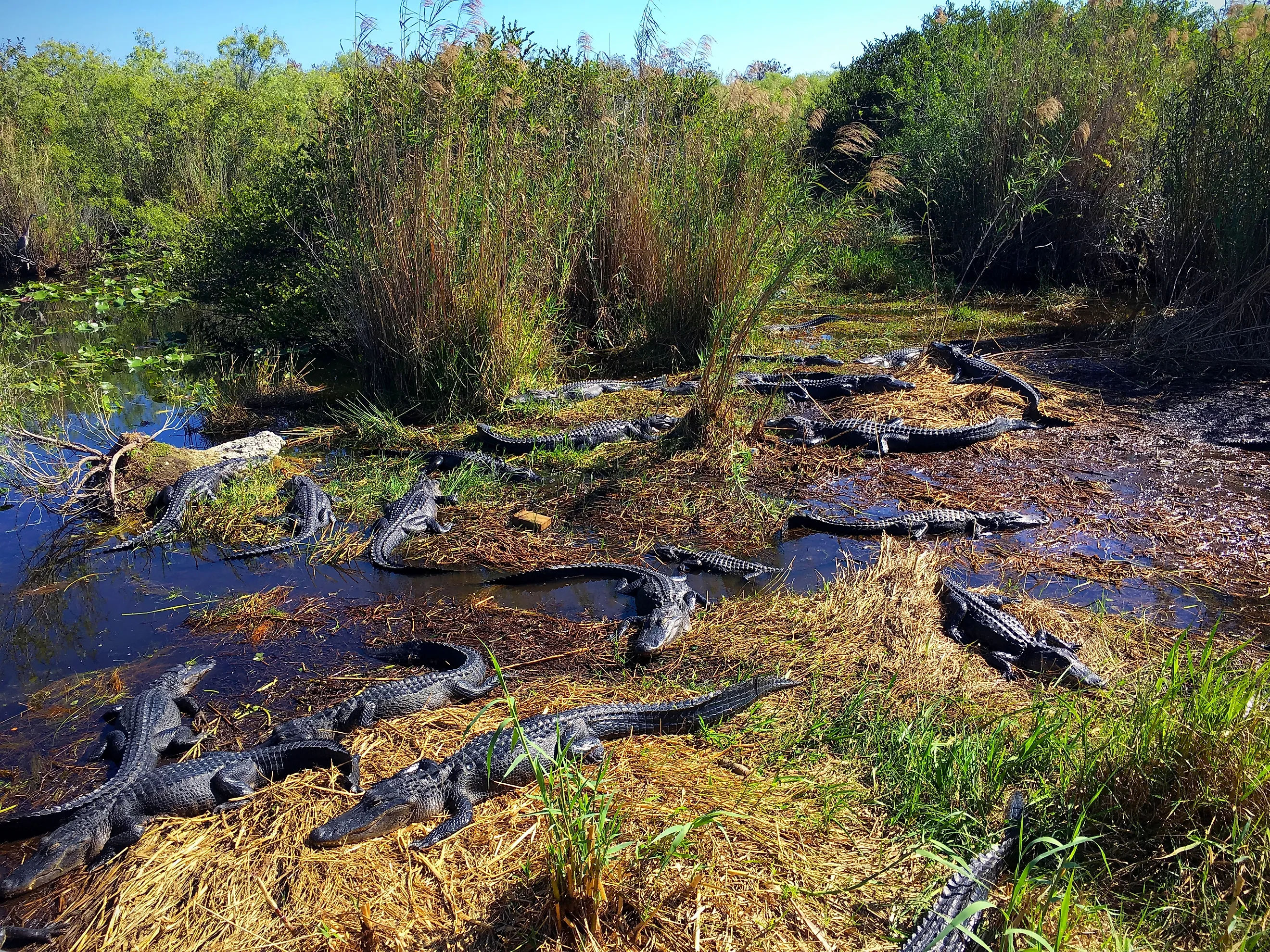
There was never any suspense about the winner. Everglades National Park is so synonymous with alligators that the two words practically travel together, and the greater Everglades holds them in the hundreds of thousands. This is the only place on Earth where American alligators and American crocodiles live side by side, which is the reptilian equivalent of two rival gangs sharing a hot tub. Gators here are a keystone species, digging "gator holes" that hold water through the dry season and keep half the ecosystem alive. Along the Shark Valley loop and the Anhinga Trail, they sprawl across the pavement in such numbers that dodging them is simply part of the walk.
Big Cypress National Preserve, Florida

Right next door to the Everglades sits Big Cypress, and the gators did not read the map telling them where one ends and the other begins. This 729,000-acre sprawl of cypress swamp is prime habitat, and it is unusually generous about showing off. Drive the gravel Loop Road or the Turner River, especially in the dry season when water levels drop and the animals concentrate, and you will find alligators lined up along the banks like sunbathers at a crowded pool. The northern edge of the preserve is even crossed by the stretch of Interstate 75 nicknamed Alligator Alley, which should tell you everything about the neighbors.
Jean Lafitte National Historical Park, Louisiana

Florida gets the fame, but Louisiana quietly has the most alligators of any state, an estimated two million of them. The Barataria Preserve, part of Jean Lafitte National Historical Park just south of New Orleans, puts that abundance within easy reach on a set of boardwalks that thread through classic bayou swamp. Spanish moss, dark water, and a gator every few minutes make it one of the most atmospheric alligator walks in the country. It is close enough to the city that you can eat beignets for breakfast and be counting reptiles by mid-morning, which is a very Louisiana way to spend a day.
Congaree National Park, South Carolina

Here is the plot twist for anyone who assumes gators are strictly a Florida-and-Louisiana affair. Congaree, in the middle of South Carolina, protects the largest old-growth bottomland hardwood forest left in the country, and its wetlands, creeks, and oxbow lakes hold a healthy population of alligators well north of where most people expect them. South Carolina has around 100,000 gators statewide, and Congaree offers some of them a shady, cathedral-like forest to prowl. Paddle Cedar Creek or walk the boardwalk and you may spot one where you least expect it, which is either a delight or a fright depending on your temperament.
Cumberland Island National Seashore, Georgia

Georgia's largest barrier island is already a strange and wonderful place, home to feral wild horses and the crumbling ruins of a Carnegie family mansion. Add alligators to that mix and Cumberland Island starts to feel like a fever dream. The gators here haunt the island's freshwater ponds and sloughs just inland of the dunes, which means a single afternoon can serve up wild horses on the beach, an armored reptile in a pond, and a Gilded Age ruin in the woods. Few places let you collect that particular trio of photographs, and fewer still make you check over your shoulder while doing it.
Canaveral National Seashore, Florida

Canaveral National Seashore protects a wild barrier island and the marshes of Mosquito Lagoon, right up against the Kennedy Space Center. That produces one of the great only-in-Florida juxtapositions: alligators drifting through primeval wetlands while multimillion-dollar rockets thunder into orbit a short distance away. The lagoon and its network of creeks are thick with gators, along with manatees, sea turtles, and a spectacular cast of birds. It is a genuine nature sanctuary that just happens to sit next to the future, and the reptiles have been doing their thing there for a lot longer than the rockets have.
Big Thicket National Preserve, Texas

Way out at the western edge of the alligator's range, in the piney woods and swamps of East Texas, sits Big Thicket National Preserve. This is where gator country finally runs out, and the animals here are living on the frontier of where their species can survive. The preserve is a famous biological crossroads, mixing swamp, forest, and prairie in one improbable package, and its sloughs and bayous host alligators alongside an outsized share of the region's plants and animals. Spot one here and you are looking at just about the westernmost wild alligators the national park system has to offer.