Where People Are Moving To In Netherlands In 2026
The Netherlands gained more than 87,000 residents in 2025, yet much of the fastest growth happened well away from its largest cities. Noordoostpolder grew faster than any other Dutch municipality, and Flevoland and the Gelderse Vallei outpaced the rest of the country. Statistics Netherlands separates moves within the country from international migration and natural change. Those domestic moves tell the clearest story about where Dutch households are choosing to live. Some are leaving Rotterdam for Lansingerland or Amsterdam for Almere. Many others are simply moving between towns in the east.
Noordoostpolder

No Dutch municipality grew faster than Noordoostpolder in 2025. Its population rose by 23.8 per 1,000 residents, and moves from elsewhere in the Netherlands supplied the largest share at 14.1 per 1,000. International migration added 6.8 and natural increase another 3.0.
The municipality is more than Emmeloord. Its principal town anchors ten surrounding villages, and the CBS figures cover all of them together. Statistics Netherlands links the influx largely to new construction, which draws more people into the polder than leave it. Emmeloord remains the main service center as the municipality plans further homes for a growing population. The result carries Flevoland's migration-led growth well beyond its familiar story of Almere.
Raalte

Deaths outnumbered births in Raalte in 2025, yet the municipality still grew. Natural change stood at -1.9 per 1,000 residents and international migration added only 0.8. Domestic moves made the difference at 13.2 per 1,000, lifting total growth to 12.1.
Municipal records show the same trend in raw numbers. Raalte counted 38,655 residents at the end of 2024 and 39,083 a year later, a gain of 428 people. Nearly 300 new homes were completed during 2025 in projects that include Raalte Noord, Broekland, and Molenwijk 2.0 in Heino. Over the coming decade, the municipality aims to add roughly 3,000 more, with a greater share of smaller, rental, and affordable properties. Most newcomers arrive from elsewhere in the region rather than from the Randstad.
Almere

Almere's growth in 2025 drew on births, domestic moves, and international arrivals in close to equal measure. The city grew by 13.4 per 1,000 residents. Natural increase contributed 4.9 per 1,000, domestic migration 4.8, and international migration 3.7.
Amsterdam still supplies a steady stream of newcomers, as it has for decades. A large stock of newer housing sits within reach of the capital's job market, linked by rail and the A6 motorway, and construction continues in growth districts such as Almere Poort. Yet the city now sends residents onward too, many of them to other parts of Flevoland. That makes Almere less an endpoint for Amsterdam households and more a link in a chain of moves across the country's fastest-growing province.
Borne

Borne crossed the 25,000-resident mark in 2025 on the back of a sharp rise in domestic arrivals. The municipality grew by 12.2 per 1,000 residents, and 9.2 of that came from moves within the Netherlands. Natural increase added 2.0 and international migration just 1.0.
Most of those newcomers are not crossing the country. Borne sits inside Twente's closely linked urban network, sharing a border with Hengelo and lying a short drive from Almelo and Enschede. The municipality has set a goal of 30,000 residents, which will require new homes along with schools, sports facilities, and other services. Development around Borne-West forms part of that plan. Borne's numbers show how short moves within one regional housing and job market can reshape a single municipality.
Deventer

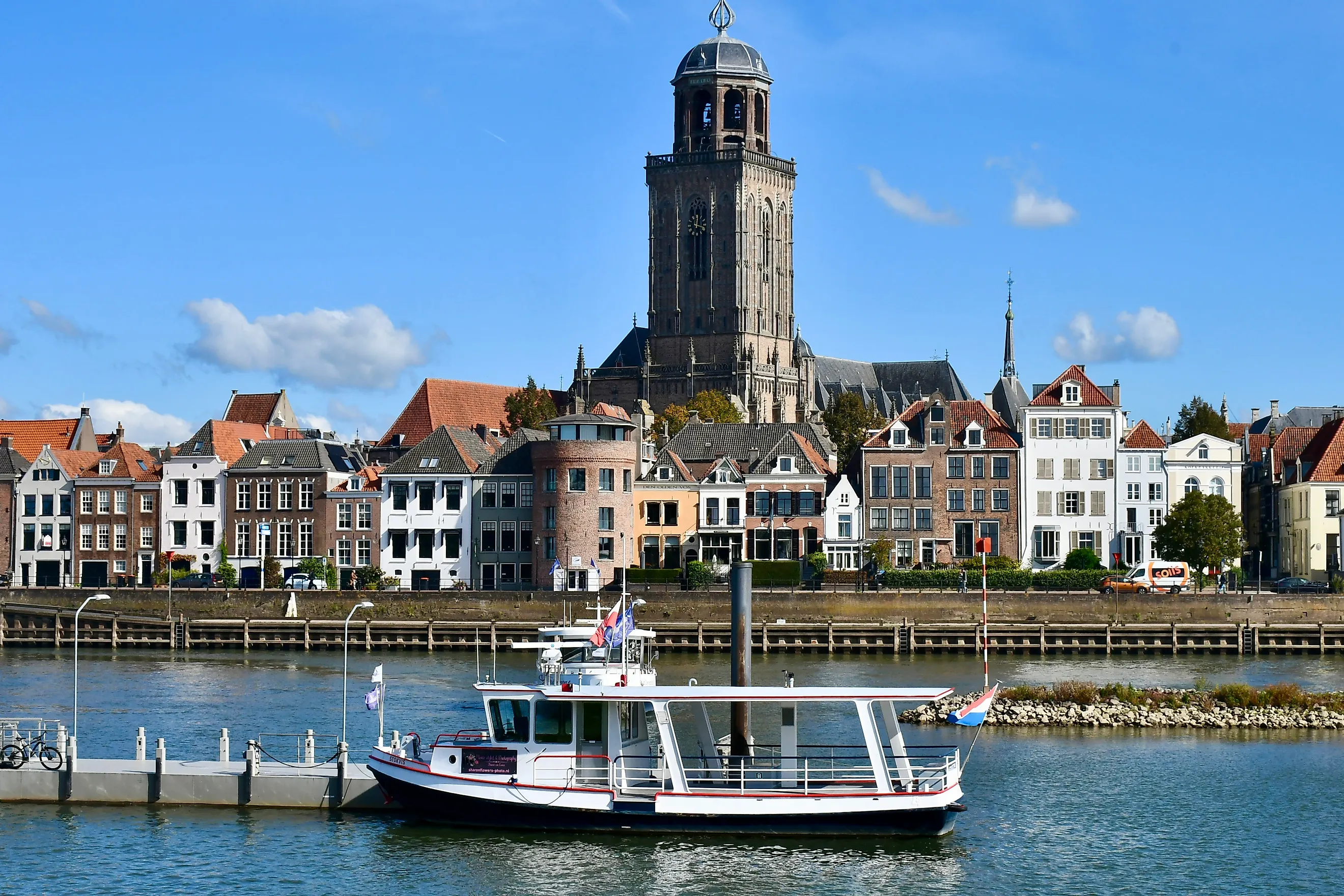
Almost all of Deventer's 2025 growth came from people moving in from elsewhere in the country. The city grew by 7.9 per 1,000 residents, and domestic migration accounted for 7.4 of that. International migration added just 0.6, while natural change dipped slightly below zero.
That sets Deventer apart from Dutch cities where international arrivals drive growth, and it shows that domestic gains are not limited to suburbs. The city expects many more residents. Its long-term plans call for about 11,500 additional homes and roughly 20,000 more people by 2040. Wechelerhoek near Schalkhaar, Haveneiland, Baarlerhoek, and Bergweide 3 are among the areas under study for expansion. The 2025 figures suggest the demand is already arriving ahead of the new housing.
Lansingerland

Lansingerland offers one of the clearest cases of households moving a short distance out of a major Dutch city. In 2025, 3,134 people moved in from another Dutch municipality while 2,584 moved out. Rotterdam supplied 1,252 of those arrivals, or about four in every ten domestic newcomers.
Across the year, domestic moves added 8.1 residents per 1,000, while international migration subtracted 2.5 per 1,000. Much of the new housing is rising at Wilderszijde, between Bergschenhoek and Berkel en Rodenrijs. That district is planned for roughly 2,700 to 3,000 homes along with schools, shops, sports facilities, and a health center. Longer-term plans around Bleizo could add far more housing, but those homes lie years ahead. For now, Wilderszijde is where Rotterdam-area households are landing.
Ede

Ede is growing on several fronts at once. Its population rose by 8.8 per 1,000 residents in 2025, with domestic migration contributing 4.6, natural increase 3.2, and international migration 0.9. The municipality lies in the Gelderse Vallei, which Statistics Netherlands identified as one of the fastest-growing regions in the country during the year.
Homebuilding helps explain the gains. Ede added 877 homes in 2025, including 269 social rental properties, though demolitions trimmed the net increase to 408. New housing went up on former barracks sites, around the World Food Center, in Kernhem, and in villages such as Wekerom and Lunteren. The World Food Center area alone is now planned for roughly 1,300 to 1,500 homes. Since 2022, Ede has added 3,190 homes in total.
Hardenberg

Hardenberg's domestic migration balance nearly doubled in a single year. Net moves within the Netherlands added 9.7 residents per 1,000 in 2025, up sharply on 5.6 per 1,000 in 2024. With international migration contributing 0.9 and natural increase 0.5, total growth reached 11.1 per 1,000.
New housing is spreading across the municipality, including Dedemsvaart and several smaller villages as well as Hardenberg itself. Around Hardenberg station, plans call for 450 to 500 homes as part of a larger effort to extend the town center. At least 30% are earmarked for social rent and at least 40% for affordable ownership or mid-market rent. The station would also gain a new underpass and improved public space. Hardenberg shows the eastern migration pattern reaching beyond cities like Deventer and toward the German border.
The Netherlands' Growth Map Is Shifting
Internal migration in the Netherlands now runs in several directions at once. Rotterdam feeds Lansingerland and Amsterdam still shapes Almere, but the fastest gains in the east owe little to either city. Raalte, Borne, Deventer, and Hardenberg are growing mostly through moves within their own regions. New housing both follows and enables these shifts. As the receiving municipalities fill up, the pressure will show not only in their population totals but in housing supply, transport, schools, and public services.