US Towns Where Every Building Is The Same Age
Most American towns are a jumble of eras. A courthouse from the 1800s, storefronts from the 1950s, subdivisions still going up today. A rare few are nothing like that. Walk any street in these places and every building around you is almost exactly the same age, down to a handful of years.
How does a whole town end up with a single birthday? The answers run from a lucky gold strike to total disaster, from company paychecks to wartime secrecy. These are the US towns where every building is the same age.
Bannack, Montana

When gold was discovered in various locales during the 1800s, towns sprung up with amazing speed to house, feed, and equip would-be miners. In 1862, John White had a lucky strike in Bannack, and the lust for gold quickly increased the tiny settlement's population to 3,000 within the space of less than a year, once the word got out. Shops, churches, saloons, jails, and even a schoolhouse were created quickly, albeit not always that solidly.
Speaking of jails, the lust for gold created plenty of controversy and the town became plagued with outlaws. Even the Sheriff, Henry Plummer, was corrupt and eventually hanged. Unfortunately, once the gold supply diminished, so did the town's fortunes. In the ensuing years, Bannack's economy swung back and forth until finally the state of Montana acquired most of it, turning it into Bannack State Park and a National Historic Landmark in 1954. It's now a beautifully preserved ghost town with more than 50 buildings from the era open for visitors to explore, both inside and out.
Fayette, Michigan

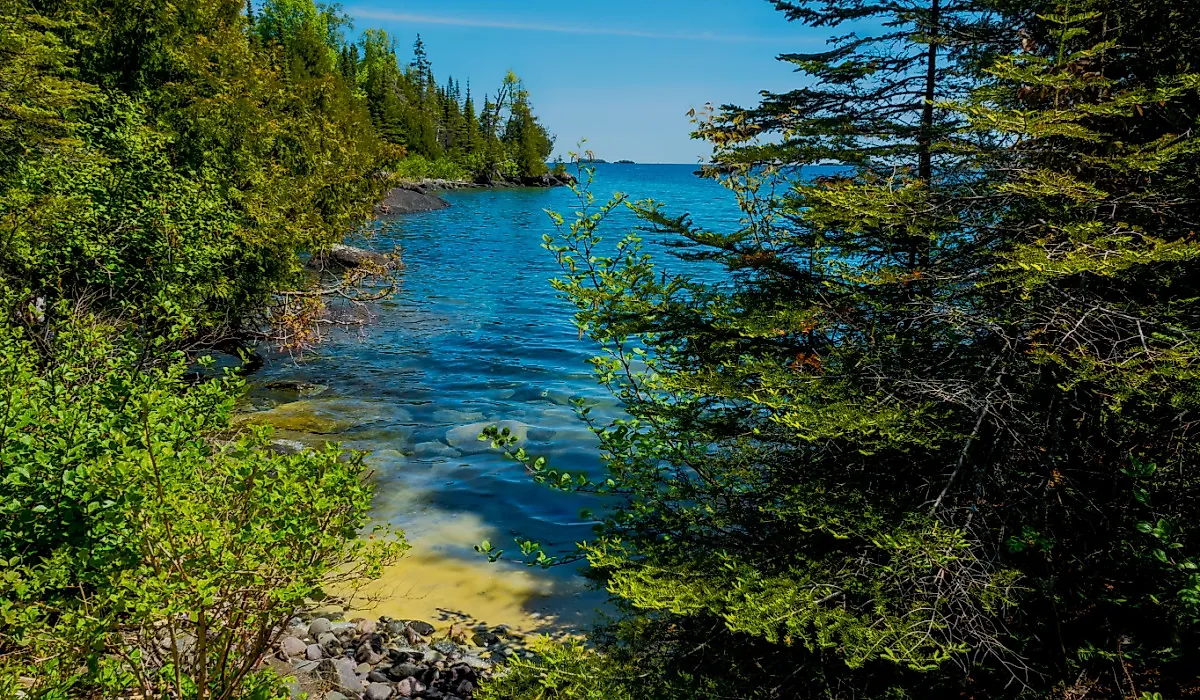
Another way that towns can spring up seemingly in an instant, are so-called Company Towns. Fayette is one such town, built in 1867 by Fayette Brown, the general manager of the Jackson Iron Ore Company, which was based in Cleveland. Its spot on the Garden Peninsula of Michigan's Upper Peninsula made transportation of its finished product, iron ore, easy to move via Lake Michigan steamers.
Alongside the massive stone blast furnace complex, the company constructed homes, a post office, school, shops, and more. There was even a hotel on site and the small population, just 500 people, had their own baseball team and coronet band. By 1891, only 24 years after it was created, the town was abandoned. The company had stripped the dolomite and lumber they needed to keep the smelts going from the surrounding area. Today, though, the well-preserved town is a part of the state's park system and can be seen in person.
Concrete City, Pennsylvania

Another company town, completely different from Fayette is Concrete City in Nanticoke, Pennsylvania. It was built in 1911 by the Delaware, Lackawanna and Western Railroad and is made entirely out of, well, concrete! When the town was first built, there were about 20 buildings arranged around a rectangular courtyard. In that courtyard was a tennis court, wading pool, and baseball field. Employees paid about $8 rent per month.
The buildings had electricity, which was a luxury at that time. Less plush were the apartments themselves. Built within a concrete shell and with no insulation, they were cold and damp. They also lacked indoor toilets. By 1924, the town was abandoned for that very reason. Local authorities required the company to install a sewer system. They declined to do so. Efforts were made to tear the buildings down, but they proved to be indestructible. In 1998, the town was declared to be a historic site. It's possible to see the buildings in person, but visitors are advised that they do this at their own risk.
Pullman, Chicago, Illinois

Pullman is another company town, but different than the ones previously mentioned because it is not a ghost town and is still occupied. It is located in the Far South Side of Chicago, about 12 miles from the downtown loop. The town was built by Charles Pullman in the 1880s and was intended to be a utopian community specifically for his Palace Car Company workers. Train repair and construction shops and other work sites, homes, and buildings such as churches, hotels, and shops were all in one place. The architecture of all of the brick buildings was of a uniform Queen Anne style.
In 2015, 206 acres of the neighborhood was declared Pullman National Historical Park and is set within the larger Pullman National Historic Landmark District. According to the National Park Service, an estimated 90% of the original buildings are still in existence. Most of these, including those within the park, are privately owned residences. Some of the buildings, such as the Hotel Florence and parts of the original factory complex are used by the park service for museums and a visitor center.
Levittown, New York

Planned communities, started from scratch, are another place where it is possible to find buildings that are all the same age. Levittown, on Long Island, was one of the first towns that were created post-World War II to provide affordable residences for veterans. It now calls itself "The First Suburb in America." The Levitt family purchased land that had been primarily farms. 17,447 homes were built, beginning in 1947, using an assembly line method with identical floor plans, and were remarkably completed in just five years. Not only were these homes the same age, but they also looked almost exactly the same. The first one was purchased for $7,900.
The community had all that any town would need: shopping, pools, playgrounds, schools, and more. Unfortunately, it also achieved notoriety for the racial covenants prescribed by the association at the town's inception. After years of controversy, those covenants were struck down. Levittown is still home to thousands, located just 25 miles east of Manhattan, it is a haven for commuters from the city. Today, it is estimated that about 80% of the original buildings still exist, but the vast majority have been altered and upgraded.
Oak Ridge, Tennessee

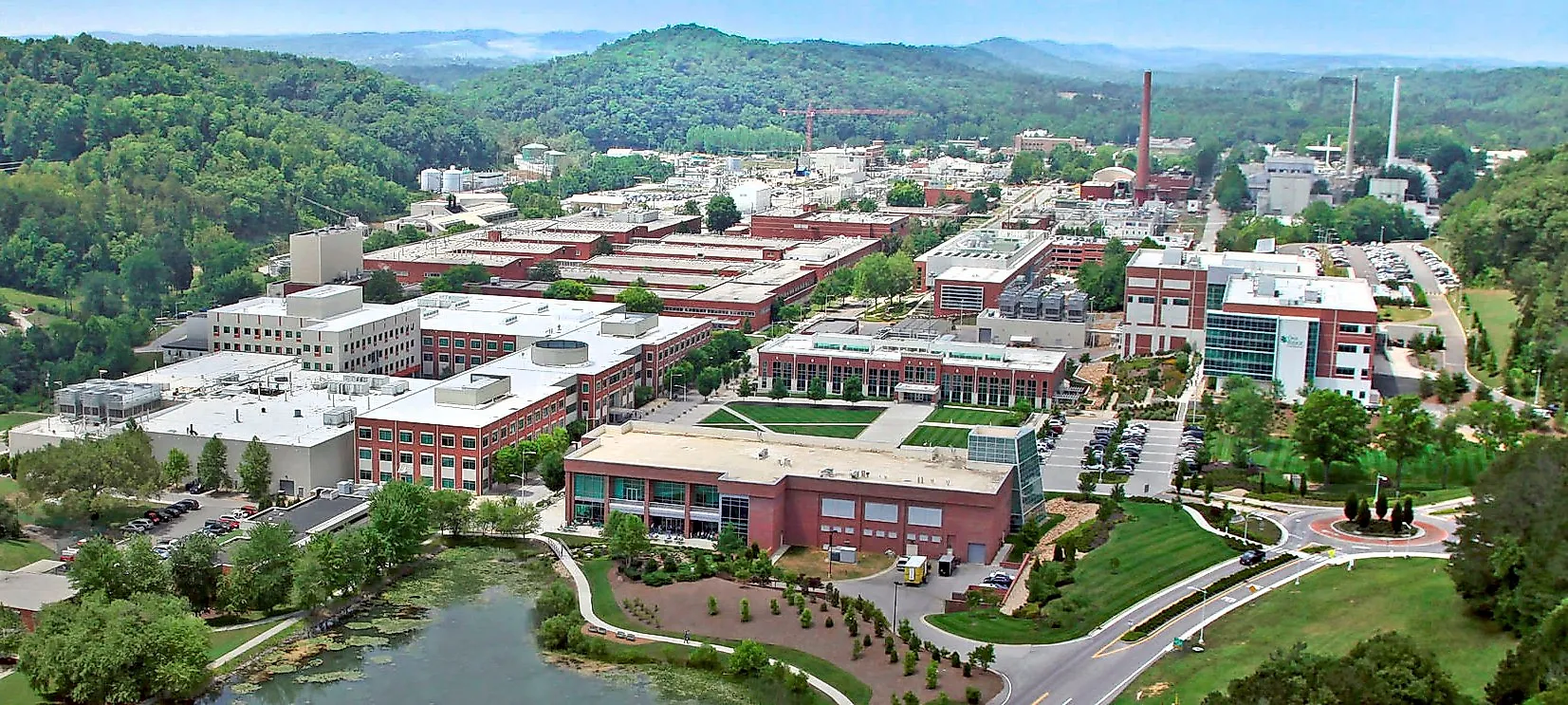
Oak Ridge, "the Secret City," is another example of a community that was planned and then built in an extremely short period of time. This one is a bit different than the brand-new suburbs created after WWII. Oak Ridge was built by the US government during the war to house employees of the Manhattan Project, the new effort to build an atomic bomb. The government purchased about 60,000 acres of former farmland, displacing 3,000 residents. According to the National Park Service, the town was originally intended to house 13,000 people, but that number quickly increased to over 75,000.
Unlike Levittown, Oak Ridge was constructed in "neighborhoods," each with its own shopping, and recreational facilities. There were a series of building designs, named "alphabet homes" by the architects. Initially, residents had to have a pass in order to enter. However, there wasn't much need to leave the area, as work and home occupied the same area, much like the older company towns mentioned earlier in this article. Massive uranium enrichment facilities and scientific research buildings were right on site. The US Department of Energy still has facilities in the town for nuclear research and production, and although it employs thousands of people, the town is now independently incorporated. Many of the original alphabet homes still exist. The Manhattan Project Historical National Park also resides in town and can be visited by the public.
Niobrara, Nebraska

In some cases, a town that already exists might be moved to a new spot and rebuilt from scratch, causing most of the new buildings to be the same age. This can happen when the US government decides to build a dam and needs the land the town occupied, or if a particular town is in constant danger of severe flooding. In the case of the town of Niobrara, both of these occurred. In 1881, severe ice gorges and subsequent flooding caused the town to pick up and move to higher ground. And then in the 1970s, the town had to move again, due to rising groundwater caused by the construction of dams that had been built on the Missouri River.
The town was just a bit less than 25 years old when the first disaster struck causing as much as six feet of water throughout the town. This first time, the town actually moved the existing buildings to its new location, about one and a half miles to the southwest on higher ground. This was a massive undertaking and not a unanimous decision by the residents. In 1972, the sentiment was different. Rising groundwater from the dams on the river was causing the ground to become saturated and residents had increasingly high amounts of water in their basements. Battling this was an overwhelming and likely losing proposition, and therefore 90% of the residents voted to move the town again. This time, the government helped to subsidize the move and build a new town from scratch. Today, this very small town's buildings are still largely from the 1970s.
Greensburg, Kansas

Another type of town where it's possible to find buildings that are all the same age are "disaster rebuilds." This unfortunately happened to the town of Greensburg when an E5 (the highest on the Enhanced Fujita scale) tornado hit it in 2007, destroying 95% of the town's buildings and killing 11 people. Much of the town's infrastructure was destroyed or damaged. About 100 miles from Wichita, Greensburg was founded in 1881 as a farming community and had a small population of about 1,500 people.
After the disaster the townspeople had to decide if they would rebuild the town as it was before or move to a new location. They decided to rebuild, but with a twist. The new town is committed to having an environmentally conscious footprint. The larger municipal buildings, including the K-12 school, are LEED Platinum certified, green-building certification given by the US Green Building Council and the highest it is possible to achieve. LED streetlights, rainwater collection, a wind farm, and native landscaping are among the requirements to achieve this award. It's not typical for such a small town to create this type of commitment. Most residential buildings had to be built anew, leaving the bulk of the town with buildings of the same age.
Paradise, California

Another example of a disaster rebuild is the town of Paradise. But this town is one that is still, as of 2026, in the process of reconstruction. On November 8th, 2018, the infamous Camp Fire swept through Paradise and became the most deadly wildfire in California's history up to that point. Paradise had been a peaceful town of about 26,000 people who lived mostly in wooded areas in single-family homes. When the fire hit, 150,000 acres burned, more than 18,000 buildings were destroyed, and 85 people died.
The population of Paradise is now less than half of what it was before the fire, but reconstruction is proceeding steadily. Around 8,000 structures are either completed, being built, or have permits to begin building. The new buildings are being constructed with stiff codes to increase resistance to wildfires. Although the new buildings do not all look alike, they are all, so far, the same age within a seven-year period.
It remains to be seen how many more buildings will be put up in the near future and whether the population will bounce back closer to what it was before the fire.
Buildings of the Same Age
There are many reasons why a town might have been built within a short period of time. But it is clear that towns like this have been around for a long time, some abandoned and some still being lived in.