9 Old-Timey General Stores In Tennessee
Tennessee's general stores trace the state's commercial development through milling and Appalachian communities along its rivers and rail lines. Many continue to operate within preserved historic structures that were once anchors for local economies. The Old Mill General Store in Pigeon Forge developed alongside an 1830s gristmill on the Little Pigeon River. These sites show the importance of water-powered industry in regional trade. Together they show how general stores functioned as essential points of exchange in developing communities.
The Old Mill General Store

The Old Mill General Store in Pigeon Forge traces its roots to 1830, when the Old Mill began operating along the Little Pigeon River as a working gristmill. The original shop developed alongside the mill to serve travelers and local residents seeking freshly ground flour and cornmeal, establishing an early commercial link to one of Tennessee's longest-running industrial sites. As Pigeon Forge expanded, the store evolved into a full mercantile while maintaining its direct connection to the mill's production process.
Today, the Old Mill General Store continues to honor that working heritage through its selection of stone-ground grains, Southern pantry staples, jams, candies, regional cookbooks, and handcrafted pottery from The Old Mill Pigeon River Pottery. The layout emphasizes its ongoing relationship with the mill, preserving the sense of a production-centered marketplace rather than a curated retail space. The store remains closely tied to the rhythm of the adjacent mill, where milling and commerce still influence the visitor experience.
T. B. Sutton General Store

The T. B. Sutton General Store in Granville opened in a building originally constructed in 1880 as a rural mercantile serving river travelers, farmers, and local families along the Cumberland River. It supplied essential goods such as groceries, tools, and household items while also functioning as a communication point for mail and local news. Over time, it developed into a central gathering place where trade and social exchange shaped daily life in the surrounding community.
Today, the restored T. B. Sutton General Store stands at the heart of Granville's historic village district and preserves the appearance of a late 19th-century Tennessee country store. Shelves are lined with old-fashioned candies, locally made crafts, gifts, and heritage-inspired goods that reflect the region's historical identity. The store also hosts the Sutton Ole Time Music Hour, a live dinner performance featuring traditional music and storytelling rooted in Appalachian performance traditions.
Ogle Brothers General Store
The Ogle Brothers General Store in Sevierville draws inspiration from the Ogle family, early settlers in the Great Smoky Mountains region. Its design honors the 19th-century Appalachian mercantile traditions, where general stores supplied rural communities with locally made goods, handcrafted items, and everyday necessities. These stores often functioned as both commercial and social centers for residents and travelers passing through the mountains.
Today, Ogle Brothers General Store still showcases regional craftsmanship through handmade pottery, locally produced foods, artisan goods, and specialty products that highlight Appalachian culture. Interactive demonstrations and tastings showcase local makers, adding context to the items on display. The store connects visitors to the skills and traditions that continue to shape the region's creative economy.
Lanier's General Store
Lanier's General Store in Pigeon Forge was designed to reflect the aesthetic of a traditional Appalachian mercantile while operating as a modern retail space. Its rustic wooden displays and vintage-inspired décor evoke the appearance of early Smoky Mountain trading posts that once served rural communities. The layout emphasizes nostalgia while accommodating contemporary visitor traffic.
Inside, Lanier's General Store offers old-fashioned candies, Smoky Mountain souvenirs, and rustic home décor. The store's selection is meant to highlight nostalgic and regionally inspired goods that reflect Appalachian themes in both design and product choice. The store pairs historical styling with a present-day retail experience, which is common in Pigeon Forge.
The Old Country Store
The Old Country Store, located in Jackson within Casey Jones Village, reflects the railroad-era development of Tennessee communities in the 19th century. During this period, general stores often formed around rail lines and depot stops, serving travelers, railroad workers, and local residents. These stores functioned as hubs for trade, communication, and daily commerce.
Today, The Old Country Store combines retail and dining within a setting designed to recall that railroad heritage. Shelves feature regional foods, handcrafted goods, vintage-style candies, and locally inspired souvenirs. An on-site restaurant and old-fashioned ice cream counter add to the visitor experience, integrating food service with a traditional general store environment.
The Apple Barn General Store
The Apple Barn General Store in Sevierville originally opened in the 1980s as part of a working apple orchard, which began in the 1970s. The site developed into a farm-centered destination that reflects the agricultural traditions of the Great Smoky Mountains foothills. Its design is rooted in rural mercantile architecture, which is common to historic farming communities.
Today, the Apple Barn General Store focuses on apple-based products and Appalachian-inspired goods, including apple butter, cider, baked goods, jams, soup mixes, candies, and handcrafted gifts. Seasonal items highlight locally sourced ingredients and traditional preparation methods. On-site cider production demonstrations and tasting stations connect visitors directly to the agricultural process behind many of the store's offerings.
R. M. Brooks General Store

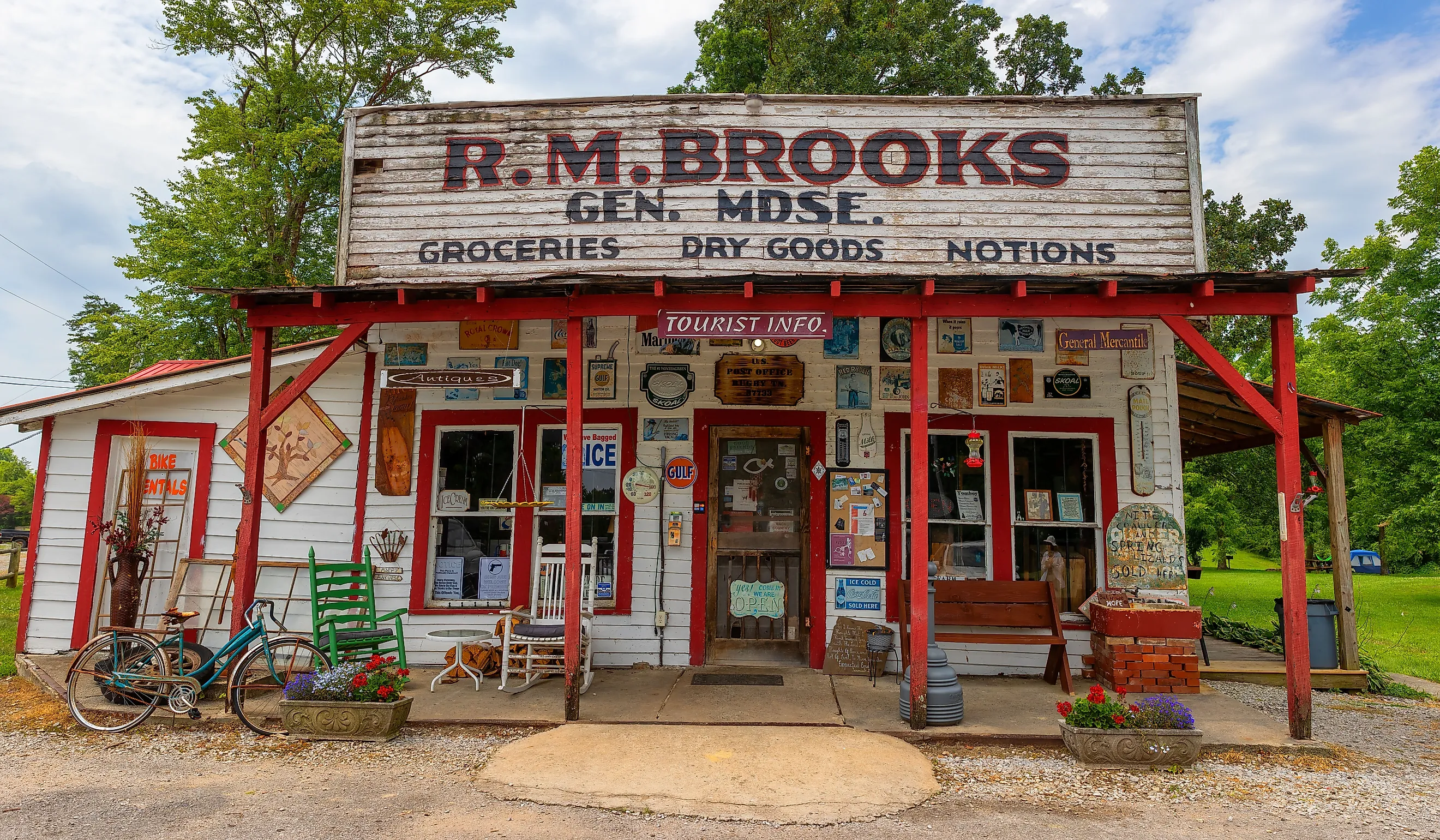
The R. M. Brooks General Store in Rugby dates to the 1920s and is a National Register of Historic Places Landmark. The store was reopened in 2014 by the great-granddaughter of the original owners and has stood through the Great Depression as well as visits from many political figures throughout the town's history. It played a central role in sustaining daily life in one of Tennessee's most distinctive communities.
Today, the restored store preserves the architectural and cultural character of the original settlement. Visitors can enjoy BBQ sandwiches, popcorn, and old-fashioned candies while sitting on the rocking chairs located on the front porch.
The Nolensville Feed Mill Amish Market
The Nolensville Feed Mill Amish Market in Nolensville occupies a restored 1890s feed mill that once supported the agricultural economy of Williamson County. The structure retains key architectural features from its industrial past. It once served as a hub for storing and distributing grain and farm supplies to local farmers.
Today, the Nolensville Feed Mill Amish Market operates as an Amish-style market offering baked goods, pastries, jams, spices, bulk foods, handcrafted items, and made-to-order sandwiches. It remains one of Nolensville's most recognizable historic landmarks and continues to function as a community-oriented marketplace.
The Greenback Drug Store and Diner

The original Greenback Drug Store opened in 1923 as a combined pharmacy and general store in the railroad town of Greenback, Tennessee. It provided prescription services and household goods while also serving as a central gathering place for local residents. The store played an important role in community life, supporting both daily needs and informal social interaction.
Today, the Greenback Drug Store and Diner retains its early 20th-century character through features such as its historic soda fountain. Visitors can enjoy milkshakes and classic ice cream treats. The store continues to highlight Greenback's commercial heritage as a functioning space that combines historical continuity with its role as a community hub.
Where Tennessee's Trade History Still Sells Goods
Tennessee's general stores preserve long-standing connections between commerce, agriculture, and community life, with many continuing to operate inside restored buildings that once served as essential trade centers. The Apple Barn General Store in Sevierville carries the orchard tradition forward, while the Greenback Drug Store and Diner preserves its historic soda fountain. Together, these stores show how Tennessee's general stores evolved from essential mercantile hubs into living historic sites, where milling, farming, rail commerce, and regional craftsmanship remain visible in both structure and daily operation.