12 Most Scenic Pacific Northwest Towns
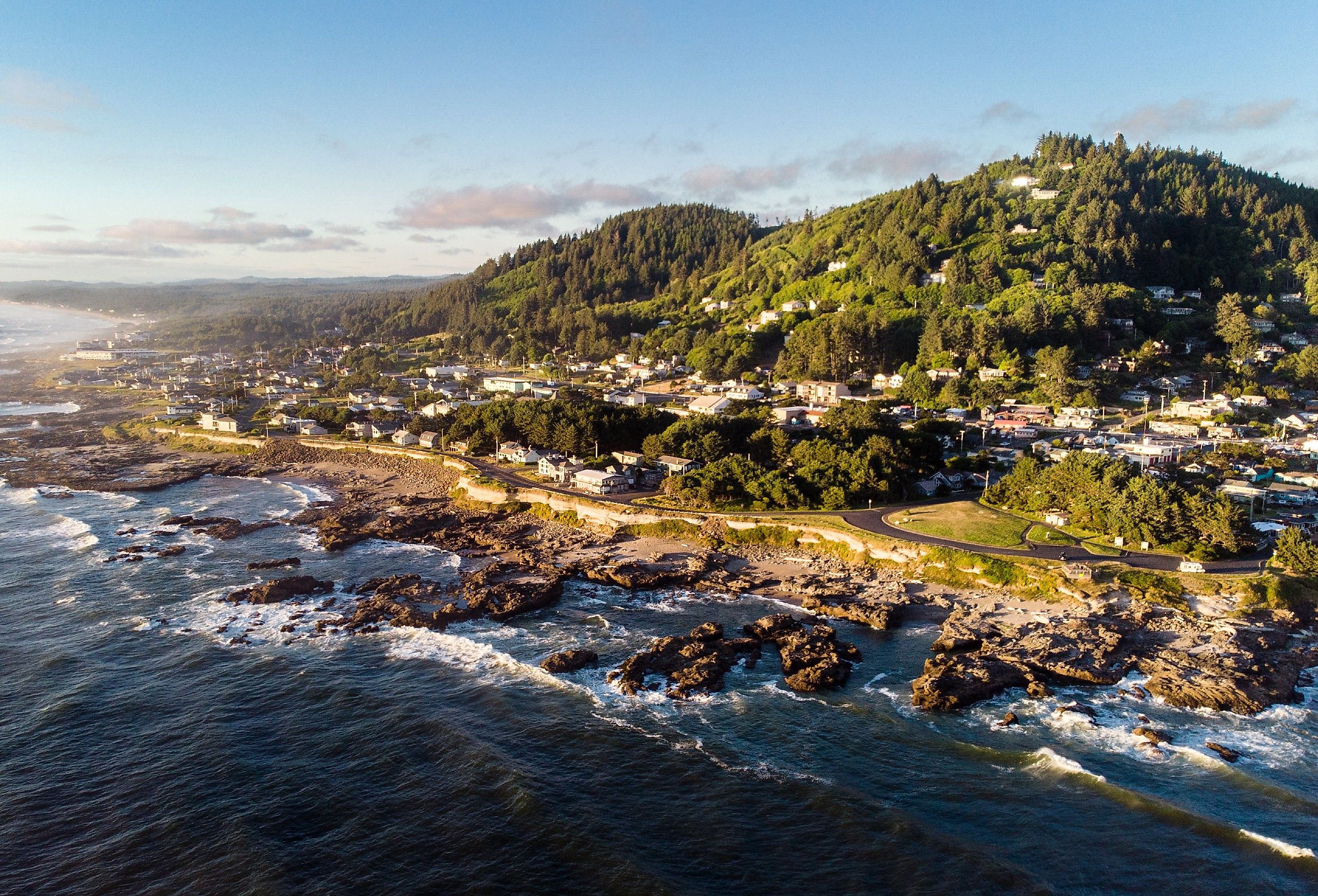
The Pacific Northwest holds twelve small towns where the view is the point. Cannon Beach has a 235-foot basalt sea stack standing in the surf. Yachats has a coastal sinkhole that blows seawater 20 feet into the air at the right tide. Sequim has 300 days of sunshine a year inside the Olympic rain shadow when 30 miles west is rainforest. Snoqualmie has a 268-foot waterfall plunging into a horseshoe canyon 30 minutes east of Seattle. Each town below earns its scenic credentials with one specific geographic feature.
Bainbridge Island, Washington

Bainbridge Island faces the Seattle skyline across Puget Sound from its 27-square-mile footprint, with the Olympic Mountains looming behind in the opposite direction; the 35-minute Washington State Ferry ride from downtown Seattle delivers one of the most photographed urban-water views in the country. The town of 24,000 keeps its shoreline character through Pritchard Park, Fay Bainbridge Park, and Battle Point Park, all open to the public for tidepool exploration and sunset photography.
Bloedel Reserve, a 150-acre former private estate on the island's northeast end, runs as a public garden with a Japanese garden, moss garden, bird marsh, and reflection pool, all designed to layer textures and seasonal color across an active 360-degree palette. The Bainbridge Island Museum of Art (admission free) shows Pacific Northwest contemporary artists in a downtown gallery building that itself was awarded LEED Gold for its design.
Cannon Beach, Oregon

Cannon Beach's defining landmark is Haystack Rock, a 235-foot basalt sea stack rising directly out of the surf zone about a hundred yards offshore. The rock is a protected marine garden and bird sanctuary, with intertidal pools that visitors can walk among at low tide; tufted puffins nest on the rock from April through August. The four-mile-long beach extends north toward Ecola State Park and south toward Tolovana, with the rock visible across the entire stretch.
Ecola State Park, two miles north of town, offers cliff-top views of Haystack Rock and the Tillamook Head section of coast that James Beard once called "one of the great viewpoints of the world." Hug Point State Recreation Site, four miles south, features a small waterfall that drops onto the beach. The Stormy Weather Arts Festival each November and the Sandcastle Contest each June anchor the town's seasonal calendar.
Crescent City, California

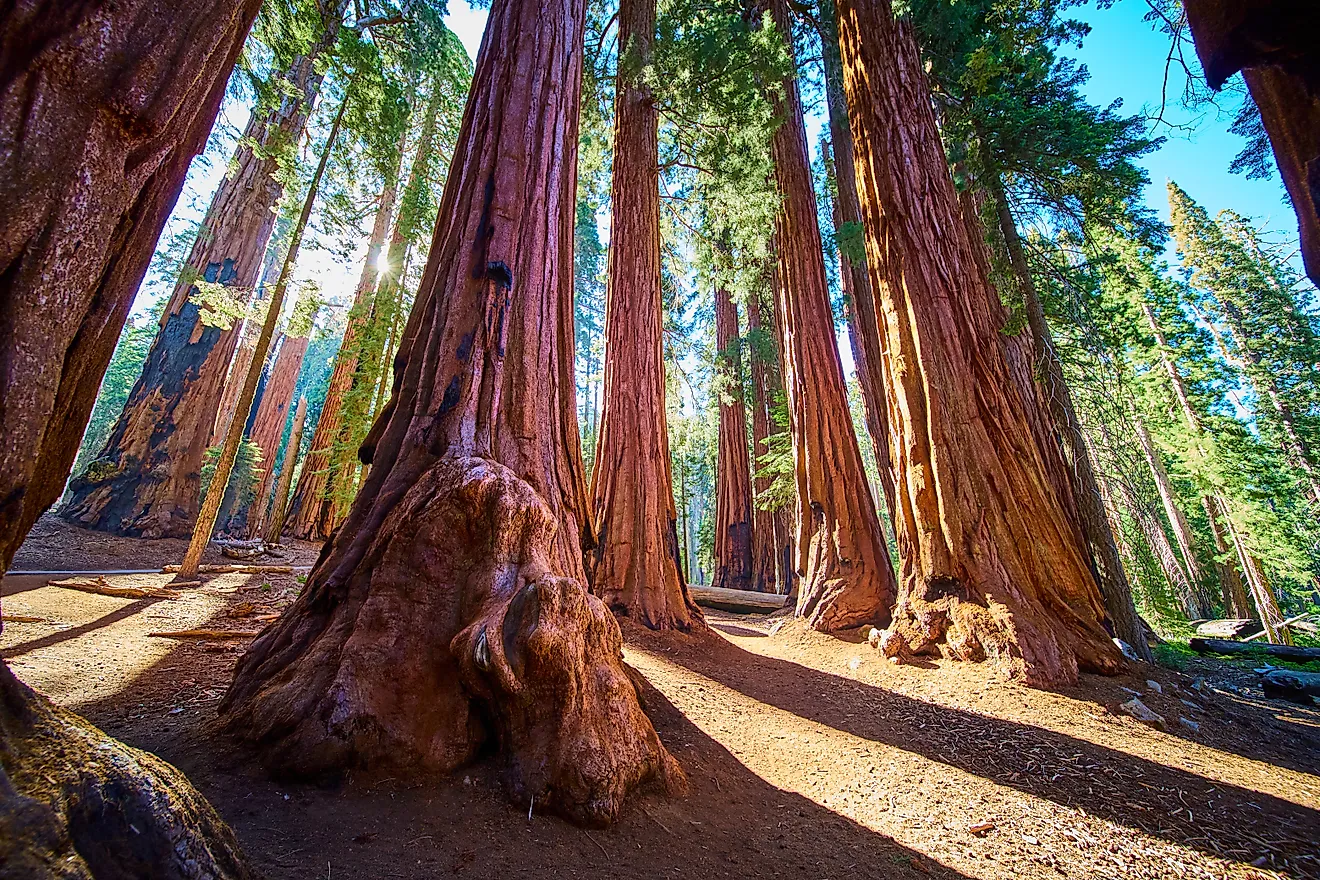
Crescent City sits on the far northern California coast and is the southern access point for Del Norte Coast Redwoods State Park and Jedediah Smith Redwoods State Park, both home to coast redwood groves with trees exceeding 350 feet in height. The Battery Point Lighthouse, built in 1856 on a tidal island just offshore, can be reached on foot only at low tide and runs guided tours during accessible windows. The current town was largely rebuilt after the March 27, 1964 Good Friday tsunami that struck following the magnitude 9.2 Alaska earthquake; the surge killed 11 people in Crescent City and destroyed 30 city blocks.
The Crescent City Harbor Trail and South Beach offer easy access to the coast for paddleboarding and beachcombing, with redwood groves a five-minute drive inland. The Stout Memorial Grove, a 44-acre old-growth section of Jedediah Smith Redwoods, features a flat half-mile loop trail among trees more than 1,500 years old. Tide pools at Pebble Beach hold sea anemones, hermit crabs, and starfish in well-defined intertidal zones.
Cottage Grove, Oregon

Cottage Grove holds six historic covered bridges within a 10-mile radius (more than any other place west of the Mississippi), and the entire downtown sits on the National Register of Historic Places. The town also has a remarkable film resume for its size of about 10,000: Buster Keaton shot The General (1926) on local railroad tracks, Rob Reiner shot Stand By Me (1986) on the Row River line, and John Landis shot Animal House (1978) at the University of Oregon and downtown Cottage Grove (the "Faber College" exterior shots were filmed at the Cottage Grove Armory).
The Row River Trail follows the abandoned Oregon Pacific & Eastern Railway grade for 16 paved miles along Dorena Lake and the Row River, with the Mosby Creek Covered Bridge (1920) and the Currin Covered Bridge (1925) accessible along the route. The All-America City Award designation (received in 1968 and again in 2002) is locally observed via the arched downtown banner. Wildwood Falls, in the Umpqua National Forest about 12 miles east, drops 35 feet through a basalt amphitheater.
Friday Harbor, Washington

Friday Harbor is the seat of San Juan County and the largest community on San Juan Island (population about 2,500), accessible only by ferry from Anacortes, WA, or by small aircraft. The island sits in the Salish Sea between Vancouver Island, British Columbia, and the Washington mainland, with surrounding waters that host the Southern Resident killer whale population (about 75 individuals organized into the J, K, and L pods). Lime Kiln Point State Park, six miles west of downtown, is widely considered one of the best land-based whale-watching sites in the world.
The San Juan Islands Sculpture Park spreads 19 acres on the north side of town with 150 contemporary outdoor sculptures and rotating exhibitions. American Camp and English Camp, on opposite ends of the island, together form the San Juan Island National Historical Park commemorating the 1859 "Pig War" boundary dispute between the United States and Britain that nearly led to armed conflict over a shot pig. San Juan Vineyards on the island's interior pours estate-grown Madeleine Angevine and Siegerrebe varieties.
Joseph, Oregon

Joseph sits in northeastern Oregon's Wallowa Valley directly beneath the Wallowa Mountains, which locals call the "Little Switzerland of America" for the way the granite peaks rise sharply to 9,000-plus feet above a flat-bottomed glacial valley. The town of about 1,100 was named for Chief Joseph (Hin-mah-too-yah-lat-kekt) of the Nez Perce, whose homeland was the Wallowa Valley and whose 1877 retreat across 1,170 miles of mountainous terrain pursuing flight to Canada ended at the Bear Paw Mountains, Montana, 40 miles short.
Wallowa Lake, immediately south of town, sits at 4,372 feet and was carved by the same glacier that shaped the Wallowa range during the last ice age. The Wallowa Lake Tramway climbs 3,700 vertical feet to the summit of Mount Howard at 8,150 feet in 15 minutes, with views into the Eagle Cap Wilderness. Joseph's Main Street holds a dozen bronze foundries (the town is home to the largest concentration of fine-art bronze casting in the country) along with the Josephy Center for Arts and Culture.
Long Beach, Washington

Long Beach sits on the Long Beach Peninsula, a 28-mile spit of sand that runs north from the mouth of the Columbia River and qualifies as the longest continuous beach in the United States. The town of about 1,800 fronts a hard-packed beach wide enough for vehicles, though most of the peninsula's beach driving is restricted to designated areas. Cape Disappointment State Park at the peninsula's southern tip preserves both the 1856 Cape Disappointment Lighthouse and the 1898 North Head Lighthouse, plus the Lewis and Clark Interpretive Center marking the November 18, 1805 arrival of the expedition at the Pacific.
The Discovery Trail, an 8.5-mile paved multi-use path between Ilwaco and Long Beach, follows Lewis and Clark's path with interpretive sculptures. The Willapa National Wildlife Refuge, on the peninsula's eastern shore facing Willapa Bay, protects 17,000 acres of salt marsh and tidal flats and is one of the most productive shellfish-growing estuaries in the country. The annual Washington State International Kite Festival, third week of August, fills the sky with team kite flyers from around the world.
Mazama, Washington

Mazama sits at the north end of the Methow Valley in north-central Washington, on the dry east side of the North Cascades crest, where the Cascade rain shadow keeps annual precipitation under 20 inches in a region where the western slopes get over 100. The result is open ponderosa pine forest and meadow rather than the dense conifer cover of the Cascades' wet side. The town is small enough (population about 200) that the Mazama Store anchors both the post office and the unofficial community center.
The Methow Valley Sport Trails Association maintains 120 miles of groomed cross-country ski trails in winter (the largest groomed Nordic system in North America by mileage) that convert to hiking and mountain-biking trails in summer. The Methow River runs whitewater above Mazama and converts to walk-and-wade fly water for native rainbow trout below town. The North Cascades National Park's South Unit and the Pasayten Wilderness both border the valley to the north and west.
Port Townsend, Washington

Port Townsend sits on the northeast tip of the Olympic Peninsula at the entrance to Admiralty Inlet, where the Strait of Juan de Fuca meets Puget Sound. The Victorian-era downtown is one of only three Victorian seaport National Historic Landmark districts in the country (the other two are Cape May, New Jersey, and Galveston, Texas), with hundreds of original 1880s-1890s buildings still in commercial use along Water Street and Washington Street.
Fort Worden State Park, on a bluff at the town's north edge, occupies the 1900s-era coastal artillery fort that defended Puget Sound through both World Wars and now serves as a working state park with conference center, beaches, and the Marine Science Center on the pier. The Wooden Boat Festival, held the first weekend after Labor Day every year since 1977, is the largest gathering of wooden boats in North America. The Olympic Peninsula's Hurricane Ridge, Hoh Rainforest, and Pacific coastline all lie within a two-hour drive west.
Sequim, Washington

Sequim sits squarely inside the Olympic rain shadow on the north Olympic Peninsula, which means roughly 16 inches of annual rainfall (less than Phoenix, Arizona) when the rest of western Washington gets 40 to 100 inches. The dry climate supports commercial lavender farming on a scale unusual for the region; the Sequim Lavender Festival each third weekend in July draws crowds to the 30-plus lavender farms in the valley, branded the "Lavender Capital of North America." The Olympic Mountains rise 30 miles south to over 7,000 feet and run snow-capped well into summer.
Dungeness Spit, immediately north of town, is the longest natural sand spit in the United States at 5.5 miles and protects an inner bay that is part of the Dungeness National Wildlife Refuge. The New Dungeness Lighthouse at the spit's tip, built in 1857, can be visited by hiking the full 5.5 miles each way at low tide. Olympic National Park's Hurricane Ridge entrance is 30 miles south of Sequim, with subalpine meadows accessible by road in summer.
Snoqualmie, Washington

Snoqualmie Falls drops 268 feet through a basalt horseshoe canyon at the heart of the town of Snoqualmie, about 30 miles east of Seattle. The waterfall is roughly 100 feet taller than Niagara Falls by single drop and is considered sacred by the Snoqualmie Tribe, who consider the mist rising from the falls the prayer connecting heaven and earth. The Salish Lodge & Spa stands on the falls' brink and served as the exterior for the Great Northern Hotel in David Lynch's Twin Peaks (1990-1991).
The Snoqualmie Falls Park lower observation deck (a 0.7-mile out-and-back trail from the upper viewpoint) puts visitors at the foot of the falls for a downstream-looking perspective. The Northwest Railway Museum runs a tourist train from the historic Snoqualmie Depot (1890) through the Cascade foothills past the falls and on to North Bend. Mount Si, the 4,167-foot rocky peak that frames the town's north side, is one of the most-hiked summits in the state.
Yachats, Oregon

Yachats (pronounced YAH-hots) is a small Oregon coast town of about 1,000 in Lincoln County, set where the Yachats River meets the Pacific. The Cape Perpetua Scenic Area immediately south of town holds the central coast's most photographed natural feature: Thor's Well, a 20-foot-deep saltwater sinkhole carved into the basalt shelf that appears to drain the ocean at high tide and erupt with seawater 20 feet into the air at the right combination of swell and tide. The well is best photographed during the hour before and after high tide.
Cape Perpetua itself rises 800 feet above the Pacific and offers the highest viewpoint on the Oregon coast accessible by car, with sightlines on a clear day stretching 70 miles north and 40 miles south. The 804 Trail follows the basalt shelf for two miles between Yachats and the Smelt Sands State Recreation Site, with whale-watching turnouts and tide-pooling stops. The Yachats Music Festival in mid-July fills the town with three days of chamber music in a community-hall venue.
Twelve Towns, Twelve Specific Views
The twelve Pacific Northwest towns above each earn their scenic credentials on one specific landscape feature. A 235-foot basalt sea stack standing in the surf at Cannon Beach. A 268-foot horseshoe waterfall at Snoqualmie. A 20-foot saltwater sinkhole at Yachats. A 5.5-mile natural sand spit at Sequim. A 28-mile continuous beach at Long Beach. A 120-mile Nordic ski trail system in the rain shadow at Mazama. A 1,500-year-old redwood grove at Crescent City. Pick the feature, point the camera.