8 Most Rattlesnake Infested Areas in Iowa
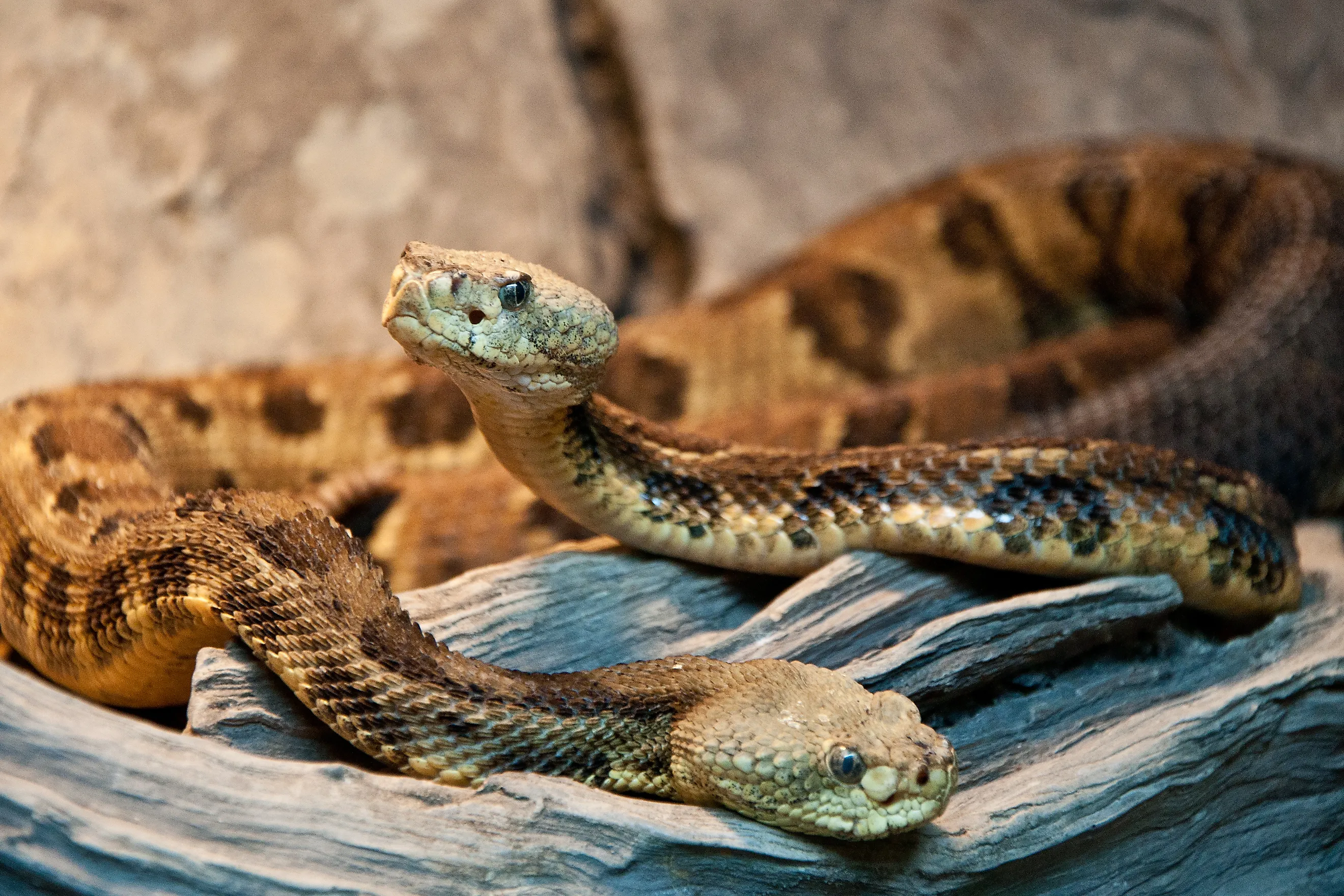
Iowa contains three species of rattlesnakes: the prairie rattlesnake, timber rattlesnake, and eastern massasauga. Of these three, the timber rattlesnake is the most common, found in the eastern parts of the state, particularly near rivers and hilly forests. Eastern massasaugas, meanwhile, are endangered in the state due to the draining of swamps and marshes where they tend to live. Prairie rattlesnakes are even more rare, since there aren't many native grasslands left in Iowa, but they do frequent a large prairie grassland on the western border of Iowa.
As you visit the state forests, caves, riverside bluffs, and the prairie grasslands of Iowa, be on the lookout for rattlesnakes, especially in these eight most rattlesnake-infested areas in Iowa.
Shimek State Forest

Nestled on the state's southeastern border with Missouri on the Des Moines River, the Shimek State Forest is made up of a mixed oak-hickory forest, along with multiple fishing lakes and creeks. At just over 9,100 acres, it's one of the largest state forests in Iowa and contains several units. Timber rattlesnakes are particularly fond of the mixed forests and proximity to the Des Moines River, and have been spotted in the Farmington Unit, a 2,207-acre section of the forest home to several camping grounds, hiking trails, and two fishing lakes.
Timber rattlesnakes aren't the only venomous snake you might find here, as copperheads are known to live in the forest as well. These snakes are more likely to bite than rattlesnakes, as they freeze in place when threatened rather than shake a rattle like a timber rattlesnake. However, bites from copperheads usually don't contain much venom, unlike timber rattlesnakes. A timber rattlesnake bite can become serious if left untreated.
Geode State Park

Located on the southeastern border of Iowa with Illinois, Geode State Park spans about 1,640 acres and is named after the state rock of Iowa. Despite this name, there aren't that many geodes in the park, and its primary feature is Lake Geode, a 150+ acre lake for fishing, boating, and paddleboarding. Surrounding the lake are hilly woodland trails, where deer and timber rattlesnakes hide.
Visitors to Geode State Park have reported multiple run-ins with timber rattlesnakes. Although timber rattlesnakes prefer rockier areas, they can also live in mixed woodlands and stay close to a water source, such as Lake Geode, for drinking and cooling off. Timber rattlesnakes aren't considered watersnakes, but they are strong swimmers. They use their tails to glide through the water, usually to escape predators or to seek new hunting grounds. They are particularly active during the warmer months for mating and hunting.
Mississippi River

The Mississippi River has the largest discharge flow in North America as it flows south from Lake Itasca in Minnesota down to the Gulf of Mexico. It stretches for 2,340 miles (3,766 km) and forms the entire eastern border of Iowa. This river has served as a major transportation hub and water source for millions of people in the United States, supporting over 375 fish species.
The river also serves as a water source for Iowa rattlesnakes. The most common rattlesnake to live by this river, either on river bluffs or in forests around it, is the timber rattlesnake. The environment is also suitable for the rare eastern massasauga. It's smaller than its timber cousin at around 24 to 30 inches (61 to 76 cm) in length, typically gray or light brown with dark blotches along its back and a thick, compact body. These snakes prefer wetter environments, such as wetlands, swamps, bogs, and marshes found in tributaries or creeks running off the Mississippi River. However, the eastern massasauga is similar to the timber rattlesnake in that it generally avoids humans.
Maquoketa Caves State Park

Covering roughly 370 acres in eastern Iowa, Maquoketa Caves State Park has the state's largest concentration of caves. It is part of the larger Driftless region, where melting glaciers from the Ice Age did not drift through. As a result, the park retains its caves and limestone bluff, which are covered by woodlands. These natural features made it a great ecosystem for timber rattlesnakes.
Timber rattlesnakes prefer rocky areas so they can make dens in crevices to stay warm during their winter hibernation months. Sometimes they share these dens with other snake species, including nonvenomous ones. They typically do not enter caves, but they can hide right near the entrance in the underbrush to wait for prey. These snakes will typically eat small lizards, mammals, or other creatures. Although rarer, eastern massasaugas have also been reported to live in the park.
Loess Hills State Forest

The Loess Hills State Forest, which covers roughly 11,600 acres across several units, is located in western Iowa and is one of the newest public forests in the state. It is situated on the Loess Hills, a ridge of loose, wind-deposited soil that stretches across Iowa, Missouri, Nebraska, and Kansas. This soil was formed during the last ice age as glaciers ground rock into fine particles, which were then blown by the wind. Although much of the forest is woodlands, there are several prairie grassland regions and a rocky canyon called Preparation Canyon State Park, from where prairie rattlesnakes are known to live.
Prairie rattlesnakes have the largest range of any rattlesnake in the U.S., stretching from southern Canada to the border with Mexico. They tend to lurk in drier areas, especially prairie grasslands, but they can also escape into rockier regions as well. During hot summer days, they may only come out at night. Their venom is quite complex and dangerous, targeting their prey's bloodstream, tissue, and nervous system.
Pikes Peak State Park

Just like the Maquoketa Caves, Pikes Peak State Park spans about 1,000 acres and sits firmly within the Driftless region of Iowa. Overlooking the Mississippi River, it has some of the largest river bluffs in the state, rising to 500 feet (152 meters) and composed of Paleozoic-era dolomites. Some of the features here were made millennia ago by Woodlands Native Americans, who created mound effigies in the shape of animals. With its location along the Mississippi River, bluffs, and woodlands, the state park is a known timber rattlesnake habitat.
During the winter, timber rattlesnakes may share a den with a black rat snake. These snakes used to be called "black pilot snakes" because they were allegedly said to guide timber rattlesnakes to their dens to rest for the winter.
Pammel State Park

Located near the childhood home of John Wayne in Winterset, Pammel State Park spans about 4,000 acres and is one of Iowa's oldest parks. Established in 1928, it includes a limestone ridge called the backbone, fields of wildflowers, and ancient oak trees along the shores of the Middle River. The cowboy John Wayne would have easily recognized one of this park's most venomous residents: the timber rattlesnake.
Although these snakes prefer to hide in the woods or in crevices in the backbone ridge, they have been spotted out on gravel roads in the middle of the park by law enforcement and hikers alike. These snakes emerge into sunny spaces like roads and trails to bask during cool weather. Thankfully, these snakes are easy to spot in the open as they can grow up to 5 feet (152 cm) long, with heavy bodies, keeled scales, and distinct dark crossbands over a gray, tan, or yellowish base color.
Broken Kettle Grasslands Preserve

The Broken Kettle Grasslands Preserve contains the largest native prairie in Iowa. Sitting in the Loess Hills, it harkens back to the older days of the Great Plains before settlers came in, with its vast grassy hills. Bison were reintroduced to the area in 2008, and today more than 200 bison roam the preserve. This open terrain provides ideal cover for another rare creature: the prairie rattlesnake, which is usually light brown or greenish with darker blotches and can reach around 3 to 4 feet (91 to 122 cm) in length, blending easily into dry grass.
First discovered in the preserve in 1999, the prairie has maintained a population of these rattlesnakes ever since, including pregnant ones, meaning there is enough of a population here to sustain growth. The Nature Conservancy of Iowa stated that this rattlesnake's presence is proof that Iowa is beginning to reclaim some of its original natural ecosystems, where snakes like this once flourished. Hikers going through this prairie should watch their step to avoid stepping on these snakes.
Watch Where You Step In The Hawkeye State
Rattlesnakes aren't present throughout all of Iowa, but they do show up in large numbers in small pockets of land in the state, especially in the hilly Driftless region, out on the prairies, or hidden in the swamps. Many of these rattlesnakes are found in popular places in Iowa, such as Pikes Peak State Park or out in the Loess Hills. The best way to handle these rattlesnakes is to avoid them. If you see them, don't get closer or attempt to handle them, as they are much more likely to strike if they feel threatened.