The Tallest Tree East Of The Mississippi
In 2011, a tree climber hung from a rope high above the forest floor in the Great Smoky Mountains and dropped a measuring tape straight down the trunk of a tuliptree. When the tape touched the ground, it read 191.9 feet. That tree, now known as the Fork Ridge Tuliptree, is the tallest known tree east of the Mississippi River, and the tallest native broadleaf tree ever accurately measured in temperate North America. It grows on the North Carolina side of Great Smoky Mountains National Park, a national park rather than a national forest, where its sheltered mountain cove has been protected from logging for generations. Its closest rival, a famous white pine, grows only a few valleys away.
The Fork Ridge Tuliptree

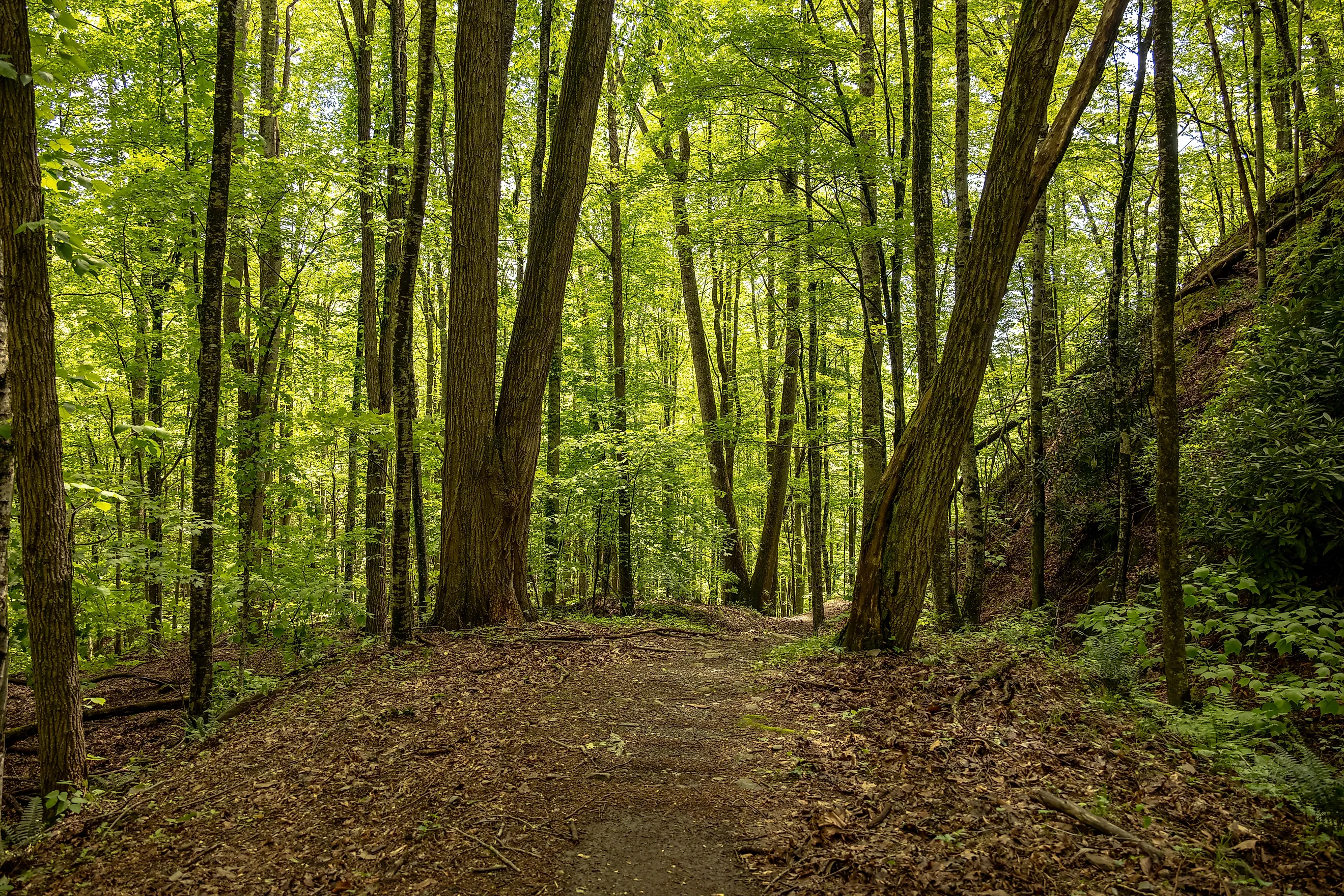
The tuliptree, also called the tulip poplar or yellow poplar, is a fast-growing hardwood named for its cup-shaped, orange-and-green spring flowers. In the rich, damp coves of the southern Appalachians, it shoots straight up toward the light, often without a branch for the first several stories of trunk. The Fork Ridge giant is an extreme example. Its lowest branches sit roughly 85 feet off the ground, and its trunk measures more than 5 feet across at chest height.
The tree was found by members of the Eastern Native Tree Society, a group of volunteer tree hunters who measure trees far more precisely than older champion-tree records ever did. Working with a National Park Service study team, they used laser scans of the forest canopy to pick out the tallest crowns, hiked in to confirm them, and then climbed the tree to measure it by hand. It was the first tuliptree ever accurately measured above 190 feet.
The Boogerman Pine

Before the tuliptree took the crown, the title belonged to an eastern white pine in the park's Cataloochee Valley. Known as the Boogerman Pine, after the nearby Boogerman Trail, it was measured at 207 feet (63.1 m) in August 1995, the tallest accurate height recorded for any tree in the eastern United States in modern times. Just weeks later, the remnants of Hurricane Opal snapped off its top.
The damaged pine still stood about 189 feet (57.6 m) tall and held the eastern record for more than 15 years, until the Fork Ridge Tuliptree edged past it. Hikers on the Boogerman Loop Trail still walk among the big old trees of this part of the park, though the most famous giants are easy to miss when everything around them is enormous.
The Pines Of The North

Farther north, white pines are the tallest trees in the forest. According to Eastern Native Tree Society co-founder Robert Leverett, the group has measured a white pine in Pennsylvania at 184.2 feet (56.1 m), the tallest tree of any species in the Northeast. In 2023, a tree hunter in New York's Adirondacks found a white pine nicknamed "Little Foot" at just over 174 feet (53 m), the tallest recorded tree in the state.
These pines are impressive, but they are survivors of a taller past. Historical accounts suggest that a few white pines in colonial times exceeded 200 feet, and the tallest, straightest ones were prized as ship masts. Most of the East's original forests were logged long ago, which is why today's record trees tend to grow in protected parks and preserves where old forests had the chance to recover.
Why The Smokies Grow Giants

The Great Smoky Mountains have nearly everything a tall tree needs. Heavy rainfall, deep, moist soils, and sheltered coves that block the wind let trees grow for centuries without being knocked down. Large stretches of the park also escaped heavy logging before it was protected, leaving some of the most extensive old forests in the East. The park is home to more giant tuliptrees than anywhere else, including the Sag Branch Tuliptree, the largest tuliptree known by volume.
Small Next To The West, Giant In The East
Even at nearly 192 feet, the Fork Ridge Tuliptree would be dwarfed by the coast redwoods of Northern California, where the tallest tree on Earth tops 380 feet (116 m). But redwoods are conifers that grow in a narrow band of foggy Pacific coastline, and no eastern species comes close to their height. Measured against the forests it actually grows in, the Fork Ridge giant is a true outlier, a broadleaf tree towering over the oaks, maples, and hickories around it. And because the most careful measuring in the East has only been happening for a few decades, the next record holder may still be waiting in a Smoky Mountain cove that no tree hunter has reached yet.