5 Best Natural Wonders To Visit In Hawaii This Year
Because of its volcanic origins and geographic isolation, Hawaii supports landscapes and natural wonders that cannot be experienced anywhere else in the United States. Individuals can walk along rugged fields of lava and watch a volcano erupt at Hawai’i Volcanoes National Park, go snorkeling in the crystal-clear waters of Kealakekua Bay State Historical Park, and swim among tropical fish and turtles, or visit a high-elevation rain forest at Waikamoi Preserve, where wildlife and plants thrive. Each of the locations discussed is diverse and offers a unique perspective on Hawaii’s landscapes.
Kealakekua Bay State Historical Park

Kealakekua Bay State Historical Park is located in Kona and is a significant historical site, also designated as a Marine Life Conservation District. The park is the site of Captain Cook's 1779 arrival, marking the first extensive contact between Westerners and Hawaiians. With free entry, this 180-acre area surrounding the bay is one of Hawaii's most popular places to visit. Walk along the sandy shores of Nāpōʻopoʻo Beach and visit the traditional religious site of Hikiau Heiau, a large stacked rock platform where various ceremonial structures were erected.
Visitors can kayak along the bay or follow the Ka’awaloa Trail to the Ka’awaloa Flats, where the monument of Captain Cook stands tall. Kealakekua Bay spans over 300 acres from Palemano Point to Cook Point, making it one of the largest natural bays on the Big Island and perfect for water activities. As one of the most popular kayaking and snorkeling areas in the world, visitors can find a diverse array of marine life. Go snorkeling to see amazing reefs where tropical fish, coral, and Hawaiian Green Sea turtles gather. For clearer and calmer waters, visit during September to October, when snorkeling is at its peak.
Haleakalā National Park

Natural beauty is always present at Haleakalā National Park in Maui. This 33,000-acre expanse offers dramatic ecosystems sectioned off into two main districts. The Summit District of the park is on the Haleakalā volcano, with a stunning landscape featuring rich colors and deep valleys. Visitors can spend time searching the native shrubland for rare birds, hike the cinder desert, or head towards the over 10,000-foot-tall summit crater. The volcano's summit is home to Hawaiian plants and animals, including endemic and rare species such as the Nēnē and the endangered Kiwikiu bird.
The second area of the park is the remote Kīpahulu District, where visitors can walk along the Pipiwai Trail. This famous trail is approximately 4 miles round-trip and takes hikers past large banyan trees, a beautiful bamboo forest, and the Makahiku and Waimoku Falls. For hundreds of years, the area has been inhabited by Indigenous peoples and continues to be an important part of their culture. For clearer and warmer weather, perfect for hiking, visit the park between April and October.
Hawaiʻi Volcanoes National Park

Home to one of the most active volcanoes in the world, Hawaiʻi Volcanoes National Park provides access to interesting biological, geological, and cultural landscapes. This massive park, encompassing approximately 355,000 acres, reaches over 13,000 feet above sea level. The two volcanoes, Mauna Loa and Kīlauea, are often the main draw of this national park, with Mauna Loa standing at 13,680 feet as the largest active volcano on Earth by volume. At the same time, Kīlauea remains one of the most continuously active volcanoes in the world. Visitors can experience contrasting landscapes and environments, or those seeking more excitement can explore lava tubes and craters, ash-covered deserts, and rugged lava fields.
The best months to visit the park are from April to May, when there is less rain and fewer people. Head over to one of the eruption-viewing locations along Crater Rim Drive or to one of the many overlooks scattered throughout the park, where you can get a stunning view of nature in action. The park includes over 130,000 acres of legally designated wilderness, perfect for backcountry hiking. Day hiking is a popular activity in the park, with several key areas attracting visitors. Hike to the top of the Puʻuhuluhulu Cinder Cone and explore the 1969-1974 Maunaulu lava flows. Examine the largest group of petroglyphs in Hawai’i, the Pu’uloa Petroglyphs, and view steam vents along Crater Rim Trail.
Waikamoi Preserve

One of the few remaining old-growth forests in Maui, the Waikamoi Preserve is a stunning natural area. At 8,951 acres, the area is one of the largest private nature preserves in Hawaii, featuring an unspoiled koa-ʻōhiʻa forest, alpine shrubland, and a high-elevation rainforest. The Nature Conservancy’s (TNC’s) Waikamoi Preserve was developed to protect the island's source of fresh water and to provide a sanctuary for native Hawaiian species, plants, and birds. This important sanctuary protects hundreds of rare species of plants, as well as animals and birds.
The preserve is home to 12 native bird species, including several endangered species, such as the Kiwikiu and the Iiwi. Additionally, the forest is home to 63 rare plant species, including native lobelia, locally known as ʻōpelu. While the preserve is on private property, visitors can book a guided hike with conservancy staff, which includes hiking for endangered species, educational tours, and bird tours. For fewer crowds, the best time to visit the preserve is in September.
Wailuku River State Park

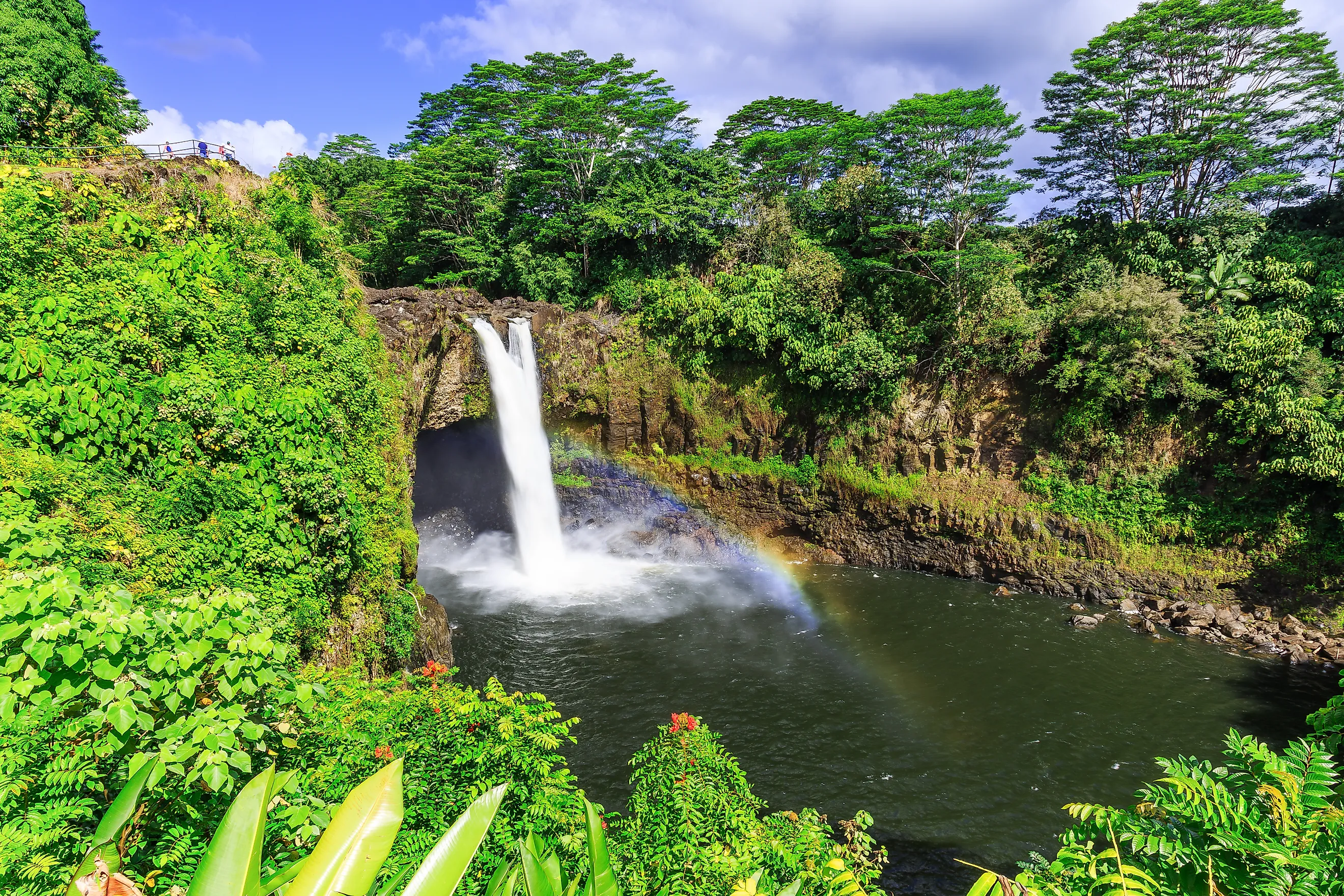
Located in Hilo, along the longest river in Hawaii, the Wailuku River, is the expansive and beautiful Wailuku River State Park. Visitors to the park are met with scenic, geologically significant views of rich jungles, waterfalls, and rock formations. The park comprises two areas: Rainbow Falls and the Boiling Pots. The 80-foot Rainbow Falls, also called Waiānuenue, is known for the rainbows that form from its mist, creating a beautiful, photographic experience. The best time to visit the park is in the morning from October to May, when the mist from heavy rain creates an ideal atmosphere for a rainbow to form.
Another waterfall here is Peʻepeʻe Falls, located further up the river and difficult to reach, but worth the effort. This multi-tiered waterfall provides dramatic views, winding into the second section of the park, the famous Boiling Pots pools. The Boiling Pots area consists of a number of large terraced pools that appear to be boiling, due to the bubbles that form and rise to the surface. A series of cascading waterfalls drift along hexagonal columns formed by slowly cooling basalt lava.
Naturally Beautiful Wonders In Hawaii
Considered one of the most isolated island regions in the world, Hawaii is an ideal location for exploring a number of natural wonders. Filled with important natural resources and composed of a series of islands, the state has numerous areas that have yet to be fully explored. With active volcanoes, tropical rainforests, beautiful beaches, and sunny weather, visitors are greeted with year-round activities and attractions that make Hawaii a top vacation destination.