6 Strange Discoveries About Dinosaurs You Weren’t Told
If you’re reading this, chances are you had a dinosaur phase as a kid. It’s no surprise that so many of us did. There is an undeniable mystique to the idea of a class of creatures once unchallenged in its dominance of the world being wiped out very abruptly. As a result, countless films, novels, and other creative reimaginings have paid tribute to the childlike wonder dinosaurs inspire, but not always very accurately. In reality, dinosaurs we encounter as skeletons in museums were far stranger creatures than Hollywood’s brightest minds would have us believe.
These six facts about dinosaurs may not have made it into the latest Jurassic Park movie, but they’re backed by current paleontological evidence.
Fluffy, Feather-Covered Dinosaurs Looked More Like Giant Birds Than Lizards

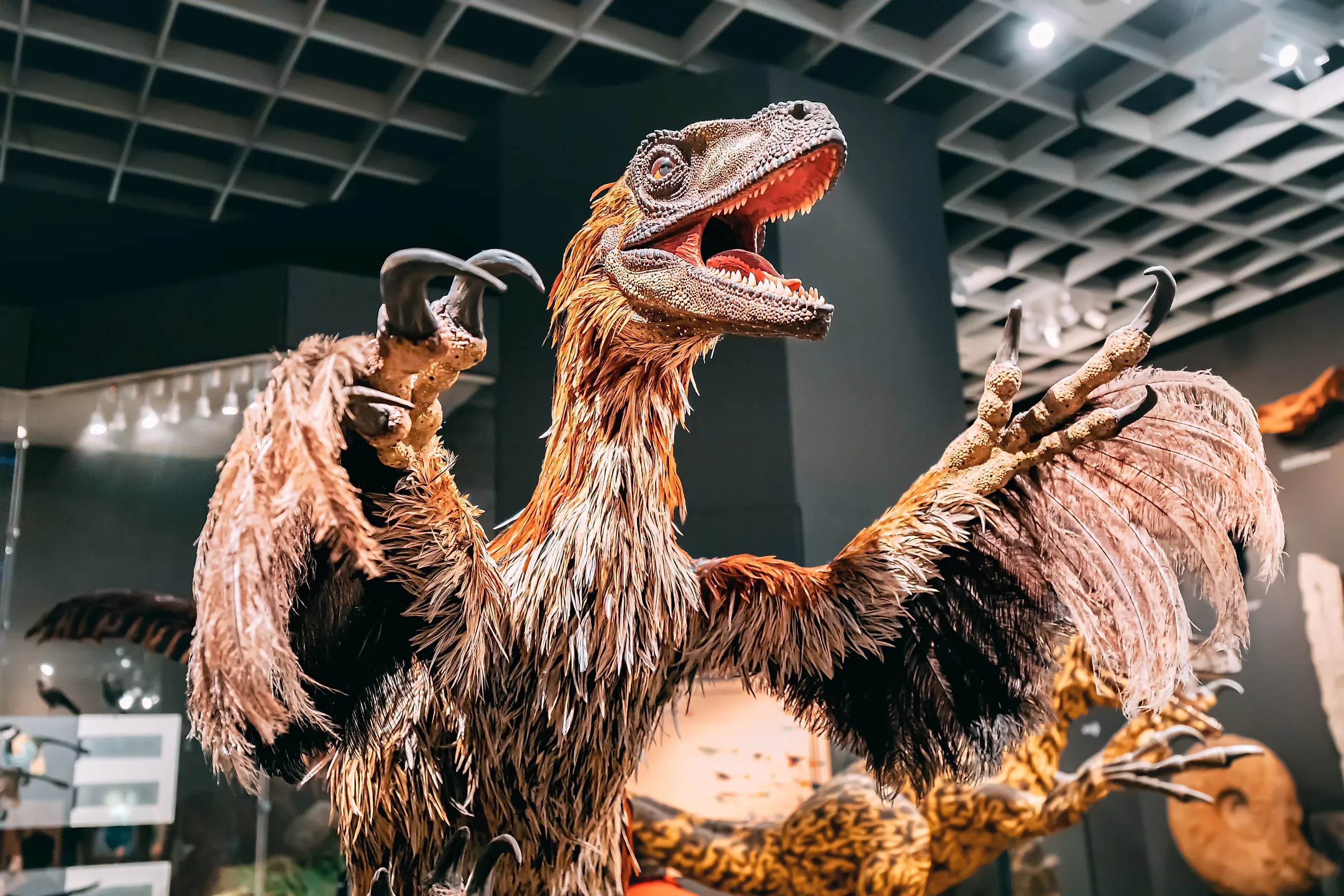
Dinosaurs are often depicted in art as scaly, armored lizards, but those depictions leave dinosaurs a little underdressed. Evidence now suggests that many dinosaurs may have had feathers. Some dinosaur fossils have been found with feathers still attached, implying that at some point in their lives, they likely had feathered coverings. Given these fossil finds, scientists have hypothesized that far more dinosaurs than previously assumed may have been feathered.
Dinosaurs Lived in Freezing Arctic Darkness Instead of Just Steamy Jungles
We often picture dinosaurs as tropical creatures inhabiting lush forests carpeted with ferns, but that image is incomplete. Dinosaur fossils have been found on every continent, including Antarctica. This means dinosaurs also lived at high Arctic latitudes. Fossils from multiple dinosaur species have been discovered north of the Arctic Circle in Alaska.
There is one important caveat. During the period when dinosaurs lived there, Antarctica’s climate was much warmer than it is today. Its ecosystems more closely resembled temperate, swampy rainforests. Dinosaurs of the Arctic adapted to prolonged darkness and freezing winters, while Antarctic dinosaurs experienced prolonged darkness in a much milder, ice-free climate.
Some of the Most Famous Dinosaurs Never Encountered Each Other

Dinosaurs walked the Earth for about 165 million years. That span can be difficult to grasp, so it helps to put it in perspective. The Tyrannosaurus rex lived closer to humans than to Stegosaurus. Stegosaurus lived around 150 million years ago, while T. rex appeared about 68-66 million years ago. That represents a gap of roughly 80 million years.
While this is not the only example of such separation across geologic time, it clearly illustrates a point that is often overlooked. Many of the most famous dinosaurs never lived at the same time, and their lives would not have overlapped at all.
Most Dinosaur Fossils Aren’t Bones Anymore

You may wonder why we cannot clone dinosaurs as depicted in Jurassic Park if so many fossils exist. While bones do contain DNA, most dinosaur fossils are permineralized bone. Fossilization is the process by which organic material is gradually replaced with minerals. As a result, most dinosaur fossils are often permineralized bones, and sometimes molds/casts or impressions left where bones once existed. This means we do not have recoverable dinosaur DNA preserved in fossils as many people assume.
Real T. rex couldn’t Have Roared as they do in the Movies

The Tyrannosaurus rex is the villain of many dinosaur movies and has captured the public’s imagination more than almost any other species. As a result, it is easy to form a mistaken impression of how this animal behaved. One key discovery is that the powerful roar commonly attributed to T. rex is not supported by current evidence.
Studies comparing fossil throat anatomy with that of dinosaurs’ closest living relatives suggest that non-avian dinosaurs likely did not have a bird-like syrinx. Instead, they probably produced sounds using larynx-based mechanisms more similar to those of crocodilians. This makes the lion-style roar often portrayed in movies uncertain. Large theropods may have produced low-frequency booms, rumbles, hisses, or other calls, including crocodilian-like low rumbles, rather than the familiar cinematic roar.
New Dinosaurs Are Discovered Every Two Weeks On Average

There are about 700 species of dinosaurs currently known to science, which already represents a substantial number. However, it is likely only a fraction of the species that lived during the roughly 165 million years dinosaurs existed. On average, paleontologists formally name a new dinosaur species about every two weeks. This suggests a vast number of species remain undiscovered. Some of these finds come from previously unknown groups of dinosaurs, indicating that the scientific understanding of dinosaur diversity is still incomplete.
What the Evidence Reveals
Sometimes, finding out the truth behind fictional tropes we accept as fact ends in disappointment. In the case of dinosaurs, the opposite is true. Scientific evidence shows that dinosaurs were far stranger than their portrayals on the silver screen. Despite their cultural fame, much about how dinosaurs lived, sounded, and adapted to their environments is still being uncovered.
The reality of dinosaurs isn’t quite what we imagine it to be, but it continues to evolve as new discoveries emerge.