Why Wolves Disappeared From Most National Parks
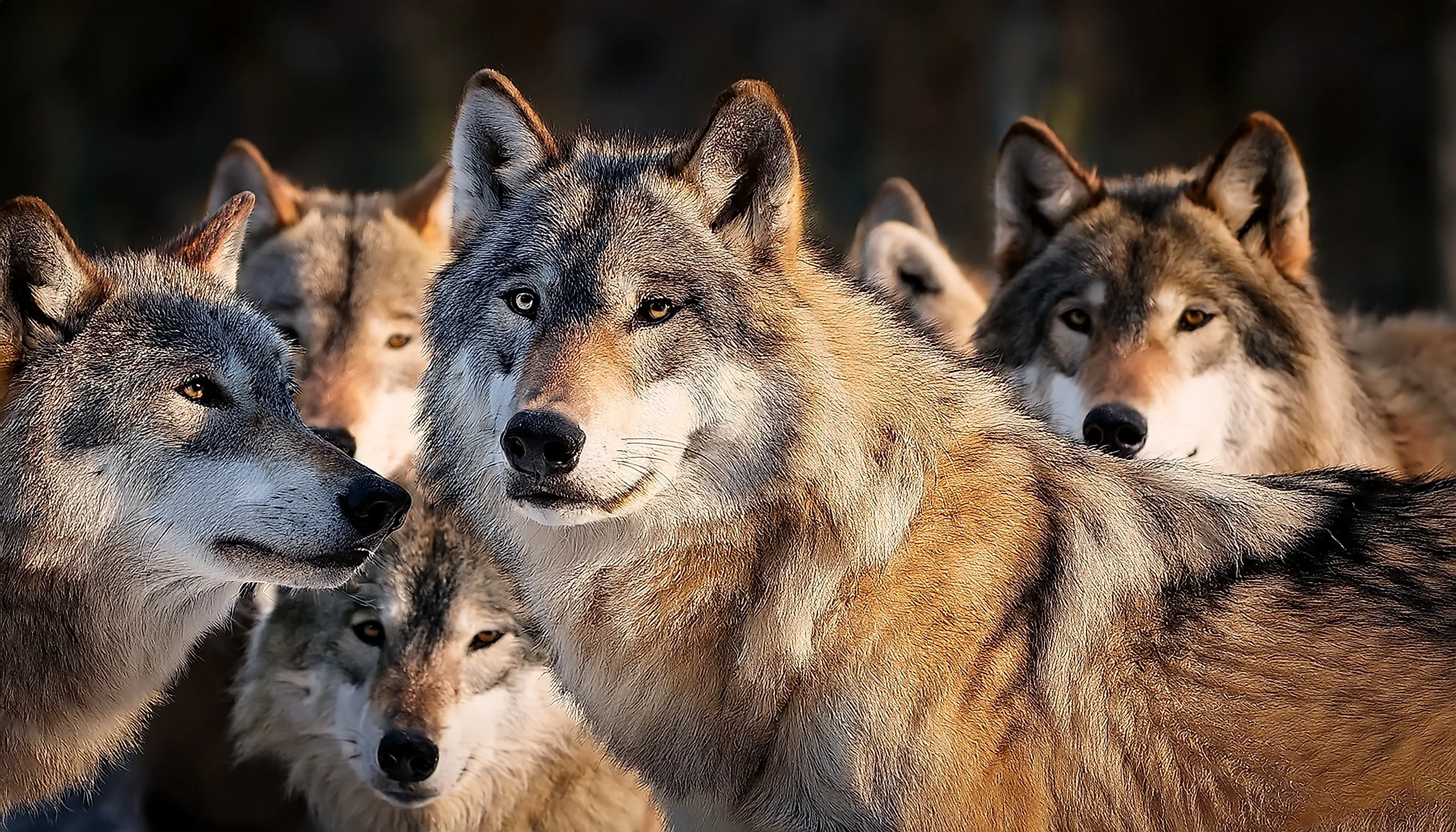
There are a near-endless number of species that inhabit the National Parks of the United States, large and small, harmless and dangerous, and everything in between. Perhaps one of the most well-known and celebrated animals that are native to the United States is the majestic wolf. The wolf has long held a significant place within the cultural zeitgeist of Americans as a symbol of the rugged landscape and untouched wilderness that so many people feel a deep connection to. Despite being an animal that is often on the wishlist of many National Park visitors to spot in the wild, the actual chances of running into a wolf are exceedingly rare. This is partially due to their timid nature, which makes them cautious to engage with humans. The main cause, however, is that there are simply so few of them left.
Where Do Wolves Live?

It is estimated that there are only around 16,000 gray wolves that live within the United States. The vast majority of that population, 8,000-11,000, live in Alaska, while the remaining 5,500 are scattered across various regions of the contiguous United States.
These numbers become even more alarming when looking at the not-so-distant cousins of the gray wolf. The red wolf, a species of wolf that is indigenous to the Eastern United States, has had its wild population dwindle to roughly two dozen adults and subadults, plus a dozen or so pups, while about 295 more live in the managed captive population.
The small pockets of gray wolves that do live within the lower 48 states can be found in the American Southwest and Pacific Northwest, but the vast majority inhabit the northern Rocky Mountains and the Great Lakes Region.
Nearly Hunted to Extinction

The somber story of the gray wolf almost perfectly mirrors the tragedy that befell the American buffalo. Both animals were nearly wiped out due to overhunting and poaching, with a few nuances that set the two species apart. However, while most Americans are arguably familiar with the devastation of the buffalo, little is known about the calamity that America's gray wolves were faced with.
Gray wolves experienced a drastic population decline between the 1850s and 1950s that nearly pushed them to extinction. Even though wolves and humans never had a peaceful relationship, the sheer scale at which their populations were devastated is hard to imagine.
By the 1970s, after more than a century of culls, hunting, and poaching, only around 1,000 gray wolves lived within the contiguous United States, most of which clung to the forests of northern Minnesota. In response to the gray wolf being nearly eradicated from the lower 48 states, Congress passed the Endangered Species Act in 1973, and the gray wolf received federal endangered listing the following year, which outlawed hunting it.
Why Were Humans So Hostile to Wolves?

Considering how timid wolves are when coming into contact with humans, what could possibly explain such a hostile attitude towards gray wolves? The hatred of wolves first began with the arrival of European colonists and settlers in the Americas in the early 17th century. Europeans brought with them a certain level of hostility to wolves that had been present in Europe since time immemorial.
This hostility developed over time due to the fact that wolves would often attack and kill the various farm animals that were used by Europeans for food and sustenance. Slow-moving and often defenseless animals such as cows, sheep, and pigs were all ripe targets for packs of wolves to prey on if a farmer let their guard down.
At the time of European arrival within what would later become the United States, it is estimated that as many as 2 million gray wolves lived in America. The clash between the new colonists and the gray wolf population was immediate. Farmers and nearby villagers often hunted wolves as a way to protect their livestock. As early as 1630, the government of Massachusetts placed a bounty on wolves to encourage their removal.
The Push Westward

During the gradual settlement of the Eastern United States, the gray wolf (and red wolf) populations were either killed or slowly pushed westward, far away from cities or towns. Despite taking a serious blow to its overall numbers, there were still thriving wolf populations in the West. This did not last long, however.
By the middle of the 19th century, millions of American settlers and new arrivals from Europe began to flood into the Western United States in search of new land and opportunities. As these new settlers came into contact with the gray wolves that inhabited these regions, a similar response was carried out as previously but at a larger scale and at a faster pace.
Firearms technology had advanced considerably since the early days of American settlement, making it much easier and cheaper to hunt wolves. As large numbers of settlers moved into the vast grasslands out west, the local gray wolf population was tracked down and killed with impunity.
By the late 1800s, large-scale industrial cattle farming was beginning to take form, which called for even larger grazing areas for livestock. In 1885, the federal government created the Division of Economic Ornithology and Mammalogy, the agency that would become the Bureau of Biological Survey in 1905. Its research, conservation, and regulatory work carried on, but predator control grew alongside it as ranching interests pressed for the removal of wolves. In 1929 the bureau created a dedicated Division of Predator and Rodent Control, and large-scale extermination became one of its central functions.
These large-scale, government-assisted hunts were carried out regularly well into the middle of the 20th century with such devastating effects that gray wolves in the contiguous United States became virtually extinct. National parks were not spared either. In Yellowstone, perhaps the most famous national park of all, the last wolf pack was killed in 1926, which ended any functioning population there. Individual wolves were reported in the years that followed, and one was recorded killed in the park as late as 1944.
Conservation Efforts
Since the intervention of Congress in the 1970s, the gray wolf population has started to steadily increase. Considering that there were only around 1,000 wolves left in the lower 48 states just 50 years ago, the current wolf population of 5,500 is nothing to shrug off.
The conservationist movement has been a success, no matter how slow and difficult the progress has been. In the mid-1990s, Canadian gray wolves were reintroduced into Yellowstone National Park nearly 70 years after the last pack was killed there. Fourteen came in 1995 and another 17 in 1996, released as several separate social groups rather than one, with more wolves brought down from Montana in 1997.
Today just about every sizable gray wolf pack in the contiguous United States is carefully monitored and looked after by scientists and conservation officers. If trends continue, there is no reason that the wolf population should not hit the 10,000 mark sometime this century.