The Only National Park With A Commercial Airport Inside It
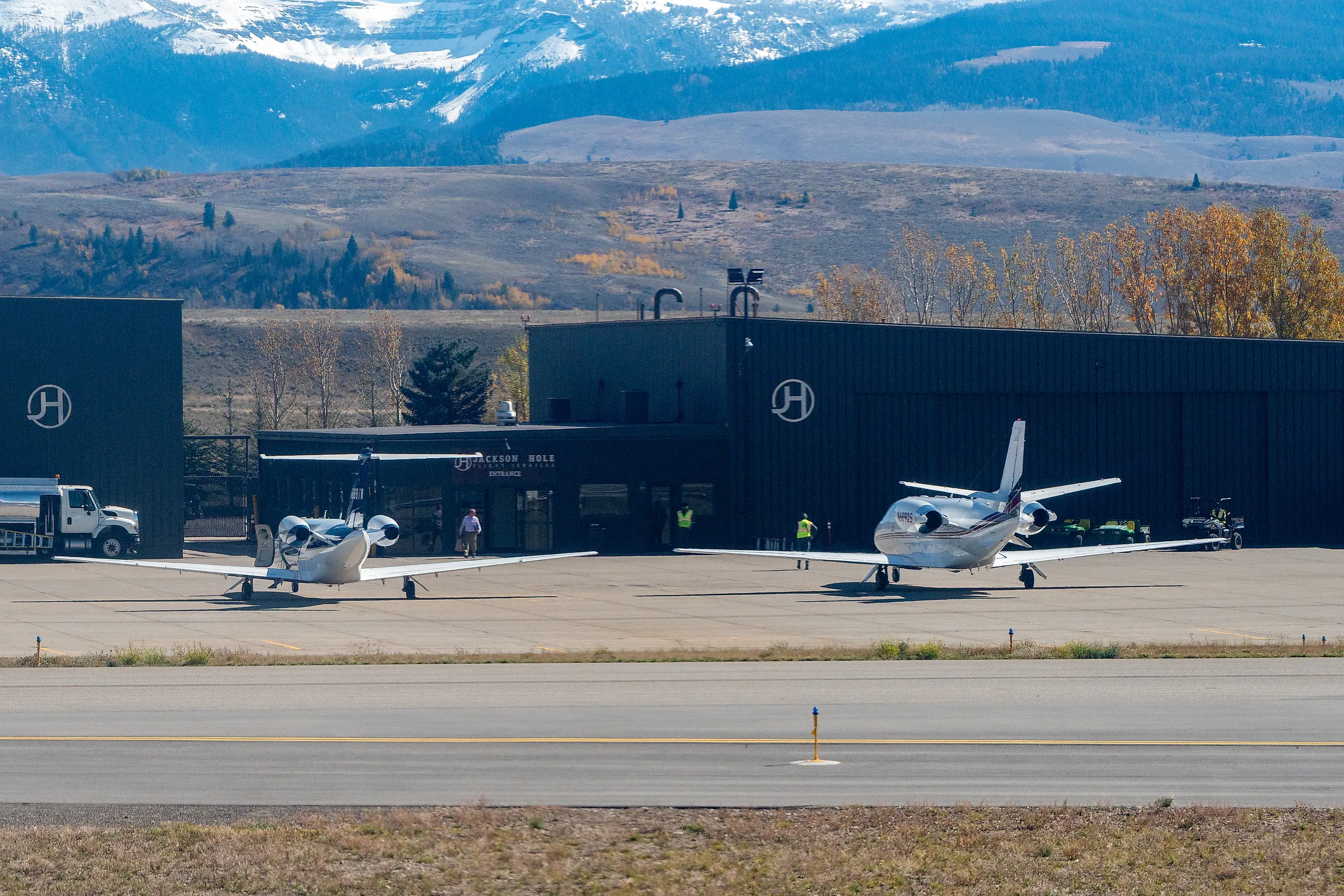
Wyoming's Grand Teton National Park is the only one of America's 63 national parks with a commercial airport within its boundaries. Jackson Hole Airport occupies 533 acres of federal park land, and in 2025 alone, more than 580,000 passengers took off from its single 6,300-foot runway.
The runway came first, with the park evolving around it, but not without plenty of arm-twisting and negotiation. Here is how a municipal airfield on the sagebrush flats ended up inside Grand Teton, and the only one of its kind in the United States.
How A Runway Ended Up In A National Park

The first landing field on the site was a dirt strip that the Town of Jackson and Teton County built in the 1930s on the sagebrush flats below the Teton Range. One local pilot of the period recalled having to buzz his house to get his wife to drive horses off the runway. The same pilot described a corral where airplanes were parked to stop cows from chewing on them.
In 1941, the Civil Aeronautics Administration, the government agency that preceded the Federal Aviation Administration (FAA), approved a municipal airport on a mix of public land and private land owned by the Snake River Land Company. John D. Rockefeller Jr. had set up the company to buy 35,000 acres of the valley without revealing his name, with the aim of donating the land for a park. Western Airlines began flying here in 1941.
At that point, none of this land was in a national park. The original Grand Teton National Park, created in 1929, covered 96,000 acres of mountains and the six lakes at their base, stopping short of the valley floor. However, that changed in March 1943 when President Franklin D. Roosevelt proclaimed the 221,000-acres Jackson Hole National Monument, which included the airport. Wyoming sued to overturn the proclamation but lost, and Congress passed a bill to abolish the monument, which Roosevelt vetoed.
The dispute ended in September 1950, when President Harry Truman signed the law that merged the monument and the 1929 park into a single 310,000-acre national park. The airport was now inside it, and in 1955, the Park Service issued a 20-year special use permit that let the town and county keep operating it. The two governments created the Jackson Hole Airport Board in 1968.
Keeping The Airport Small

Short-term permits soon became a problem as air traffic grew, largely because they conflicted with FAA requirements for funding airport improvements. That all changed in 1982 when the Department of the Interior recognized the Jackson Hole Airport Board as the airport's sole proprietor.
A year later, the two signed a use agreement with a 30-year term and two ten year renewal options, which the Park Service has since extended to 2053.
The current arrangement, though, has its limits. An earlier agreement, signed in 1979, had already cut the airport's footprint from 760 acres to 533 and reconfigured the site to allow a runway extension to 8,000 feet, which has never been approved. The runway remains 6,300 feet long, and the decision to extend the agreement to 2053 restricted growth outside the existing boundary.
Noise is the other half of the bargain. The 1983 agreement imposed what the airport describes as more stringent noise limits than those required at any other commercial airport in the United States.
In 2007, an act of Congress allowed the airport to ban Stage 2 aircrafts, the older and louder generation of jets, and a flight path developed with the FAA cut the time arriving aircrafts spend over noise-sensitive parts of the park.
The airport also asks all operators not to land or take off after 9:30 p.m. or before 7:00 a.m., a curfew that's voluntary. Its Fly Quiet program grades every commercial and private operator each quarter on aircraft type, flight procedures, and curfew compliance, and publishes the names of the top performers.
How Low Can You Go

The clearest sign of the park's influence is the height of airport buildings. The terminal at Jackson Hole Airport is limited to 18 feet, preventing it from blocking views of the Teton Range. As traditional jet bridges would exceed this height restriction, passengers are required to embark and disembark by mobile ramps and cross the apron on foot with the mountains in full view.
The current terminal dates from an expansion that began in June 2009 and doubled the size of the building. To gain interior volume under the height cap, the designers used queen post trusses, a wood and steel roof structure that spans the hall without deep beams, and put mechanical equipment in an enlarged basement. The runway itself was rebuilt in 2022 during a 78-day closure of the entire airport.
Lighting is controlled as well. In April 2025, DarkSky International, the nonprofit that certifies places for limiting light pollution, named the airport an Urban Night Sky Place, making it the first airport in the world to be certified as such. Nearly 200 fixtures on the public-facing side of the facility were retrofitted with lower-intensity, downward-facing lights in under a year, while runway and taxiway lighting continues to meet FAA standards.
Keeping Things Natural
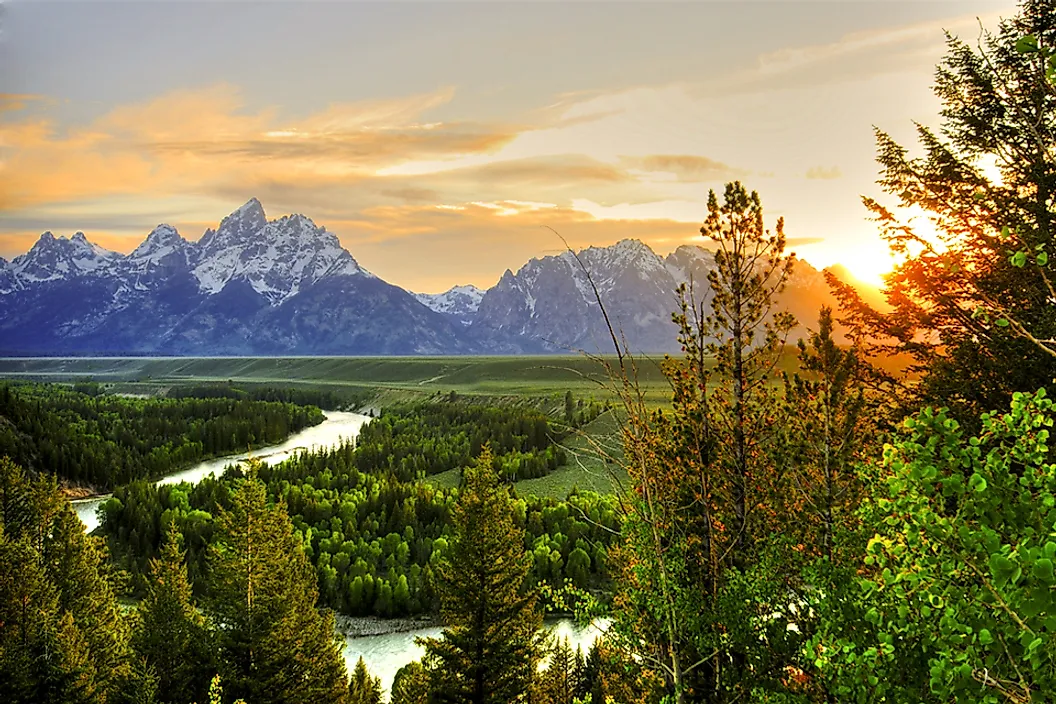
Living with the park's wildlife is all part of daily operations at Jackson Hole Airport. Greater sage-grouse, a ground-nesting bird native to the surrounding sagebrush flats, have long had a spring mating ground beside the runway, with warnings issued to pilots from April through October.
Since 2019, the airport has spent at least $680,000 restoring grouse habitat elsewhere in the park, and biologists have deployed robotic decoys to lure the birds to a safer site.
The sagebrush flats around the airport are also a habitat for moose, elk, and pronghorn, and travelers wanting to learn more about them can take the short drive north to Moose, the small community where the park has its headquarters. Here, the Craig Thomas Discovery and Visitor Center also has exhibits on wildlife migration, the park's landscape, mountaineering history, and Indigenous tribes, and issues backcountry and boating permits.
A Tenant Of The Park
While having a major commercial airport in a national park may not seem ideal, it's a situation that Jackson Hole Airport and Grand Teton National Park have made work. What keeps the arrangement alive is the fact that it's all based on a lease with terms including a fixed 533-acre footprint, an 18-foot height limit, a voluntary overnight curfew, and what the airport calls the strictest noise regulations of any U.S. commercial airport. It's a unique arrangement that no other national park or airport has ever emulated.