The National Parks Where The Crowds Never Came Back
Seven national parks drew bigger crowds in an earlier year than they drew in 2025. At one, a six-inch motor shaft sheared apart and stopped the elevator that had carried visitors underground since 1955.
At another, two hurricanes came ashore in a single season and closed the only lodging inside the park. At a third, five lightning fires crossed more than half the acreage in seven years. Every figure below is a National Park Service recreation-visit count.
Haleakalā National Park, Hawaii

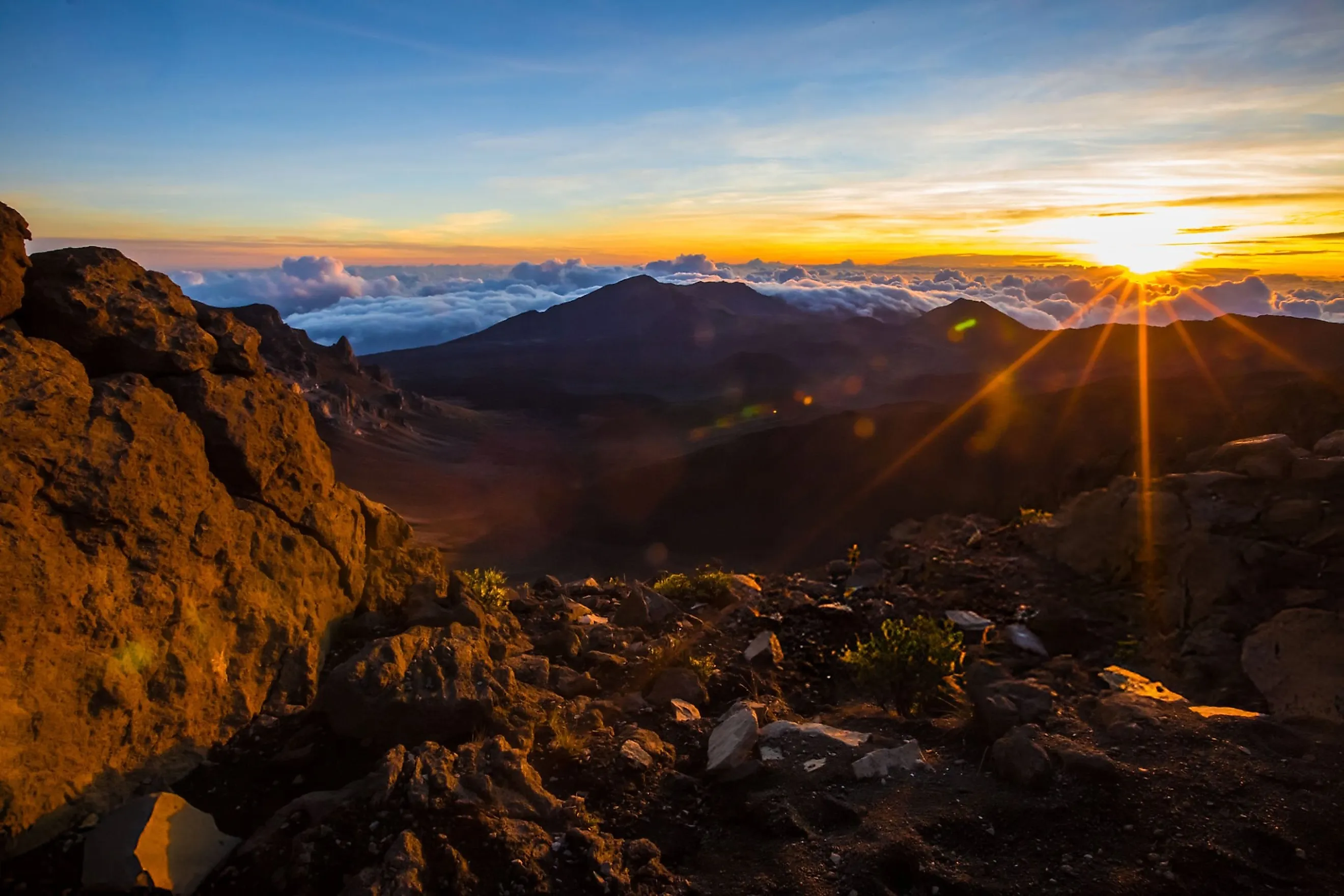
The road to the summit of Haleakalā climbs above 10,000 feet, and sunrise up there has drawn visitors since the late 1800s. In 1997 the park recorded an estimated 1.7 million recreation visits comapred to the 2025 count that came to roughly 854,000.
Some of what changed appears in the park's own paperwork. On October 10, 2007, the National Park Service halted commercial downhill bicycle rides inside the park pending a safety review. Five companies held downhill permits at the time. A Board of Review reported the following spring that the tours had posed an unacceptably high risk as previously managed. The stand down held, and the five operators kept their access to the mountain as van tours instead.
Sunrise viewing later acquired an arrangement of its own. Vehicles entering the summit district before 3 a.m. now need a reservation, a system that arrived two decades into the slide rather than at its head. People still gather in the dark at Puʻu ʻUlaʻula, at Kalahaku, and at Leleiwi. Fewer of them come now than came in 1997.
Carlsbad Caverns National Park, New Mexico

In November 2015, a six-inch motor shaft sheared off inside the primary elevator machinery at Carlsbad Caverns. The quickest route into the cavern stopped working along with the secondary system going down as well. From that November until May 2016 everybody who entered the cave walked in and walked out with visitors, rangers, and contractors all taking the same route.
The walk is the Natural Entrance Trail with 1.25 miles of steep ground. The park describes it as a 75-story descent and climb that is not walkable with a wheelchair, a stroller, or any mobility device. The primary elevators dated to 1955 and rebuilding them cost approximately $4.7 million, running from December 2017 to the end of May 2018. New motors and new cars went into a shaft that had carried people for six decades.
However, none of that opened the decline, which is the most striking part. Carlsbad counted more than 792,000 recreational visits in 1989 and more than 411,000 in 2025. The losses came in a long, gradual slide rather than a single collapse, bottoming near 365,000 in 2011. The park then climbed back above half a million by 2017 before falling away again, and the pandemic year of 2020 stands apart from the pattern entirely at 183,835. The machine that made this cave a drive-up attraction failed long after the crowds had first thinned.
Everglades National Park, Florida

At the far end of the road, pavement gives out on Florida Bay. Flamingo spent decades as the one place inside Everglades where a visitor could sleep indoors. Annual recreation visits hovered near a million across the 1990s and into the 2000s. The park logged more than 778,000 in 2025.
Hurricanes Katrina and Wilma both reached Flamingo in 2005. Storm surge reached as high as eight feet through an already aging cluster of buildings. The lodge closed, along with the cottages, the restaurant, and the cafe. The Park Service eventually demolished the lodging and hauled it away. Flamingo became a day-use and camping area, and it stayed that way for the better part of twenty years. Hurricane Irma flooded the campground and damaged a roof twelve years later.
Planning for a replacement lodge started in 2018. The Guy Bradley Visitor Center reopened after renovations, and a new lodge and restaurant now stand at Flamingo, built to a design that assumes the water will return. Everglades is the one park here that got its building back.
Virgin Islands National Park, St. John

No part of this park recovered faster than its shoreline. Hurricanes Irma and Maria crossed the Virgin Islands within two weeks of each other in September 2017. By December the beaches, trails, and roads on St. John had been cleared and reopened. Federal testimony the following March listed what had not been fixed: 90 vessels aground or sunk inside park waters, stands of pillar coral had been destroyed, more than 500 archaeological sites and historic structures awaited stabilization, and 35 derelict boats remained in sensitive habitat.
Water systems, signs, fee stations, and concession buildings had been wrecked or badly damaged. Cinnamon Bay Campground, the largest concession operation in the park, passed to a new operator in 2019 for rebuilding.
Recreation visits reached an estimated 693,000 in 2002 with the 2025 figure at more than 471,000. What did not come back is the part that mattered most to that count.
Caneel Bay Resort closed in 2017 and stayed closed. That same testimony called it the largest single employer on St. John and said the closure left an indelible mark on visitor services. When Tropical Storm Ernesto passed in August 2024, the park's status update still listed the Caneel Bay entrance and dock as closed.
Mesa Verde National Park, Colorado

Five large wildfires burned through Mesa Verde between 1996 and 2003, and together they covered just over 28,750 acres, more than half the park. Lightning set every one of them. The Chapin 5 fire took 4,781 acres in August 1996 and drew 649 firefighters at its peak. Five helicopters, five airtankers, and 16 engines worked it at a suppression cost of $2 million.
Bircher burned 19,607 acres in 2000 and Pony took another 1,352 the same summer. Long Mesa followed in 2002 and the Balcony House Complex in 2003.
The attendance record tracks the same period. Mesa Verde counted more than 628,000 recreation visits in 1997. While the 2002 figure fell to an estimated 406,000, in the middle of the fire years with visits standing near 463,000 in 2025.
What burned was the pinyon and juniper cover rather than the cliff dwellings at Cliff Palace and Balcony House. Roughly 19 lightning fires a year have ignited at Mesa Verde since 2003, and none has grown large, partly because so little fuel was left to carry one.
Wind Cave National Park, South Dakota

Boxwork lines the ceilings of Wind Cave, in the southern Black Hills, in thin calcite fins that meet at angles. The park has more of it than every other cave on earth put together, and it calls the cave the seventh longest in the world. Almost nobody sees any of that without riding an elevator, and the alternative is a stairway that keeps becoming the only option.
Elevator trouble in November 2016 pushed every tour through the Walk-in Entrance and no further than the Post Office Room. Visitors went down and back up 155 steps, which the park compares to a 15-story building. Tours ran weekdays only, with none on weekends or holidays, and group size dropped from 40 people to 20. Mechanical problems stopped tours again in July 2019 before resuming in March 2021 after what the park called a long closure. They halted once more in August 2023.
The count topped 810,000 in 2002, but by 2025, it had settled near 606,000. A year-long elevator replacement ran through 2024, and tours resumed on January 28, 2025.
Voyageurs National Park, Minnesota

Kettle Falls Hotel has no road to it. Guests arrive by boat or by float plane, and the building shuts for the northern Minnesota winter. The Park Service is working to place the operation under a new ten-year concession contract that takes effect on January 1, 2027.
The terms show how much of a park can run through one building. A future operator would keep ten hotel rooms plus ten villa units across three village buildings. It would serve three meals a day and run round-trip boat transportation from the Ash River Visitor Center. Marina sales would cover fuel, oil, ice, and bait.
The operator would also rent boats, motors, and staff the Trading Post. It would handle mechanical boat portage, how a vessel moves between two bodies of water, over the Kettle Falls Dam between Rainy Lake and Namakan Lake.
Voyageurs show the shallowest decline here. Attendance measured near 238,000 in 2002, then an estimated 206,000 in 2025. By the standards of the system, this park has never been crowded at all, and the whole gap between those two figures amounts to roughly 32,000 visits a year. It is a small number, and at a park this size it is also most of the difference between a full parking lot and an empty one.
What The Counts Don't Say
Visitation figures are blunt instruments, as the agency itself notes, because counting methods have changed at many parks across the decades. The seven here hold up under that caveat. What they share is not obscurity but every one was busier inside living memory. In each case the reason is specific enough to point at: a shaft, a storm surge, a lightning strike, and a permit.