11 Best Rockies Towns For Retirees
There is a river outside Lander, Wyoming that disappears into a limestone cavern, stays underground for two hours, and comes out somewhere else with more water than went in. Nobody has fully explained it. That is the kind of thing the Rockies keep in the towns most people drive through rather than stop in.
Retiring well up here takes more than a view, though. It takes a hospital you can reach in winter, a downtown worth walking in February, and neighbours who notice when you are not about. These eleven towns have all three, and none of them is a resort. Grouped by state.
Butte, Montana

They called it the richest hill on earth, and for a while it was. Butte's copper paid for a downtown of brick and terracotta that a town this size would never build today, and because the money left and nobody could afford to tear it down, it is all still standing. The uptown historic district is one of the largest in the country.
Housing here sits well below the Montana average, which is unusual for a town with this much architecture, and St. James Healthcare is a full-service hospital in town rather than an hour down the road.

The World Museum of Mining runs underground tours into a real shaft. The Copper King Mansion, built by William A. Clark in the 1880s, opens for tours and still takes overnight guests. The Continental Divide Trail passes just outside town. Be clear-eyed about one thing: the Berkeley Pit, a flooded open-pit mine full of acidic water, sits at the edge of uptown and is a Superfund site. Locals charge two dollars to look at it.
Lewistown, Montana

Five mountain ranges are visible from Lewistown: the Snowies, Moccasins, Judiths, Belts, and Highwoods. The town sits almost exactly at the geographic centre of Montana, which is why.
Housing is among the most affordable in the state, and Central Montana Medical Center is in town.
The Lewistown Trail System threads the neighbourhoods and follows Big Spring Creek, which is spring-fed, cold, and good for trout. The Central Montana Historical Museum opens in summer and covers the settlers, ranchers, and railroad crews who built the place. The Fergus County Fairgrounds keep a calendar of fairs and concerts. It is a plain town rather than a pretty one, and the price reflects that.
Dillon, Montana

William Clark stood on a limestone outcrop above Dillon in August 1805 and sketched the valley below. Clark's Lookout State Park preserves the spot, and you can climb it in ten minutes and see roughly what he saw.
Housing runs below the Montana average, and Barrett Hospital and HealthCare is in town, which for a community of 4,000 is better coverage than the population would suggest.
The Beaverhead County Museum covers pioneer and Native history. Beaverhead-Deerlodge is the largest national forest in Montana and starts at the edge of the valley, with blue-ribbon trout water on the Beaverhead and Big Hole rivers. Bannack State Park, half an hour west, is a genuine ghost town and Montana's first territorial capital, with sixty buildings still standing and nobody living in any of them.
Livingston, Montana

One thing to go in knowing: Livingston is the most expensive town on this list and sits above the Montana average, not below it. It is cheaper than Bozeman half an hour west, which is how it usually gets described, but that is a comparison with one of the priciest markets in the state rather than a claim to affordability.
What that buys is a real town on the Yellowstone River at the gate to Paradise Valley, with Yellowstone National Park an hour south. Livingston Medical Center handles day-to-day care, with Bozeman the referral centre.

The wind is the thing nobody mentions. Livingston sits where the valley funnels air out of the mountains and regularly sees gusts over 70 miles an hour. In return you get the restored 1902 Depot Center, the Yellowstone Gateway Museum, a serious fly-fishing culture, and an arts scene that has drawn writers and painters since the 1970s.
Evanston, Wyoming

Wyoming has no state income tax, which does more for a fixed income than any amenity on this list. Evanston pairs that with housing below the state average and Evanston Regional Hospital in town.
The town sits on the southwestern corner of the state where the plains meet the Uinta Mountains. The restored Roundhouse and Railyards Complex is the centrepiece, a surviving railroad turntable and machine shop now used for festivals and events.
Bear River State Park on the edge of town keeps bison and elk herds and has flat walking paths along the river. The Uinta County Museum occupies the old Carnegie library. The Uintas run east-west, which is unusual for a North American range, and they are twenty minutes south.
Lander, Wyoming

A river disappears here. The Popo Agie runs into a limestone cavern at Sinks Canyon, vanishes underground, and resurfaces a quarter mile downstream in a pool full of enormous trout. Dye tests showed the water takes over two hours to make a trip that should take minutes, and more water comes out than goes in. Nobody has fully explained it.
Lander sits against the Wind River Mountains, and while housing runs above the Wyoming average, the absence of a state income tax offsets a good deal of it. SageWest Health Care runs a hospital and clinics in town.

The Museum of the American West covers Native and settler history. Popo Agie Falls is a walkable trail to a cascade. The National Outdoor Leadership School is headquartered here, which gives a town of 7,500 an unusually outdoorsy population and a steady stream of lectures and events.
Buffalo, Wyoming

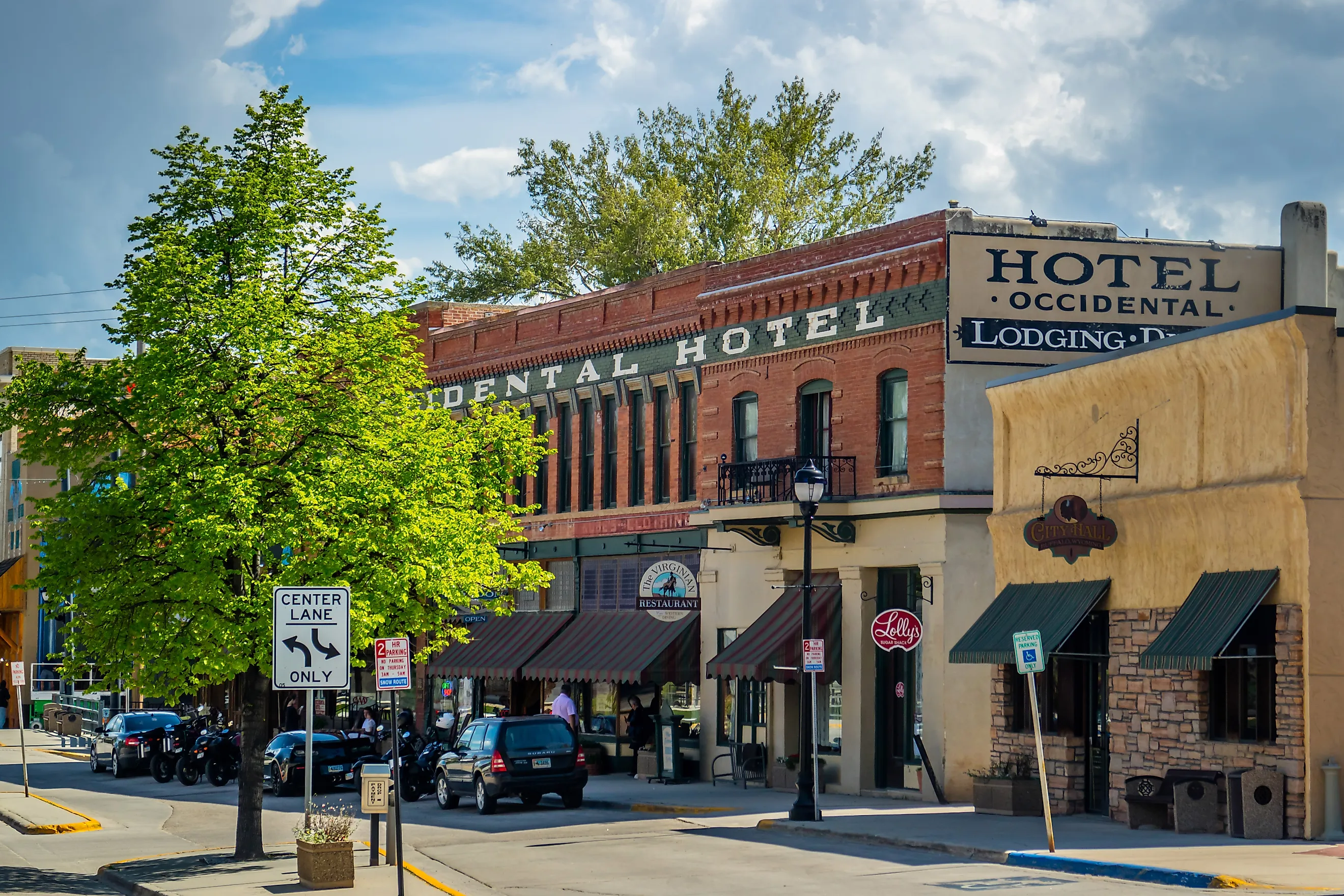
The Occidental Hotel has been open on Main Street since 1880, and the guest list runs to Teddy Roosevelt, Calamity Jane, Butch Cassidy, and Owen Wister, who set part of The Virginian here. The saloon still has bullet holes in the ceiling and still books live music.
Buffalo sits at the foot of the Bighorns, with housing cheaper than Sheridan up the road and Johnson County Healthcare Center providing hospital and clinic services in town.
The Jim Gatchell Memorial Museum holds a substantial collection of Native American and frontier material, much of it gathered by a local pharmacist who traded for it. Bighorn National Forest begins minutes from downtown, with the Cloud Peak Wilderness beyond. The Bozeman Trail and the Fetterman and Wagon Box fights all happened within a short drive, which makes this one of the more historically dense corners of the state.
Alamosa, Colorado

North America's tallest sand dunes sit half an hour from town, against snowcapped peaks, in the middle of a high desert valley. Star Dune at Great Sand Dunes National Park rises around 750 feet, and in late spring Medano Creek runs at the base so you can wade at the foot of them.
Alamosa sits in the San Luis Valley at 7,500 feet between the Sangre de Cristos and the San Juans, and it is the most affordable entry in Colorado on this list by some distance. San Luis Valley Health Regional Medical Center is in town.

The Rio Grande Scenic Railroad runs excursions into the mountains. The San Luis Valley Museum covers local history. One honest caveat: at this elevation the winters are long and genuinely cold, with overnight lows well below zero, and the valley is one of the colder inhabited places in the state.
Trinidad, Colorado

Trinidad's downtown is paved in brick, much of it original, and the whole commercial core is a National Historic District built on coal money from the 1880s. The Corazon de Trinidad district covers several blocks of Victorian and Territorial architecture that survived because the coal left and nothing replaced it.
Housing runs below the Colorado average and the cost of living is lower than most mountain towns in the state. Mt. San Rafael Hospital and local clinics cover medical needs.
The Trinidad History Museum covers Native, Hispanic, and settler heritage across a block of historic buildings. The A.R. Mitchell Museum holds a strong collection of Western art including pulp magazine cover paintings. Trinidad Lake State Park has trails and fishing with the Spanish Peaks on the horizon, and the Highway of Legends scenic byway starts here.
Westcliffe, Colorado

Westcliffe and neighbouring Silver Cliff became the first International Dark Sky Communities in Colorado in 2015, and only the ninth and tenth in the world at the time. The Smokey Jack Observatory runs public stargazing nights, and on a clear evening the Milky Way is visible from the middle of town.
The Wet Mountain Valley sits at 7,900 feet with the Sangre de Cristos rising sharply to the west. Housing costs sit near the Colorado average rather than below it, so this is a lifestyle choice rather than a budget one.
Be realistic about the medical situation, because it is the weak point. There is a clinic and a critical access facility locally, but the nearest full hospitals are in Cañon City and Pueblo, each roughly an hour away over a mountain pass that gets weather. For anyone managing a serious condition that is a genuine consideration. San Isabel National Forest borders the town for everything else.
Montrose, Colorado

The deepest, narrowest gorge in Colorado is fifteen minutes from town. Black Canyon of the Gunnison drops over 2,000 feet with walls so steep and close that parts of the canyon floor get half an hour of sunlight a day, which is where the name comes from.
Montrose sits on the Western Slope with housing below the Colorado average and a cost of living roughly 13 percent under comparable cities in the state. Montrose Regional Health is a 75-bed hospital with a Level III trauma centre, which is the best medical coverage of any town on this list.

Gunnison Gorge National Conservation Area has gentler river trails for birdwatching. Ridgway State Park is a short drive with a reservoir and a swim beach. The Ute Indian Museum sits on land once owned by Chief Ouray and is the only state museum in Colorado dedicated to a single tribe. The senior centre runs a full programme of classes and activities.
Choosing Between Them
These eleven sort by what you want your week to look like. Butte, Trinidad, and Lewistown are the history towns, with downtowns built on copper and coal money that nobody later had the means to knock down. Lander, Westcliffe, and Dillon put wilderness at the end of the street, and all three suit someone who intends to keep walking into their eighties. Montrose, Buffalo, and Livingston are the ones with the fullest calendars, where a quiet week is a choice rather than the only option.
Two things are worth weighing beyond the scenery. Medical access varies more than the brochures suggest: Montrose has a Level III trauma centre and most of these towns have a hospital in them, but Westcliffe means an hour over a pass to Cañon City or Pueblo, which matters a great deal in January. And the tax picture is genuinely different state to state, with Wyoming charging no income tax and Montana no sales tax. Neither shows up in a photograph, and both shape how a fixed income actually feels.