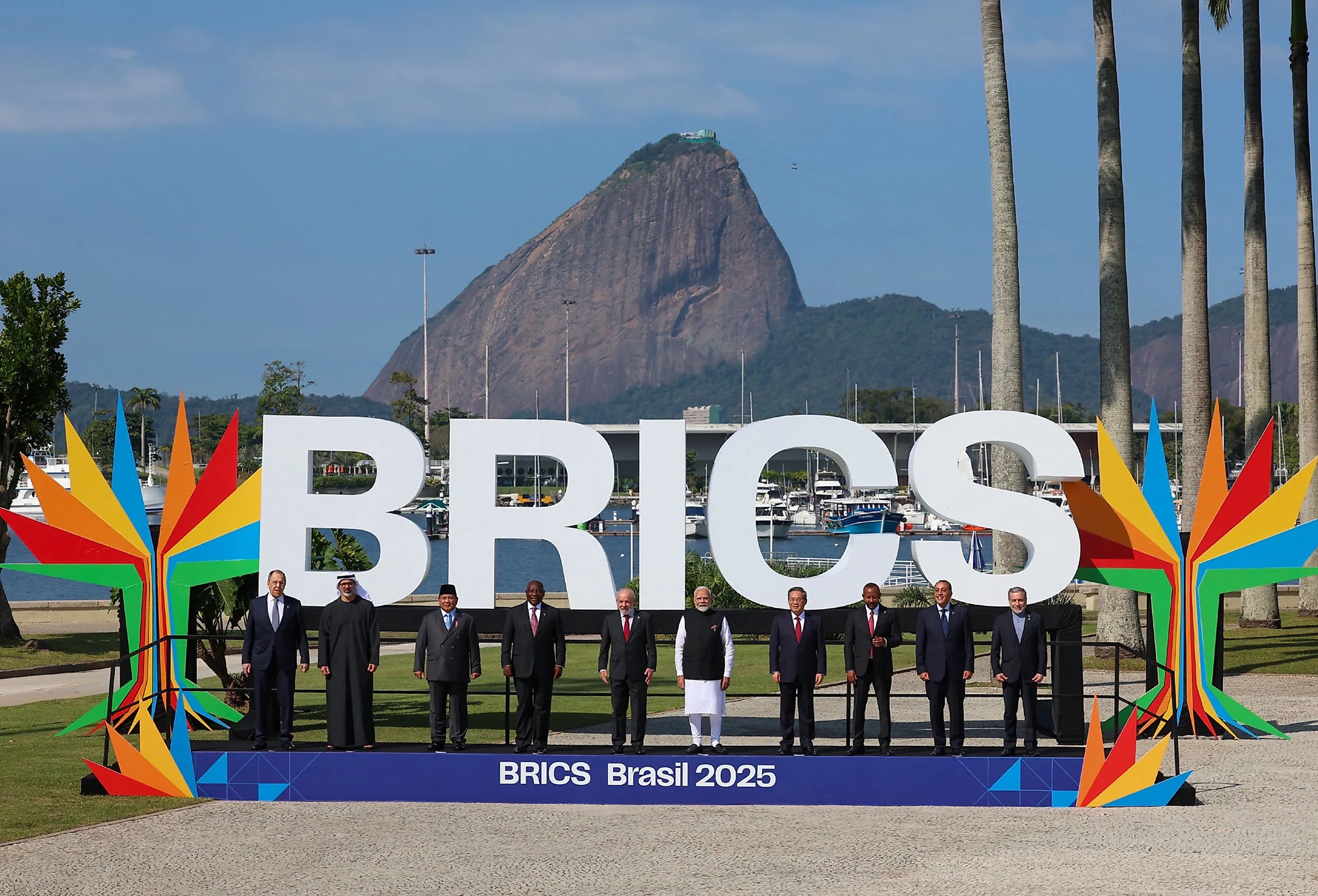
What Is BRICS+
BRICS+ is an acronym for Brazil, Russia, India, China, and South Africa. The plus sign is an informal addition meant to represent the additional members and partner countries that have joined the organization since its inception in 2009. The organization is meant to provide economic and energy strategies to its members, partners, and other countries, especially in the global south. Some of its initiatives have included the New Development Bank and BRICS Pay, a proposed/developing cross-border digital payments platform.
In order to join BRICS as a member or partner, BRICS leaders must come to an overall consensus to approve their application. BRICS sets criteria for membership, including maintaining good diplomatic relations with all members, being a member of the UN, and supporting multilateralism. Learn what BRICS+ is, which countries are members or partners, and how the bloc’s expansion is reshaping global politics and trade.
Founding

The acronym BRIC itself began not in an official capacity but as an observation from the economist Jim O'Neill of Goldman Sachs bank in 2001. In 2001, Goldman Sachs economist Jim O’Neill coined the BRIC framing in a paper arguing that the large emerging economies would grow in importance and should be reflected in global economic governance. Goldman Sachs’ later 2003 paper, ‘Dreaming with BRICs: The Path to 2050,’ projected that the BRIC economies could become larger than the G6 within 40 years if conditions went right.
Before this, the idea of forming an economic partnership between these countries had been developing in the Russian Ministry of Foreign Affairs from 1996 to 1998. Foreign Minister Yevgeny Primakov proposed a strategic cooperation with Russia, India, and China in 1998. Some of these meetings took place during other events, such as July 15 to 17, 2006, when the first meeting of BRIC Foreign ministers took place at the G8 St. Petersburg Summit. The ministers met again on September 20th, 2006, for a meeting at the UN General Assembly.
In June 2007, Russia, Brazil, India, China, and South Africa began a two-year dialogue as part of the Heiligendamm Dialogue Process to discuss African development, research, energy efficiency, and cross-border investment. This was followed by another meeting on May 16, 2008, in Yekaterinburg, Russia, where BRIC leaders discussed food shortages, climate change, and cooperation. In July 2008, BRIC leaders held their first informal meeting prior to the G8 Summit in Tokyo. The first formal meeting of BRIC leaders was hosted at the inaugural BRIC Summit in June 2009 in Yekaterinburg, Russia.
In a joint statement on June 16, 2009, the four countries presented the BRIC Action Plan, which called for democratic decision-making, assistance for developing countries, cooperation in energy efficiency, condemnation of terrorism, and dialogue. The action plan states BRIC will be "conducive not only to serving common interests of emerging market economies and developing countries, but also to building a harmonious world of lasting peace and common prosperity."

South Africa joined the bloc in December 2010 and attended its first BRICS summit in April 2011, giving the group the name BRICS. One of the group’s goals was to expand development-finance options through the New Development Bank, whose agreement was signed in July 2014 and which was established with US$100 billion in authorized capital and US$50 billion in initial subscribed capital.
2024 Expansion

In 2023, more than 20 countries reportedly formally sought to join BRICS. The BRICS organization responded in August 2023 during the XV BRICS Summit with a formal invitation to Iran, Saudi Arabia, the UAE, Egypt, Ethiopia, and Argentina. However, not all countries responded to this invitation. Argentina declined the invitation in December 2023, with its President, Javier Milei, stating that it was not an "opportune" moment for Argentina to join BRICS.
In addition, Saudi Arabia has maintained a distance from formal BRICS membership. Initially, it signaled it would join on January 1, 2024, through government channels, but later removed those announcements from its media and stated it was still considering membership instead. They were absent from most of the 2024 BRICS gathering, save for a foreign minister joining on the last day. In May 2025, Saudi Arabia attended a BRICS meeting in Rio De Janeiro, Brazil, but still held off on officially joining. Experts have suggested that Saudi Arabia is aiming to stay flexible by maintaining close ties with BRICS and Western economic interests.

There are several proposed reasons for this hesitancy, such as Saudi Arabia's alliance with the United States and concerns over one of the members added in January 2024: Iran. It is one of three countries that joined in January 2024, along with Egypt, Ethiopia, and the United Arab Emirates. The following year, in January 2025, Indonesia officially joined BRICS, bringing its total member count to 10 countries.
Not all member applications have been approved. Algeria attempted to join in 2023, but was rejected for membership. There have been several reasons proposed for this, such as its low GDP per capita of around $5,364 in 2023 and its reliance on hydrocarbons. Despite this, Algeria has become a member country of the New Development Bank as of May 2025.
BRICS Partner Countries

In addition to the main members, BRICS has several partner countries as well, a secondary tier of membership which were first announced at the 16th BRICS Summit in October 2024 in Kazan, Russia. This initiative is part of a plan to provide economic support to developing countries.
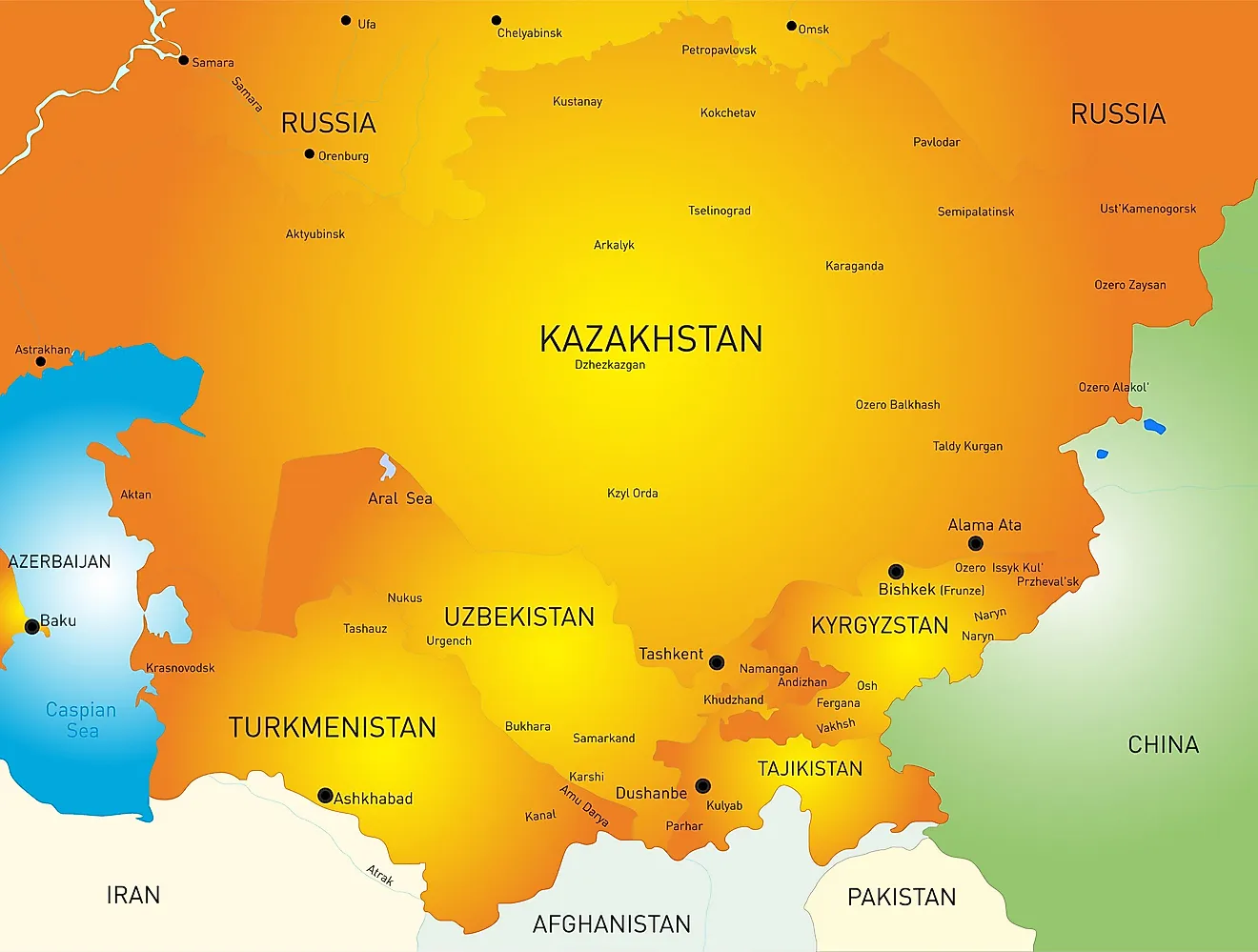
The current partner countries that were invited and accepted the invitation are Belarus, Bolivia, Cuba, Kazakhstan, Malaysia, Thailand, Nigeria, Uganda, and Uzbekistan, which all formally joined in January 2025. Vietnam also formally accepted an invitation on June 13, 2025, bringing its total number to 10.
These partner countries can perform several different tasks, such as participating in the annual Summit and Foreign Ministers' meetings. They can also endorse declarations and discuss initiatives among themselves and member countries. However, only members have full decision-making authority within BRICS.
Since the expansion, commentators have often used informal labels such as BRICS+ or BRICS 20, while official BRICS pages generally continue to use BRICS and distinguish full members from partner countries
GDP, Population, and Oil

With 10 members and 10 partners, BRICS 20 has a population of 4.45 billion people, which puts it at 53% to 55% of the total world population. If only member states are considered, it has a population of 3.9 billion people.
The 20 members and partner countries together have been estimated at about 43.93% of global GDP on a purchasing-power-parity basis; official BRICS data for the member bloc projects roughly 41% in 2025. The countries also account for 24% of global international trade.
When examining natural resources, BRICS 20 has 43.6% of the global oil production, 36% of natural gas, and 78.2% of mineral coal.
Challenges to BRICS

One primary challenge to BRICS is tensions surrounding ongoing foreign conflicts, such as Russia's "Special Military Operation" in Ukraine, which has been ongoing since February 2022.
Members and partners have taken a cautious approach to this conflict, with only Brazil condemning the operation in May 2022 in the UN General Assembly. At the July 2025 BRICS summit in Brazil, Vladimir Putin and Xi Jinping did not attend in person. Xi cited a scheduling conflict, while Putin addressed the summit via video amid the ICC arrest warrant issue. BRICS leaders did condemn Ukrainian attacks on Russian civilian infrastructure but made no official statement on Russian actions in the operation itself.
Another current conflict creating tensions inside BRICS is the US-Israeli war with Iran, which began with US and Israeli strikes on Iran on February 28, 2026. As a member, Iran has called on BRICS to condemn the US, but is opposed by fellow member the United Arab Emirates. As a result, the group has yet to make an official statement on the conflict, with Indian officials pointing to "differing views" as a key issue.
In a meeting in May 2026 in Beijing between Russian President Vladimir Putin and Chinese President Xi Jinping, both parties urged an end to the conflict between the US, Israel, and Iran and a return to dialogue to prevent the conflict from spreading.
This conflict has also proved troublesome for the economies of the members and partner states, as it impacts the oil trade, which is one of the key industries for many countries within BRICS.
One reason behind this challenge is that BRICS is not a centralized organization. It primarily relies on summits and consensus-building among members and partners.
Status of BRICS+ as of May 2026

The 18th BRICS Summit is set to be held in September 2026 in New Delhi, India. As of the end of the first quarter of 2026, the New Development Bank had approved $42.9 billion USD in financing for 140 projects.
Turkey was offered partner status in 2024 in response to a bid for membership. It has yet to respond officially, and continues to express interest in becoming a full member. As of May 2026, the country is neither a member nor a partner of BRICS.

.jpg)
.jpg)
.jpg)

